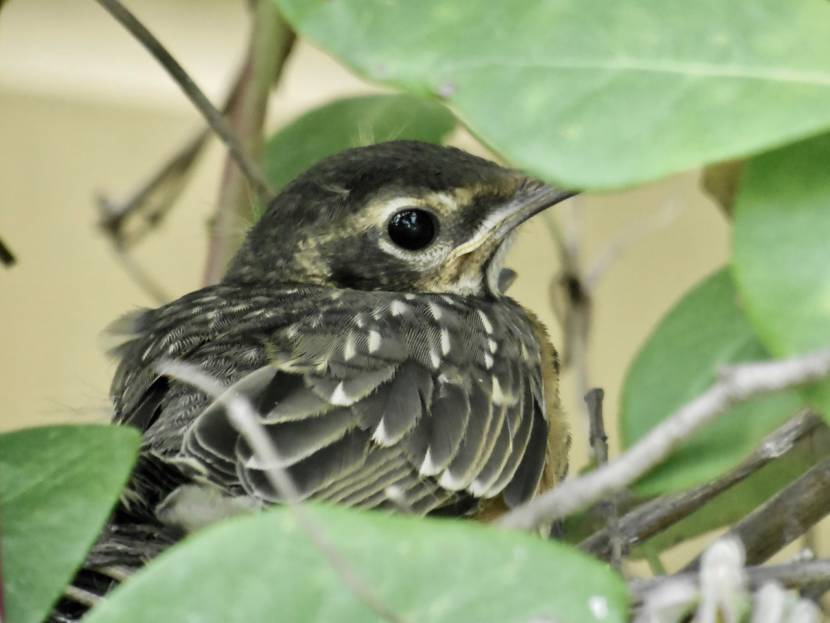
Mount Washington — On June 23, we spied two turquoise eggs and two hatchlings in the robin’s nest. On June 25, three fuzz balls overflowed the round cup of woven twigs; one egg at the periphery. June 29, one large nestling, eye open, bill prominent, rested above what seemed a pile of dormant little ones; the last egg edged to the side. June 30, three fully feathered birds, the largest with open mouth, lifted.
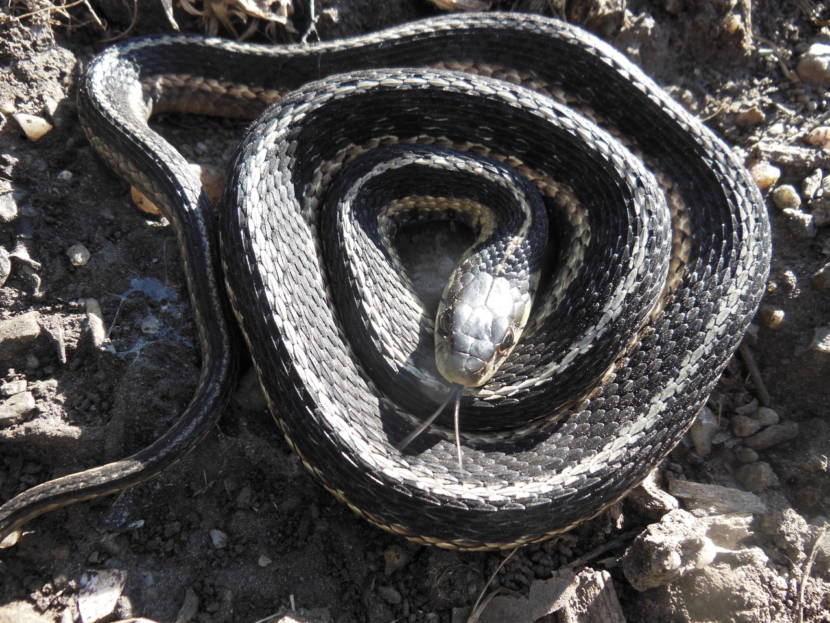
This snake took up residence within the bluestone steps that led to a side door of our house, not far from the trellis where Mother Robin had built her nest. We gave a glancing thought to the proximity of the two domiciles, which turned out not to be a cause of concern. The snake was very welcome, considering the numbers of rodents that find access to the house.
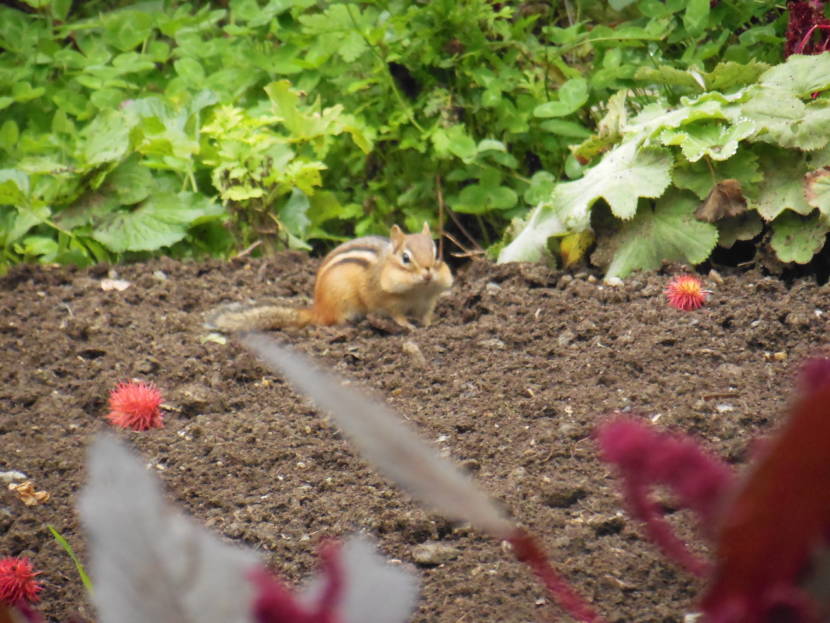
Days after I noticed this opportunist – this marauder who was raiding my carefully prepared bed of painstakingly sown cover crop seed – I caught him/her on camera: unfortunately, it was just a picture that I snapped, the cheeky offender skipping off, fully loaded with winter rye seed! That planting, intended to protect the earth through harsh winter storms and serve many other functions for the soil, was stripped and hauled away to chipmunk storage chambers, a ready food for uninvited guests of the garden. Notice the bright red, spiked castor bean seeds strewn on the bed in an effort to deter the indifferent striped ground squirrel.
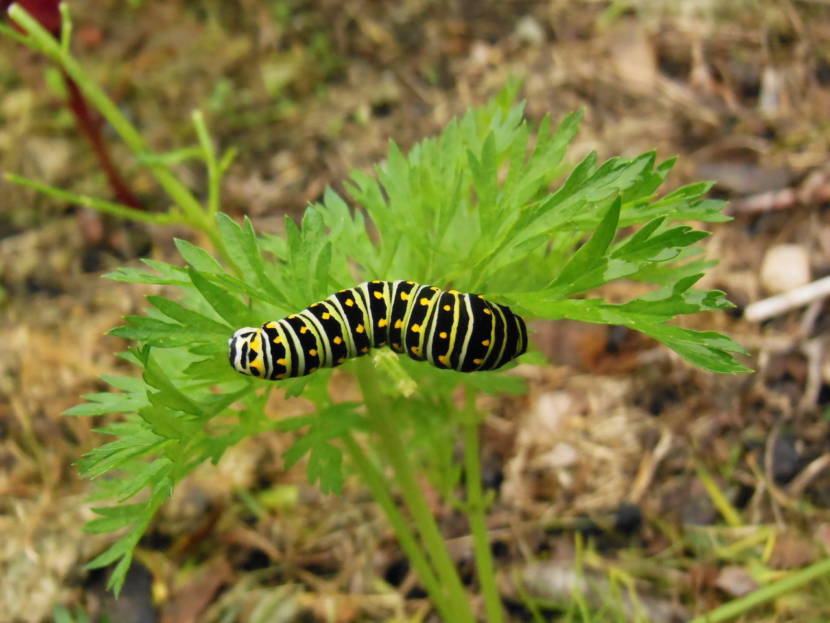
When beautiful, beneficial caterpillars that will metamorphose into beautiful, beneficial butterflies eat my vegetables, they are welcome to feast. The few swallowtail caterpillars that I noticed also ate fennel tops and dill.
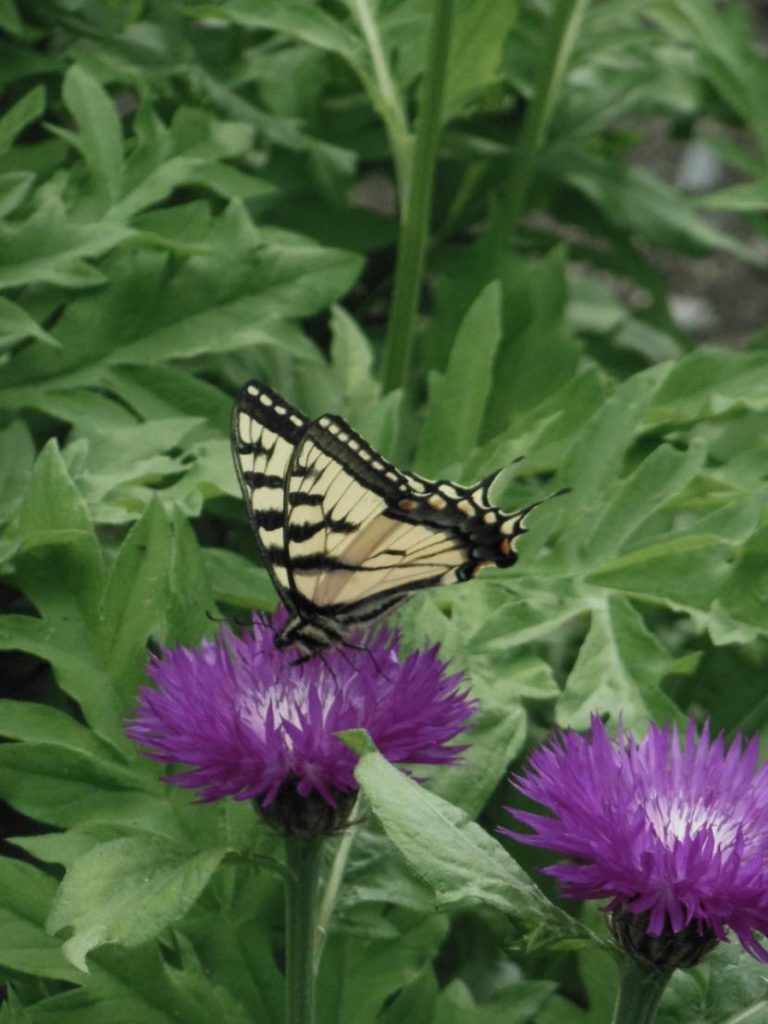
This centaurea, or cornflower, is not native to North America, but does provide nectar to swallowtails and other insects. Native butterflies, moths and birds are attracted to native plants in and around our gardens. To find species of native plants that attract birds in your locale, go to https://www.audubon.org/native-plants
ADDENDUM for your winter bird watching pleasure and citizen science at home, school and in the field:
Citizen Science – https://www.birds.cornell.edu/page.aspx?pid=1664
https://feederwatch.org/learn/feeding-birds/#safe-feeding-environment
All About Birds, Cornell Lab of Ornithology
Short videos – https://academy.allaboutbirds.org/media-library/
Free, threehour Bird Academy course, CEU credits optional. Many fee courses available. https://academy.allaboutbirds.org/product/ebird-essentials/
Bird identification apps free of charge – https://gbbc.birdcount.org/birding-apps/
Mid-December – Early January Christmas bird count (CBC) and other birding opportunities
Sharon Audubon, Conn. – https://sharon.audubon.org/christmas-bird-count
Pleasant Valley Wildlife Sanctuary, Lenox, Mass. – https://www.massaudubon.org/get-outdoors/wildlife-sanctuaries/pleasant-valley/programs-classes-activities/go-birding
Berkshires’ Hoffman Bird Club – https://hoffmannbirdclub.org/field-trips/
Columbia County – https://www.alandevoebirdclub.org/AboutCalendar.htm