“Po-tay-toes! Boil ‘em, mash ‘em, stick ‘em in a stew,” said Samwise Gamgee when asked by Gollum what taters were in Tolkien’s “The Lord of The Rings: The Two Towers.”
There are, of course, many more ways to prepare potatoes than Samwise’s explanation, but since we’re coming up on St. Patrick’s Day, I’d like to focus a bit on Ireland’s famous and, at one time, tragic relationship with the vegetable most identified with Ireland.
 First, a bit about the spud itself. A medium potato contains about 110 calories, is an excellent source of vitamin C, contains more potassium than a banana, is a good source of vitamin B6, and provides three grams of protein. Potatoes are considered a nutrient-dense vegetable and are a staple in many countries. In Ireland, each person would have eaten an average of about 300 pounds a year in 1962. Consumption has steadily dwindled to about half that amount now. For reference, Belarus presently leads the world in potato consumption, each citizen eating about 340 pounds a year, and the annual per capita consumption in the good ol’ USA is about 120 pounds. Meanwhile, because I know you’ve been wondering, the average person in Ghana eats the equivalent of a medium potato in a year, about a third of a pound, barely enough to make chips for a fair serving of fish and chips.
Which brings us to the catastrophic potato blight in Ireland during the mid-19th century, when roughly one million Irish died due to starvation-related causes. That number equates to about 12 percent of Ireland’s population at the time. For perspective, about 1.6 percent of U.S. citizens have lost their lives to date due to COVID-19. A majority of those who succumbed during the years of the blight were from the poorer west of Ireland, where many depended on their potato crop with nothing to fall back on. In those areas, it’s estimated that 25 percent of the population died. A poor, hardworking Irish tenant farmer would have been so dependent on the potato for subsistence, he would have eaten more than three dozen medium potatoes in a day.
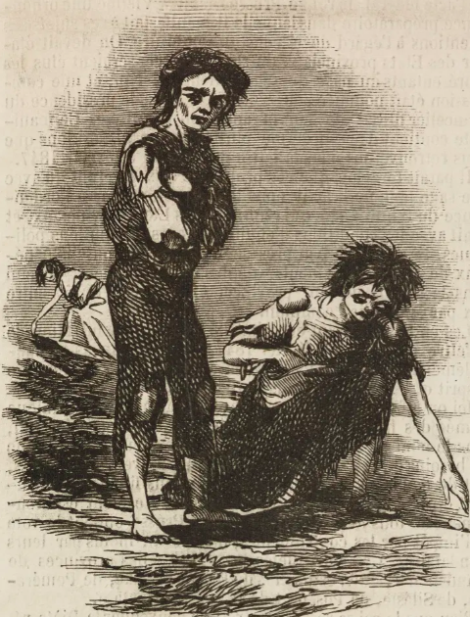
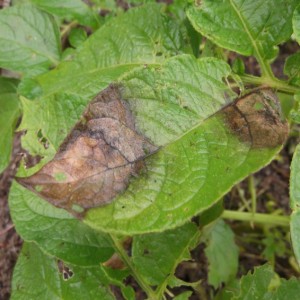
The potato blight appeared suddenly in 1845. Many of the subsistence tenant farmers would have gone out to their fields and found their potato vines withered black and a strange putrid smell in the air. The infected potatoes would soon rot and virtually all the family’s life-sustaining potato crop would be lost. Over the next six years, the population of Ireland would be decimated by 25 percent due to either death or emigration. While it’s true the vast majority of Irish citizens experienced the effects commonly found during a famine, how and why it occurred is more complicated than simply laying the blame on a potato blight. Famine may not even be the right term applied to those years.
At the time, Ireland was an agrarian society under British rule, which was dominated by absentee British landowners who employed landlords to manage their lands, with local tenant farmers renting land from them. Prior to this time, draconian British penal laws enacted in Ireland during the 17th and 18th centuries penalized the practicing of religions other than the official Church of Ireland, an Anglican church which originated from the Church of England. The penal laws applied to the 75 percent of the Irish population who were Roman Catholic and included barring Catholics from voting, holding public office, owning land, or teaching the Catholic religion.
The penal laws went through many changes, repeals, and reimpositions over the years, and some went so far as banning Catholics from owning a horse valued at more than £5 or building a Catholic church from stone, and it was considered treason, punishable by death, to convert a Protestant to the Catholic faith. Most of the penal laws had officially been repealed by the beginning of the 19th century, and the last of any significance was removed in 1829 with Catholic emancipation, primarily engineered by Daniel O’Connell, known in Ireland as The Liberator. But the effects of those laws were still being felt in 1845, and Irish unrest was becoming stronger as demonstrated by the jailing of O’Connell in 1843, just two years before the blight first appeared and not long after he organized a successful massive protest on the Hill of Tara outside Dublin.
With political unrest on the rise and the British government never having been sympathetic to the poor living conditions of Irish citizens, the British government was even less inclined to be sympathetic to the Irish as they grappled with losing their life-sustaining food source. British landowners continued to export large quantities of food, and actually increased some of their food exports, during the “famine,” as the British government sat largely indifferently by, many say consciously so. Those years, 1845-1852, are generally referred to as The Great Famine, but many historians dispute that appellation, as famine is defined as “a severe insufficiency of food in a region.” With food being exported from Ireland, in some cases at record amounts, it’s difficult to define that period as a famine. Many historians go so far as to charge the ruling British government of the time with genocide by means of conscious indifference in order to help solve what they considered “the Irish problem.”
In my first visit to Ireland, during the fall and winter of 1973-74, it was still an impoverished country. In the little glen of County Donegal, where my family owned a cottage, there were few of the amenities we enjoyed in the States. Unemployment was extremely high, almost no one had a telephone, our electricity was supplied by peat, cut and dried from the bogs and burned in a facility, and cars were not particularly common. At the local grocers, the fresh vegetables generally offered in the fall and winter were limited to onions, cabbage, turnip, carrots, and potatoes. Since Ireland joined the EU, I’ve been able to find virtually anything I need at the local grocer, owned by our friend and fellow music lover Pat McClafferty and his family. As a sign of progress, or possibly of the apocalypse, I saw a Facebook post the other day from McClafferty’s market featuring a display of Dunkin’ Donuts!
A constant for me, throughout, has been my relationship with the wonderful Curran family, who helped care for this young hapless Yank during that first trip almost 50 years ago. A few months ago, they invited the Lovely Lois and me to participate in a monthly game of quiz, via Zoom, which they started to keep in touch with each other during the pandemic. Quiz is what we call trivia here and we’re even worse at the Irish version than we are at any of our few pathetic attempts here. Because they felt sorry for the poor dumb Americans, coming from a country which had elected the man President Biden refers to as “the other guy,” Bernadette and her husband Mick allowed us to finish second to last in the rankings of our last quiz. It was our best finish ever. In between quizzes, we use a WhatsApp group to keep in touch. I asked the group for old authentic Irish recipes, in anticipation of this St. Patrick’s Day article, and the thread was dominated by pure Irish humor among the eight siblings and their families.
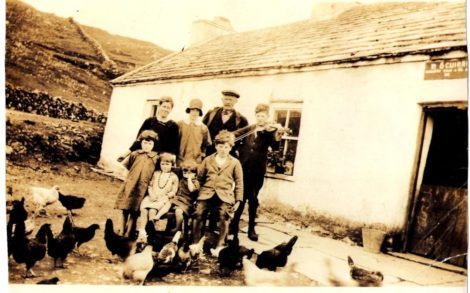
Besides laughing a lot, I learned a lot. I learned the sardines Tom caught, and their mammy boiled in milk, he had found gorgeous and Bernadette had found revolting. “Beestings,” the first milk drawn after a cow has given birth, was fed warm from the cow to the family by their daddy, as it strengthened their immune systems, among other health benefits. It was generally agreed the beestings they had been served when they were young had probably saved them all from contracting COVID-19. Anne described beestings as watery scrambled eggs; Tom, Joe, and Kevin thought beestings were lovely; and Bernadette had as much use for it as she did sardines boiled in milk.
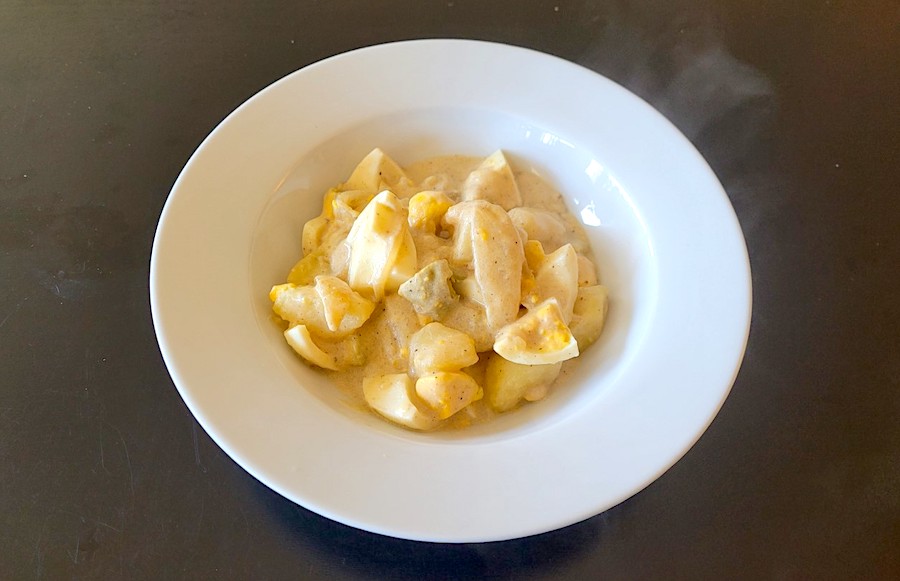
Of all the dishes recommended, the one which intrigued me the most, and fit into the potato theme for this article, was best described to me by Anne. Her mother, who was from Tipperary and had cooked for an estate there, used to make what they called sowsheen, which the entire clan agreed was lovely. Sowsheen, sometimes called solamagunda, is an onion white sauce with chunks of hardboiled eggs served over potatoes. Very Irish for the time, as potatoes, onions, eggs, and milk were all generally available, although another neighbor of ours told us, if their cow wasn’t giving milk in those days, they didn’t have milk.
The recipe that follows is my understanding of sowsheen, working from Anne’s description but having never had it before. I think this version is easy enough to put together and lovely for breakfast. Even Bernadette might agree.
Sowsheen
I just started making this, but I’m sure it would be good with some added diced ham or cooked bacon (what isn’t good with bacon?) and/or grated cheese added. Don’t forget the nutmeg! This doesn’t need to be confined to breakfast and can be made for a quick weekday dinner or lunch. A simple green salad served alongside would be nice.
Ingredients:
2 medium potatoes (I use Yukon Gold), peeled and cut into large dice
½ large Spanish onion (about 1 cup), sliced
2 Tbl butter
1 Tbl all-purpose flour
1½ cups milk
4 large hardboiled eggs, peeled
A few gratings of fresh nutmeg or a pinch of already grated
Salt and pepper to taste
Method:
- If you don’t have hardboiled eggs hanging around in your refrigerator, as I usually do, cook them now. If you do, peel and warm them in a small bowl with the water you’ve heated for your tea or coffee.
- Cover the potatoes with salted water and bring to a boil, reduce heat to medium and gently boil for about 7 or 8 minutes, until they can be easily pierced with a fork.
- Meanwhile, sauté the sliced onion in the butter over medium-low heat for a couple of minutes, until soft. Add the flour and cook, stirring, for about 30 seconds. Add the milk, adjust the heat to low once the milk begins simmering, and allow to simmer, stirring occasionally, while the potatoes finish cooking.
- When the potatoes have finished cooking, drain and add to the onion white sauce, cut the hardboiled eggs into quarters, and gently fold into the sauce. Adjust the salt, pepper, and nutmeg to taste, avoiding breaking up the eggs too much.