Viral: The Search for the Origin of COVID-19
by Alina Chan and Matt Ridley
HarperCollins Publishers Inc.
Copyright © 2021 by Alina Chan and Matt Ridley
COVID-19 is everywhere. As of January 7, 2021, the Johns Hopkins Coronavirus Resource Center reported a total of 305,504,472 cases of COVID-19 worldwide with 5,486,955 deaths. U.S. confirmed cases have reached 59,818,955 with deaths at 837, 288. The New York Times on New Years’ Day reported that “the Omicron variant drove coronavirus case counts to record levels, upended air travel and left gaping staffing holes at police departments, firehouses and hospitals.”
I get a daily email from the New York Times with their summary of COVID cases in Berkshire County. Recently, the numbers have been going up and up. On Sunday, Jan. 9, 2022, this is what they wrote: “New cases are the highest they have ever been. The average number of new cases in Berkshire County was 238 yesterday, about the same as the day before. Because of high spread, the CDC recommends that even vaccinated people wear masks here. Since January 2020, at least 1 in 8 people who live in Berkshire County have been infected, and at least 1 in 357 people have died.”
My new reality: far less time seeing friends (my weekly poker game evaporated), less time indoors with Fuel coffee shop crowds, more time outdoors, often alone and wearing masks. It’s kind of funny, ironic funny, but I’ve spent an awful lot of time watching mysteries of all kinds on Netflix and Prime. Mysteries from France, Poland, Germany, England, Ireland, Scotland, and Australia. Many more than in the years before COVID, when I read many, watched more, and wrote two.
But until “Viral,” the collaboration between American scientist Alina Chan and Matt Ridley, a science writer from the United Kingdom, I missed the reality that we have been living in the midst of a mystery with more than 5 million real life victims and counting. Or, as “Viral” puts it, “the keenest mystery of our lifetime.” A mystery so confusing it’s worthy of Alice.
The authors are well qualified to send us down this rabbit hole. Dr. Chan works at the Broad Institute, a joint endeavor of the Massachusetts Institute of Technology and Harvard University, specializing in human gene therapy. She quickly became involved in trying to investigate the origins of COVID-19.
Matt Ridley, a former member of the British House of Lords, is an award-winning journalist. His books about science, “The Red Queen,” “Genome,” “The Rational Optimist” have sold more than 1 million copies. He writes for the Wall Street Journal, The Economist, and the London Times. A conservative and critic of governmental regulation, Ridley is no stranger to controversy.
In December 2019, four patients were admitted to a Wuhan, China hospital with what at first seemed like pneumonia. All were linked to the Huanan Seafood Market. For most of us, this was the first time we learned about COVID-19 and the wet market in Wuhan.
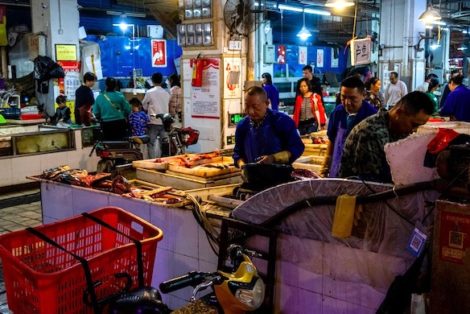
The “wet” refers to the ice used to keep the seafood and animals fresh; its melt used to clean the blood from the floor and the 700 stalls serving 10,000 customers a day. Huanan Seafood Market offers a slightly different selection than our Big Y or Price Chopper, options many of us probably wouldn’t choose for lunch or dinner: crocodiles, badgers, foxes, wolf puppies, turtles, giant salamanders, snakes, rats, hedgehogs, peacocks, porcupines, koalas, even the occasional but rare pangolin. Having had bear and monkey without knowing at an honorary banquet in the small city of Taishan, Quangdong in 1984, I appreciate that the Chinese have a far broader appreciation for what qualifies as a meal.
We were told the COVID-19 virus spread from infected animals to humans, a process called zoonosis. The U.S. Office of the Director of National Intelligence (DNI) in its Updated Assessment on COVID-19 Origins defined the process this way: “Zoonosis: An infection or a disease that is transmissible from animals to humans under natural conditions. A zoonotic pathogen may be viral, bacterial, or parasitic, and can sometimes be transmitted through insects, such as mosquitoes. Zoonotic spillover: An initial infection or disease that is caused by contact between an animal and human under natural conditions.” The example I knew most about was rabies, and the rabid dogs I had been warned about as a kid.
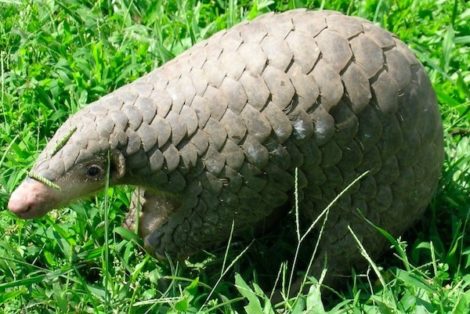
Then, Shen Yongyi and Xiao Lihua of South China Agricultural University in Guangzhou told Medical News Today that a pangolin might be the prime suspect: “Pangolin is found as a potential intermediate host of new coronavirus in South China.” Explaining that pangolins are “a natural reservoir of coronaviruses and researchers are investigating their potential role as an intermediate host for SARS-CoV-2.”
So, was this a classic case of pangolin-to-patient? Murder at the Wuhan wet market? This would certainly explain why Wuhan, of all places, was the epicenter of the illness.
But slow down and remember, in this mystery, things are rarely what they seem. Maybe not pangolin-to-people. Maybe people-to-people. Because, according to the Congressional Research Service’s COVID-19 and China: A Chronology of Events (December 2019-January 2020), Dr. Zhang Jixian of the Hubei Provincial Hospital of Integrated Chinese and Western Medicine later told China’s state news agency that she reported a family cluster of cases to her superiors on December 27, 2019, because, “It is unlikely that all three members of a family caught the same disease at the same time unless it is an infectious disease.”
Then respiratory specialist Dr. Zhang Jixian, who had experience dealing with the SARS epidemic in 2002-2003 also determined and reported to the authorities that this was a case of human-to-human transmission.
Dr. Ai Fen of the Emergency Department of Wuhan Central Hospital admitted two patients whose tests revealed SARS coronavirus. This diagnosis reached other Wuhan doctors, including the ophthalmologist Dr. Li Wenliang who alerted 150 of his colleagues. Concerned about person-to-person transmission and the spread of the coronavirus, Wenliang urged colleagues to take precautions for themselves and their families, then, probably anticipating a problem, urged them not to circulate the message. Which, of course, was leaked.
This person-to-person transmission told a very different story than the official Chinese version: Wuhan market animal-to-person transmission.
Even as late as January 22, 2020, Dr. George Gao, director of the Chinese Center for Disease Control and Prevention in Beijing, declared: “The origin of the new coronavirus is the wildlife sold illegally in a Wuhan seafood market.”
The Wuhan market was closed and sanitized. On January 1, Dr. Fen was criticized for publicizing his concerns. His account was deleted from the People (Renwu) website. Dr. Wenliang was questioned by police, formally censored, forced to confess to spreading rumors, and then to sign a letter of reprimand.
Dr. Wenliang posted the “letter of reprimand” for his “unlawful act” on his Weibo account, which made it to the Library of Congress website: “Dr. Li was accused of ‘making false comments’ that ‘severely disturbed the social order.’” Sadly, Dr. Wenliang was hospitalized on January 12, 2020, then died of COVID on February 7, 2020.
In the early days of COVID in China, honest doctors were a pain and the truth problematic.
Then it turned out that maybe the culprit wasn’t a pangolin. A June 7, 2021 article in Scientific Reports, “Animal sales from Wuhan wet markets immediately prior to the COVID-19 pandemic,” notes: “between May 2017 and November 2019 in Wuhan’s markets … no pangolins (or bats) were traded, supporting reformed opinion that pangolins were not likely the spillover host at the source of the current coronavirus (COVID-19) pandemic.”
It seems the pangolin had an alibi. Could a snake be at the heart of the zoonosis? On January 24, 2020, Haitao Guo, Guangxiang “George” Luo, and Shou-Jiang Gao wrote for CNN: “Snakes — the Chinese krait and the Chinese cobra — may be the original source of the newly discovered coronavirus that has triggered an outbreak of a deadly infectious respiratory illness in China this winter … Snakes often hunt for bats in the wild. Reports indicate that snakes were sold in the local seafood market in Wuhan, raising the possibility that the 2019-nCoV might have jumped from the host species — bats — to snakes and then to humans at the beginning of this coronavirus outbreak.”
According to a January 22, 2020 study in the Journal of Medical Virology: “Results obtained from our analyses suggest that the 2019-nCoV may appear to be a recombinant virus between the bat coronavirus and an origin-unknown coronavirus … Additionally, our findings suggest that 2019-nCoV has most similar genetic information with bat coronavirus and most similar codon usage bias with snake.”
Chan and Ridley explain: “The argument was that viruses tend to use the amino-acid-encoding three-letter codes (codons) most frequently used by their host so that they can more effectively hijack the host protein production machinery. The new virus sported codons more commonly used in snakes than in marmots, hedgehogs, bats, birds and humans, the researchers found. Before the pandemic, approximately nine thousand tonnes of snakes were sold in Chinese markets each year.”
As these initial studies made the light of day, Laurie Garret, the author of “The Coming Plague,” wrote for CNN that there were reasons to be skeptical of the claims of the Chinese authorities. Reminding us of two major misstatements: “They also repeatedly stated that there was no evidence of human-to-human spread of the disease (which turned out to be false), leading the World Health Organization and outside world to believe that closing the live animal market effectively brought the outbreak to a halt.
“As recently as January 18, the Chinese Center for Disease Control and Prevention posted stern warnings against paying heed to ‘rumors’ and insisted there were no cases of the disease in hospitals outside of Wuhan, adding that the outbreak was ‘preventable and controllable.’ But we now know that was far from true.”
While so many folks were focused on pangolins and snakes, and animal-to-human transmission, by December 27, 2019 the Chinese authorities had deciphered the genetic DNA sequence (the genome) of the novel coronavirus, and shared it with the Wuhan Institute of Virology (WIV). By January 3, the Chinese Center for Disease Control offered the genome to companies to develop diagnostic kits for the coronavirus pathogen. A day after Dr. Wenliang signed the confession letter, the leading Chinese vaccine developer, Sinopharm, kicked into high gear manufacturing a vaccine for the novel coronavirus.
Dr. Liu Yingle of Wuhan University’s State Key Laboratory of Virology analyzed lung fluid from two patients and published the results on February 5, 2020 in Emerging Microbes & Infections: The “2019-nCoV also shared close relationship with CoVs originated from Rhinolophus bat,” then finding a 98.7 percent match between a section of the new virus with a prior published section of BtCoV/4991, the genome of a virus taken from a horseshoe bat by the Wuhan Institute of Virology in 2013.
Chan and Ridley write: “This ought to have been big news: a nearly 99-percent match to the 4991 fragment was strikingly high and would have raised eyebrows, implying a possible connection to the outbreak.” [Emphasis added]
But more attention was focused on the work of Dr. Shi Zhengli of the Wuhan Institute of Virology (WIV). On February 3, 2020, she published “A pneumonia outbreak associated with a new coronavirus of probable bat origin” in the journal Nature, announcing a 79.6-percent match with the SARS CoV virus strain from 2002. Significantly, SARS CoV had infected 8,000 people in 28 countries, killing approximately 800 people. “The sequences are almost identical and share 79.6 percent sequence identity to SARS-CoV. Furthermore, we show that 2019-nCoV is 96 percent identical at the whole-genome level to a bat coronavirus.
“We then found that a short region of RNA-dependent RNA polymerase (RdRp) from a bat coronavirus (BatCoV RaTG13) — which was previously detected in Rhinolophus affinis from Yunnan province — showed high sequence identity to 2019-nCoV… with an overall genome sequence identity of 96.2 percent.” [Emphasis added]
John Sudworth of the BBC explains how the bat viruses get their names: “RaTG13 is a virus whose name has been derived from the bat it was extracted from (Rhinolophus affinis, Ra), the place it was found (Tongguan, TG), and the year it was identified, 2013.”
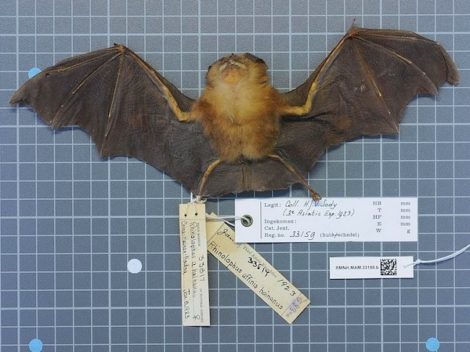
“Probable bat origin.” Yes, bats. Not snakes, not pangolins. And bats from Yunnan province. But nothing was simple about these discoveries. One with a 98.7-percent match of the new virus to a virus known as BtCoV/4991, and another with a 96.2-percent match to a virus known as RaTG13.
Now, remember, it wasn’t just the Chinese authorities. The World Health Organization (WHO) reinforced the notion that there was no person-to-person transmission, rather the problem was humans interacting with infected animals:
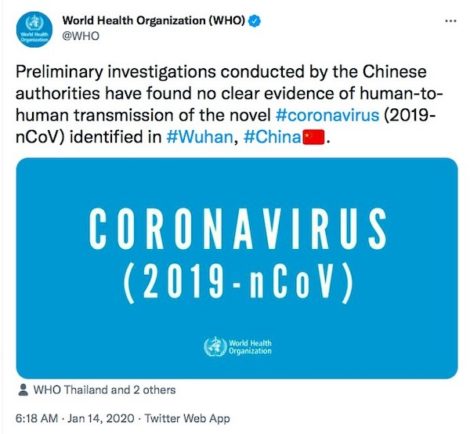
That same day, Dr. Maria Van Kerkhove, the acting head of the WHO’s emerging diseases, declared: “From the information that we have, it is possible that there is limited human-to-human transmission, potentially among families. But it is very clear right now, that we have no sustained human-to-human transmission.” [Emphasis added]
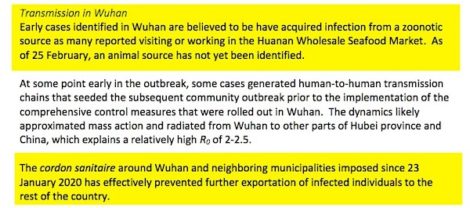
From January 14–February 10, WHO convened a Global Study of Origins of SARS-CoV-2, then in their summary unfortunately repeated two major false claims of the Chinese – the first, that the epidemic was primarily linked to animal-to-human zoonotic transfers at the Huanan Seafood Market, and second that they had effectively kept the virus from spreading elsewhere in China or the rest of the world:
She shared this discovery on the Virology Blog on March 16, and wrote to Nature to ask the authors to clarify the issue. But heard nothing. But what might it mean that there were strains of previously sampled viruses, analyzed and catalogued, bearing similarity to the new Wuhan coronavirus? That these dangerous viruses could exist in Chinese laboratories?
Meanwhile, on March 7, 2020, an anonymous Twitter user, schnufi666 noticed that the entry for the BtCoV/4991virus in a Chinese database had now been altered to include a reference to RaTG13. Enter the United States in the person of Dr. Peter Daszak, the president of the New York-based EcoHealth Alliance. Schnufi666 asked Dr. Daszak, a funder of and close collaborator with Dr. Zhengli’s Wuhan Institute of Virology, if he could confirm the identity of the two samples. On May 9, Dr. Daszak replied that “The answer is already in the papers & obvious to people working in virology.”
But, certainly not obvious to Dr. Yingle and his Wuhan University team or to Dr. Segreto. As for Dr. Daszak and EcoHealth, he had already supported the Wuhan Institute of Virology’s emphasis linking the new coronavirus’ to the previous SARS epidemic. As well as bolstering the Chinese government’s assertion of animal-to-human transmission: “The virus responsible for the current outbreak in Wuhan has so far killed one person; fortunately it’s not currently believed that the virus has the ability to spread human-to-human.” [Emphasis added]
Dr. Segreto knew from experience that it’s possible for an organism to accidentally escape from a laboratory. Which is why she wasn’t willing to deny out of hand the possibility that the Wuhan novel coronavirus had leaked from a Chinese lab. All the more reason to investigate further. But she and most of the world had more to learn.
It seems the search for the origins of COVID had mobilized a bunch of internet sleuths, including Dr. Segreto, who spent hours, days even, rummaging through newspaper archives and arcane databases. They referred to themselves as DRASTIC, the Decentralized Radical Autonomous Search Team Investigating COVID-19, “decentralized and autonomous and a little radical.”
Most of the world didn’t know about the miners sent 500 feet down, in 2012, to re-activate and clean an abandoned Yunnan province copper mine — amidst millions of bats who called the mine home. Part of their job was gathering bat guano for use in Chinese herbal medicine and organic fertilizer. And so almost no one knew of the mysterious illness that ultimately killed three of the six very sick miners. But The Seeker ultimately did. A member of DRASTIC and at that point an anonymous Twitter user (later to be revealed as the former Indian science teacher Prasenjit ‘Jeet’ Ray), accessed cnki.net, a website for Chinese masters and doctoral theses. There, The Seeker located Li Xu’s 2013 thesis: “The Analysis of Six Patients with Severe Pneumonia Caused by Unknown Virus.”
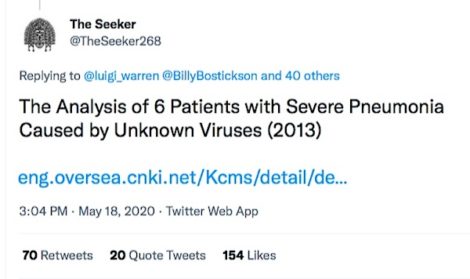
Li Xu detailed their treatment. According to Alina Chan’s English translation, symptoms included fever, coughing, difficulty breathing, chest pain, loss of appetite, and soreness of limbs. Li Xu explained how the Kunming Institute of Zoology was able to extract from the Rhinolophus sinicus bats a SARs-like CoV pathogen.
And with his tweet, The Seeker shifted attention many miles from Wuhan and the official story of the wet market to the miners, the mysterious pneumonia, and bats. Then, The Seeker uncovered a 2016 doctoral thesis from Dr. George Gao, the deputy director of the Chinese CDC, which not only revealed the precise location of the mine but stated that the Wuhan Institute of Virology (WIV) had found samples positive for SARS virus antibodies in the bats. After The Seeker’s tweet, journalists from all over, including the BBC, tried their best to get to the mine. But Chinese police and their roadblocks, along with local residents, managed to keep reporters and researchers at bay.
To summarize elements of the bat controversy: different scientists who sequenced the new virus found matches with previously discovered viruses in bats, BtCoV/4991 and RaTG13, which turn out to be the same. So much of the very extensive research about bat viruses hadn’t been shared. The Wuhan Institute of Virology, which received significant grants from the United States Agency for International Development (USAID) via the New York-based EcoHealth Alliance, had discovered a multitude of bat viruses from the Yunnan province. On November 17, 2020, Dr. Zhengli revised her February article in Nature to include mention of the mine, the miners, the medical theses, testing the samples at the WIV, changing the name of the sequence from the 4991 sample, and disclosing that they had the full genome by 2018, not 2020.
Then, in an interview with the BBC, Dr. Zhengli discounted Li Xu’s account of the miners, their illness, and its relevance to COVID-19: “‘I’ve just downloaded the Kunming Hospital University student’s masters thesis and read it,’ [she said]. ‘The narrative doesn’t make sense … The conclusion is neither based on evidence nor logic. But it’s used by conspiracy theorists to doubt me. If you were me, what you would do?’ [Zhengli] has also faced questions about why the WIV’s online public database of viruses was suddenly taken offline. She told the BBC that the WIV’s website and the staff’s work emails and personal emails had been attacked, and the database taken offline for security reasons. ‘All our research results are published in English journals in the form of papers,’ she said. ‘Virus sequences are saved in the [US-run] GenBank database too. It’s completely transparent. We have nothing to hide.’
So what did the U.S. know? In 2009, USAID’s Emerging Pandemic Threats Program began funding Dr. Daszak’s EcoHealth Alliance for a total of $120 million dollars over 10 years. A portion of the money, directed to counter the risk of pandemics, went to other countries, including a high-profile grant to Dr. Zhengli’s Wuhan Institute of Virology. In 2011 and 2012, Daszak and Zhengli travelled to caves throughout Yunnan and other parts of China collecting bats to be tested for viruses. They discovered seven different varieties of viruses. They experimented with a series of interactions between the viruses and other cells in their laboratory, even modifying the genomes to see whether they could affect/infect human cells.
Chan and Ridley continue the story: “Dr. Peter Daszak … gave an interview in which he asserted that the sample, whatever its name, had remained neglected in a freezer in Wuhan for six years until its similarity to the virus causing COVID-19 was noticed … Only when the match was noticed in January had the entire sequence of that virus been assembled. That sequencing event, he claimed, depleted the sample so that nothing was left for further analysis. The WIV’s Nature paper had given the same impression. This turned out to be untrue. When the raw data underlying the RaTG13 genome sequence was uploaded to the GenBank database in May, its date stamps revealed that its various parts had been sequenced in 2017 and 2018.”
Which raises the question: is the defense establishment of the United States either judiciously funding research into coronaviruses to better protect us and the homeland or surreptitiously trying to figure out how to weaponize these viruses?
Finally, the joint WHO/China investigating team offered up the most likely pathways for the virus:
- direct zoonotic transmission (also termed “spillover”)
- introduction through an intermediate host followed by zoonotic transmission
- introduction through the cold/food chain
- introduction through a laboratory incident
As for direct zoonotic transmission: “there is strong evidence that most of the current human coronaviruses have originated from animals … surveys of the bat virome conducted following the SARS epidemic in 2003 have found SARSr-CoV in various bats, particularly Rhinolophus bats, and viruses with the high genetic similarity to SARS-CoV-2 have been found in Rhinolophus bats sampled in China in 2013.”
And yet, “although the closest genetic relationship with SARS-CoV-2 was a bat virus, more detailed analysis found evidence for several decades of evolutionary space between the viruses. Although many betacoronavirus sequences have been found in a range of bats, isolation of viruses from them is rare, and only a few of the identified full genomes have human ACE2 binding properties.” But the “the zoonotic introduction scenario was listed as possible to likely.”
As for the intermediate host theory: “the evolutionary distance between these bat viruses and SARS-CoV-2 is estimated to be several decades, suggesting a missing link (either a missing progenitor virus, or evolution of a progenitor virus in an intermediate host). Highly similar viruses have also been found in pangolins, suggesting cross-species transmission from bats at least once, but again with considerable genetic distance. Both these putative hosts are infrequently in contact with humans, and an intermediary step involving an amplifying host has been observed for several other emerging viruses.” And the intermediary host theory was considered to be likely to very likely.
The cold chain argument suggests contaminated frozen food items commonly sold in markets, including the Huanan Seafood Market. But “there is no evidence of infection in any of the animals tested following the Wuhan outbreak. Risk-assessments have concluded that the risk of foodborne transmission of SARS-CoV-2 through these known transmission pathways is very low in comparison with respiratory transmission.” Still, the WHO team found that the potential for SARS-CoV-2 introduction via cold/food chain was considered possible.
As for the theory that there was a laboratory release: First, the team acknowledged “We did not consider the hypothesis of deliberate release or deliberate bioengineering of SARS-CoV-2 for release, the latter has been ruled out by other scientists following analyses of the genome.” But they did acknowledge that “Although rare, laboratory accidents do happen, and different laboratories around the world are working with bat CoVs. When working in particular with virus cultures, but also with animal inoculations or clinical samples, humans could become infected in laboratories with limited biosafety, poor laboratory management practice, or following negligence. The closest known CoV RaTG13 strain (96.2 percent) to SARS-CoV-2 detected in bat anal swabs have been sequenced at the Wuhan Institute of Virology. The Wuhan CDC laboratory moved on 2nd December 2019 to a new location near the Huanan market. Such moves can be disruptive for the operations of any laboratory.”
But the team then offered the following arguments against the theory: “There is no record of viruses closely related to SARS-CoV-2 in any laboratory before December 2019, or genomes that in combination could provide a SARS-CoV-2 genome. Regarding accidental culture, prior to December 2019, there is no evidence of circulation of SARS-CoV-2 among people globally and the surveillance programme in place was limited regarding the number of samples processed and therefore the risk of accidental culturing SARS-CoV-2 in the laboratory is extremely low. The three laboratories in Wuhan working with either CoVs diagnostics and/or CoVs isolation and vaccine development all had high quality biosafety level (BSL3 or 4) facilities that were well-managed, with a staff health monitoring programme with no reporting of COVID-19 compatible respiratory illness during the weeks/months prior to December 2019, and no serological evidence of infection in workers through SARS-CoV-2-specific serology-screening.” They then concluded: “In view of the above, a laboratory origin of the pandemic was considered to be extremely unlikely.”
Chan and Ridley add another odd piece to the puzzle: Wuhan hosted the international Military World Games from October 18–October 27, 2019. One hundred countries sent 9,000 athletes, including a total of 280 Americans. A June 23, 2021 Washington Post story suggests that numerous athletes fell sick with COVID-like symptoms during and after the games, adding to speculation that the virus was already spreading in October. The Chinese later used the event to suggest that U.S. military personnel might have brought the virus to Wuhan from “Fort Detrick in Frederick, Md., where the U.S. Army bioresearch program is based.”
While China and WHO were initially focused on exposure from the Wuhan wet market, Dr. Jesse Bloom of the Fred Hutchinson Cancer Research Center noted this data does “not provide evidence either for or against either a natural animal origin for the virus or an accidental lab leak, nor do they reveal the first person infected by the virus.” But the sequences do “support other lines of evidence that SARS-CoV-2 was circulating in Wuhan before the December 2019 outbreak in a seafood market.” [Emphasis added]
So maybe it’s time to turn our primary attention from those first blamed — the pangolin, snake, and bat — and regard them as potential accessories. Then examine the possibility that COVID had leaked from a lab or an error in the field while handling infected bats. Maybe we humans are most responsible. Certainly, the possibility crossed the mind of Dr. Zhengli. On June 1, 2020, Scientific American published an interview with her. When she shared her concern that the Wuhan outbreak might have been caused by an accident, she said she “’wondered if [the municipal health authority] got it wrong. I had never expected this kind of thing to happen in Wuhan, in central China.’ Her studies had shown that the southern, subtropical provinces of Guangdong, Guangxi and Yunnan have the greatest risk of coronaviruses jumping to humans from animals — particularly bats, a known reservoir. If coronaviruses were the culprit, she remembers thinking, ‘Could they have come from our lab?’”
Well, two other Chinese scientists expressed similar concerns. The husband and wife team of Lei Xiao and her husband Dr. Botao Xiao, while working on his post-doctorate at Harvard Med, co-authored the article “The Possible Origins of 2019-nCoV Coronavirus.” They suggested the possibility that “somebody was entangled with the evolution of 2019-nCoV coronavirus” and that “in addition to origins of natural recombination and intermediate host, the killer coronavirus probably originated from a laboratory in Wuhan.” They pointed to WIV and the Wuhan CDC.
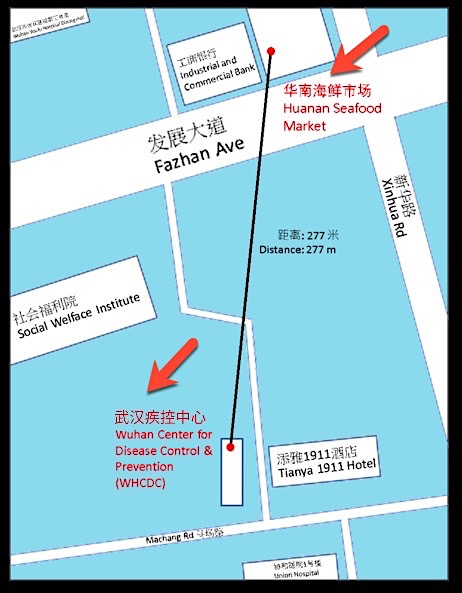
According to the Xiaos, the Wuhan CDC, located only seven miles from the market, “hosted animals in laboratories for research purpose, one of which was specialized in pathogens collection and identification.” There was a researcher who was working with bats, had even been attacked by one, then had to quarantine himself for two weeks because he was exposed to bat blood. The Xiaos revealed that the CDC was performing surgeries on their animals and were taking RNA and DNA samples. It was possible that an accident had occurred there. Then, their posting was deleted from the web.
On May 25, 2020, the Chinese CDC finally acknowledged that it was likely that SARS-CoV-2 was present in the country before the cases in Wuhan. And then, in November 2020, the WHO agreed that the virus was from its onset “well adapted to human transmission.”
Jennifer Kahn of the New York Times highlighted Daszak’s work in a feature on epidemics: “Daszak helped found an ambitious project called the Global Virome Project, which seeks to identify 70 percent of the estimated 1.6 million potentially zoonotic viruses over 10 years, at a cost of $1.2 billion. ‘We found the closest relative to the current SARS-CoV-2 in a bat in China in 2013,’ Daszak told me. ‘We sequenced a bit of the genome, and then it went in the freezer; because it didn’t look like SARS, we thought it was at a lower risk of emerging.’”
As for tempting disaster, in 2018 scientists at the Wuhan Institute of Virology were experimenting with bat cell lines, to better understand how these bats withstand chronic viral infections better than we do. “Viral” explains the great risks: “such cells can harbour latent viruses that can become reactivated during in vitro cultivation when the cells are outside the host and isolated from other components of the immune system that would otherwise control virus replication.” Remember, Dr. Zhengli had been taking swabs from bats as early as 2003. [Emphasis added]
Then there’s the question of whether the WIV actually kept bats in their Wuhan lab. Daszak clearly denied that in April 2020: “The researchers don’t keep the bats, nor do they kill them. All bats are released back to their cave site after sampling. It’s a conservation measure and is much safer in terms of disease spread than killing them or trying to keep them in a lab.”
As with any compelling mystery, it’s hard to know who’s telling the truth. Chan and Ridley remind us that one of Dr. Zhengli’s colleagues told Science Times in 2009: “The research team captured a few bats from the wild to be used as experimental animals. They need to be fed every day. This Spring Festival, the students went home for a holiday, and Dr. Zhengli quietly took on the task of raising bats.’ Then in 2018, WIV applied for a patent for a new, improved bat cage. They got the patent the next year. Interestingly enough, soon after they received another patent for a method of quickly binding, then disinfecting finger cuts.”
In 2020, WIV applied for yet another patent for breeding bats. Chan and Ridley write: “When questioned about allegations that the WIV might have ‘bat rooms’, Dr. Daszak replied on Twitter:
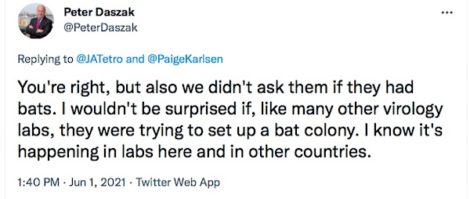
In 2021, DRASTIC found a 2018 video produced by the Chinese Academy of Sciences showing the latest high-security lab at WIV, including shots showing bats contained and clinging to wire mesh.
Now, imagine what could possibly have gone, or might still go, wrong with the allocation of $207 million dollars of the U.S. Defense Department’s Predict program. Predict funded 60 laboratories around the world, trained 5,000 people in virus surveillance, collected over 140,000 samples, and identified 1,000 new viruses. Add to that the 2018 Global Virome Project (GVP) that Dr. Daszak talked about, which called for the Chinese to play a significant role identifying and studying viruses, bats, rodents, primates, and water birds.
By 2020, WIV had collected 20,000 specimens and 630 novel coronaviruses. Chan and Ridley add that the State Department claimed in January 2021 that Wuhan laboratory workers were amongst the first cases of COVID-19. This was followed by a leaked story four months later in the Wall Street Journal that three researchers in the WIV had fallen ill in November 2019.
I’ve talked about just some of the fascinating information “Viral” has to offer, including some very detailed discussion of the ongoing experiments with the very structure of these coronaviruses, as well as the efforts to strengthen their ability to infect in hopes this research will enable us to more effectively combat them. Chan and Ridley discuss the intricate RNA coding of the virus, the three-letter-word codons, and if and how the virus might have been manipulated in a lab.
“Viral” offers a stern warning from the late Stephen Hawking: “Nuclear weapons need large facilities, but genetic engineering can be done in a small lab. You can’t regulate every lab in the world. The danger is that either by accident or design, we create a virus that destroys us.”
We now face the reality of mutating strains of COVID-19. At this moment, there are overlapping surges of both the Delta and Omicron variants. Unlike the vast majorities of the mysteries we read or watch, it seems there’s no turning off or closing the book on COVID. For now, there is no escape.
These are perilous times for scientists and journalists — for those who labor to pursue the truth, employing scientific methods with eyes open, wary of preconceived biases. Today, even urging a more vigorous investigation of the lab-leak theory automatically consigns one to the Donald Trump conspiracy team. But why wouldn’t any sensible investigator pursue with rigorous precision the lab leak hypothesis.
I may still not know the origins of COVID-19, but I learned much from “Viral” — about bats and pangolins, how viruses function and disease spreads, how humans increasingly attempt to make changes in our natural world (for better and sometimes worse), and how politics intrudes far too often as scientists labor to do the best science.
Sometimes a mystery is a mystery.