Editor’s note: Berkshire artist Virginia Bradley continues her reporting on the art scene in Barcelona, where her own work “Rapturous Alchemy” is on exhibit now at the Uxval Gochez Gallery. Click here to read her first Barcelona report.
When considering “Modernist” architects, Le Corbusier, Walter Gropius, Louis Sullivan, and Mies van der Rohe immediately come to mind. Antonia Gaudi certainly does not! But actually, when referring to the Modernists in Barcelona, the term encompasses a group of Catalan architects including architects like Antoni Gaudí, Luis Domènech i Montaner, and Josep Puig i Cadafalch.
During the late 19th and into the 20th century, Catalunya was prospering and Barcelona in particular was filled with a growing number of wealthy patrons who wanted to celebrate Catalunya wealth, ingenuity and independence. Simultaneously, the rest of Spain was in a severe economic depression due to loss of colonial Cuba, Puerto Rico and the Philippines. The conditions were ripe for a Catalan “Renaixança,” a resurgence of Catan traditions and culture.
The Catalan architects led the way with “Moderisme” and created a new architectural language which embraced organic form, nature and bright lively colors. Moderisme was revealed at the 1888 World’s Fair in Barcelona with the opening of Luis Domènech i Montaner ‘s Café building, the first Modernist building. This event paved the way for the bright forms and structures that are the face of Barcelona today. Tourists from all over the globe travel to Barcelona to experience the Modernist’s delightful playful world.
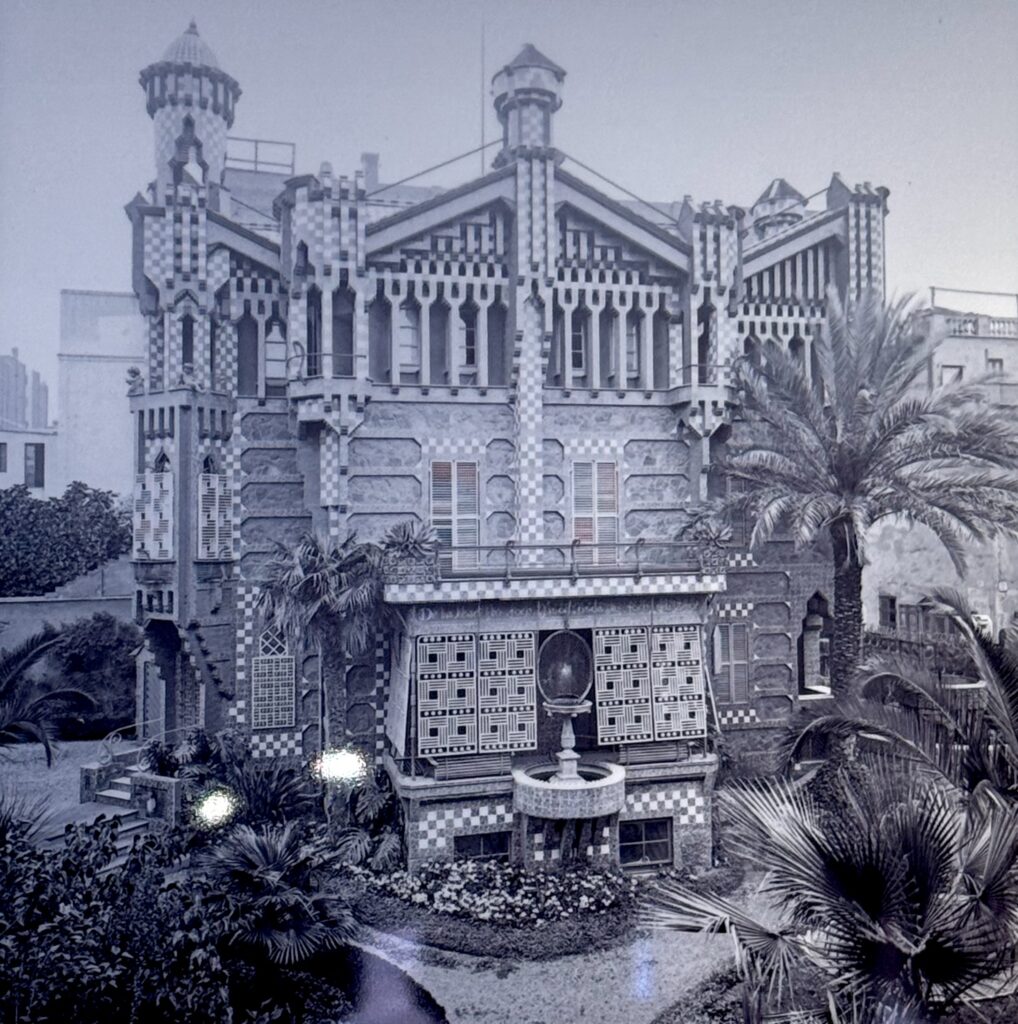
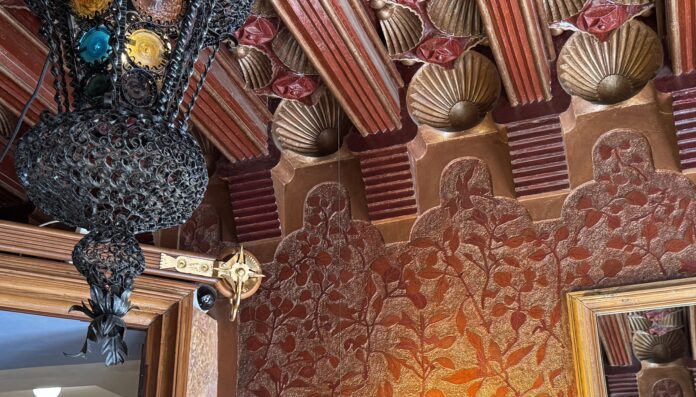
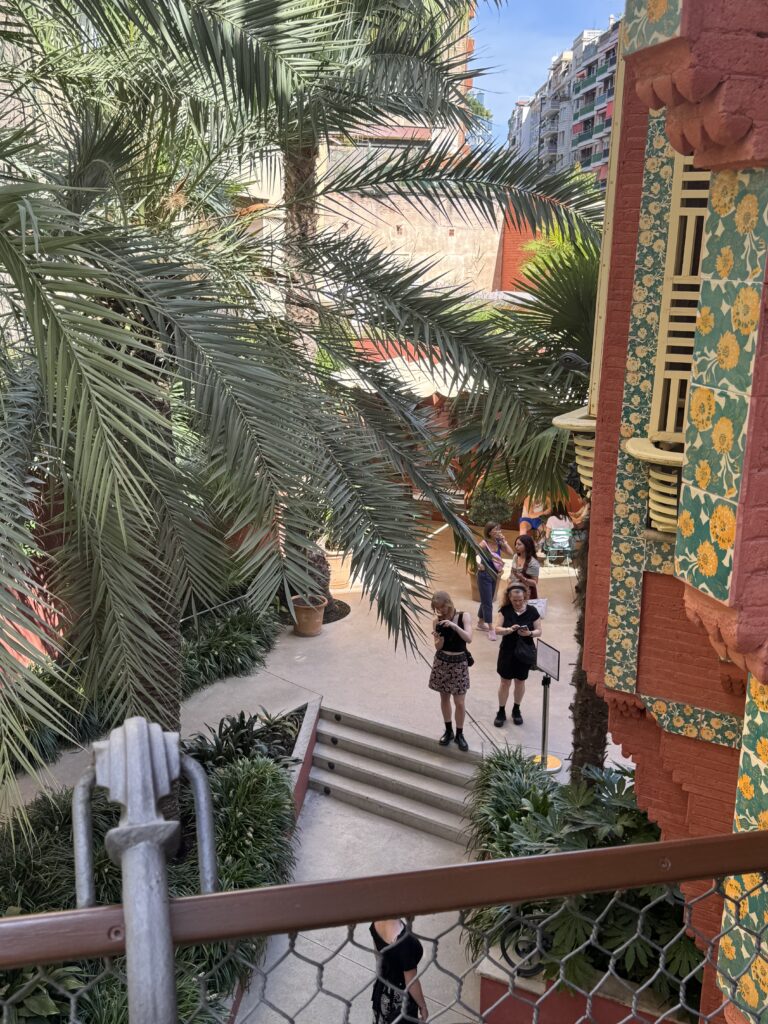
Casa Vicens, Gaudi’s first official commission was a summer residence for patron Manuel Vicens i Montaner. Casa Vicens is one of the best examples of Gaudi’s early work and combines ornamentation inspired by lush Mediterranean plant life inter-mixed with geometry. He uses a variety of building materials in the project including ceramic tiles, brick, wrought iron, wood, and papier-mâché. The ornamental iron work throughout the structure is a marvel in itself.
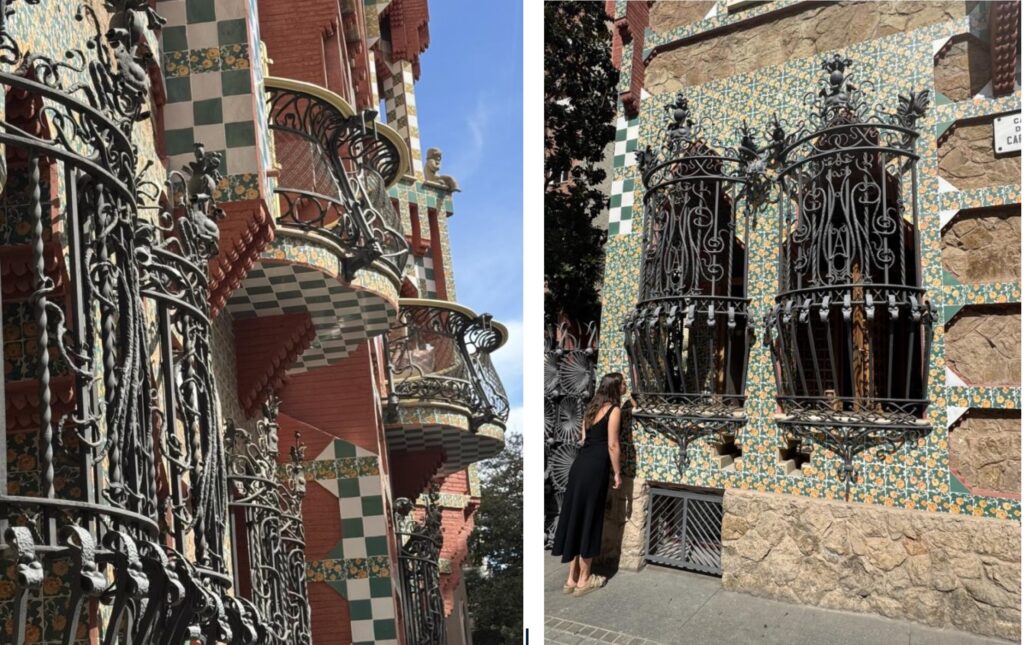
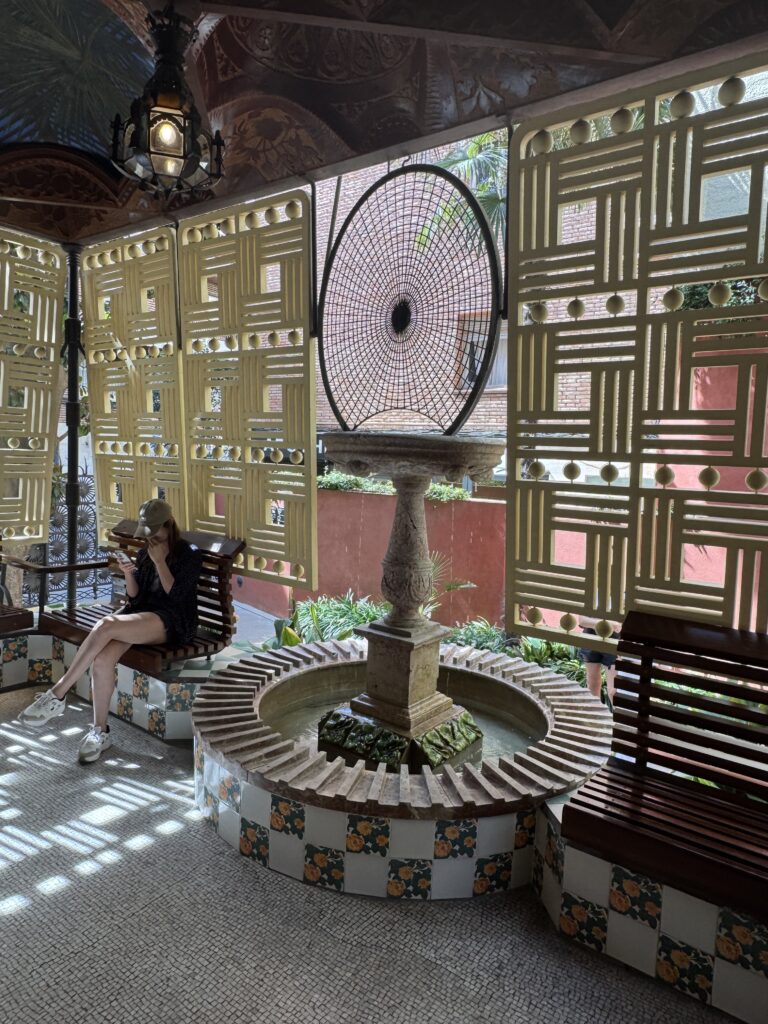
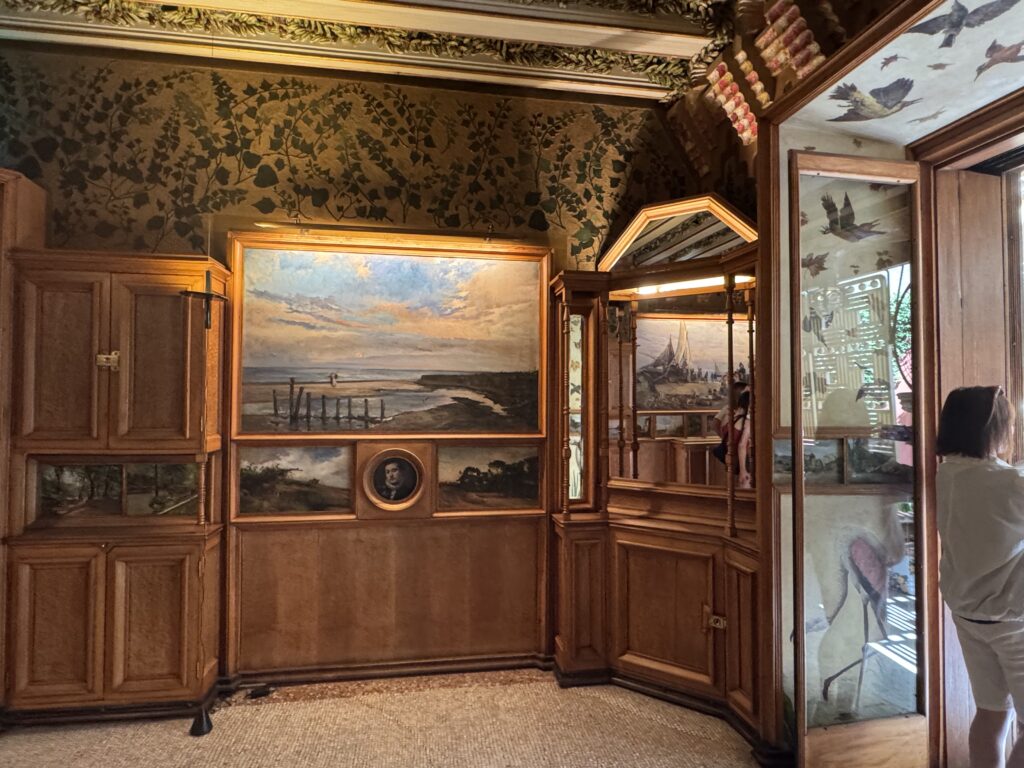
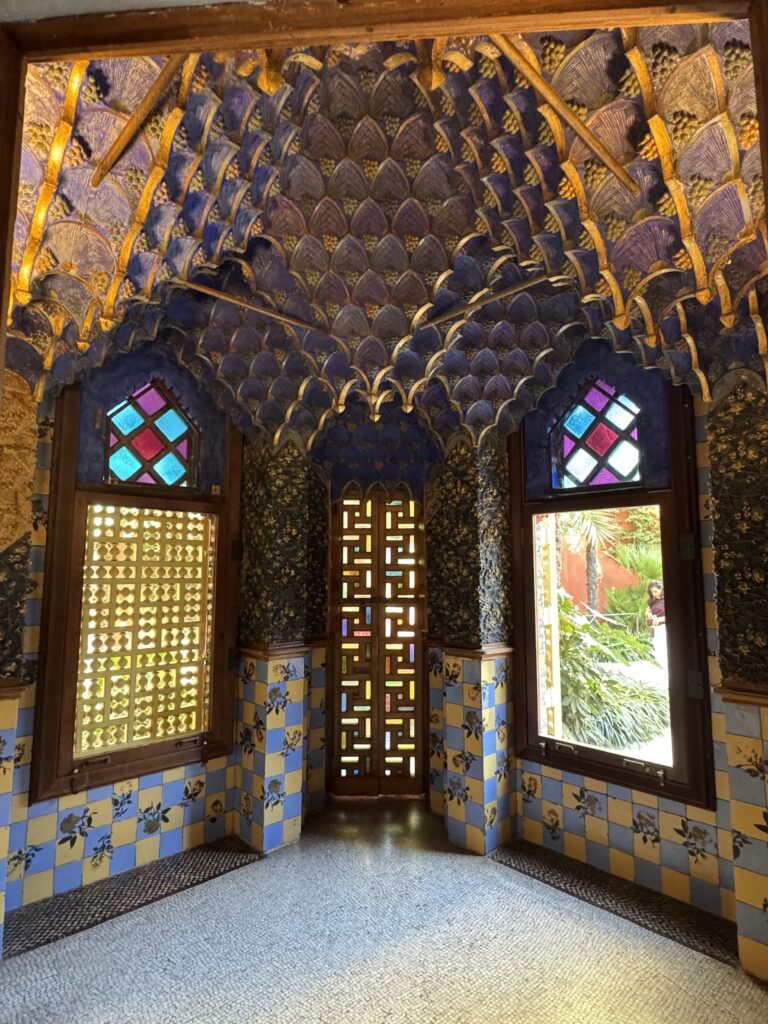
There is consistent attention to detail throughout Casa Vicens. Gaudi is always full of surprises through the repetition of form and color. Often, he utilizes the view from the casa’s windows to create a play between the interior and exterior of the home.
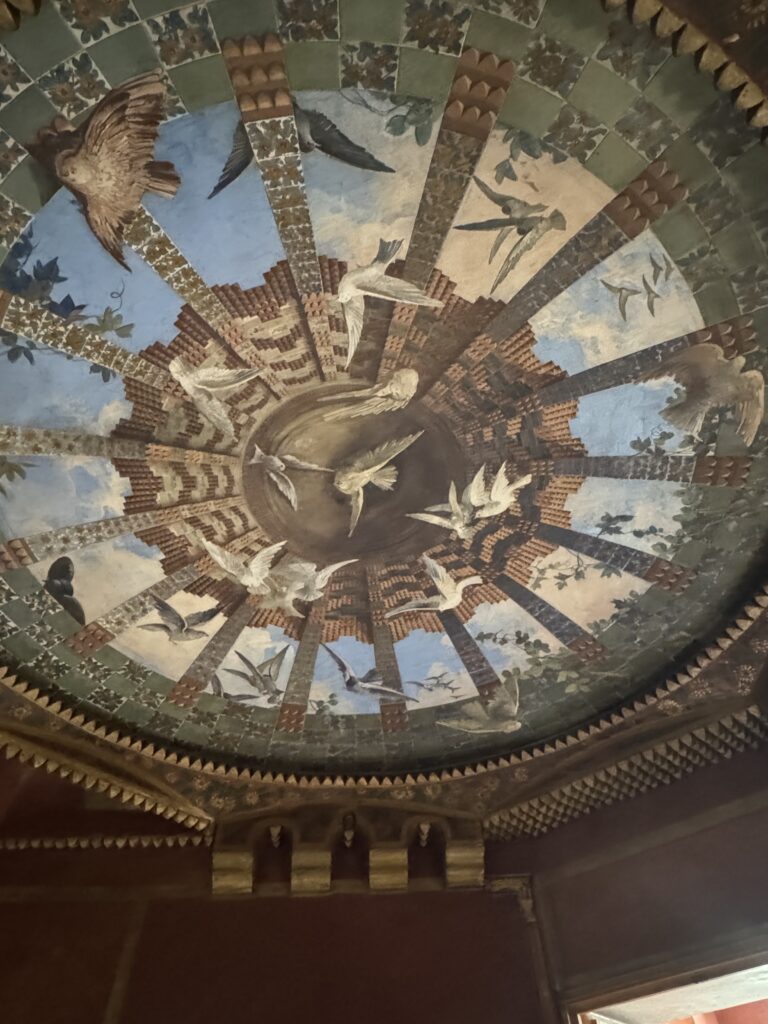
In another small corner room, a painted mural on a domed ceiling becomes an opening to the heavens and another realm.
Gaudi even disguised the chimneys on the roof.
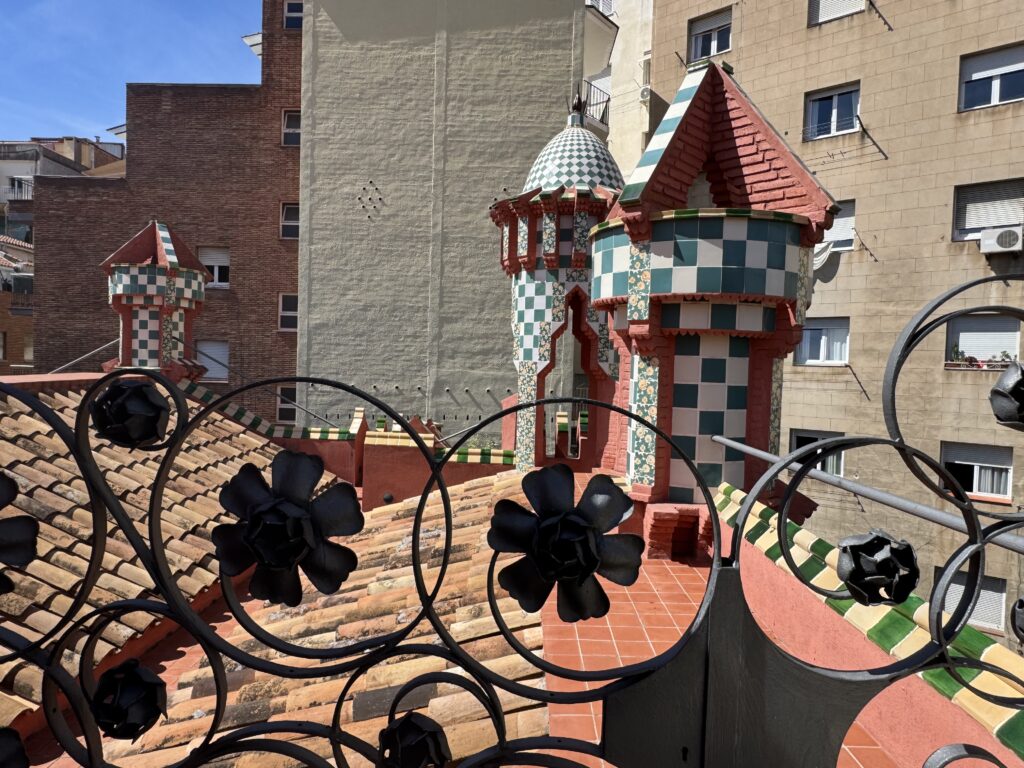
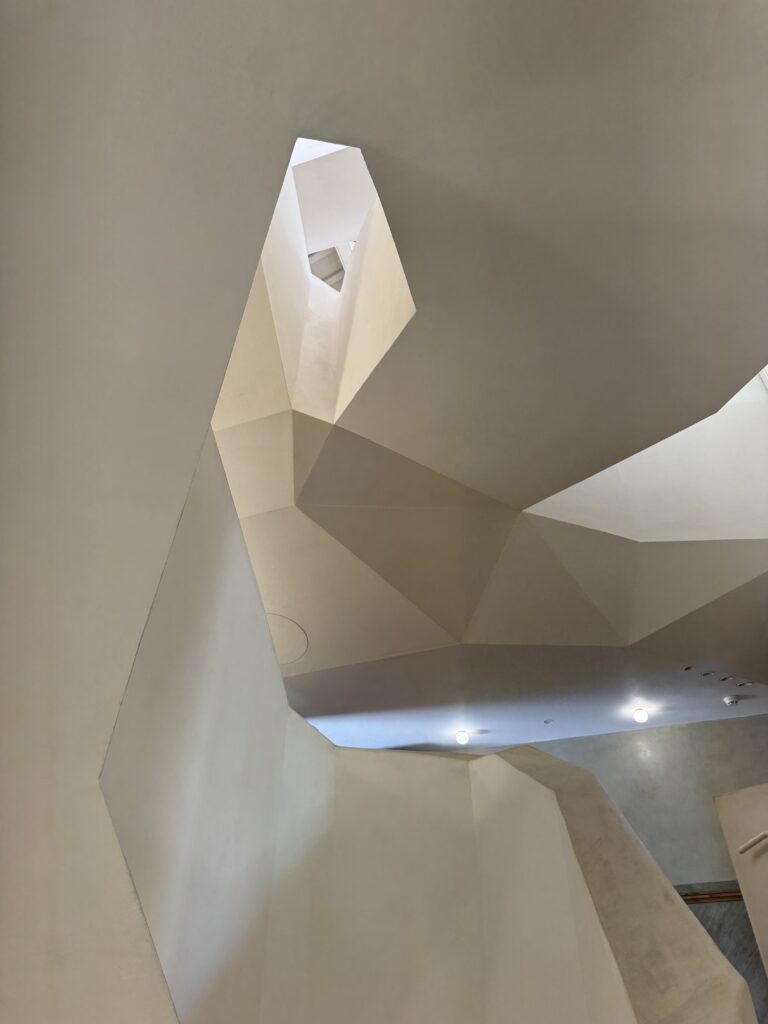
Casa Vicens has had several different owners. The restoration project to return it to its’ original state began in 2011 and the Casa opened to the public in 2017. If you are in Barcelona, take the time and treat yourself to a visit. The home constantly reinvents itself as you move from room to room and explore the interiors from different angles. Gaudi said “he was turning a little summer house into a palace.” Indeed he did.
***
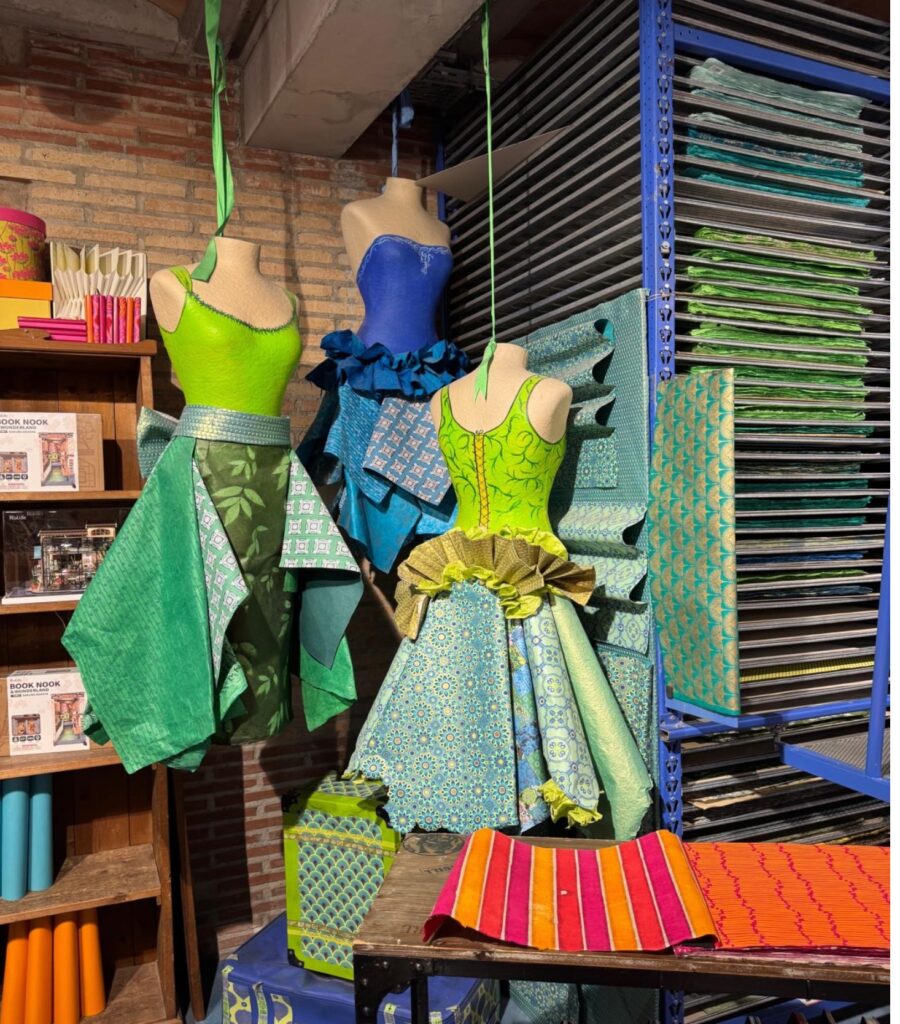
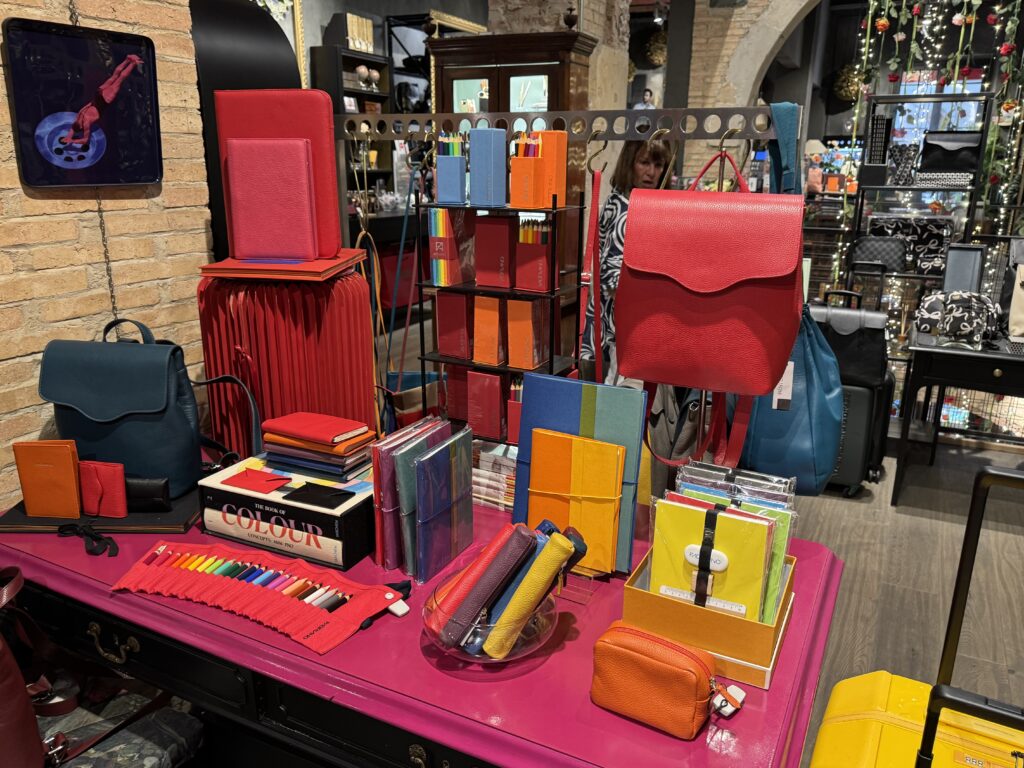
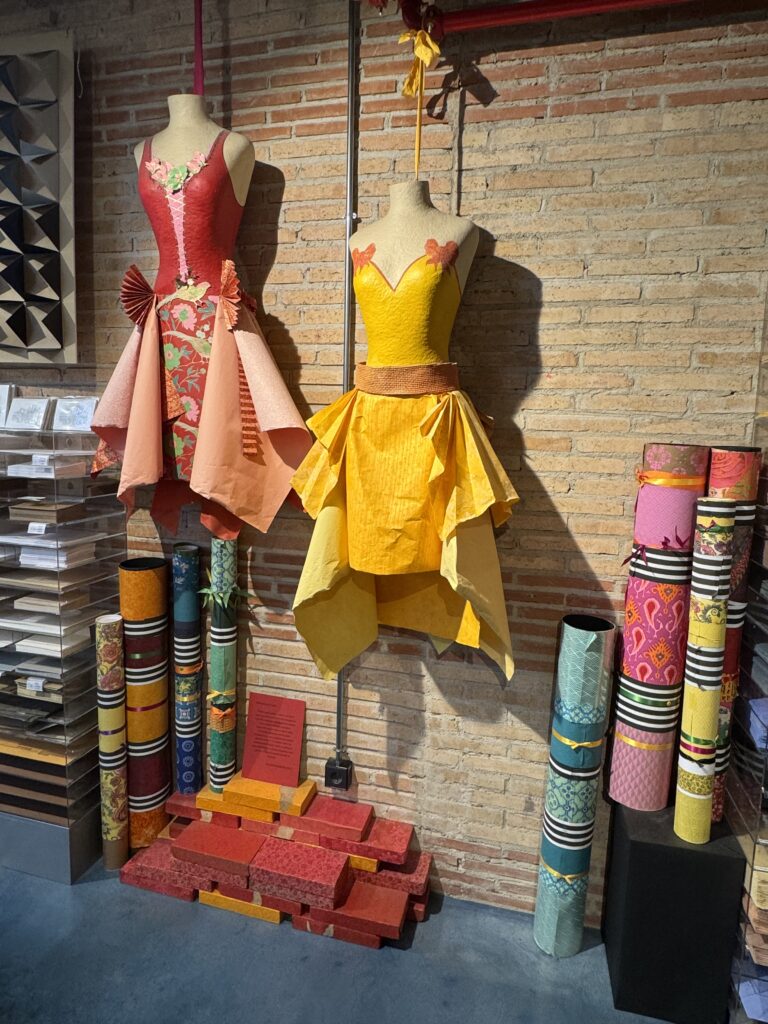
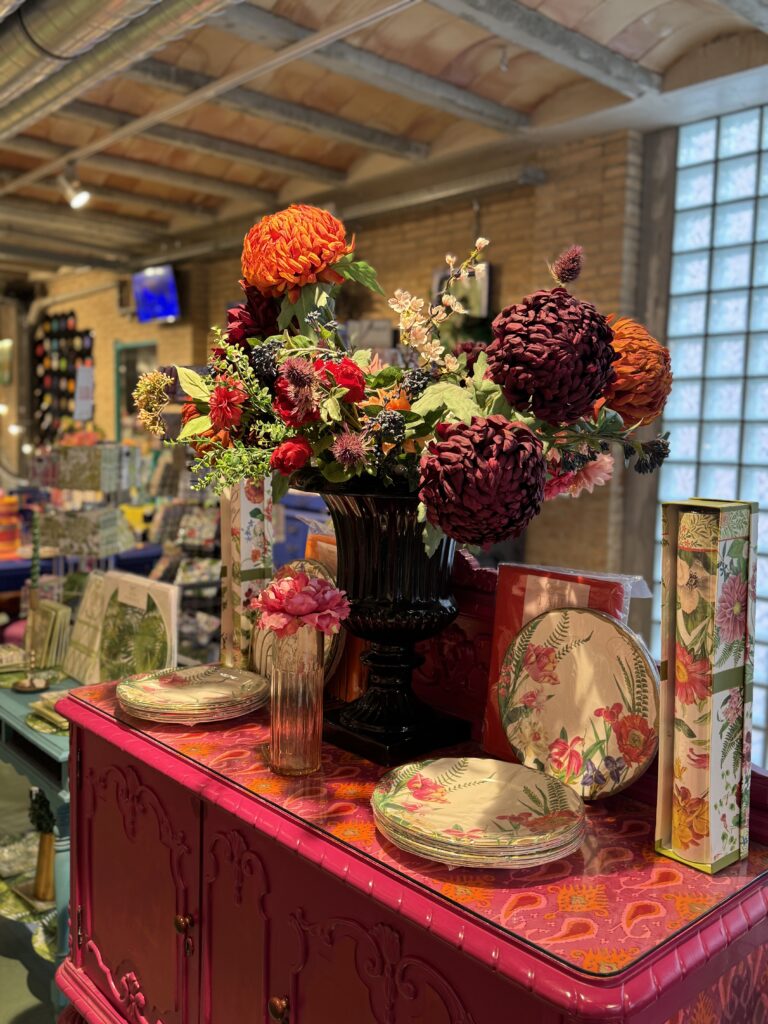
Another taste of color
Diane and I stumbled upon an amazing paper store one evening, RAIMA at Comtal, 27. I have been back three times but haven’t bought anything….yet.
***
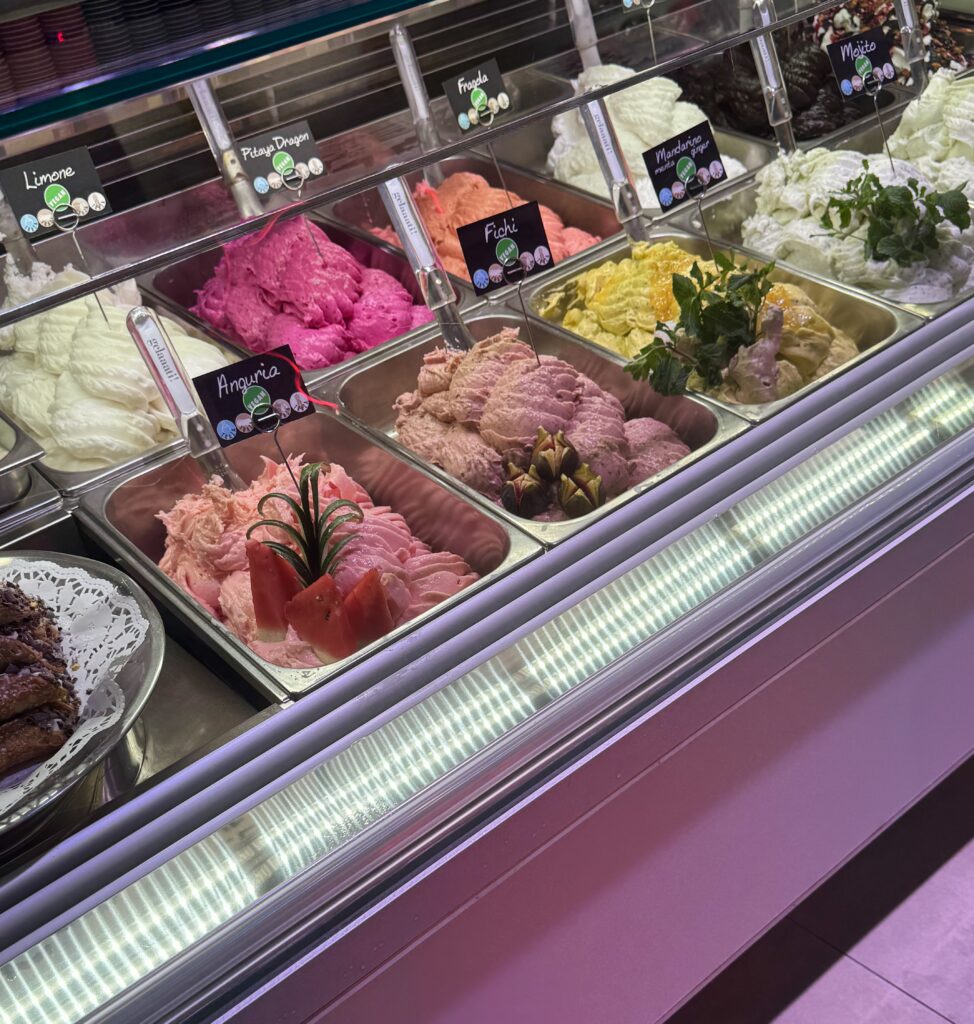
And finally, dessert!