GREAT BARRINGTON — Like a lot of government committees, members of this one work mostly behind the scenes. But, unlike most others, the Regional School District Planning Board (RSDPB) just snagged a six-figure grant from the state to fund its operations.
The board, which is looking into a possible consolidation or merger between the Berkshire Hills and Southern Berkshire regional school districts, was recently awarded a $125,000 grant from the state Department of Elementary and Secondary Education (DESE) under the department’s school reorganization program. This is on top of a $50,000 DESE grant the board, then known as the Eight Town School Consolidation Committee, received in 2019 to complete Phase I of its work.
The two small districts have entered into discussions before about merging, most recently in the early 1990s, and were described by Southern Berkshire School Committee member Art Battachi, who also served during that era, as “a waste of time.”
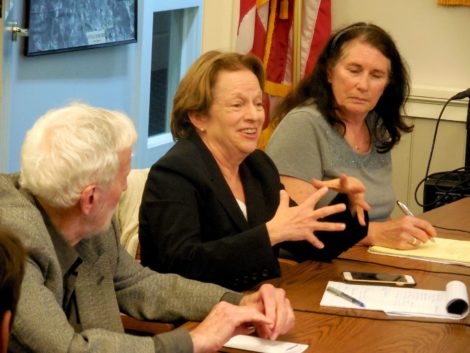
“I do think this is a different level of discussion and study,” RSDPB chair and practicing attorney Lucy Prashker said in an Edge interview. “There have been discussions in the past but not as formal a process of study as this, or as broad a discussion as this.”
The 24-member panel represents the five towns that make up the Southern Berkshire district (Sheffield, New Marlborough, Egremont, Monterey, Alford) and the three towns of the Berkshire Hills Regional School District (Great Barrington, Stockbridge, West Stockbridge). Peter Taylor of Great Barrington, who is also executive director of the Berkshire Taconic Community Foundation, is the vice-chair.
The move toward a merger gathered steam after Berkshire Hills Committee member Rich Dohoney proposed in June 2019 that his district send a letter to SBRSD “for the purpose of either forming, or consolidating into, a regional high school district to serve grades 9-12.”
The letter was followed by a summit of school committee members, held at the foundation’s offices that September, in Sheffield, at which they noted the driving force behind the merger should be greater opportunity for students and a desire “to keep education strong” in the two districts amid declining enrollments, which together include fewer than 2,000 students from kindergarten to grade 12.
The SBRSD School Committee members made it clear they were only interested in a K-12 consolidation, while Berkshire Hills School Committee chair Steve Bannon emphasized that, contrary to rumor, his district was not interested in a merger so the five towns of the SBRSD could share in the costs of a new Monument Mountain Regional High School.
However, if a new Monument was built with a combined district, it would add up to 6 percentage points to the level of reimbursement from the Massachusetts School Building Authority or, as Berkshire Hills Superintendent Peter Dillon estimated, $4 million to $5 million in additional state aid for a new high school.
The regional planning group continued to meet through the pandemic. Its members include three persons from each of the eight towns, chosen by each town’s moderator, with at least one member being a School Committee member. Eventually, subcommittees were formed.
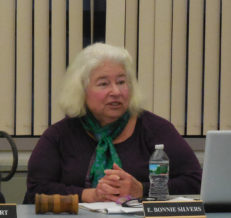
The board received an initial $50,000 DESE grant to conduct Phase I of its work: “hiring consultants to help gather data about the fiscal and educational ramifications of merging the school districts, the impact of continued declining enrollment, and the condition of school facilities,” Bonnie Silvers, a member of the both the board and the Southern Berkshire School Committee, wrote in the Sheffield Times.
“Clearly, this is the furthest these discussions have moved in decades,” Silvers said in an email to The Edge.
“It’s like trying to manage the building of a cathedral,” added member George McGurn, who also chairs the Egremont Select Board and was once the dean of the Boston University Business School. “Twenty-four members are not easy. On the other hand, it’s easier than the 150 tenured faculty members I used to have to deal with.”
Prashker, managing partner at Cain Hibbard, is accustomed to managerial challenges, and said one of her priorities is to hire a project manager and facilitator to do the legwork required to make the endeavor successful. The project manager and facilitator could be the same person, or the positions could be filled by two people. The board sent out a request for proposals for the position earlier this month, with a deadline of March 31 for responses.
“We are going to have a lot of folks working on this simultaneously and we really need someone who can coordinate all of that work and stage it appropriately,” Prashker explained.
Merging school districts is a complicated process, as three experts brought in to discuss the process told members of the planning group in October 2019. The colorful Glenn Koocher, executive director of the Massachusetts Association of School Committees, cautioned that regionalization in general is “an extremely process-heavy enterprise” that “requires Camp David-style negotiations, exceptional interpersonal collaboration, the ability to deal with multiple outlier personalities wherever they happen to be.”
Phase II, which the board hopes to complete by the summer of 2022, includes studying the educational and financial feasibility of various consolidation scenarios. The state funds will be used primarily to hire a project manager/facilitator and other outside consultants.
There is also money allocated to conduct surveys and focus groups to gather input from community stakeholders. The board has also asked the eight towns to place an item on the warrants for their annual town meetings to approve additional funds for Phase II work, Silvers said.
As welcome as the news of the $125,000 grant was, the process has taken on a renewed sense of urgency because the state is requiring the funds be expended by June 30.
“That gives us a very tight timeframe for getting a lot of work done, so we’re trying to move forward as quickly as we possibly can,” Prashker said, adding that regionalization studies of this type generally take at least two to three years.
By spring 2022, Silvers said the board will begin procedures for gathering community reaction. After that input, the board plans to make formal recommendations to the selectboards of the eight member towns.
McGurn agreed about making the hiring of a project manager a priority and that there are obvious reasons why the state has been so generous in funding it.

“The state is very responsive because, in the abstract, they think consolidation is a good idea,” said McGurn, who added that the merger of two districts is certainly preferable to the recommendation of the Berkshire County Education Task Force, which proposed in 2017 that the county consolidate its 19 school districts into one countywide district.
“That went over like a lead balloon,” added McGurn, who chairs the board’s operations subcommittee. “It has got to be a town process. Eventually, it’s got to go to eight town meetings.”
As with any merger talks, the devil is in the details. Experts say closing school buildings is where most of the savings will be. But Prashker emphasized that “consolidation can happen with or without the closing of buildings. We haven’t gotten to that point yet.”
In her article for the Sheffield Times, Silvers said, “It is critical that we do not make a very costly mistake” and, in the end, any merger or consolidation must “result in improved educational outcomes for our students.”
“Some cannot imagine giving up being an Eagle or a Spartan and having a new mascot, let alone traveling to a different school,” Silvers wrote. “At the same time, we know taxpayers ask that our districts keep annual budget increases within sustainable levels. It’s a tall order to accomplish.”
Prashker said the board’s next meeting has not yet been set, but will probably occur in mid-April, when the board hopes to have responses to its RFP for the project manager/facilitator position and will be in a position to make more decisions.