The New York Film Festival (NYFF) press screenings at Lincoln Center this fall offered a more-glorious-than-usual bounty of first-rate films. I sat through three weeks of multiple screenings (the first week sometimes five) a day (sometimes an additional one in the evening). Enviable, you may think, but not easy, and it goes without saying that there’s just no way to cover it all here.
The most striking thing about this year’s festival to me is the huge strides women filmmakers have made. After writing a book about women directors in 1988, I have watched through disappointing decades when the miniscule number of women making films seemed to be unchanging, but lately every new year at the NYFF has seen an increasingly strong showing in the numbers and the quality of women’s work. And this year the presence of women filmmakers is nothing less than stunning. So much so that I have to leave out a lot, guided only by what meant most to me.
Perhaps I should start with an exciting film with a large subject, likely to achieve big success and big audiences, but the less commercial films are closer to my heart, so I must start with two very quiet films by two women directors I particularly admire, American Kelly Reichardt and French Mia Hansen-Love. Reichardt’s “Showing Up,” like her marvelous “Old Joy” and “Wendy and Lucy,” is its own unique self, with a lot of drifting about and not much of a plot trajectory. But with Reichardt, the quotidien gradually turns into poetry.
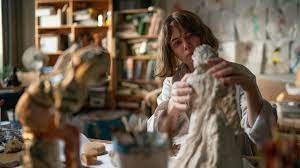
Our heroine here is Liz, with a gorgeous performance by Michelle Williams, who has most convincingly transformed herself into a dowdily dressed, somewhat defeated-looking artist, part of a loose community around the Oregon College of Art and Craft in Portland, Reichardt’s home base. The streets with their skateboarders, a geodesic dome on which colorful images are projected, a young woman who spent a year knitting a brilliantly colored full body suit, all remind us of the counter culture world there that we are entering.
The film has quiet humor, though never at the expense of the characters, and a lightness of touch. We witness a flurry of preparations, the process of art-making, for gallery shows that are about to open. Those involved are not the kinds of artists who end up in museums or Sotheby’s auction houses, but they are spirited, talented, hardworking, and produce colorful, lively, and quite beautiful work, as we see during the preparations for the shows, and also as the camera lingers on a classroom of weavers, or of people dyeing fabric or at potters’ wheels, or of painters working from a male model, shown with full frontal nudity for a change.
The buzz of excitement, concentration, hard work, trepidation, is so truthfully caught (a way of life I know something about from my time at the Art Students League in NYC and as a painter in the Berkshires). Indeed our first glimpse of Liz, the first image in the film, is of the intensity of her concentration and of her hands-on shaping of the clay. The camera pans repeatedly over Liz’s clay girls, especially after they are glazed in a kiln, from which they emerge really alive and wonderful to look at. But equally engaging is her process, as the camera patiently watches as she intently adds arms to an armless figure.
Reichardt’s camera looks randomly meandering but it is anything but that, as it wanders over the joyful work of these people, and feels like a kind of homage to the homemade, the handmade. Which in turns seems akin to the kinds of films Reichardt herself makes—writing, editing, directing all herself and in total opposition to the smoothness of a commercial product. Of course someone like Liz survives by holding a “real” job, in her case a secretarial job under her own remote mother.
The job is not a happy one and life keeps interfering with her need to work on her art. Indeed, apart from the art, her life feels pretty bereft: an always hungry cat; a rental space without hot water; no boyfriend; no real friend; an alienated family with a familiarly kooky, separated father played by Judd Hirsch; a brother who seems schizophrenic; and a mother who justifies and denies his strange behavior and exalts him above Liz (who uncharacteristically expresses her quiet resentment in one scene). She is herself touchingly protective of the brother, but there is otherwise very little sense of family support. In Reichardt’s lovely immersion in the quiet daily details, a small incident of the cat damaging a pigeon’s wing unexpectedly weaves through the whole film, and by the end it becomes movingly clear that the broken bird is Liz herself.
The blackened side of one of her clay girls who is cooked wrong in the kiln, is another instance of woundedness, as well as—in Liz’s dismay over the kiln accident—of the kind of perfectionism that art is built on. The figures she creates (really the work of Portland ceramicist Cynthia Lahti, made especially for the film) are rough, but done with intent, marvellous purpose, like the film itself, a lovely movie, which like most of Reichardt’s work, ends in a modestly hopeful and life-affirming way, that feels just right. She is without question one of the very best filmmakers working in America today.
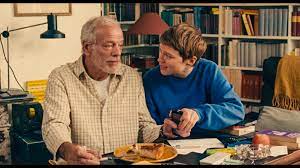
Mia Hansen-Love’s “One Fine Morning” stars Lea Seydoux, an actress who was blonde-tressed flamboyance itself in Bruno Dumont’s film “France” (a dazzler now on Amazon), but here as Sandra, hair cropped and dulled, casually dressed, she is made to look like any other pleasant looking young Parisian woman. Hansen-Love, like Reichardt, works very sensitively with the quotidian — the routines of a single mother, husband dead five years, picking up her daughter from school or at work as a translator—at a veterans ceremony at Normandy, or a dull conference, work that gives her little. And she attentively visits her ill old father Georg, once a beloved professor of philosophy, played wonderfully by Pascal Greggory. One fine morning, the mind he lived for, pursuing clarity and rigor above all, can no longer put words or thoughts together—can’t even remember, in the film’s opening moments, how to open the door to his devoted and beleaguered daughter. And one fine morning, passionate romance unexpectedly falls from the sky into Sandra’s life. The love affair is all consuming, and the woman’s sexual hunger is unusually central, but Clement is a married man who also has a child, a decent man fraught with understandable guilt. So as always in Hansen-Love’s films, there’s daily struggle, indecisiveness, pain, and joy—but a joy not to be counted on.
Clement has the lovely job of pursuing and analysing extraterrestrial dust particles, which can entail exotic travel, and the posters in his workplace are of glowing outer space, just as she herself is grounded and is a bridge for others, especially her father. Her continual efforts to help him find a next word, even as she sees he is drowning, are poignant. Equally moving are the scenes when he—blind and confused—can no longer live on his own, and he is moved from one sad nursing home to another. The economic realities, the perfectly chosen inhabitants who look utterly real and right and familiar but each disheveled and lost, wandering into rooms not theirs, not knowing where they are or who they are. The dilemma of what to do with his books that meant everything to him. In Hansen-Love’s earlier terrific film, “Things to Come,” (also now miraculously available on Amazon), she had the remarkable empathy as a young woman filmmaker to enter fully and compassionately into the being of a middleaged woman professor—and here similarly to look so directly and truthfully into the cruelest aspects of old age. She fears for herself if her father’s disease is hereditary but admits to Clement she is too afraid to check online, and she gets him to promise her a medically assisted death by a lake in Switzerland if this should happen to her.
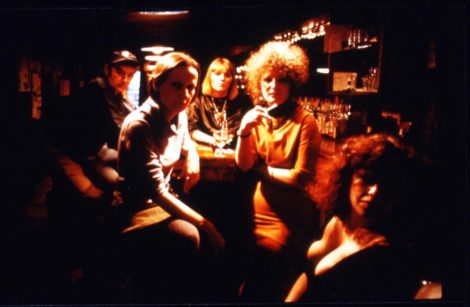
Moving on now to the women’s films that are likelier to come to the Triplex and/or get nominated for an Oscar: “All the Beauty and the Bloodshed,” honored as the centerpiece of this year’s festival, is a really, really good, very well made documentary by Laura Poitras with the collaboration of Nan Goldin. The latter’s life and photography are at the center of this film, along with a moving attack on the Sackler family, owners of Purdue Pharma, and all the institutions—the great museums, the government itself—that looked the other way while hundreds of thousands were misled into addiction to Oxycontin and Fentenyl. We watch the inspired protests, modeled on the Act Up demonstrations over AIDS, and hear the disastrous statistics of the dead and the hooked, and the monstrous company’s strategems to make ever more money and to escape any accountability. But what makes the film so involving is the way it is entwined all the way through with Nan Goldin’s life story, the conformist suburban home she was born into, mother’s concern not to let the neighbors know, the older sister who rebelled, often sexually, and in a repressive time was wrongly and repeatedly institutionalized, ending up killing herself at age 18. So it’s clear why Goldin, 7 years younger and very close to her sister, felt that her sister pointed the way to rebel. It is fascinating to understand this as the story behind that body of startling motley photographs one saw in museums over the years, of drag queens and other wild looking—glittery or utterly battered and strung out—young people, often nude, on grungy beds, in grungy rooms. Goldin ended up in New York, finding a world, and making a work life by photographing everyone around her, and herself, showing all, uncensored, unfiltered, a kind of photography not seen before and that no gallery would take until quite late. So to make money to buy raw film, she worked all kinds of jobs, selling photograph buttons, semi-nude bar dancing, even a brothel as she now admits. She is as honest in showing herself in her photographs, even having sex, as she is with the many friends she includes, whom we hear a lot about. This life was centered on the Bowery in New York, she’s there through all the terrible AIDS dying, and then being prescribed Oxycontin after a surgery, she fell into a drug abyss which took years to emerge from. She organized an opposition, a group called P.A.I.N., participated in political hearings, die-ins, prescriptions dropped like confetti at the Met and the Guggenheim. Because the Sacklers sanitized their horrific doings by giving hugely to museums and even to Government health agencies, large groups of protestors demanded that the institutions refuse this filthy money, once they were forced to deal with how it was made. And they insisted that the various Sackler-named wings and galleries in museums take down the name. A slow battle, but gradually achieved, in Boston, in New York, even at the Louvre. And all through this, Nan Goldin’s by now very wellknown name in the art world gave the whole effort far more attention than it would otherwise have gotten—though that use of her name was early on a big risk that she took. The film celebrates the victories, but makes clear that the opioid crisis still exists and is still killing people. But the great thing about the film is that it is captivating to watch, shaped as it was by these two so talented women, Poitras and Goldin.

Two excellent films deal with sexual abuse. “She Said” is beautifully directed by Maria Schrader (a German director, much awarded there, who made “Unorthodox” for television) and what looks in the credits to be almost all women’s names as screenwriter, producers, cinematographer, director of photography, production designer, etc. Extraordinary. The film’s format is familiar, like the two male journalists tracking down the Nixon Watergate scandal in “All the President’s Men” (1976), or the more recent Boston Globe team of journalists investigating the sexual abuse of children by Roman Catholic priests in “Spotlight” (2015), to mention just a couple. But this has a very different feeling because here it’s two women journalists tracking down other women and trying to convince them to tell their stories of horror working with Harvey Weinstein. Because we all watched these events unfold in real life, and know the story, it’s impressive that the film finds ways to make it all fresh, dramatic, very alive, the pacing fast, cutting from person to person, to city image, to Times newsroom, voiceovers carrying one line of plot while we are watching something else on the screen. Zoe Kazan as Jodi Kantor and Carrie Mulligan as Megan Twohey are immensely likable tenacious, struggling with children and childbirth and the work they are totally committed to, and are wonderful to look at, as the two New York Times journalists who finally crack the ugly story of Weinstein’s terrifying pathological behavior, sexual assaults and cover-ups, and vengeance-taking. You don’t expect a lot of depth from a film like this, but it works in exciting ways with New York bustling streets, with abstract patterns of window lights at night, with striding purposeful women determined to get the job done, and to get justice—even if it means leaving two small children in the arms of an accommodating husband to take a plane to London in the hope of getting three women there to talk on the record. Two of these give particularly strong performances: Samantha Morton’s sharp Zelda Perkins about her ultimately futile attempts to make conditions to stop Weinstein’s behavior, and an extraordinarily moving performance by Jennifer Ehle, as Laura Madden, bravely allowing her name to be used as she’s about to have breast cancer surgery. The Times overseers—Patricia Clarkson as editor, and Andre Braugher as Times head—add to the sense of a great professional job so very well done.
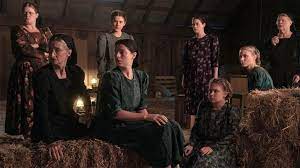
Sarah Polley, who made the excellent “Away From Her,” and in a more recent film (“Stories We Tell“) talked about intimate family secrets in her own personal life, adapted her new film “Women Talking” from a novel based on a real life situation. A group of eight women in a closed religious Mennonite colony, cut off from the world and even from literacy, discover that they have been repeatedly drugged, raped, and otherwise sexually abused by several men in the same community. All the men dismiss their bruises and bleeding, and when one of the perpetrators is actually caught in the act, and the women call the police, the other men think only of bailing all the culprits out of jail, and demand that the women ask forgiveness or they will be cast out of the colony and lose hope of the kingdom of heaven. So the women meet in a barn, ranging in age from elderly to quite young, dressed in modest loose fitting vaguely archaic black or print dresses, to discuss what to do. They see three choices: Do nothing, stay and fight, or leave. And these women, who have never had a voice, create a democratic structure for decision-making, by voting, and then talking at length back and forth. An active and alive camera prevents this from being static and feeling too talk-y, and while Polley is intent on respecting where everyone is, including religiosity, that doesn’t distance the issues and the discussion, which strongly resonate with our present concerns. The film is bracketed by a voice-over, words directed to a baby, ending “Your story will be different from ours.” The question the film raises several times is how to break the world we live in and make a new one. The concluding high overhead shot is accordingly very powerful and full of hope for a better time. In the press conference afterward, Polley said that Frances McDormand, a producer of the film, also with a small acting role as one of the “do-nothing” women, expressed surprise at how epic the film seemed, and Polley said we are used to films about war or football opening up to the whole world, and that though she herself generally veers away from bombast, this subject certainly should be treated as hugely important. Sarah Polley is a wonderful talker, I should add, and made reference to her own scarred development. In fact, there was a fascinating article by her in the Guardian recently about her experience as a very young child actress made by Terry Gillliam, one of the adored Monte Python group, to experience terrifying and dangerous stage effects, that affect her even today. In the spirit of “Women Talking,” she writes to him, trying by making him aware to protect another child actress he is using, but unable to get through to him at all, aimiable and civilized though his immediate reponse to her is. What was most impressive to me from the press conference—attended by the director and many of the actresses (among them Rooney Mara and Claire Foy)—was the emphasis on women listening to, hearing, one another. The performers repeatedly commended Polley for creating an atmosphere of profound respect for the women to listen to one another. Also memorable, Polley’s happy sense of finding, from McDormand, a new model for filmmakers with kids—of spending 10 hours a day at work but still being able to be with the children at night. There’s one man in the film, played a little too sweetly by Ben Whishaw, but clearly all this is strikingly the result of WOMEN talking.
There’s no way to cover the whole whirling wonder of films by women well worth seeing. There is Margaret Brown’s “Descendant,” an important documentary about the last slave ship that arrived in Mobile, Alabama in 1860, with 100 kidnapped Africans, illegal for some decades, so the ship was deliberately sunk, and a Black community of the survivors who settled in a nearby area, which they called Africatown, now talk about it. Then there’s Carla Simon’s appealing “Alcarras,” about a Catalan peach farm with a warm extended farm family that for generations has worked that farm, about to be destroyed for solar panels. Chinonye Chukwu’s “Till,” about the 1955 Mississipi murder of Emmett Till. Alice Diop’s “Saint Omer,” about the trial of a Black woman who has killed her own child. Marie Kreutzer’s “Corsage,” an Austrian film about a restless melancholy queen. “Stars at Noon,” by Claire Denis, always an interesting director. “Aftersun,” by Charlotte Wells, about a daughter-father attachment. And more. And these just on the Main Slate feature films, not the other categories of film at the Festival.
Of the festival films directed by men, most special to me is Iranian director Jafar Panahi’s work. “No Bears” starts off with a light hearted stroll along a Turkish street with food peddlers and a couple of musicians, takes a number of whimsical turns, and ends by breaking your heart. The great director himself is the central character, he has in real life been repeatedly imprisoned, for a long time banned by the government from working, and has gotten around the restrictions every way he can, to keep producing his wonderful films. (His son made a marvellous debut himself at the last NYFF with “Hit the Road,” again now miraculously available on Amazon, and really dealing with similar material and tone.) In this film, Panahi has assistants working with him, and for a few days has rented a space in a village close to the Turkish border, a narrow provincial world very different from sophisticated Tehran (though the news currently coming out of Tehran is horrific too). Much of the film’s drama comes from the yearning and difficulty of crossing the border. Panahi’s process within the film: keeping one’s head down and yet directing actors long distance through a computer from the rented room, giving cameras to others to record ceremonies and provide him with material, and trying to steer clear of the authorities. However, each strand of plot develops painful complexities, there’s a strong sense of the darkness closing in, and though the Panahi in the film—when warned—hastily drives away, the real man was sentenced to 6 years in prison just this summer. The wonder is how alive and actually entertaining his work is for all the pain it conveys. What is fiction and what is documentary here is not quite separable, but what is clear is that Panahi is directly communicating the cost of a repressive regime watching and threatening every movement of its most creative and talented artist. And he does it in a way that is humorous, full of dignity, and immense humanity.
Year of production : 2021
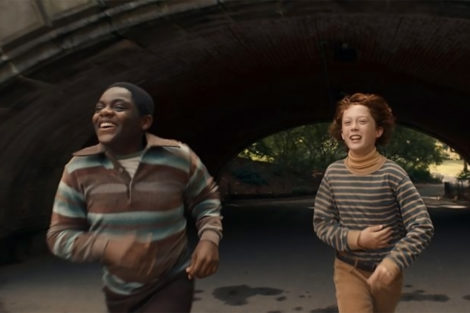
While Panihi’s film will unfortunately reach limited viewers, James Gray’s “Armageddon Time” should find wide audience interest. We are given a young 11-year-old boy, Paul Graff (Banks Repeta), growing up in a Jewish family in 1980 Queens. The film, strongly autobiographical, is rather conventional in form, a bit simplistic, a bit too broad (which will make it the more accessible). Yet when Gray said repeatedly in a press conference that he was trying to tell the full truth about families (with all their rage as well as love), the fact is that he does do that in a way that is startling. He also wanted honesty about the things we do that make us uncomfortable and that we’d rather not look at (like going against our sense of right by turning away fearfully from someone who is not acceptable to others). I think that struggle for largely autobiographical honesty makes the film something special. The parents look decent, responsible, caring, loving as the world defines those things, and yet they are blind, unable to understand their child. His father punishes him inappropriately and with a terrifying eruption of rage. He’s an awkward man (played effectively by Jeremy Strong), a working man aware of being looked down on as lower class by Paul’s mother’s family, and he admits at one point that he doesn’t know the right way to deal with his son—who wants to be an artist, has a friendship with a black boy, and becomes increasingly rebellious. There are many notes struck in this film that reverberate for anyone who grew up in a similar family. (What doesn’t reverberate is the Jewish mother, though played by Anne Hathaway, not intervening in the beating of the child.) On the other hand, Paul’s Black friend, Johnny, is raised in poverty by a grandmother, who now can no longer take care of him, no mention of parents, siblings, the only Black child in the class, so stripped of everything that he makes Paul’s schoolteacher grandparents’ savings appear to be opulence. So one of the film’s central themes is the unfair disadvantage of the Black child. And you do feel vividly at various points how much more dangerous the world is for Johnny than for Paul, a theme very much on people’s minds these days. One could say much more about this film, as about many of the others, but this piece is already very long. All in all, I found “Armaggedon Time” a mixture of the predictable and the revealing, and an engaging experience.
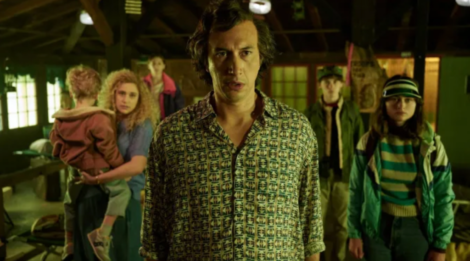
America’s malaise features centrally in Noah Baumbach’s “White Noise,” which has pride of place in this year’s festival, awarded the honor of opening it (as it opened the Venice Film Festival in August), and attracting overflow festival audiences. The director’s father, Jonathan Baumbach, a writer and film critic, lived with his wife in Great Barrington for many years until his death in 2019—so Noah has ties to our Berkshire area too. For this film, the director went very much out of his comfort zone in taking on an adaptation rather than working out of his own writing. And it’s an adaptation of a difficult, ambitious, intellectual, contemporary, post-modern US novel celebrated especially for its prescient early focus on toxic chemical threat, all-around anxiety and terror, and the lure of consumerism and mood-altering pills to cope with the anxiety and craziness of this American life. It’s a vision—as Baumbach stated in a press conference after the screening—that seemed as accurate in his rereading of the book in 2019 as it did when “White Noise” was published in 1985. Baumbach, with a track record from “The Squid and the Whale” (my own favorite of his films) to “Marriage Story,” has honed his filmmaking skills and achieved the kind of budget that allowed him to conjure up roads jammed with cars on orders of mass evacuation when a toxic black cloud menaces. The film begins as a family drama but soon has the Gladney family on the road in terrified flight, at one point the car deep in water. So as opposed to the intimate one-on-one psychologically acute dramas of his earlier films, here he’s aiming for very large effects, with impressive professionalism.
His total immersion in film history, always obvious when he speaks, carries remembrance of Godard’s “Weekend.” The central character, Jack, the head of the family, played by Adam Driver, is a Professor of Hitler studies. Baumbach honors DeLillo’s sardonic humor, announced at the very beginning with a college lecture by Don Cheadle’s character on the great achievement of American car crashes, so we know from the start that we are in a dark wayward place of satiric humor. The professor is haunted by fear of death, and the jam-packed glowing supermarket is turned to as the antidote, the diversion, from mortality anxiety satirically seen as a paradisiacal place, a haven. The mother of the family, Babbette, played by Greta Gerwig, in fact becomes addicted to pills in her attempt to escape that anxiety. So the film should resonate. But it has a stylized distancing that keeps one from identifying with and caring much about these characters. That clearly is the aim here, kudos for striking out in such a new direction, the courage to go beyond oneself, but for some of us, the earlier films are closer to this director’s real metier.
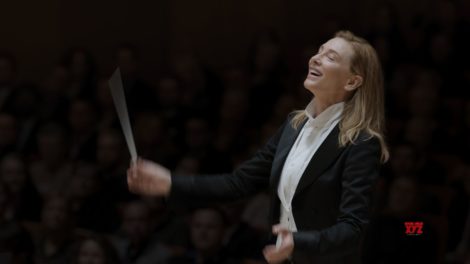
Todd Field’s “Tár” is an intriguing and disturbing film. It is supersmart, exciting in its use of ideas, especially about music and art generally. The film is built around a fictive orchestra conductor, eminent, brilliant, and charismatic, named Lydia Tár, of course strikingly played by Cate Blanchett. With her wife Sharon (the great Nina Hoss, with not enough to do), she has a young daughter. At various points—during an interview/performance with an actual Adam Gopnik, or while teaching a class at Julliard—Lydia gives long disquisitions about music, about Mahler, about Mahler’s 5th—talk that is uncompromisingly intelligent, even eloquent, and full of information, unusual in film. Visually compelling as well, framing the musicians and their instruments beautifully, the film makes us feel genuinely immersed in the world of musicians. But there is something problematic about positing a woman with so much brilliance in what is still largely a man’s world of classical music conductors—as really a singular instance of this kind of success and power—only to bring her down, a female version of such male figures publically shamed for sexual scandal as our own James Levine. There’s something here that makes one a little queasy. But Field maintains ambiguity in every way, pulls his punches to hold on to our sympathy, by avoiding any directly sexual scenes. Lydia’s face simply lights up around the new Russian cellist, and she strokes the girl’s large pink handbag in a provocative way. So, a woman with this kind of power, enormous though in the tiny world of classical music—is she to be respected for being such a commanding presence, able to bend everyone to her will? Or is she to be seen as manipulative, controlling, predatory, preying on younger women who need career guidance, support, or actual favors? She does vicious things to those she wants out, violently reactive, falsely accusatory to remove an elderly associate conductor, so she can put her female favorite in his place. There is an eeriness that erupts from time to time in the film, usually unexplained: a horrific space stumbled into, a sense of late night dread, something brooding and sinister in the musical score. On the other hand, we are dazzled by the eloquence with which she expresses her love of music—touched as, watching an old CD in her original family house (before she re-fashioned herself from what appear to be lower middle class origins), she is moved to tears by Leonard Bernstein on the power of music. Is this a very mild version of the old hard-to-fathom reality of Nazis doing unspeakable things while they loved their Beethoven quartets? The film itself withholds judgment (as Field even withheld judgment, disturbingly, about a pedophile in a children’s playground in an earlier film years ago). Its final moments’ shocking, somewhat surreal conclusion, boldly switching tones as few directors would dare to do, seems to be saying that all of us watching also have our masks and our disguises, and we cannot throw stones.
Another attempt at an ambitious large reading of our current dismal situation, and very much involved in gleefully throwing stones, is “Triangle of Sadness” from Ruben Östlund, a Swedish director—”Force Majeure,” “The Square“—here working in English and pushing his desire to outrage much further than ever, in taking on class inequality. The film looks like it picked up from Lina Wertmuller’s “Swept Away,” enlarged and amplified—but similarly inverting class and power hierarchies when a super-super luxury cruise ship hits such a powerful storm that everyone ends up on an island, where the rich and privileged don’t have survival skills but those on the bottom do. Östlund is very theatrical, energetic, slick, in-your-face entertaining—until he feels irritatingly excessive, even disgusting. He clearly wants us to wince and be repelled, though many laughed at what I winced at. He opens the film with the sleek perfect naked torsos of young male fashion models—the ultimate in indulgence and social uselessness (his wife is a fashion photographer). He takes us through scenes between one of the beautiful male models and an equally perfect woman—ultimately that male model ends up as the sex toy of a middleaged, not-good-looking worker of a woman, who provides the fish to eat. But even if you feel strongly the obscenity of those with vast riches when so many have so little, you might not want to sit through a very long scene of the storm at sea, with the wealthy projectile-vomiting their guts out, over and over again, and their toilets backing up with shit pouring out, over a matronly-looking formerly overbearing older white woman. The metaphor may be accurate, our garbage is returning to us with a vengeance, plastic clogging the most remote regions of the earth, but still—compared to this, Wertmuller is subtle, and she was by no means a subtle director. I have to add (after writing this) that I was very happy to see the excellent New York Times critic A.O. Scott skewer this film in a way that is rare for the Times reviewers, who are careful in the use of their extremely powerful positions, who have to deal with so much film junk, and who tread cautiously when a film looks as seriously intentioned and well made as this one. But I think Scott totally dismisses this film out of genuine deep concern that Östlund’s having twice won the highest award at Cannes Film Festival—that holy sanctum of sanctums for high film culture—will make him an influencer, and lead to the debasement of future good films, with clever crassness wearing the guise of big serious idea-filled filmmaking.
Among other films I hope people find a way to see: Christian Mungiu’s intriguing “R.M.N.,” in which a rural Romanian world which charms with quaint village houses, and the beauty of surrounding woods and mountains of Transylvania, on closer acquaintance reveals male macho brutality, and a lengthy town meeting with the whole population joining in one multifaceted outcry against immigrants. A delicious, wildly funny, and tender film—with a lot of pain underneath it—that Robert Downey Jr. made with and about his ill father, Robert Downey Sr., rebellious outrageous filmmaker renowned in 60s and 70s NYC. Elvis Mitchell’s “Is That Black Enough for You?“—is another angle on the ways Black lives have been revealed, and left out, of the great Hollywood years. The film, which will soon be out on Netflix, engagingly features many clips from the remarkably numerous films Black directors did manage to create in the 70s and 80s.
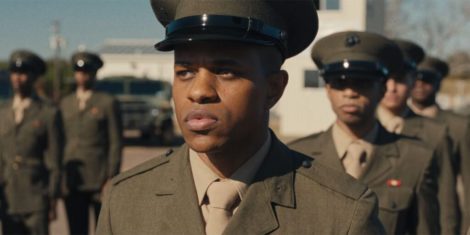
The affecting film honored as the Closing Night film, “The Inspection,” a first film by Elegant Bratton, follows a young queer Black man, from a homeless shelter (thrown out by his mother because of his homosexuality), to a desperate attempt to right his life by joining the Marines. The rigor of the basic training, with the superiors hideously screaming orders like Nazi guards in concentration camps; the intense physical demands, which in his extreme determination, he can deal with (though once it nearly kills him); the bullying and extra brutality he must endure as his gayness becomes evident to the others; and the human bonds formed—all this is convincingly presented as his mission to have his mother finally accept him. The moving triumph of the film is that by his great efforts he certainly makes himself more visible, a person to be respected.
With COVID, changed viewer habits, lingering uneasiness about going into movie theatres, and the vast numbers of empty English and Norwegian policiers flooding Amazon and Netflix, who would have expected that this year’s film festival would overflow with serious first-rate films, among the best in years, with mid-career directors at the peak of their game, and new terrific ones continuing to surface! Cinema feels alive and well.