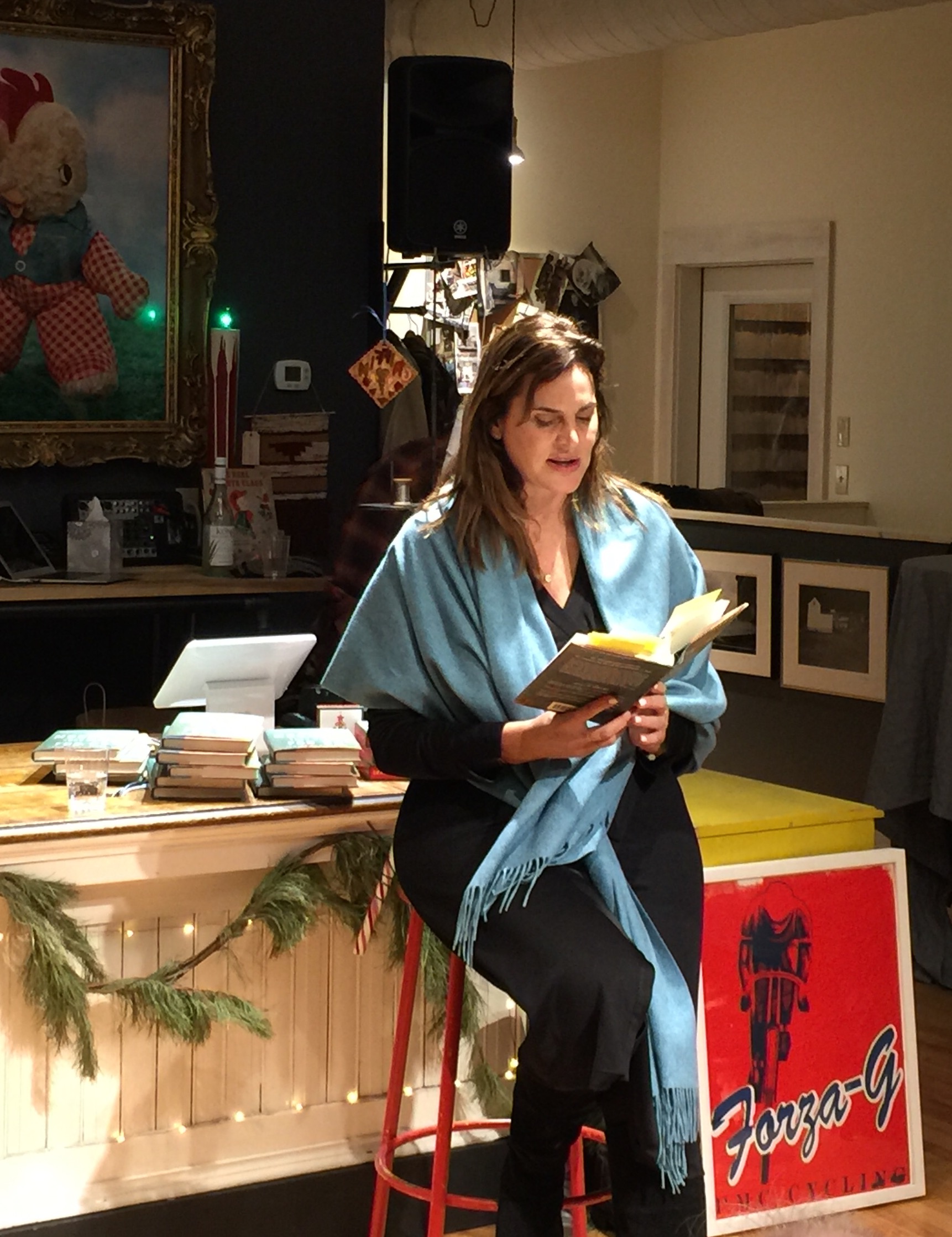
Great Barrington — She’s been dragged from a car at gunpoint, marched into the woods and threatened with rape. Some of her friends and colleagues have been kidnapped, others, beheaded.
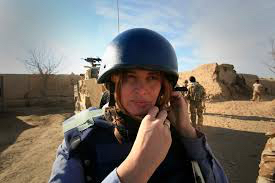
But award-winning war reporter Janine di Giovanni keeps going back into war zones to make sure the stories get told. And when she leaves, she worries about the safety of the sources she leaves behind, and takes all measures to protect them. She spent two decades covering the Middle East, then Bosnia, Chechnya, Sierra Leone, and more recently Syria.
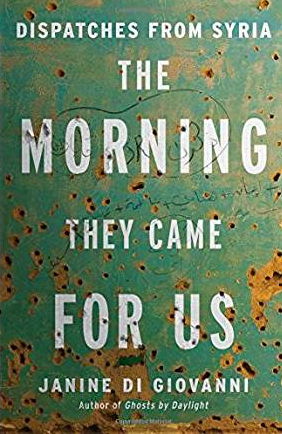
In her book The Morning They Came for Us, Dispatches from Syria she describes what is “a terrible fever” that propelled her back to Bosnia, for instance, to trace the movements of war criminals, to keep these stories alive because “I wanted people never to forget.”
She said she wanted her fever to break, “but it never did” as war criminals “went unpunished.”
Di Giovanni knows war well, with its extremes of atrocities, heartbreak and “boredom.” In Dispatches, the Paris-based Middle East editor of Newsweek has written about it from the civilian perspective. She gave a reading at Griffin in Great Barrington on Wednesday (December 28), and talked about the “proxy wars” that have torn Syria apart and the unimaginable violence that has destroyed so many lives there and spawned a massive refugee crisis.
Di Giovanni described what war is really like.
“War means endless waiting, endless boredom. There is no electricity, so no television. You can’t read. You can’t see friends. You grow depressed but there is no treatment for it and it makes no sense to complain – everyone is as badly off as you. It’s hard to fall in love, or rather hard to stay in love. If you are a teenager, you seem halted in time.”
And that is the very least of it.
“After a city falls is the most dangerous time for human rights.” She said the fall of Aleppo was “the worst — there were no protections.”
In Dispatches she tells stories of rape and torture. Stories of little girls offering Syrian soldiers money to not kill them during a family massacre, or to spare a baby brother.
“I was for Obama until Syria,” di Giovanni said in response to a question at the reading. “If you want to be the world’s policeman, you have to step up…there should have been a simple message in 2013, ‘you will not commit another genocide on our watch.’ ”
Russia, she said, “Pummeled the city of Aleppo, turned it into a parking lot…the big target, hospitals and schools.” This, she said, gave Russia a “foothold into a very prosperous region.”
She said Russian Prime Minister Vladimir Putin has also “done horrific things to his own people,” and to make alliances with him is like “cozying up to Stalin.”
As for President-elect Donald Trump: “I have yet to work out what Trump’s foreign policy is.”
She explained the complexity of how this happened in Syria, and said that the “dismemberment of Iraq” was the original trigger for all of it.
Someone in the audience said, “We’re not going to see an end to this war in a very long time.”
“No, we’re not,” di Giovanni said. “We’re not.”
And as for all the shattered lives, she lays blame on the United States. “Obama checked out morally in 2013.”