
Pittsfield — Jenny Herzog, producer of the documentary “Hear Me,” and Williams College Professor Ben Snyder were invited to present “Gun Violence Prevention: A Public Health Approach” at Pittsfield’s Public Health and Safety Committee Meeting on Tuesday, March 17.
Addressing gun violence in Pittsfield
Gun violence has been a continuous problem in the city. Almost 10 years ago, to improve responses to shootings, Pittsfield entered into a contract with ShotSpotter, an audio sensor system that triggers an alert when it detects suspected gun shots. Though it has proved effective in responses, gun violence and illegal carry per Massachusetts law persists—even among juveniles. In 2025, police seized a total of 27 illegal firearms. Gun-related crime in 2025 included the death of a Taconic High School senior who was found fatally shot in his car. Up to this point in 2026, Pittsfield Police report one seizure of an illegal firearm.
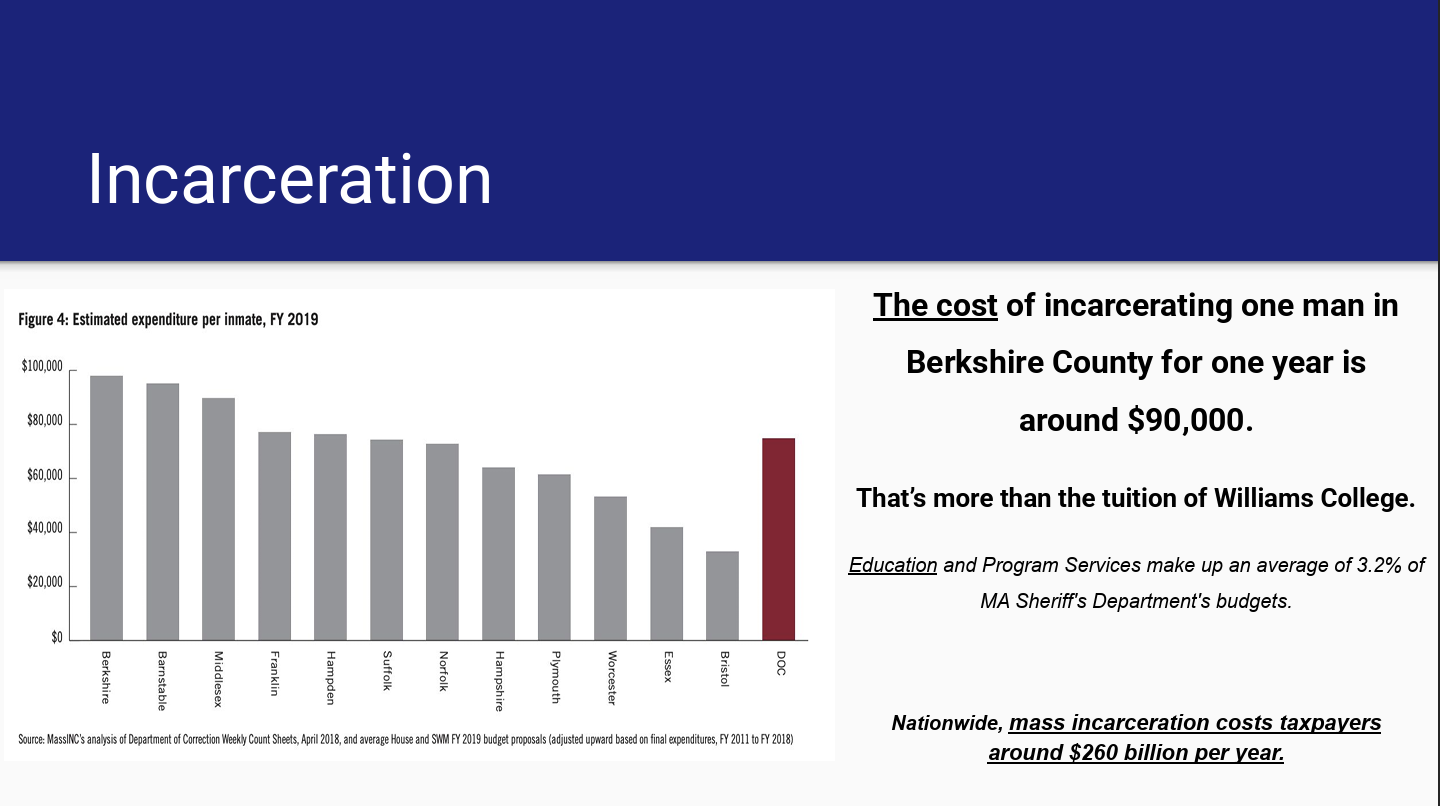
“Pittsfield has recorded an average homicide rate of 5.4 per 100,000 people, which is more than double the state average,” Herzog pointed out. Additionally, she noted the racial disparities within the criminal justice system and the annual price of incarcerating one man in Berkshire County ($90,000), leading to a call to an investment in gun violence prevention.
Snyder, who has spent the last decade of his career studying violent crime and more traditional forms of policing, has “become more convinced that public health approaches to violent crime, particularly gun violence, are essential. They’re at the cutting edge, and it’s what we should be trying to pursue in all of our cities and towns.”
“When there’s a shooting or a homicide, it triggers a transformation in the entire social network,” Snyder continued. “It sets off then more violence that starts to spread through the entire neighborhood and sometimes through the entire urban area.” Therefore, like looking at an infectious disease, taking a public health approach to gun violence allows for ways for communities to interrupt the transmission. “Rather than focusing on individual moral culpability, we should focus on the environmental factors that drive people’s behavior and then try to provide people with the tools to change that behavior. Pretty quickly, there starts to be a focus on prevention, rather than just using punishment.”
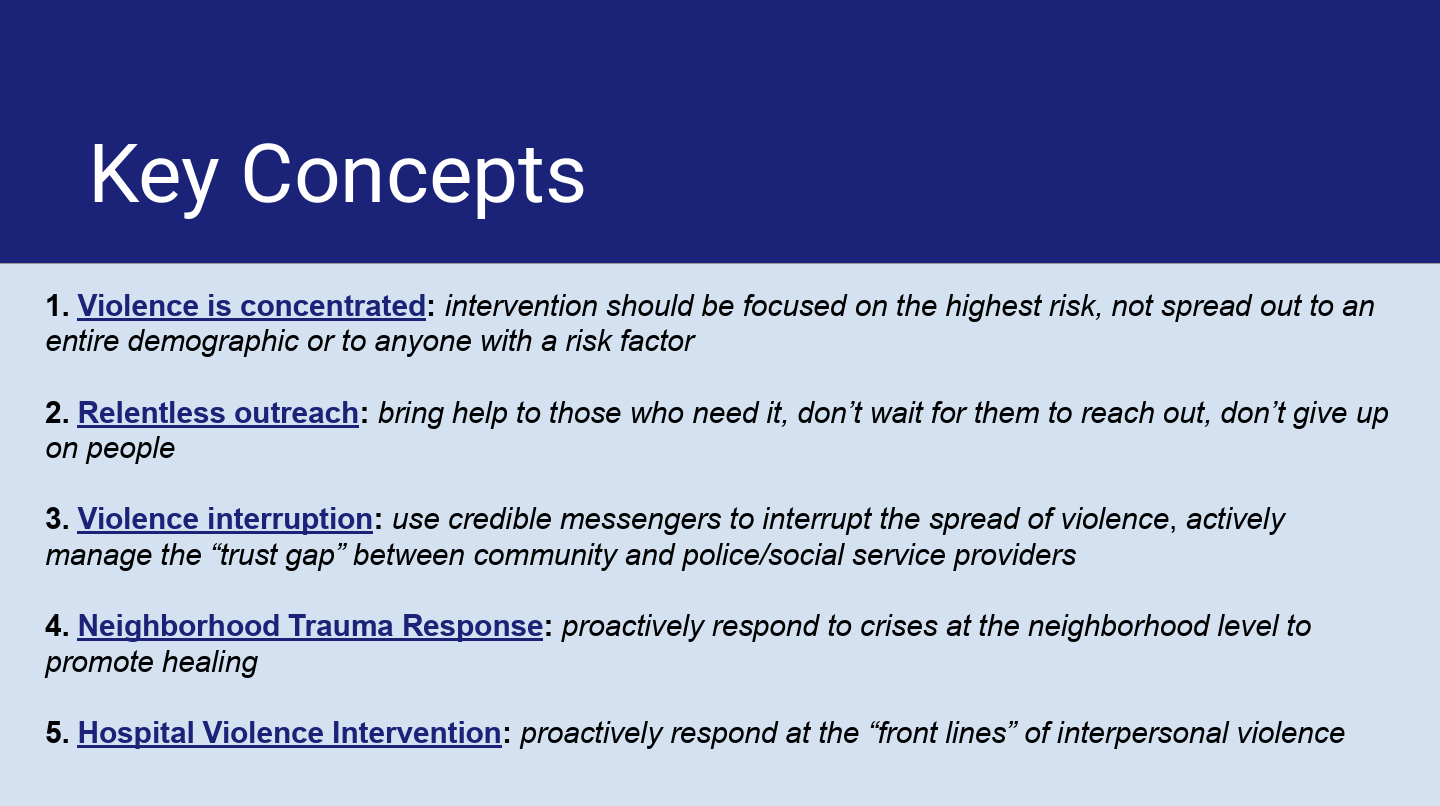
In looking at the different levels of prevention, Snyder highlighted Pittsfield’s current efforts, but also pointed out gaps in preventative action around the time of a shooting—when violence can spread. Accordingly, Herzog and Snyder identified five key concepts in which to build prevention strategies and solutions to fill these gaps: violence concentration, relentless outreach, violence interruption, neighborhood trauma response, and hospital violence intervention.
“The approaches that we’re talking about supplement police work in the sense that they’re about interrupting behavioral dynamics in the lead up and fallout from violence, and these are places where the police really can’t do a lot of work,” explained Snyder.
How Pittsfield compares to the public health approach
In each of these five categories, Herzog and Snyder’s presentation shows that Pittsfield’s status quo lacks the infrastructure needed to catch those at the highest risk of gun violence.
- Violence is Concentrated: Instead of focusing on the highest risk individuals in “hot spots” of violent activity, social services are spread out to those who show any risk factors.
- Relentless Outreach: The city relies on voluntary engagement, waiting for individuals to participate in prevention, as opposed to relentless outreach programs, like Roca. Roca is a nonprofit agency that operates out of Baltimore and Boston. It engages high-risk young men (ages 16 to 24) in order to prevent gun violence.
- Violence Interruption: Violence interrupters are not present in Pittsfield communities.
- Neighborhood Trauma Response: Pittsfield does not have a dedicated trauma response team to focus on healing mental and emotional trauma related to gun violence.
- Hospital Violence Intervention: Berkshire Medical Center does not have an intervention advocate to address mental and emotional trauma (PTSD assessments), provide follow-up care in the community, and coordinate with violence interrupters to prevent retaliation.
The value of violence interrupters
Violence interrupters are a critical part of a public health approach to gun violence prevention. But what is a violence interrupter?
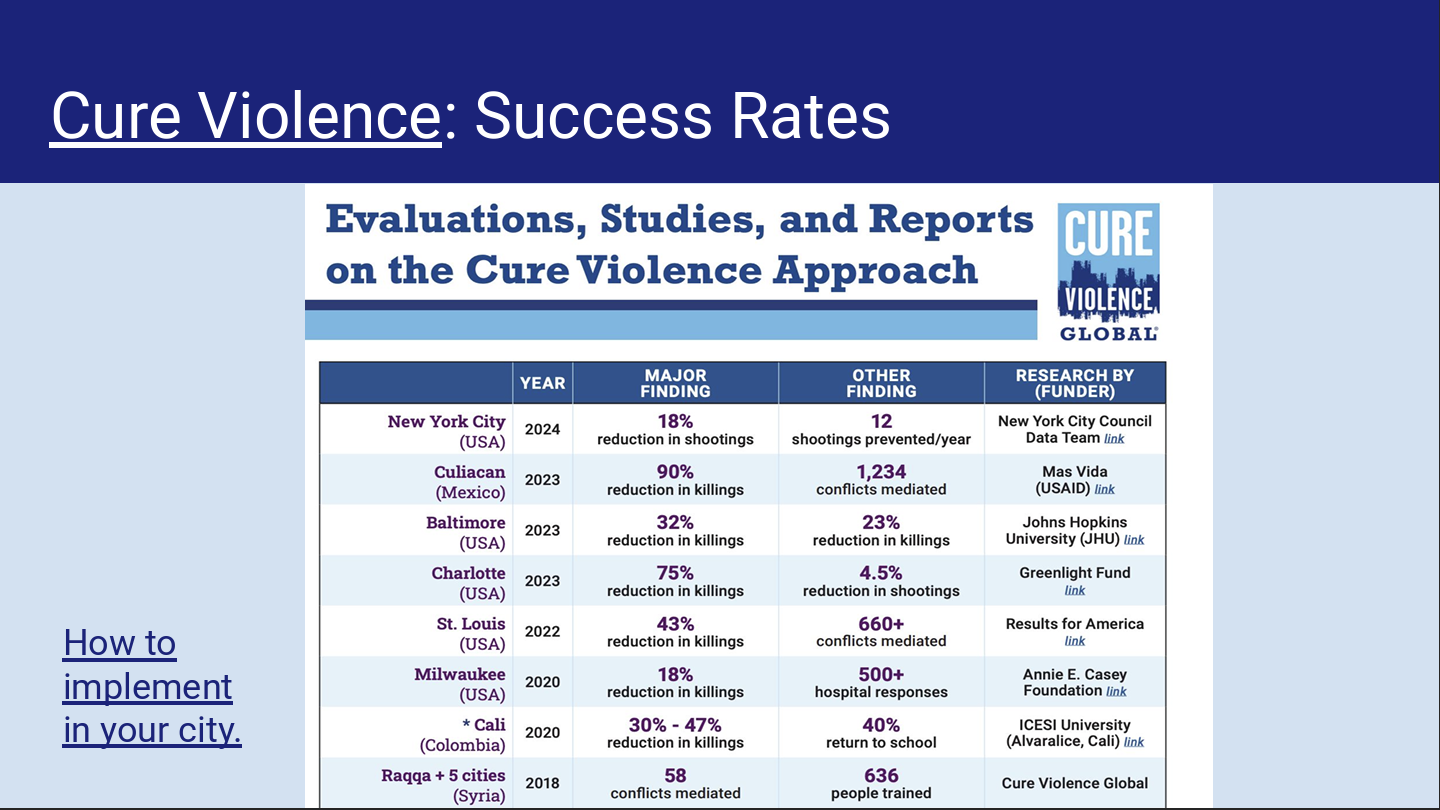
They are not police officers or undercover agents. A violence interrupter, as Herzog and Snyder explained, is an individual who has “credibility” (experience with gun violence or the criminal justice system firsthand), mediates conflicts, monitors problematic interactions and relationships (“beefs”), and can build relationships with those most likely to be a perpetrator or victim of gun violence. Violence interrupters intervene before a shooting occurs, and if and when a shooting does happen, they respond to the situation immediately in order to prevent retaliatory violence.
In a follow up with The Berkshire Edge, Herzog explained that, “In cities like Baltimore and Boston, violence interrupters and police agree that they have a common goal: reducing shootings. Police give violence interrupters data on high-risk individuals and trust the violence interrupters to go into the community and intervene.”
Violence interrupters work independently from law enforcement, but they are not replacement for law enforcement. “It’s not a question of one or the other, either/or. Violence interrupters/trauma response teams/etc. do not take away from police work. Police are crucial partners in this work. But violence interrupters are able to approach the work in a way that is altogether different and has great success in reducing shootings.”
What will Pittsfield’s answer to the question be?
The headline of this article poses a question that Herzog and Snyder posed to committee members that night: “What are we doing to prevent the next shooting?” But there was another question in that presentation: “What are the ramifications of not intervening effectively?”
“These models are not about gun reform,” stated Herzog. “Violence interrupters/neighborhood trauma response teams/hospital violence intervention aren’t related to changing gun laws or what people can and can’t do with guns. These models are specifically aimed at reducing shootings happening with guns that are already flowing on the streets. They are based on the understanding that ghost guns are already prevalent in the community, and we are all better served if we can prevent/intervene in shootings/homicides before they happen.”
Access the full presentation here.