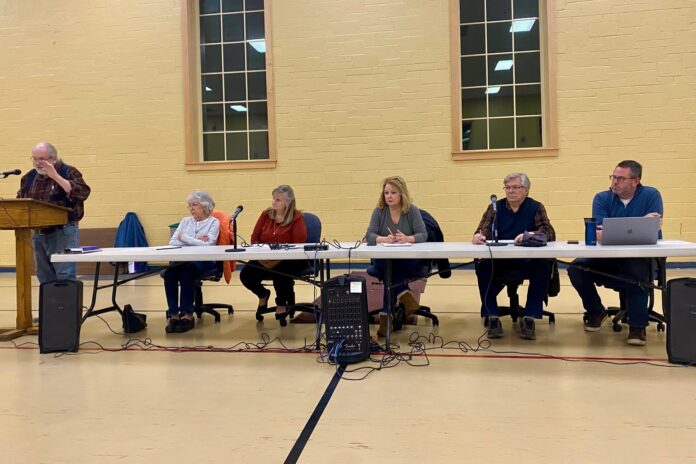
Stockbridge — With slightly more than three percent—or 40 of its 1,209 registered voters—in attendance, West Stockbridge residents unanimously approved measures that will allow its governing body to issue fiscal year 2026 (FY2026) property tax bills during the December 16 Town Meeting.
The warrant encompassed three articles pertaining to remedying the town’s water and sewer system budget issues, appropriation actions Finance Committee Chair Robert Salerno previously said are required for the Commonwealth to approve the local tax rate. If the tax rate is not approved, tax bills cannot be submitted out to residents this month.
On December 11, the West Stockbridge Select Board unanimously approved a single tax rate for all property classifications for FY2026 at $10.38 per $1,000 valuation, a 76 cent increase over the $9.62 per $1,000 valuation set for FY2025. However, that approval is subject to review and change by the Massachusetts Department of Revenue.
A copy of the December 16 West Stockbridge Town Warrant can be found here.
Steve Sautman, a member of both the town’s Finance Committee and its Sewer and Water Commission, explained that the items do not impose an additional tax burden on residents. Rather, the articles call for the appropriation of $25,000 from free cash to cover the sewer system’s operating shortfall; $35,000 from free cash to fund an engineering study aimed at identifying future sewer plant issues for the aging system; and $49,000 to cover the water system’s shortfall from that program’s $170,000 in retained earnings.
“We were notified by the state that they had some concerns about our budget and rates for the sewer and water,” Sautman advised attendees.
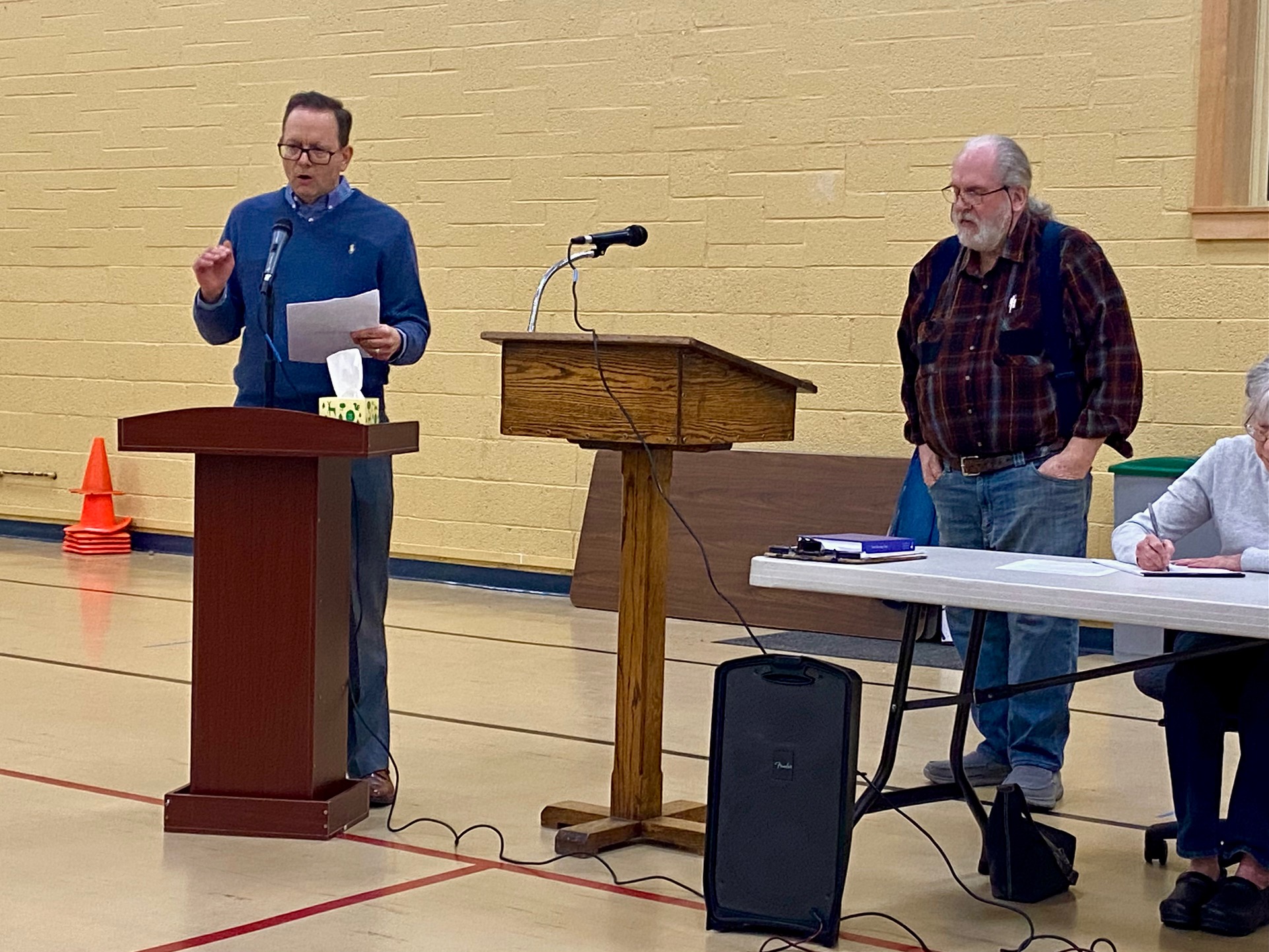
During the last fiscal year, the sewer revenue collected did not cover the town’s sewer expenses, leaving a $22,000 shortfall. For FY2026, the projected sewer revenue is expected to result in another shortfall amounting to $20,000. The first article allows the transfer of funds to cover that shortfall. The Sewer and Water Commission has planned a meeting “to review and potentially raise rates to help with that shortfall,” Sautman said, adding that any excess collected could reimburse the town’s general fund.
According to Sautman, sewer repairs have added up this year, with the second article intended to appropriate funds for “a full engineering study of the sewer building and operations so we can see what is needed and improvements are required.” “We’re trying to do that this year,” he said. “If we wait for the regular budget cycle, then this would happen next year, and we’d be a year further behind getting those projects identified and finished.”
The third article focuses on transferring funds within the local water enterprise that has retained earnings, or monies collected over what was budgeted. However, Sautman said “the current budget exceeds what we have collected in revenue or projected collection in revenue.” “Both last year and, so far year to date, our actual expenses are below budget, and we believe that the revenue collected will cover water,” he said. “All that this [article] is doing is taking the water retained earnings, or the extra amount of money we have collected for water, for the state-projected shortfall that we could have, just moving money from your excess fund to cover your projected budget.”
Town Moderator Joe Roy Jr. thanked the constituency for their attendance on “a cold night,” citing the need to continue such local practices. “Open town meeting has been referred to as the purest form of democracy,” he said.