If you’ve worked, or work now, in one of our region’s arts and cultural nonprofit organizations, there are some folks who would like to hear from you. Specifically, they’d like to hear from current or former entry- or mid-level employees, via a brief and anonymous survey, with detailed information about your salary history and related finances as part of an ambitious effort to begin to address inequitable pay in the region. Data-gathering, the leaders say, is step one in the direction of reform.
While asking for and sharing private and sensitive salary details would have been unthinkable, much less an institutional priority, just a few years ago, the cultural upheavals of the past few years have blown the tops off lots of things, including the cultural taboo against talking about money. Loud voices demanding radical changes to the sector have made themselves heard through Black Lives Matter-inspired national and local movements such as Change the Museum and Change Berkshire Culture.
Locally, the group behind Berkshire and Columbia County’s new salary survey grew out of the Inclusive Leadership Cohort, convened by Multicultural BRIDGE. The cohort originally included board members and administrators from 23 Berkshire and Columbia County cultural organizations and funding institutions. The smaller group undertaking the current survey is comprised of the Mahaiwe Performing Arts Center, WAM Theatre, Community Access to the Arts (CATA), Art Omi, Berkshire Art Center (formerly IS183 Art School), and Jacob’s Pillow Dance Festival. Funding partners are Berkshire Taconic Community Foundation, Berkshire Bank, and Greylock Federal Credit Union.
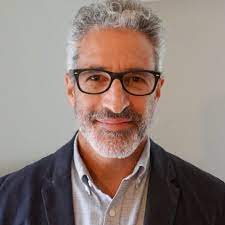
The ‘E’ in the Diversity, Equity, and Inclusion movement has been moving into a ‘show me the money’ phase. As of November 15, 2022, national job boards for the museum industry will be required to include salary ranges alongside job listings, a move that comes in the wake of the just-published Equity in Pay + Pay Transparency Accountability Tracker. Aron Goldman, the independent consultant helping the local ILC team to get the word out about the survey, says the group has committed to including this same information in job listings going forward. Some members have already started. A current listing for CATA, for instance, includes the salary range front and center.
The survey is geared toward entry- and mid-level arts and culture employees, and in addition to hard numbers, it mines for ancillary data with questions such as, “How often are you expected to work over-time unpaid?”, “Do you have a monthly student loan payment?”, and “Do you have other sources of income or wealth?” As Ruth Adams, Co-Executive Director of Art Omi, described the new effort, “It’s important that this survey is received in the spirit of, ‘We really see you, workers in the arts.’”
Margaret Keller, Executive Director of CATA, points out that the seeds of the current work were planted through what she described as the powerful collaborative strategizing she and her peers did together in their initial capacity-building process supported by the Barr Foundation. “In that intensive yearlong program, we had the opportunity with BRIDGE as a critical leader and partner to dig even deeper into issues around equity, diversity and inclusion that I think all of us as leaders in the sector felt passionately about. This specific project emerged from that larger conversation about how do we advance equity in the field.”
Goldman was brought in, he says, “because I do national work around racial equity and have a lot of experience in equity issues in the Springfield area, not just in terms of the substance of what equity means, and why you would care about that, but also the practical dimensions of how to implement.”
Berkshire County alone is home to more than 350 501-c-3 not-for-profit organizations, with 120 of these, or 35 percent, falling under the category of arts and culture. According to a salary and benefits survey commissioned by the Nonprofit Center of the Berkshires and published in January, 2022, most employees working in the mid-level areas of administrative assistance and program management earn somewhere between $35,000 to $70,000 annually. (Those full results are available for purchase here.) For livability reference, in October of this year, the median list price for a home in Great Barrington was $637,000, and in once-affordable Becket, it’s now $459,000. According to Great Barrington Town Planner Chris Rembold, to afford even a $300,000 home, a family of four would need an annual income of $90,000
The hope with the pay survey, according to Goldman, and the “set of insights, recommendations, and tangible commitments” that will result from it, is that pay transparency will become “sort of contagious for the rest of the nonprofit sector, and for the region,” encouraging “all employers to think differently about equity, fairness, and livability, particularly for groups that are traditionally marginalized and vulnerable, not just because it’s the right thing to do, but also because that’s a necessary ingredient for the extraordinary and transformative arts and culture that the Berkshires and Columbia counties known for.”
Goldman has already undertaken focus groups with more than a dozen employees in the cultural field and incorporated their feedback into the implementation of the survey project. The bosses were not present during those conversations because, says Keller, “We wanted people to speak candidly and authentically.” The stories culled from those focus groups were presented to the group, with Goldman calling them an “unvarnished” set of insights from, in particular, “people from diverse backgrounds, perhaps coming from Boston or New York and trying to start a career in the arts and not being able to get by. You hear about how hard it is to find housing, you hear about late nights and driving home in the middle of the winter … and barely able to pay for gas. One woman said, ‘I get a technology reimbursement, but no health reimbursement.’”
Goldman is leaning on seven or so of the focus group participants to assist with community engagement with the survey, along with word of mouth. You can find it here. The group is hoping for at least 200 responses, which are due by December 5. The results will be combined with those of the focus group series, and a compensation benchmarking analysis to create “a set of sector recommendations and commitments,” as Goldman framed it, with those announcements expected in early 2023.