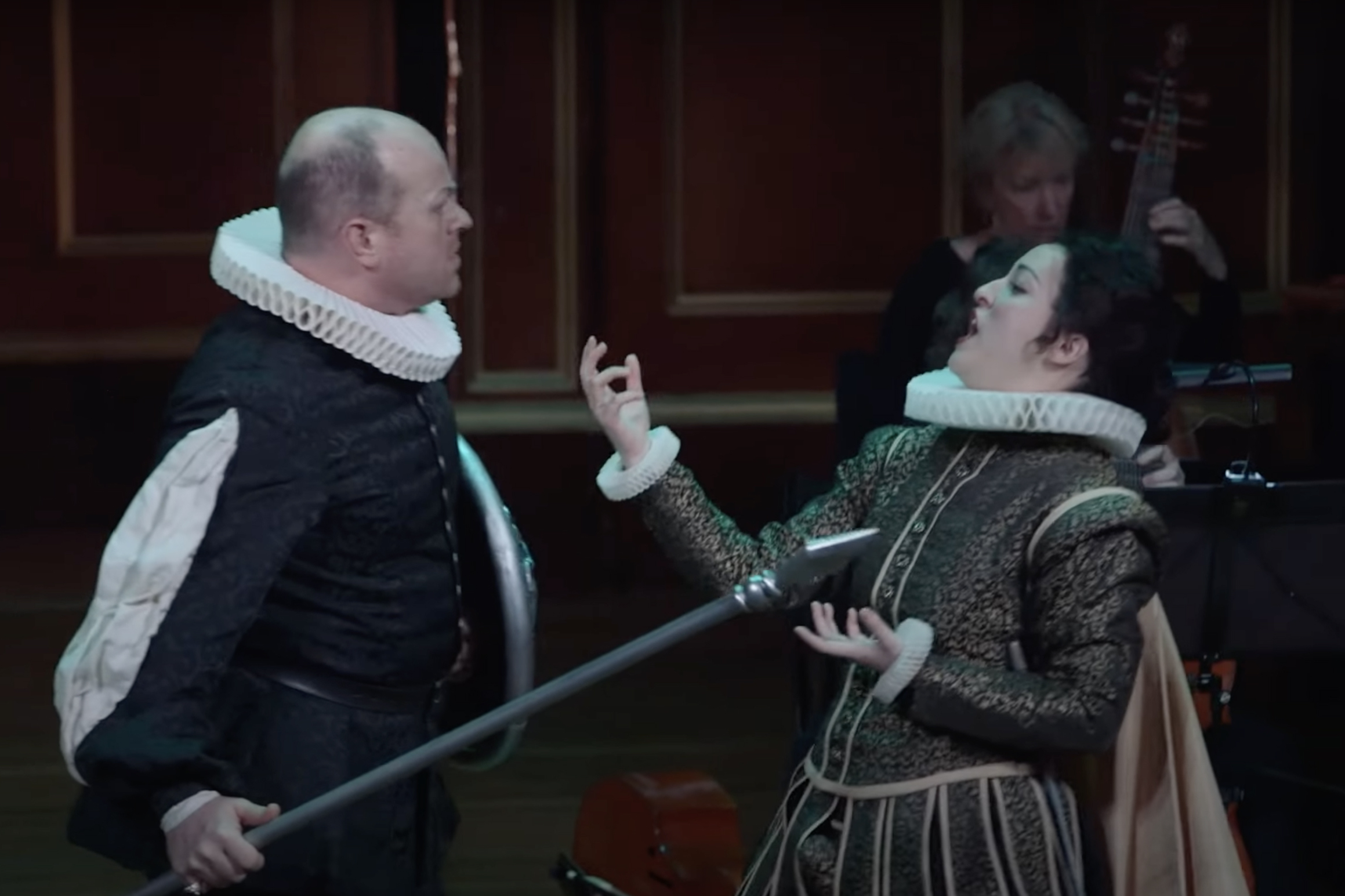
Great Barrington — On June 23 and 24 at the Mahaiwe Performing Arts Center, Boston Early Music Festival’s presentation of Francesca Caccini’s “Alcina,” a comic opera in four scenes, will serve as a reminder that music in 17th-century Italy did not concern itself exclusively with liturgy, nor was it written exclusively by men. In fact, this year’s encore performances of “Alcina” (originally staged in November 2018) were programmed for the festival’s 2023 theme, “A Celebration of Women.”
More than 150 years before Joseph Haydn wrote a string quartet nicknamed “The Joke,” Francesca Caccini was cracking wise for the amusement of her commissioning patron, Regent Archduchess Maria Maddalena of Austria (wife of Cosimo II de’ Medici), and other Florentine light-opera buffs. She was a composer of both chamber and stage music, a lutenist, poet, teacher, rehearsal coach, and vocalist, having performed the title role at the premiere of “Alcina.” In her maturity, Caccini was the highest-paid musician of the Medici court, not only on account of her musical virtuosity but because of the way she generally exemplified her patron’s ideal of female excellence.
Many of Caccini’s songs were based on her own poetry, much of which was humorous. She wasn’t exactly the Weird Al of her day, but laughter is laughter, and she knew how to get it from an audience.
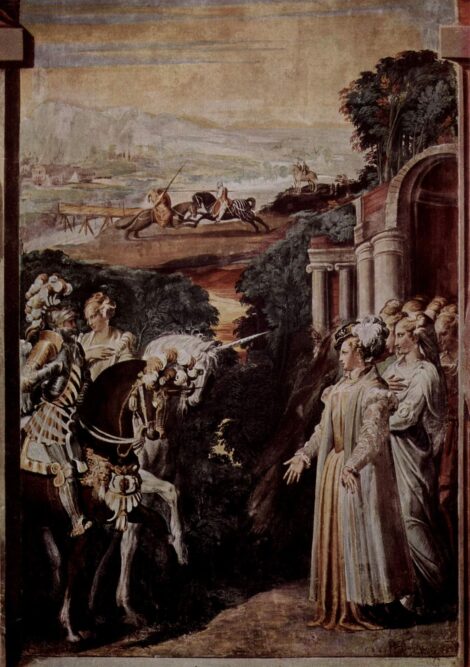
Do not confuse Francesca Caccini’s “Alcina” with the much later work by George Frideric Handel of the same name and also based on “Orlando Furioso,” the story written by Ludovico Ariosto in 1516.
Caccini’s opera is written in Claudio Monteverdi’s stile moderno, and its production by Boston Early Music Festival is what BBC Radio 3 calls “arguably the most important and influential early music event in the world.” (One assumes the BBC’s argument applies to a specific time period.)
Set on and around the island of Alcina, “La liberazione di Ruggiero dall’isola d’Alcina,” or “The Liberation of Ruggiero from the island of Alcina,” is about the life and times of the horribly wicked sorceress Alcina and her innumerable victims, whom she has unfortunately transformed into shrubberies. (Wait ’till you see the victims’ costumes!) Alcina’s foil, Melissa, is a wonderfully benevolent sorceress who searches for the old hag’s latest victim, Ruggiero; frees him; and forces the evil Alcina to flee the island.
Although she composed more than a dozen court theatricals, “Alcina” is Caccini’s only surviving stage work.
Boston Early Music Festival formed in 1980 for the purpose of enjoying and promulgating historical music performance. The group likes to unearth lesser-known baroque operas from underrepresented composers.
See the Boston Early Music Festival’s production of Francesca Caccini’s comic opera “Alcina” at 8 p.m. on Friday, June 23, or on Saturday, June 24, at the Mahaiwe Performing Arts Center. Tickets are available here.