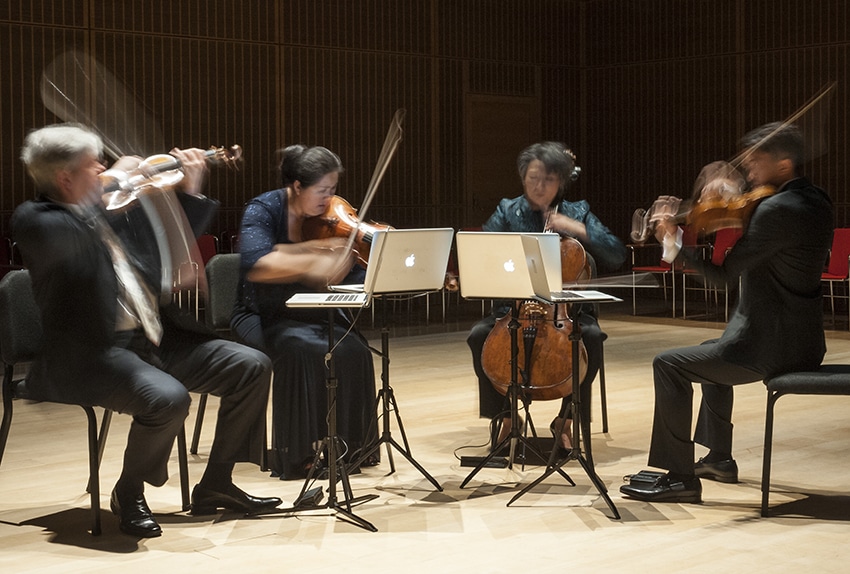
Great Barrington — What’s a string quartet to do after reaching the zenith of technical excellence? Rest on its laurels and cash in? The answer to this question comes easily to members of the Borromeo String Quartet, who will appear at the Mahaiwe Performing Arts Center in Great Barrington on Saturday, Dec. 14, in a concert presented by Close Encounters With Music. They’re likely to tell you that, upon reaching artistic maturity, a string quartet ought to devote themselves to two causes: First, the group should seek to discover, through painstaking analysis of scores and performance histories, the best and truest picture of a composer’s intentions in any given piece. Second, the quartet ought to share their insights and techniques with new generations of chamber musicians around the world. Indeed, at New England Conservatory, the Borromeo has pursued these objectives for nearly 30 years, the last 20 of which have been in the role of the conservatory’s quartet in residence.
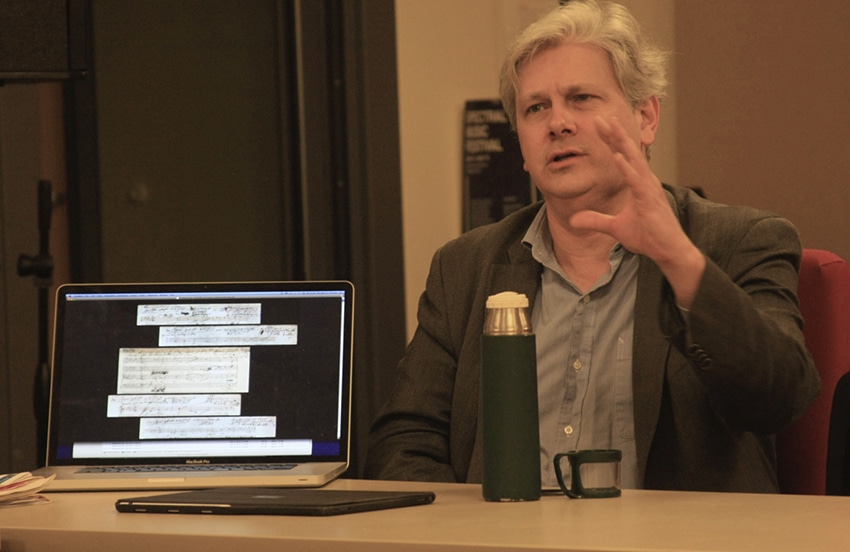
The Borromeo’s co-founder and first violinist, Nicholas Kitchen, is an inveterate technology geek. This proclivity has rubbed off on violinist Kristopher Tong, violist Mai Motobuchi, and on Kitchen’s wife, cellist Yeesun Kim. All use laptop computers on their music stands instead of printed sheet music, and they all play from the complete score. (Decades ago, the Borromeo became the first string quartet to work this way.)
Reading music notation from a tablet or laptop isn’t terribly unusual. Nor is it particularly difficult. But doing it with handwritten scores? That is something else altogether, especially when you’re trying to decipher Ludwig van Beethoven’s horrific penmanship. But what’s the point? Why torture yourself trying to read an illegible score when a crisp, engraved edition is widely available? It’s about authenticity — and fun. Beethoven included copious expressive instructions in his autograph scores — instructions that often didn’t make it into printed editions. And some of those instructions can make a big difference in the way a piece sounds.
It’s fun to experience Beethoven’s music when it sounds exactly the way he wanted it to sound. But how can anyone ever know what a composer was hearing in his head? No one can, of course. But some people seem to have come pretty close — people like Nicholas Kitchen.
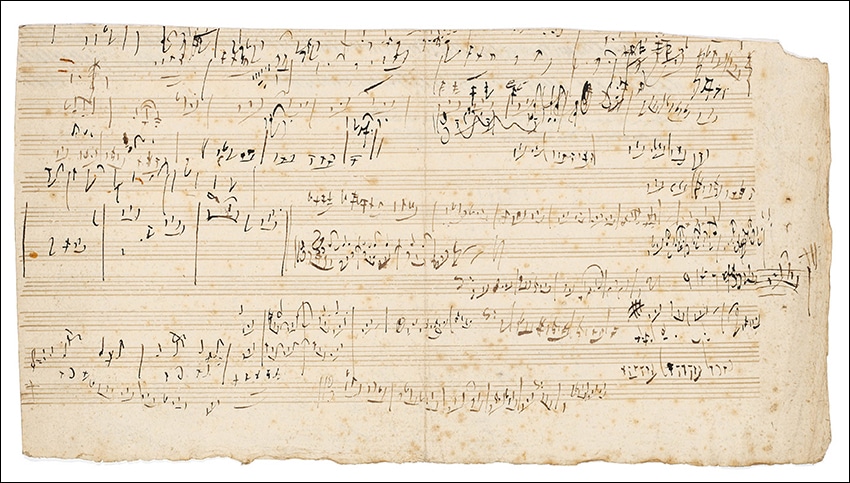
As the leader of Count Razumovsky’s private string quartet in Vienna, Ignaz Schuppanzigh understood as well as anyone what Beethoven wanted from the musicians who performed his quartets. Nicholas Kitchen, by virtue of his long intimacy with Beethoven’s autograph scores, has become something of a modern-day Schuppanzigh among the world’s leading Beethoven scholars. Professor Jeremy Yudkin, co-founder of Boston University’s Center for Beethoven Research, said: “Nick’s work is astounding. He knows this music better than anyone I know, both as a superb performer and as an obsessive reader and punctilious analyst of the manuscripts themselves.”
The Borromeo String Quartet is known for its edge-of-the-seat performances. Everything that goes into those performances is a bit mind-boggling to contemplate. But we needn’t obsess about it. Nick and the group have taken care of that. All we have to do is listen and have fun.