“Sexual Behavior in the Human Male” and “Sexual Behavior in the Human Female” were published in 1948 and 1953 respectively. Called The Kinsey Reports, they were heralded as the first such studies—they were not.
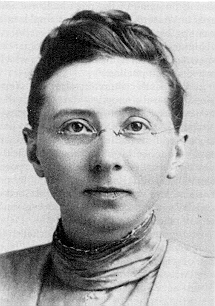
The earliest known study of human sexuality in the United States began in 1892. It was conducted by a 28-year-old biology undergraduate student at the University of Wisconsin. The student was a female; her name was Clelia Duel Mosher. It is a surprising data set: 1892, female, college student, interested in sexual behavior. It was a time when discussing sex in mixed company was forbidden. Sex education was a contradiction in terms. And yet, it would appear the generally held opinion about these ladies of the Victorian Age had no interest in or curiosity about sex; that their knowledge was as limited as their sexual behavior. Mosher was about to prove that untrue.
Mosher continued her survey until 1920. The total number of respondents in 28 years was 45. Mosher could hardly claim a broad sample, and yet … one reason the number was limited is that she was only interested in interviewing women. Hardly as extensive as Kinsey’s work, yet Mosher had something Kinsey did not. Mosher had responses from women born prior to 1845. The oldest of the Kinsey respondents was born a half century later—circa 1892—born when Mosher began. Mosher’s work offers a glimpse into the sexual behavior and attitudes of women in pre-Civil-War America and the early Gilded Age.
No one is claiming 45 participants, all women, and all college students is a representative sample; still, it makes a point that Victorian sexuality is not an oxymoron. Evidently it was not that our ancestresses lacked opinions, experience, and information; it was that the women were discouraged from ever talking about them. Social rules and rituals forbade mention of sex in the company of a lady. Further, lady-like behavior was equated with ignorance.
The Mosher survey clearly shows that the women had active sex lives and well-formed opinions on the subject. There was, however, what women did, and what they admitted to doing. The ideal woman was sweet and discouraged mention of anything coarse. In Mosher’s opinion, these romantic ideals of womanhood were unrealistic and harmful.
Even more interesting are the attitudes themselves. One might imagine they would be censuring, judgmental, or embarrassed, but they were not. A report of her findings published in the Stanford University Alumni Magazine is the record we have of her work. Respondents were quoted characterizing sexual behavior as “a beautiful thing,” a gift from nature, divine, and spiritual. Unlike any stereotype of our ancestresses—they approached sex with gusto.
Mosher was interested in more than sexual behavior. She was more interested in exploding myths. She was a doctor. Mosher received her MD from Johns Hopkins in 1900. As a female physician, she was one of only six percent of all doctors. She faced discrimination and her efforts to establish a private practice were stymied. She accepted a teaching post at Stanford and continued her research.
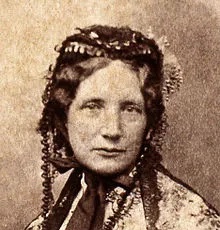
In the mid-nineteenth century, Harriet Beecher Stowe’s sister, Catherine Beecher, made the same arguments. She too considered the conceits of femininity harmful to women’s health. Both women opposed fashion that hid a woman’s natural form. Both opposed was the notion that women should not exercise. Beecher asserted that exercise was essential to good health. Mosher wrote, inferior muscle development led to “inevitable illness.”
With a study on female sexual behavior, Mosher was first, and she was feisty. With Beecher before her, they studied female behavior, as they fought for women’s health and women’s their rights. Underlying all their work was the desire to explode myths and replace myth with the genuine woman.