About Connections: Love it or hate it, history is a map. Those who hate history think it irrelevant; many who love history think it escapism. In truth, history is the clearest road map to how we got here: America in the 21st century.
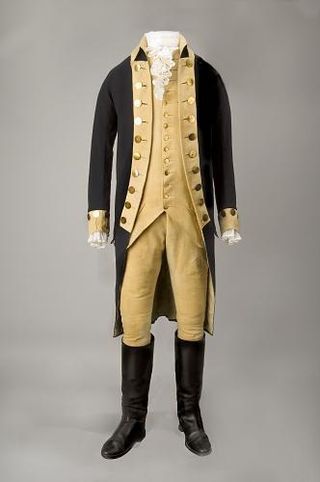
It was war. Not war a thousand miles away, but in their back yards. The soldiers were not in far-away barracks, but in the Berkshire fields. David Noble of Pittsfield sold one of his farms to raise money. He sewed gold coins into his jacket, mounted his horse, and rode to Philadelphia — the nearest place where he could buy “blue and gold regimentals” for the Pittsfield militia.
From the pulpit, the Rev. Thomas Allen preached revolution and freedom; then hitched up his sulky — a two-wheeled, horse-drawn vehicle given to him for his pastoral rounds — and drove to the field of battle, with parishioners, fired up by his sermon, trotting behind.
The English misunderstood the concentrated power of so many enflamed farmers, causing British troops to be hemmed in by shirt-sleeved yeoman with pitchforks. In a letter of explanation to the King, Colonel Baum wrote, “Sire, it was the grandest of causes won in skirmishes by the scantiest forces.”
Herman Melville’s grandfather was Major Melvill (no “e”) of Green Street, Boston. O.W. Holmes wrote a poem describing the old man as follows:
“Not a better man was found
By the crier on his round.
But the old three-cornered hat
And the Breeches and all that
Are so queer.”
In 1773, Melvill returned from Griffin’s Wharf. His colleagues, “Ok-wooker-tunkogog” and 70 of the “tribe,” led by the “Sachem of Narragansett,” dumped 342 chests of tea into Boston Harbor. When Melvill entered Green Street, he found he still had tea caught in his shoe. His wife shook it out and placed it in a drawer. After many years, word traveled, the tea was sealed in a tin and hidden from relic hunters by Madam Melvill.
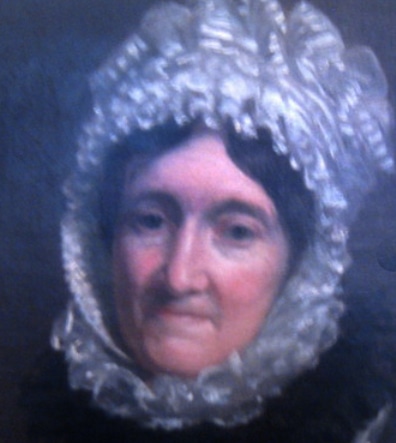
The family well remembered that Madam Melvill sat absolutely erect in her chair. Ribbons were tied from ear to ear so she could not move her head. If she rose to leave the room, the Major would rise also, bow, offer her his arm and escort her to the door. On her return, as the children saw her approach, they whispered, “Now we must put on our manners.”
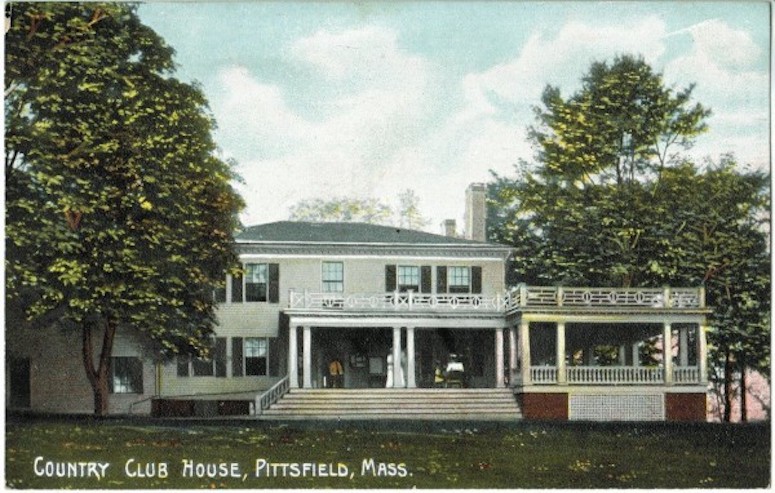
It was the offspring of that courtly couple, Major Melvill Jr., who came to Pittsfield and bought the Van Schaack mansion, Broad Meadows (later the Pittsfield Country Club). When Mrs. Quincy (Abigail Adams’ mother was a Quincy) visited the Van Schaack mansion with the “charming fishpond,” she described its “exquisite neatness,” woven rugs, and painted floors.
During the Revolutionary War, many had to flee, abandoning their property because they were branded Tories or King’s men. Van Schaack was one. Forgotten were his contributions to the colonies. For example, it was he who rode to Colonel Williams’ aid at Crown Point during the French Indian Wars. No matter, he was a Tory and urged out of Berkshire.
Pittsfield and Berkshire County took a most unique position during the Revolution. They fought in Massachusetts regiments against Great Britain and, at the same time, effectively seceded from Massachusetts. It all started with a letter.
In the period between being colonists and becoming citizens of a new nation, there was, naturally, confusion. In May 1775, the Massachusetts Convention wrote John Adams, Massachusetts representative to the Continental Congress: “We are happy in having an opportunity of resting our distressed state before the representative body of the Continent.”
The problem was, if the King and the King’s men no longer ruled the Province, who did? Without an established government, how were they to enforce laws, pursue civil claims, finalize contracts, buy and sell land, or maintain order? The state and local government they knew had been run by Tories.
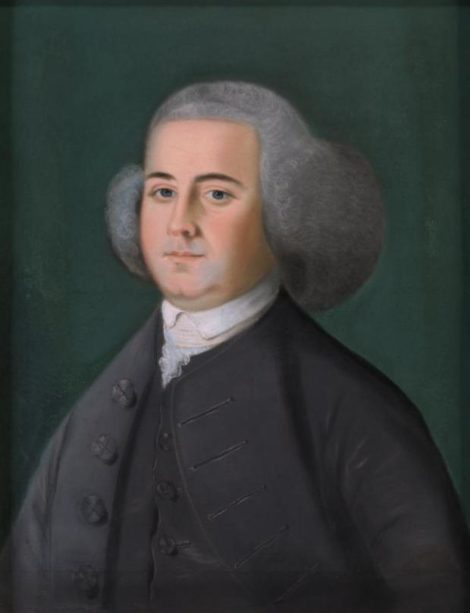
In answer to the letter, John Adams took the position that Massachusetts should at once cease to function as a colony and call a state convention. The people should elect delegates to the convention, and those representatives chosen by the people should establish a state government. When he laid this before the Continental Congress, he expressed the belief that all colonies should do the same. The members demurred.
At that early stage, many thought they were fighting for better conditions in the colonies, not to become an independent country. Therefore, Adams was outvoted and on June 9, 1775, they answered that: “The inconveniences arising from the suspension of the powers of government are intolerable. [An Assembly should] govern according to its Provincial Charter.” That would leave the extant laws in place, the General Court in power, and its local courts in operation.
No one liked continuing under the Provincial Charter, but they liked lawlessness less. On June 19, the Massachusetts Convention voted to accept the recommendation of the Continental Congress.
By November 1775, the Continental Congress shifted position and, when they received a similar plea from New Hampshire, answered: “Recommended that New Hampshire call a full and free representation of the people … and establish a form a government as, in their judgment, will best produce the happiness of the people and most effectively secure the peace and good order … during the present dispute between Great Britain and the Colonies.” New Hampshire, and every state after that, received from the Continental Congress the “Adams” recommendation; it served to fan the flames in Berkshire County.
In December 1775, in town meetings, Lenox and Pittsfield explicitly rejected the Massachusetts Convention’s decision and denied the state’s civil authority in Berkshire. Lanesborough followed suit and voted to: “Make manifest to the General Court that this town disapprove of [state] laws until a new Constitution shall be sent to us.” The Constitutionalists of Berkshire County were born.
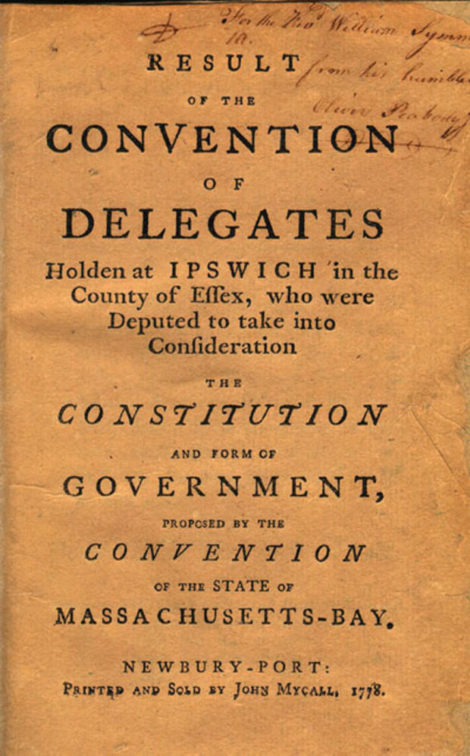
Under the leadership of Pittsfield minister Thomas Allen, Berkshire County refused to follow the Provincial Laws and refused to seat the civil or criminal courts in Berkshire unless and until there was a new state Constitution. With the exception of Hancock and Alford, every town voted to eschew state government. Berkshire closed the courts and “explicitly forbid” its representatives “to assist in legislation under the current laws.” Berkshire had declared war on both Great Britain and Boston. It was on its own.
Some historians have called Berkshire County’s 1775–1780 position contradictory. Allen believed their position was absolutely consistent. The Constitutionalist maintained that the Bill of Rights superseded any advice from the Continental Congress. They believed the underlying principles of the Revolution and practical politics must be inexorably linked and, therefore, a new Constitution assuring the rights of the people was mandatory. Otherwise, the war would be a useless exercise, and the people, even if they won the war, would be no better off.
Allen and the Constitutionalists went further. The New Constitution must be acceptable to the people. Allen wrote, “The people are the fountain of power.” This was a radical belief, indeed. Hierarchy was accepted. Religious beliefs accepted the ultimate supremacy of God and government came, not from the people, but from God. The limits of government were proscribed by the “best of men” — those God chose for positions of power. A government formed by the people and limited only by the law to which all were equally subject was unknown. Individuals in Berkshire who were Anti-Constitutionalists were most often those who held power in the old regime plus ministers and deacons of the churches. Not in Pittsfield; there, the Congregational minister Thomas Allen became leader of the Constitutionalists.
Allen explained: “December 1775, To the Representative Body sitting at Watertown: Only an unalterable attachment to liberty and an invincible love of civil rights and religious liberty induced us to add to your burdens [and demand a new constitution with] civil and religious liberty [that] no length of time will corrupt as long as the sun and the moon shall endure.”