On September 17, 2025, as was widely expected, the Federal Reserve Bank cut the federal funds interest rate by one-quarter of one percentage point (an amount also referred to as 25 basis points, or 25 bps) down to a range of four percent to 4.25. The Fed’s Summary of Economic Projections, also known as the dot plot, shows expectations of two more cuts in 2025.
I have contended that this cut (and further possible cuts this year) was unnecessary for several reasons, namely inflation is trending higher, the labor market is not as bad as it seems, and it would have minimal impact anyway.
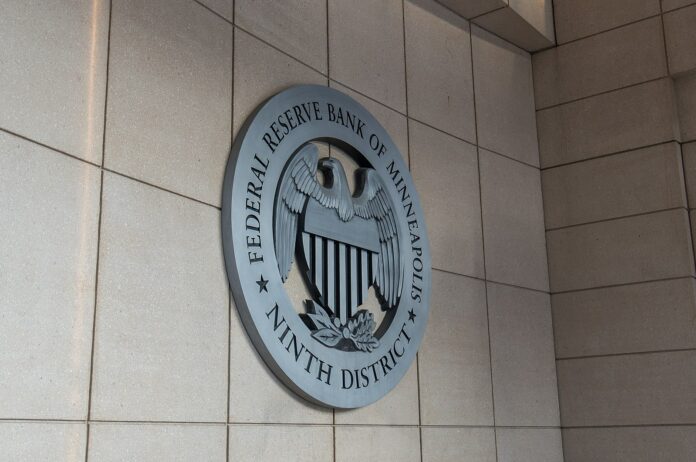
I sense that I am not the only person who shares this hawkish bent to keep monetary policy restrictive. And as if in response to my pushback, Neel Kashkari, president of the Federal Reserve Bank of Minneapolis, released an essay that gently pushes back on my inflation concern (question #3) as well as a couple of other questions on investors’ minds.
Q1: Why do stocks look lively while the job market looks tired?
Kashkari notes a split screen: Hiring has cooled, and wage growth is moderating, yet stock indexes have been achieving new highs. How can both be true? One possibility Kashkari raises is that the “neutral” interest rate (the federal funds interest rate that neither accommodates nor restricts the economy) may be higher than many people calculate. The midpoint of the longer-run federal funds rate projection (which is the approximate neutral rate) is 3.25 percent, which would make any federal funds interest rate above that (including the current four percent rate) restrictive. However, instead of 3.25 percent, Kashkari contends that the neutral rate could be, for example, 3.9 percent (which is the highest dot on the dot plot), making interest rates more accommodative than they would otherwise seem.
If Kashkari is right, then consider the capital that is flowing toward tech-heavy projects (like data centers for artificial intelligence), which require lots of money up front but relatively fewer workers to operate later. That combination can buoy markets while leaving hiring more sluggish. He also points out that markets might be betting inflation will drift back toward two percent and that the Fed will cut rates further, which props up risk assets even as payrolls slow.
To add a little of my own flavor about the labor market looking tired, it is not as bad as the recently weak payroll numbers suggest. With fewer people entering the U.S. workforce due to tougher immigration policy, the break-even rate for job growth has dropped considerably. The break-even rate is the number of new jobs that must be created to keep the unemployment rate stable. Calculating the break-even rate is more art than math; however, three years ago, the break-even rate was about 130,000 per month, which means that if the U.S. economy created fewer than 130,000 jobs, the unemployment rate would rise. Six months ago, the breakeven rate was 80,000. Today, it is probably somewhere between 30,000 and 50,000. That means the economy does not have to create as many jobs to maintain a healthy employment rate.
Q2: Are long-term inflation expectations at risk of running too hot?
Inflation expectations are the rate at which consumers, businesses, and investors expect prices to rise in the future. They matter because they influence actual inflation. If a company expects inflation to be three percent, it will adjust prices by a similar amount (or more). If an employee takes a new job, they will expect a raise that matches inflation. All else equal, actual inflation tends to increase by the same amount as expected inflation. So, if you want to control inflation, you want to control the expectations that affect behavior and decisions.
The Fed targets an inflation rate of two percent. However, if households and businesses start to believe “three percent is the new two percent,” everything from wage negotiations to price-setting can drift higher. It is the classic wage-price spiral, but Kashkari argues that it looks unlikely with the labor market cooling. Still, he flags two other risks: threats to Fed independence and the perception that the Fed’s “reaction function” changed, namely, cutting rates while inflation is still elevated. He worries that cutting rates as inflation is rising could look like settling for a three percent inflation target instead of their stated two percent. And the threat to Fed independence may unleash a host of unintended consequences, including an expectation of lower interest rates that could pump up prices.
Kashkari says he remains committed to two percent inflation and is prepared to act if expectations increase. However, it sure does appear that the Fed is comfortable with inflation creeping up towards the three percent level. The Fed’s preferred inflation gauge, the Personal Consumption Expenditures index (PCE), was 2.7 percent year over year through August 2025. It was 2.2 percent in April 2025, meaning the Fed is cutting interest rates as the direction of travel is not only up, but above its stated target rate.
Over the last quarter century, the PCE has averaged close to 2.2 percent, and in the previous 40 years, it has averaged 2.4 percent. Current inflation is not significantly hotter than historical norms; however, as Kashkari points out, a change in expectations can alter that temperature.
Q3: What is the bigger risk from here? Another flare-up of inflation or a crack in the job market?
Kashkari’s answer: the job market. He sees more near-term risk of unemployment rising quickly than of inflation breaking decisively higher from here, assuming no new significant supply shocks, such as what we experienced after the COVID pandemic or the Russian invasion of Ukraine. That risk assessment is what led him to support the Fed’s quarter-point rate cut on September 17.
It’s not the decision I would have made, but I can make sense of Kashkari’s view, and so can Fed Chairman Jay Powell. Powell stated in his August 22, 2025, speech at the Jackson Hole Economic Symposium that “the balance of risk appears to be shifting” away from a concern for inflation, probably because, as I mentioned, it is not significantly far from its historical levels.
The September cut, the next two cuts, and the real-economy
After the Fed made its 25-basis-point cut and signaled two more quarter-point cuts are likely before year end, investors might ask two practical questions: “What do additional rate cuts mean for economic growth?” and “What might more interest rate cuts mean for jobs?” Let’s walk through the numbers.
Because many consumer and small-business loans are indexed to the Wall Street Journal Prime Rate (a floating rate linked to the federal funds rate), a 25-basis-point cut typically flows through to those borrowers. A single 25-basis-point cut reduces annual interest costs by approximately $3.8 billion for U.S. households and small businesses. That breaks out to $1.5 billion from revolving credit cards, $1 billion from home equity lines of credit (HELOCs), and $1.3 billion from prime-linked small-business credit. Two more cuts would triple those annualized savings (assuming balances and indexing shares do not change much).
So, what does that mean for the U.S. economy? A good rule of thumb is that a single 25-basis-point cut will have its peak effect six to 12 months later and will raise GDP’s growth rate by 0.06 percent (that is roughly the midpoint of a range of expectations). Three cuts should add about 0.2 percent t to GDP growth, which translates to about 13,000 new jobs created per month.
Economically, the growth is not as significant as you might expect. But the good news is that it should not be so much that it shoots inflation back up to levels that would shock the stock market. To be sure, inflation will run above its stated target, and that creates its own long-term problems. However, for now, don’t fight the Fed. Declining interest rates are an overall positive for intermediate-term economic growth and, thus, a tailwind for the stock market.
Allen Harris is an owner of Berkshire Money Management in Great Barrington and Dalton, managing more than $1 billion of investments. Unless specifically identified as original research or data gathering, some or all of the data cited is attributable to third-party sources. Unless stated otherwise, any mention of specific securities or investments is for illustrative purposes only. Advisor’s clients may or may not hold the securities discussed in their portfolios. Advisor makes no representation that any of the securities discussed have been or will be profitable. Full disclosures here. Direct inquiries to Allen at AHarris@BerkshireMM.com.