With its iconic marquee once again aglow, the Mahaiwe (as it is familiarly called) has returned to its rightful place as a beacon for the arts in Berkshire County. Observing a steady stream of smiling patrons winding its way up Castle Street to catch an evening show has been one of the surest signs of a return to normalcy in Great Barrington — and a harbinger of hope for the cultural economy in the region.
After all, when the Mahaiwe was forced to go dark, back in March 2020, the future of this small, homegrown theater was bleak at best. Everyone was straining to absorb conflicting information and guidance around COVID-19, with zero understanding of the length and breadth of what lay ahead. Like its fellow venues here and elsewhere, the Mahaiwe — which offered year-round programming — was instantly prevented from carrying out its mission.

And yet: Having opened its French Renaissance Revival doors in 1905, the storied venue has survived a century’s worth of challenges, including being on the brink of demolition. “We had withstood the First World War, the Spanish Influenza, the Great Depression, the Second World War, the Great Recession — all kinds of events — and we had every reason to believe that we would withstand this as well,” says Executive Director Janis Martinson, who had stepped into the leadership role in January 2020, mere months before the lockdown.
Even still, it’s important not to underestimate the then-prevailing uncertainty around running a business that requires large groups of people to be confined in tight spaces for two hours at a time. Such a proposition could shake the most stoic of countenances.
Or, as Martinson puts it: “We faced the enormous responsibility of caring for human beings in a shared indoor enterprise, an enterprise that we have raced to keep up with as things have changed and changed and changed.” Certainly, the Mahaiwe has evolved over its 110-year history, embracing an ever-expanding audience through its innovative programming, and with a renewed purpose of being an inclusive gathering place for the entire demographic.
Navigating the pandemic without a playbook
So what if there was no playbook for sustaining such a business during a pandemic? Martinson, her staff, and the Mahaiwe’s board worked as a team to make difficult decisions about employment and safety measures and how to fulfill its commitment to the arts and the community. The entire staff began working from home and although some employees’ hours were cut back, the organization was able to avoid layoffs.
Initial efforts to merely postpone the scheduled performances ultimately led to some being cancelled, a gut-wrenching outcome for the team to grapple with. The symbiotic relationship that exists between a venue and the artists is at the core of its very being, as is its role in creating a space for a collective experience among artists and audience members. Back then it was hard to imagine being able to replicate that experience any other way.
Obtaining funding for local theater is a challenge during the best of times. Generally, the Mahaiwe receives a little more than half of its support from individual, corporate, and foundational donations; the balance comes from ticket sales and grant money. In the aggregate, the Mahaiwe was able to bring in funding comparable to a normal year. “We had some exceptional gifts from foundations and individual donors, some of whom we hadn’t heard from before and who were deeply committed to keeping the arts alive,” Martinson says.
Ticket holders were offered a menu of options for postponed or cancelled shows, including receiving a full refund or a credit towards a future event. Martinson recalls being “really touched by how many ticket holders donated their refund back to the theater” — and acknowledges that these gestures played an important role in helping the venue survive a prolonged and precarious stretch.
As with many other small businesses, the Mahaiwe applied for and received Payroll Protection Plan (PPP) loans to help meet payroll and operating expenses. It also received financial support from the Massachusetts Cultural Council and the Shuttered Venue Operators Grants, a program offered by the Small Business Administration to help eligible venues access funds to offset the hardship caused by the pandemic.
But survival was never a given. Plenty of local nonprofit theaters across the country were unable to raise the necessary funds and were permanently shutting their doors, creating a climate of concern for the arts in general. Martinson is quick to attribute the Mahaiwe’s survival to the generosity and unwavering support of the community.
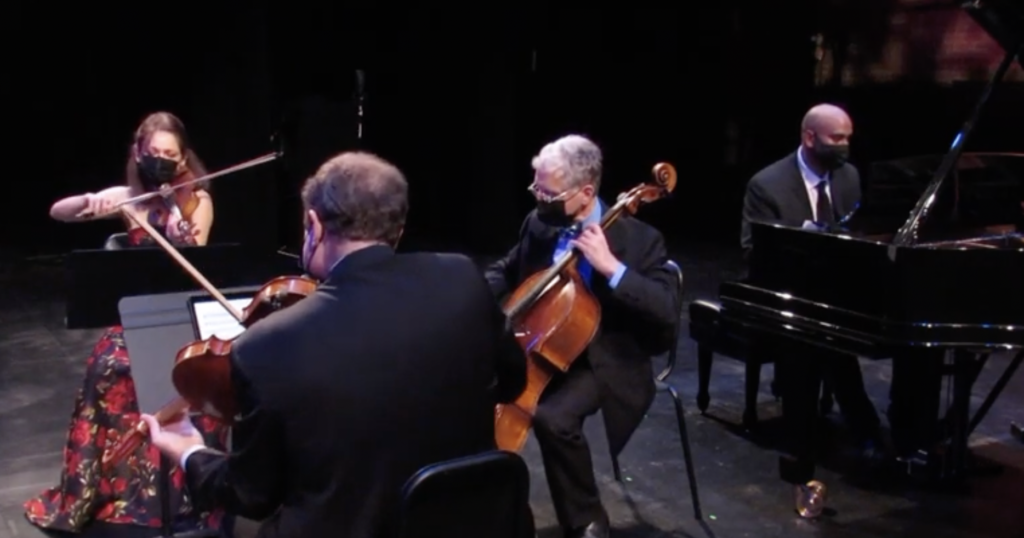
Carefully heeding state and federal guidelines, again without a playbook, the theater continued to provide content by streaming its archived content — including the popular Met Opera, Bolshoi Ballet, and Close Encounters With Music performances — along with new virtual events, including music, dance, plays, and readings (some offered for free). These broadcasts averaged around 60 households.
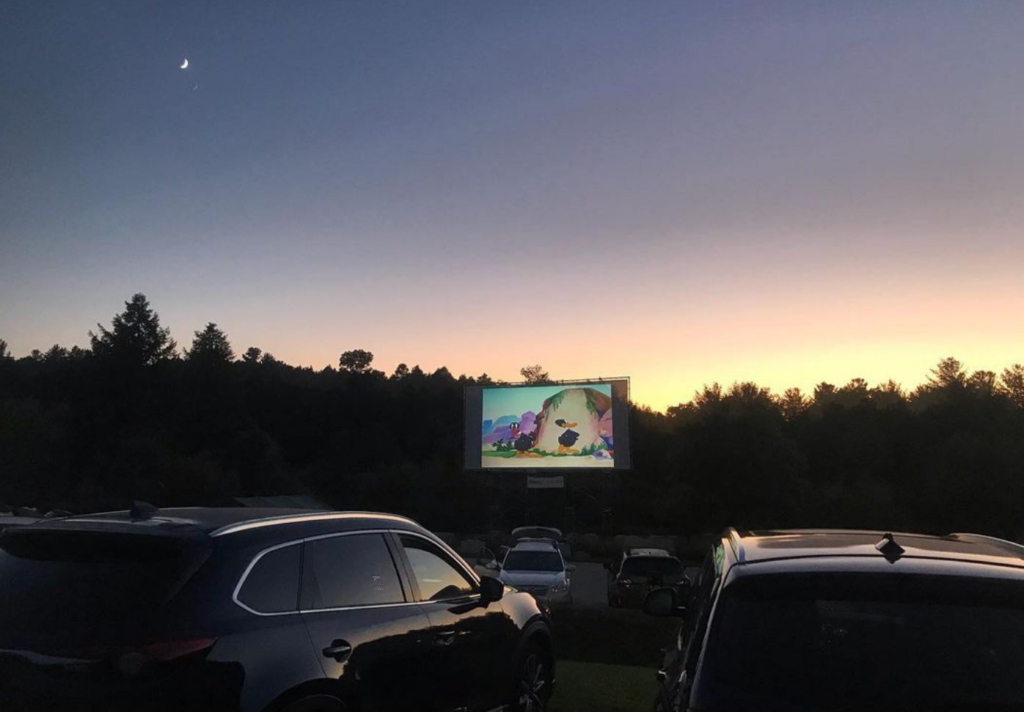
Given the popularity of its movie nights over the years, the Mahaiwe hosted a drive-in movie theater on the campus of Bard College at Simon’s Rock for the summer season. It also held its annual gala outdoors. These events not only contributed towards the theater fulfilling its commitment to the arts, but they also added much-needed human interaction during a period of isolation.
Reopened but remaining diligent
The theater was at last able to reopen its doors in a limited-seat capacity in June 2021, with the usual diverse line-up: the award-winning Pilobolus contemporary dance company, a one-night benefit performance of Broadway in the Berkshires (hosted by Richard Kind), and a preview of Cecily Strong’s memoir, “This Will All Be Over Soon”.
Figuring out the seating to comply with distancing guidelines was admittedly a huge challenge. The solution was to block off a set number of seats between groups of patrons, which reduced the maximum capacity from 650 to less than 100. Although this arrangement proved somewhat inconvenient, Martinson reports that most patrons were extremely appreciative of the staff’s commitment to protecting the safety of all who entered the theater.
Since then, the Mahaiwe has had a steady schedule of live shows and has been able gradually to provide more seating, all while keeping the safety of the community at the forefront. The theater is equipped with medical-grade HEPA filters and a bipolar ionization system, another means of air purification. Proof of vaccination (or a recent COVID test) is required to enter the building and masks must be worn at all times. As a result, no food or drinks are allowed; the concessionary is closed and even the water fountains are turned off. Other measures include touchless ticketing, directional signage, and hand-sanitation stations.
It continues to present virtual events, too — including the fifth annual W.E.B. Dubois Legacy Festival, which runs from February 18 through 23 (and is free of charge).
When asked about the morale of the team, Martinson notes: “There are a lot of gifts from being forced to work in a different way. It was liberating in some ways, as all normal expectations were gone. You were forced to experiment.”
For her, the Mahaiwe cohort is an ecosystem built on purpose, commitment, and action — to serve the arts and the community. Rather than running for cover, she applauds the team for viewing the pandemic as an opportunity to work cooperatively in devising and implementing a new paradigm.
“One of the things that became obvious very quickly was that performances are a shared experience. Along with the audiences, many people onstage and backstage are working together to make this one moment happen. It is endemic to what we do, to our art form.”