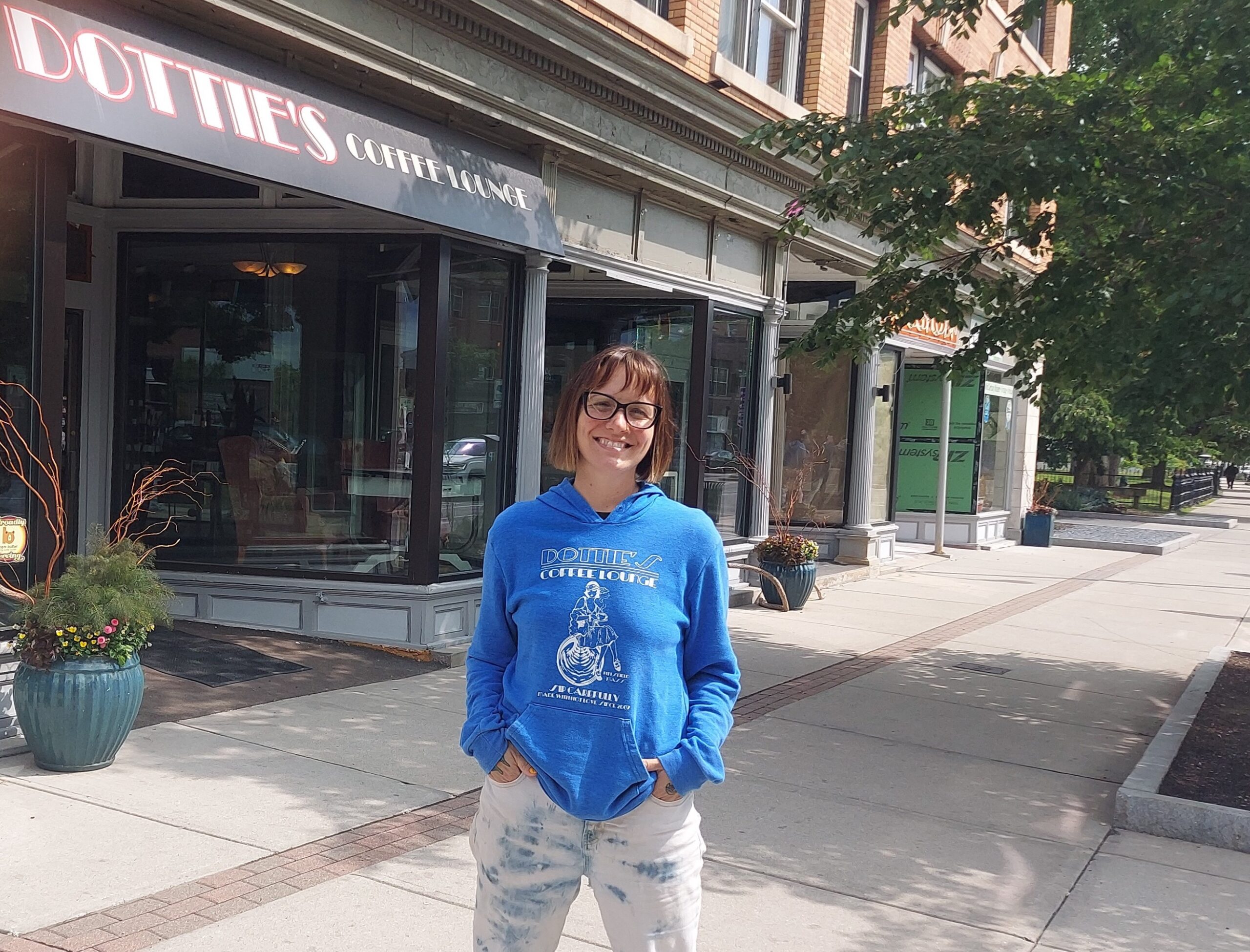
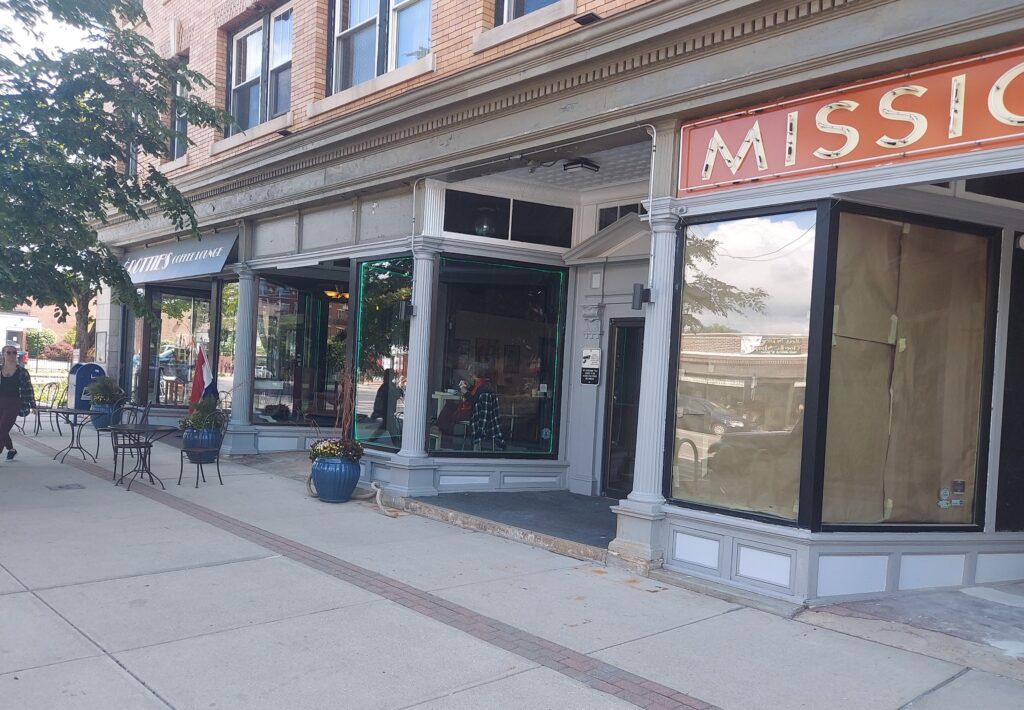
Pittsfield — For 15 years, two adjacent businesses—Dottie’s Coffee Lounge and the Mission tapas bar in the Greystone Building—created a social and culinary center on upper North Street in downtown Pittsfield. Mission was also known for its popular live jazz sessions on Monday nights.
In October 2022, however, Milltown Capital, which had acquired Mission in 2021, closed its doors for good. The loss was a blow to downtown Pittsfield, which was already struggling to recover from the effects of the COVID pandemic.
Nevertheless, the prospects for the Greystone block—and the entire downtown scene—have received a new boost. In March, Dottie’s Coffee LLC purchased Mission’s liquor license and other business assets and began expanding into that space with a new restaurant called Dorothy’s.
Following approval of a liquor license transfer in April and pending other permit approvals and construction, the goal is for Dorothy’s to open in July.
Two restaurants but the same welcoming atmosphere
This new venture will result in a total of 3,617 square feet, increase the operating hours, and expand its offerings to include dinners and alcoholic beverages, says Jessica Rufo, founder of Dottie’s, which she runs with her husband, Michael Downer. Rufo plans for the two establishments to have distinct identities but with common characteristics. “My goal when I started Dottie’s was to create a welcoming space where everyone can enjoy good food and coffee and have joyful experiences,” she says. “We want to provide that at Dorothy’s in a slightly different form.”
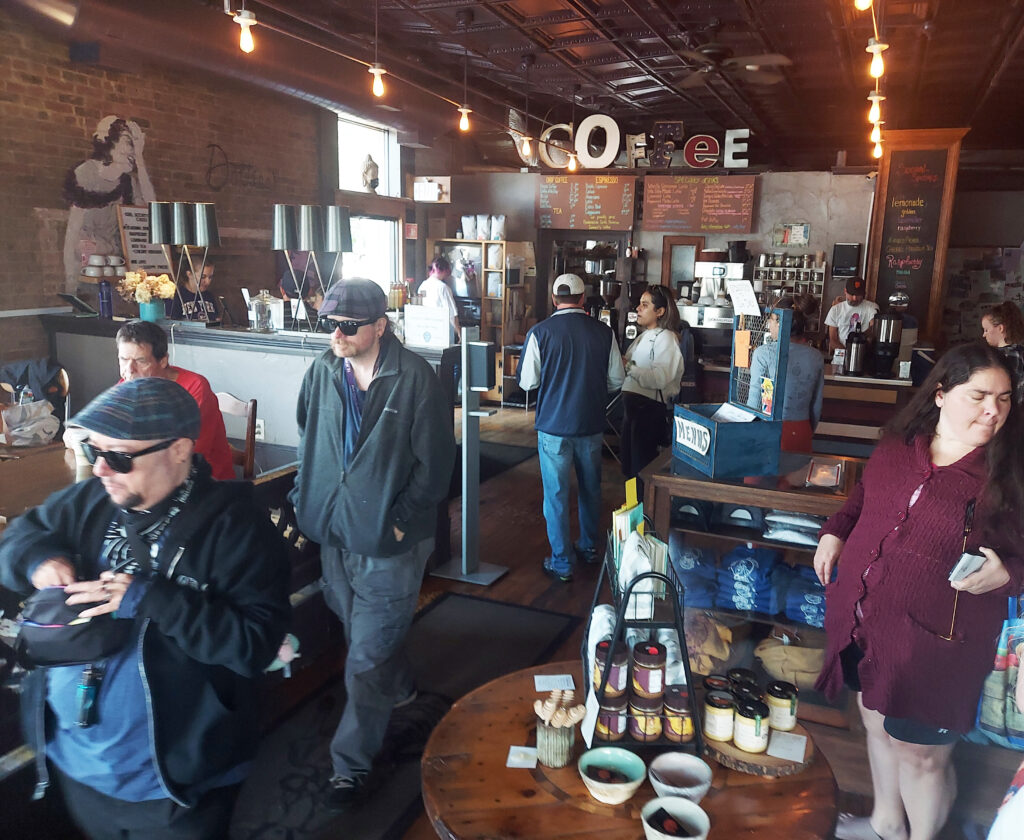
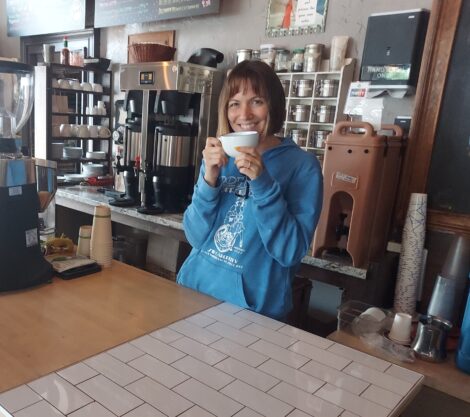
Dottie’s (444 North St.) has long been a popular spot for breakfast, lunch, snacks, and coffee drinks featuring Barrington Coffee’s roasts. In keeping with the casual coffeehouse atmosphere, people often linger to socialize, work, and relax. The plan is for the same friendly atmosphere of Dottie’s to spill over to Dorothy’s, which will serve dinner and drinks. So Dottie’s will remain open from 7 a.m. to 2 p.m. on weekdays and 8 a.m. to 2 p.m. on weekends. Then Dottie’s will close, and Dorothy’s will be open from 2 p.m. to 8 or 9 p.m.
“One great thing about Dottie’s is the lack of pressure. We want people to feel equally comfortable coming into Dorothy’s to relax and enjoy themselves. But we’ll need to make a certain amount of income daily on each seat there to make it work,” Rufo says, adding they considered whether Dorothy’s should be a full-service restaurant or take the approach of Dottie’s, where people order at the counter. “We decided to also have counter service at Dorothy’s, to maintain that same comfort level for customers.”
Currently, Dottie’s has two sections, which are separate storefronts connected by an internal open doorway. An outdoor patio offers additional seasonal seating. The original section on the building’s north side is known as the “coffee room.” It contains the service counters, kitchen, and a few tables and chairs. Adjacent to that is a section known as the “dining room,” an open space with tables and chairs and a small, raised area by the front window that doubles as seating and a stage during live music performances or other events.
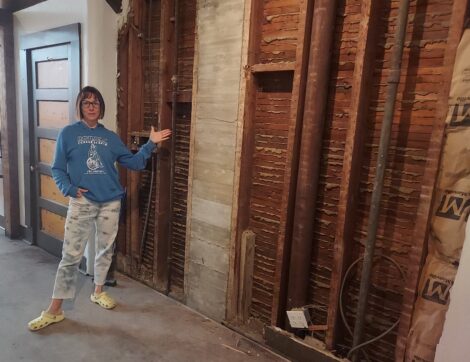
The new addition will connect to that (now) middle section by opening an existing passageway with its own dining area, bar, and kitchen. It will also have a separate entrance and an outdoor sign for Dorothy’s.
Gaining seating and kitchen capacity
Rufo notes a business advantage in combining the former Mission space with Dottie’s. The middle dining room will be open during Dottie’s and Dorothy’s hours for a total of 105 interior seats plus outside seating. “Although Mission was popular, one problem was that the space was small for a restaurant,” she comments. “It didn’t have enough seats, making it difficult to earn a profit. Hopefully, we can benefit by having more seating and space overall.” Dottie’s staff of ten will increase to about 16 when Dorothy’s opens.
The business’s culinary capabilities will also grow with a larger and more versatile kitchen. “The kitchen at Mission is a major upgrade for us,” she says, adding they’ll use that one to prepare meals for both Dottie’s and Dorothy’s while Dottie’s will be for food prep and baking.
Rufo explains they are still working out the menu and pricing for Dorothy’s. “I’ve been doing a lot of research into restaurant trends,” she says. “We’ll try out different things and see what works. But I have noticed that comfort food is popular, and the spirit of Dottie’s has always been about that. We serve quality homemade food with wholesome ingredients that everyone can enjoy. That will also be the orientation of Dorothy’s.”
She suggests the menu will probably start light and evolve. “We’ve always listened to the public, and the menu at Dorothy’s will go in the direction indicated by people who dine there.” One thing is sure: Although they will serve alcoholic beverages, that will not be a primary emphasis. “We don’t want to be a bar heavily oriented to drinking but be more like a friendly dinner party,” she says. “We’ll also have mocktails as an alternative.”
Rufo estimates the expansion cost at about $75,000, which is largely self-financed. She also applied for grants from the Pittsfield Economic Revitalization Corp. and the state. “We’re taking a big bite with this,” she says, crediting Keith Girard of the Massachusetts Small Business Development Center with helping them devise a business plan.
The path to ownership and expansion
A Berkshire County native, Rufo attended college in Boston and then lived in Brooklyn, where she worked in a popular coffeehouse and acquired a taste for coffee and its related culture. She returned to Berkshire County in 2007 and opened Dottie’s in a space formerly occupied by Bellissima Dolce, a coffeehouse and bakery.
She renamed it Dottie’s as a tribute to her grandmother, Dorothy Rufo. She also infused it with a youthful sense of community and made the space available for local art displays, live music, meetings, and other events.
The decision to invest in the expansion was due to a combination of personal and business considerations. Rufo notes that her circumstances have changed since she started Dottie’s. “Back then, I was a young single gal with the dream of opening a coffeehouse in Pittsfield,” she says. “Today, I’m married and have three children. So instead of just providing an income for one person, the business has to support a family of five.”
She added that it is also being done with the future in mind. “It’s part of our long-term escape plan,” she states. “We expect to continue doing this for at least ten years. But at some point, we’ll evaluate where we are and what we might do next. When the time comes, we want to be able to sell it as a substantial and valuable business.”
Remaining—and investing—in downtown Pittsfield
The timing was right for other reasons, too. The sale of the Greystone Building to Dennis McIntosh increased her confidence in the location. “As a landlord, he’s been very encouraging and has done whatever he can to help make this work,” she says.
Rufo had previously been exploring the possibilities of moving and expanding to another location. “However, the required investment was beyond our means,” she says. “And I love the story of Dottie’s and what it’s become in downtown Pittsfield.”
Downtown Pittsfield has been through ups and downs since Dottie’s opening. It went through a burst of energy during the administration of Mayor James Ruberto, who served from 2004 to 2011 and prioritized economic and cultural revitalization of downtown. However, that momentum subsequently slowed, and there are currently many vacant storefronts. A rise in crime and social issues further tarnished its reputation. The COVID pandemic only exacerbated these problems.
Nevertheless, Rufo is confident in the prospects of a comeback. A number of new stores and restaurants have opened recently, and she believes it is ready for a new chapter of revitalization.
“It’s challenging, but the downtown businesses are actually thriving,” she says. “And additions like the Berkshire Flyer train service are making a noticeably positive difference at Dottie’s. We just need more public support for downtown and more people like our landlord willing to invest here. I’d also like to see more young people start new ventures here and fill in the vacant spaces.”
She sees Dorothy as playing a role in this process by adding to the mix of activities that attract people to the city center. “My goal is for people to come to Dorothy’s in the evening, have a great time, and say, ‘I love being in downtown Pittsfield.'”