“Good guys working there, and some are really knowledgeable. They helped me a lot with my project. They deliver to your place and have reasonable prices and courteous drivers. They deserve 5 stars! Thank you!”
—review by Brian S.
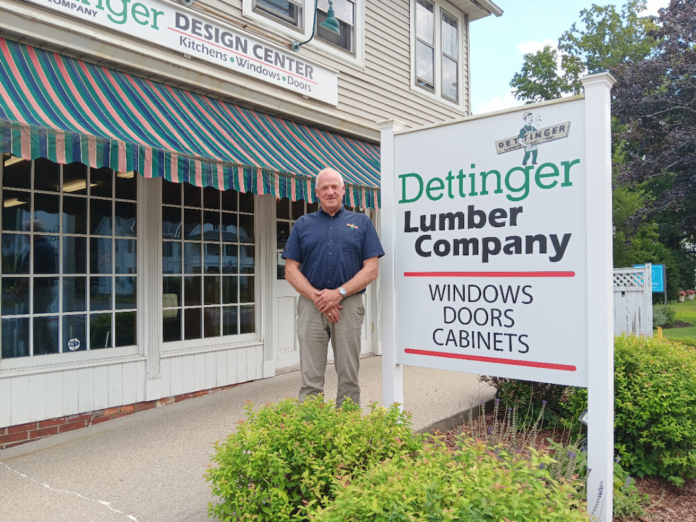
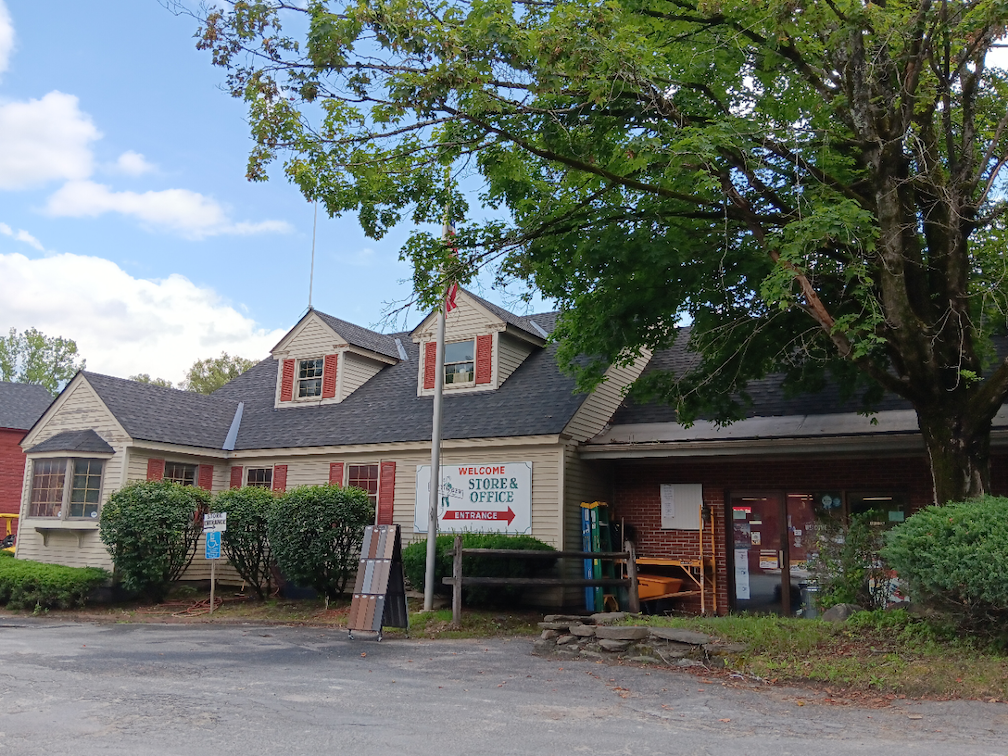
As it approaches its 100th anniversary, Dettinger Lumber Co. continues to be a staple of Berkshire County’s business community as an independent, full-service lumberyard, building-materials supplier, hardware store, and design center. It occupies a five-acre site, located in Pittsfield’s south end at 24 Warren Terrace, with another building facing South Street. The full-time staff of 16 is supplemented with four seasonal employees.
Since its founding by Jacob Dettinger as a lumberyard in 1926, the business has weathered numerous changes in the economy, the construction industry, building methods and materials, and the retail climate. Yet it has remained a family-owned and -operated business, with Jacob’s daughter-in-law, Maxine Dettinger, running things after his death. In 1959, she hired Leslie Sutherland, who quickly assumed responsibility for managing the day-to-day operations. He also became a part-owner.
Eventually, Leslie’s son, David Sutherland, and daughter, Joanne Spence, joined the business. In the 1990s, the Sutherlands acquired full ownership of the company. Today, David’s son, Jonathan Sutherland, is a third-generation member of the team, joining David (president) and Joanne (CFO) as executive vice president.
David attributed Dettinger’s longevity to a combination of successful adaptation to the market, with a focus on the basics of customer service and quality products. “Over the years, we’ve developed long-term working relationships with a very loyal customer base,” he said. “Initially, the business was oriented to lumber and other hardline building materials for professional builders,” he continued. “Over time, we expanded into other products. We also increasingly served the consumer market of people doing DIY home improvement projects and maintenance.”
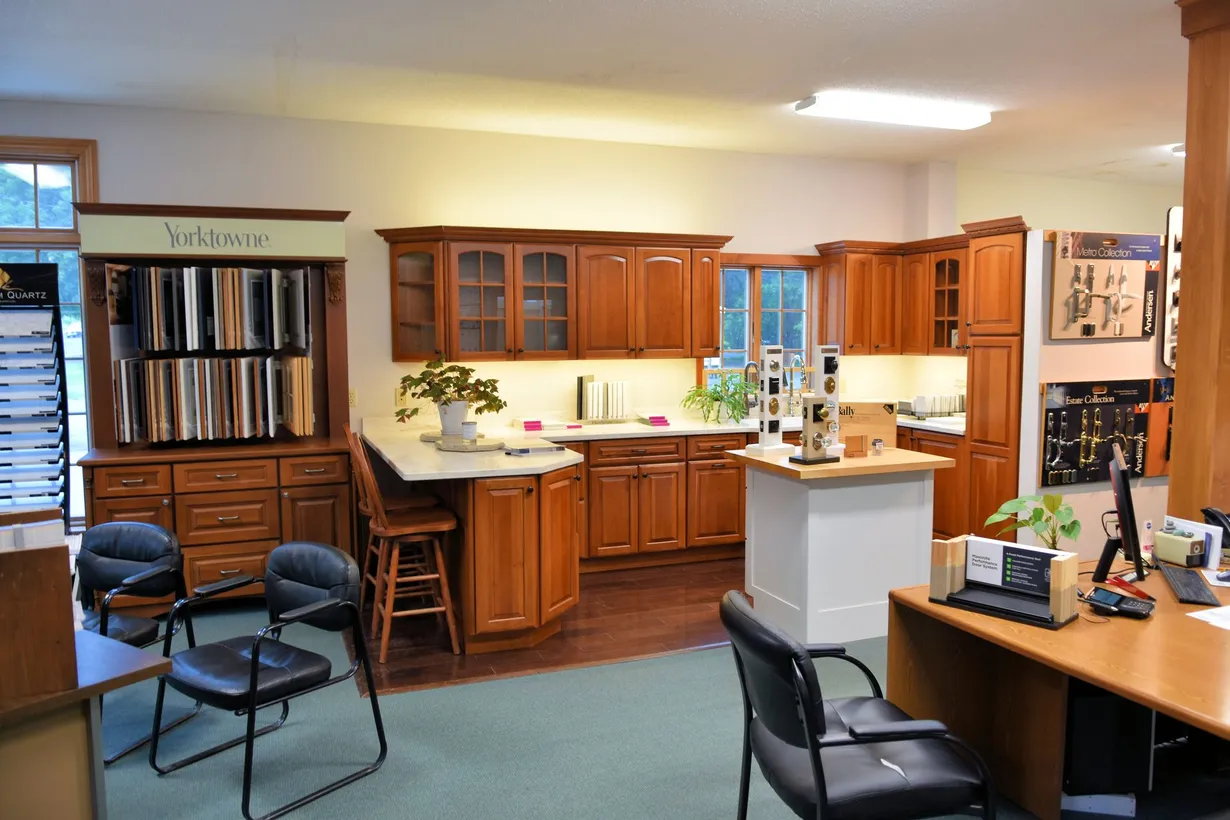
Dettinger’s opened the hardware store at the lumber yard in 1985. Then, in 2001, the Sutherlands purchased a nearby building on the corner of South Street (the former South End Market). They converted that small grocery store into a showroom and design center. Staffed by two people, that operation provides interior design services and sales. “We do everything but actual installation, because we don’t want to compete with the contractors who are our customers,” David explained.
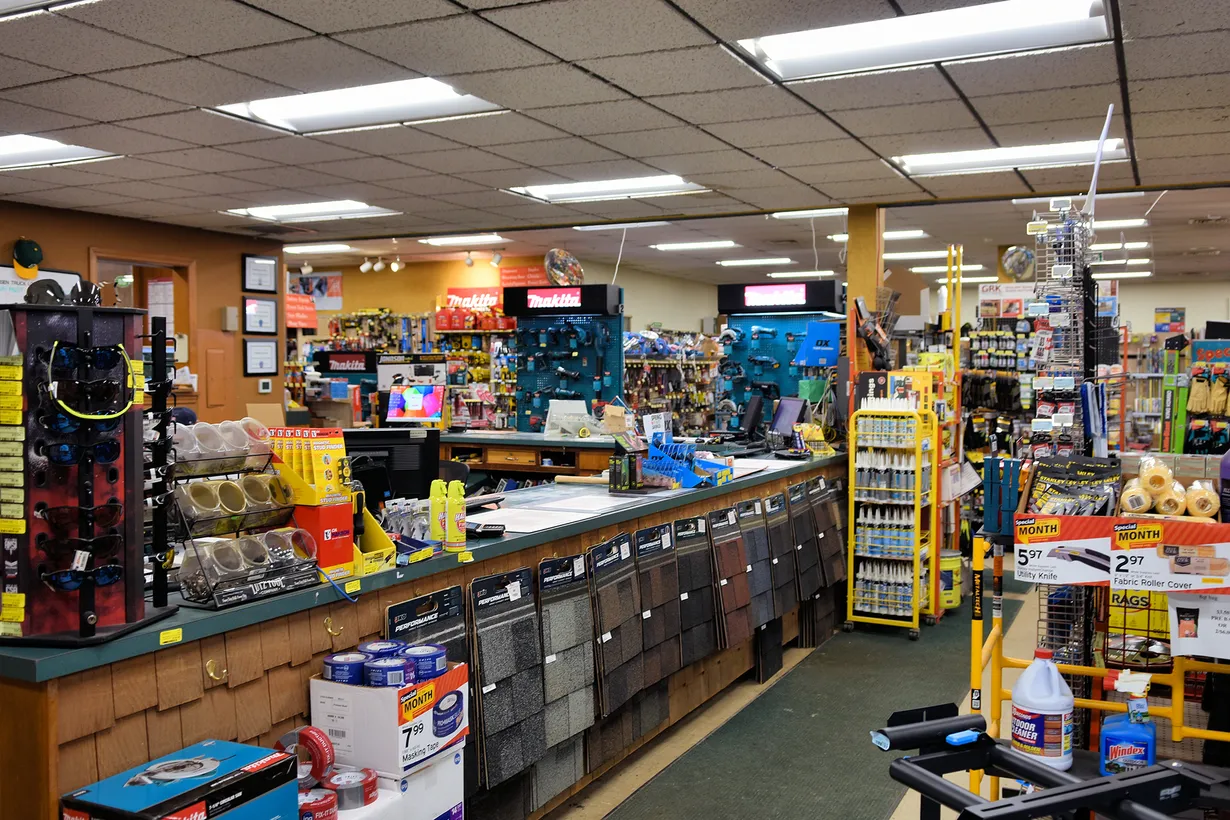
Dettinger offers an extensive selection of lumber, including pressure-treated wood, SPF (spruce, pine, fir) dimensional lumber, plywood, and Eastern White Pine boards. They also sell a variety of other materials, including concrete, roofing supplies, drywall, insulation, and siding, as well as cabinets, countertops, flooring, doors, and windows. The hardware store stocks a wide range of tools, paints, and electrical and plumbing supplies, among other items.
A focus on quality products and reliable customer service
As in other sectors of the economy, the market for building supplies and hardware has consolidated since the 1970s. It is now dominated by major suppliers, distributors, and retail chains such as Home Depot. Along the way, many independent businesses have closed or been acquired by these larger operations. Additionally, the emergence of online commerce has significantly reshaped the retail industry. “Like other independents, we were worried about the emergence of chains,” said David. “It has certainly had an impact. However, we’ve been able to survive and successfully compete by focusing on our strengths.“
One of those strengths, he said, is their affiliation as members of LBM Advantage, a large nationwide purchasing co-operative. That gives them the buying power and access to products and competitive prices of a high-volume purchaser. “It enables us to be independently owned and operated, while being represented by an organization that represents a very large number of businesses with billions of dollars in sales,” David said, adding that although the retail consumer market is an important part of their base, the core of their business remains professional builders and contractors. “We’ve evolved, but that continues to be our backbone,” he said.
Jonathan commented that the majority of their staff has worked there for many years, giving them the necessary expertise to help customers make informed decisions on matters such as selecting the proper lumber for specific purposes. “This business is all about relationships among management, staff, customers, and suppliers,” he said.
Reliable service is especially critical for businesses that serve the construction industry, according to the Sutherlands. Responsiveness and accuracy are vital when preparing and delivering orders of building materials to job sites. Often deliveries are time-sensitive, and effective coordination is critical. Dettinger offers free and fast delivery. “A large order can be very complex,” acknowledged David. “We have to select and load and deliver the products quickly. Being able to do that efficiently is an anchor of our business.”
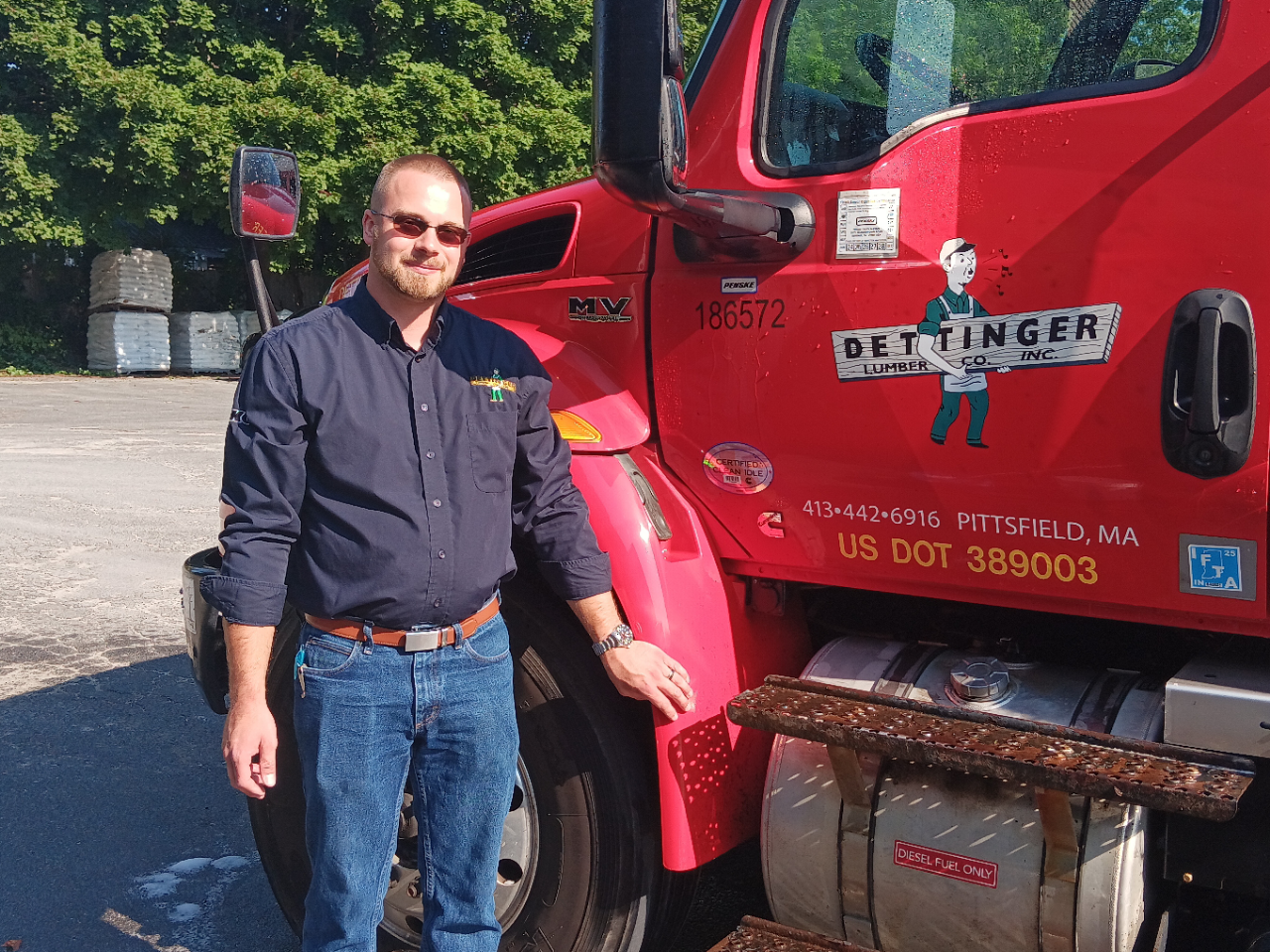
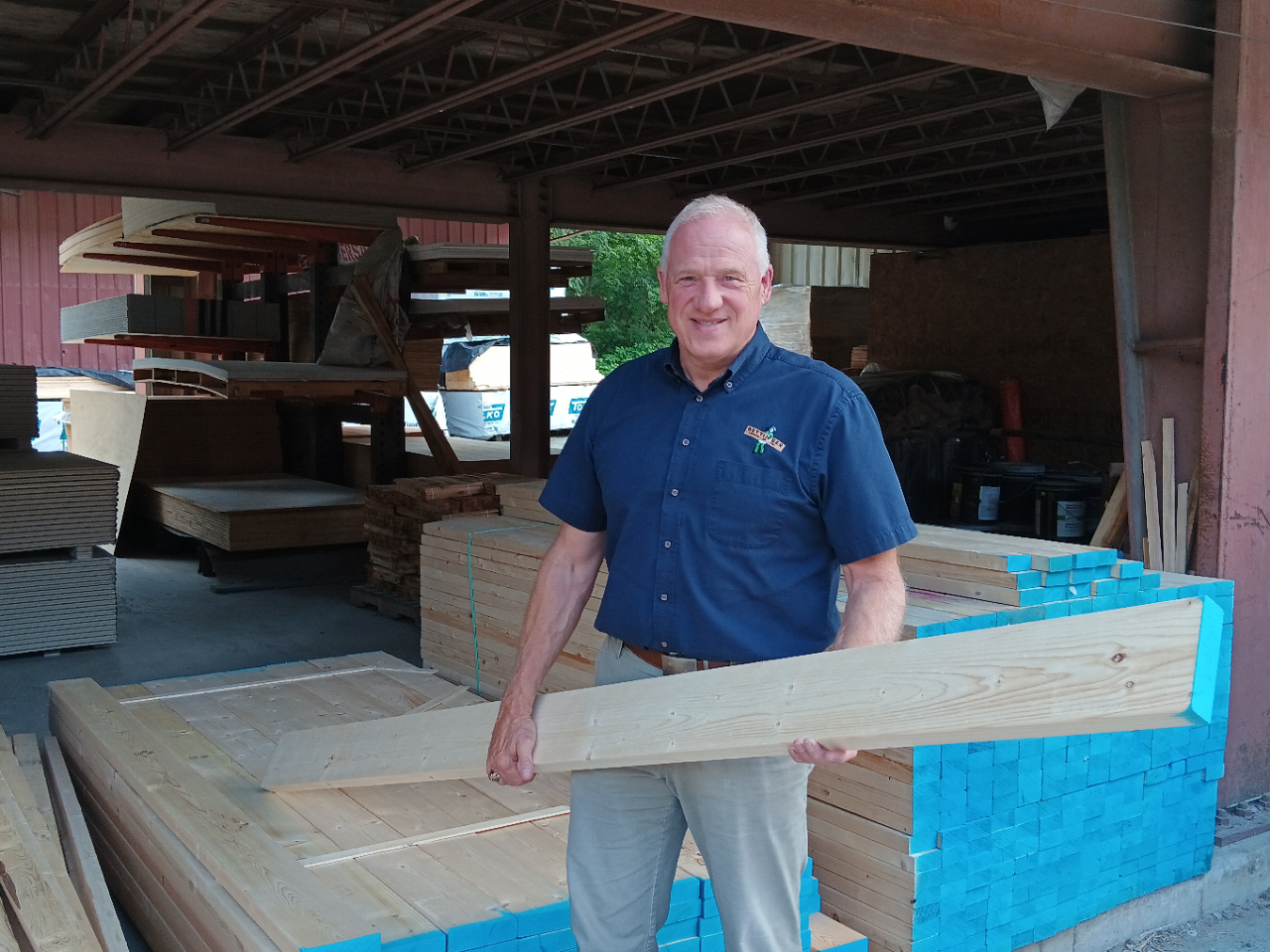
Quality control is also crucial. “If any lumber at a job site can’t be used or is left over because of flaws and imperfections, it can cause significant problems for a contractor,” he said. “Our specialty in premium products is one reason contractors work with us. There is less waste and a need to exchange products.” While they aim to be competitively priced, the Sutherlands’ emphasis is on quality and value in their offerings, rather than the cheapest products available. “Mills have different grading standards, and not all of it is as good as it used to be,” said Jonathan.
To ensure the quality of structural framing lumber, Dettinger sells top-grade SPF lumber, which primarily comes from British Columbia, Canada. “That’s among the best available,” said Jonathan. Treated wood for other purposes, such as porches, fences, and decks, is sourced from high-quality southern pine, which is well-suited for the treatment process.
Overcoming challenges, past and present
When asked about the ongoing volatility in trade and tariff policies, David acknowledged that the ultimate effects of this on imported lumber are still unknown. However, despite the high-profile dramas, he does not expect major long-term changes in the fundamental dynamics. “I’m not an expert on tariffs, and it hasn’t happened yet, so I can only offer an opinion,” he said. “But this is not new. For as long as I’ve been in this business, there has been constant litigation and back-and-forth with Canada over lumber. One country will periodically accuse the other of unfair trade practices and will impose duties. Then, they’ll negotiate a settlement. My best guess is that over time, tariffs will continue to come and go as they have always done. But we’ll have to wait and see.”
Another issue that the industry has had to contend with in recent years was the COVID pandemic. David said the impact was paradoxical. “When that first hit in 2020, everyone in the industry was expecting sales and business activity to decline and suppliers drastically cut back on production,” he said. “But the opposite happened. There was a huge bump in sales. With people staying home, there was an increase in demand for construction and renovation projects.”
This was intensified in the Berkshires due to the large number of people from cities who relocated here during the pandemic. “So it bolstered business, but the major challenge was getting material,” David continued. “It was rampant throughout the industry. There were major shortages and long delays in shipments.”
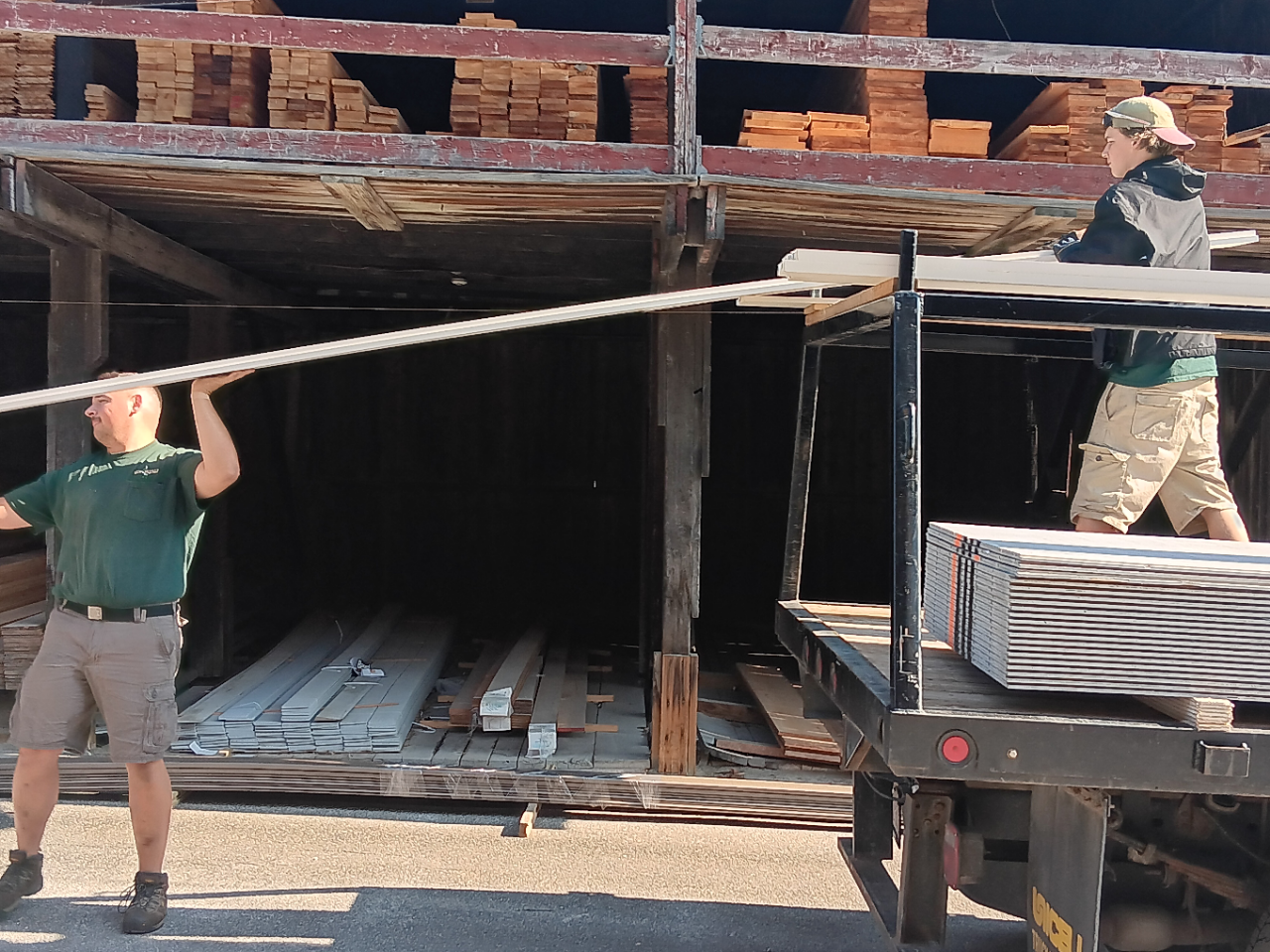
Jonathan added that the pandemic was stressful for the company and its customers. “Fortunately, we have an awesome staff and everyone stepped up,” he said. “If it wasn’t for their dedicated efforts, we might not have made it through that period.” The Sutherlands said that the situation has returned to normal, but it continues to make business planning more challenging. “Overall, we’re on track for business growth,” said David. “But the market is still unpredictable. And we base our budgeting and projections on historical business data. It’s difficult to make those comparisons because of those disruptions.”
Looking ahead, the Sutherlands plan to continue Dettinger Lumber as a family-run business into its second century. “When I was young, I did not think this would be my career,” Jonathan admitted. “But when I started working here, it eventually drew me in. I love this business and the people I work with. So now, I can’t imagine doing anything else.”