“At Canna Provisions Group, our mission is about making life’s journey better by providing premium cannabis products to all types of customers, from first-time shoppers to experienced consumers.” — Canna Provisions website
Given the highly competitive (and fast-growing) local cannabis industry in the Berkshires, you may wonder what sets Canna Provisions apart. Meg Sanders, co-founder and CEO, narrows it down to this: “Ensuring ethical practices and quality products (completely natural and free of chemicals), and fostering a supportive community.” Equally important to supporting the surrounding community is building a supportive network of women-owned, women-led companies.
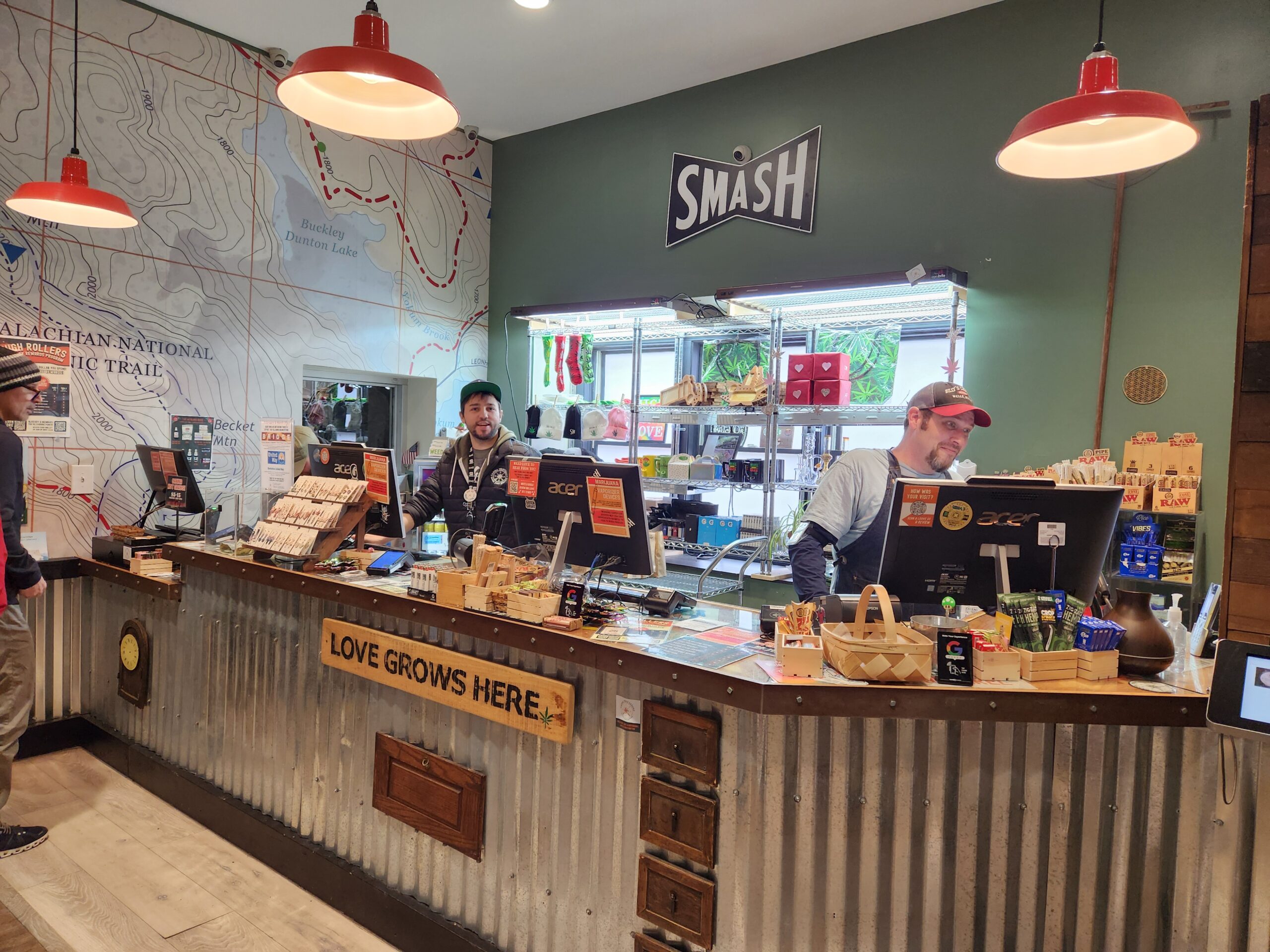
“People know and trust Canna Provisions,” she notes—a statement supported by its being voted the #1 Cannabis Dispensary in Massachusetts by Chronogram, The Valley Advocate, and Rural Intelligence. The company’s mission is relatively simple: helping adults “better your journey” by making it more enjoyable. “It starts when you walk into one of our dispensaries and get assigned a personal guide who will take you through the store, answer your questions, and recommend products based on your personal needs,” media specialist Dan McCarthy explains. You can also preorder online for store pick-up or use the in-store kiosks to place orders.
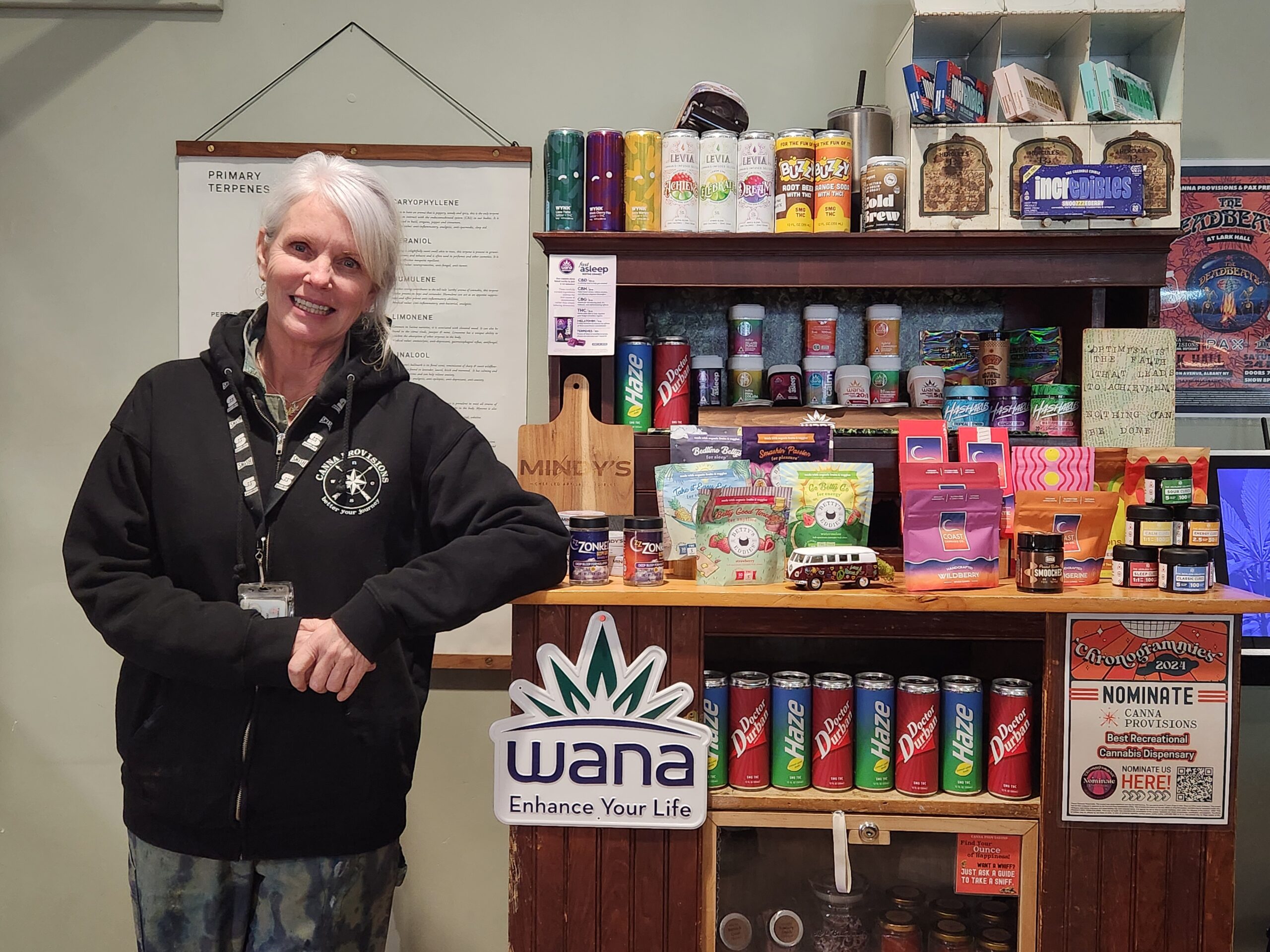
Sanders’ vision for Canna Provisions is as big as “changing the world” and as focused as “giving back to the local community.” At 57, with 15 years in the cannabis industry, her sense of purpose and perspective are fully cultivated, and her ability to deliver is unquestioned.
First seeds of two budding futures
Asked how she became interested in the legalization and cultivation of cannabis, Meg Sanders cites watching friends and upstanding members of her community in Colorado lose custody of their children due to growing cannabis in the home. Some were growing cannabis flower for a child with cancer, she explains, and many are “medical refugees” still.
She began working in the cannabis industry in 2009 when Colorado was the Wild West—with no rules, regulations, or zoning restrictions. “It was a hot mess,” she admits. Following the 2008 economic crash, people started buying land and vacant buildings to grow their provisions and open dispensaries. In 2012, Colorado voted to legalize recreational marijuana beginning in 2014, making it the first state alongside Washington to permit recreational use.
Sanders was running a company (MindFUL, Inc.) with seven dispensaries in Colorado but couldn’t accept out-of-state investments. “It was hard to raise money in Colorado; the IRS, DEA [U.S. Drug Enforcement Agency], and FBI were all determined to keep the money within the state borders,” she notes. “Only Colorado operated under a truly regulated scene. Other states needed guidance, but the talent vacuum was very real,” she adds.

Sanders began collaborating with, consulting for, and raising capital for more than 30 dispensaries across five states, including Massachusetts, gaining unparalleled expertise in the cannabis sector. She divested her successful MindFUL dispensaries in Colorado during the early stages of the legal market before returning to operations in 2019 with the launch of Canna Provisions, headquartered right off the interstate in Lee.
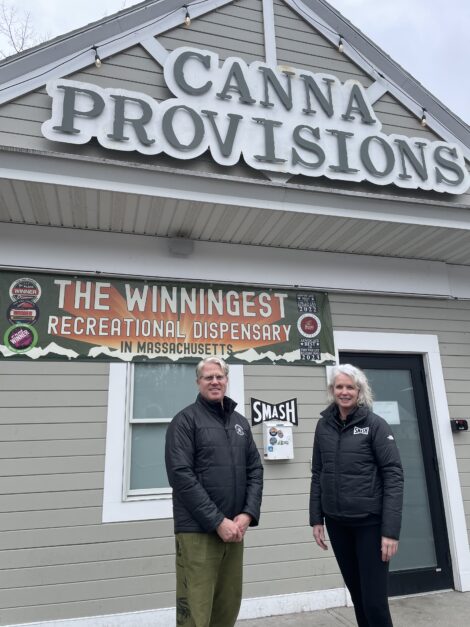
Over the course of her career, she has solidified her reputation as an “industry pioneer, cultivation expert, and consumer sales specialist,” establishing Canna Provisions as one of the top 10 largest independent cannabis companies in Massachusetts, according to the Boston Business Journal. She participated in a National Academy of Sciences workshop in collaboration with the White House, FBI, and NSA (National Security Agency). She has also gained national influence through her involvement in operations that impact nearly every state with legal cannabis activities.
Erik Williams, co-founder and COO of Canna Provisions, became passionate about getting cannabis legalized as a college student when he witnessed other students who “lost everything” (tuition, loans and scholarships, housing, and their future) after being caught with one seed. They then became marginalized members of the community and were often placed in the corrections system with no possibility of bond money.
Along with Sanders, Williams oversaw MindFUL, Inc., before the duo went on to form Will and Way Consulting, working with cannabis firms and legalization initiatives across the country. Throughout his 20-year political and cannabis career, he has held many roles, including serving as founder and executive director of the Connecticut division of NORML (National Organization for the Reform of Marijuana Laws), which shaped state regulations tied to the legalization of medical marijuana use. He has also helped other states navigate regulations—speaking to legislative bodies and current business operators as well as consulting over budgets and location siting.
In 2017 and 2018, Williams started consulting in Massachusetts, where over 60 percent of the townships had opted out or placed a long-term moratorium on cannabis, forcing reliance on local ordinances. He comments, “Every state wants to do it in its way. Massachusetts wanted to be the tightest regulated system in the U.S.”
A “marquee destination” for tourists and cannabis enthusiasts is born
After Massachusetts voters passed the Massachusetts Legalization, Regulation, and Taxation of Marijuana Initiative in 2016 (also known as Question 4), regulating the system took a long time to put in place, given the limited licensing schemes. In working with clients, Williams and Sanders learned that Lee and Holyoke were open to cannabis dispensaries based on the multiple revenue streams they would provide (including sales tax, cannabis tax, and host community agreements, which allow towns to maximize what they get).
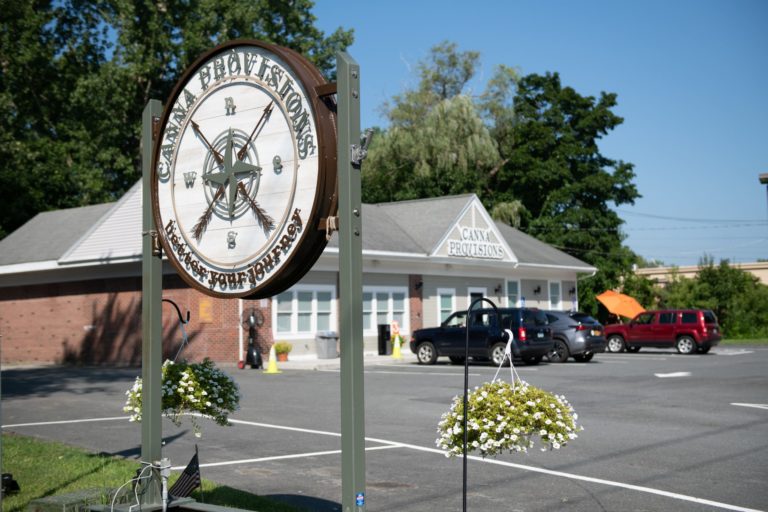
“We were very thoughtful about the placement of each of our dispensaries,” Sanders points out. She and Williams first met with the Lee police and fire chiefs, followed by the town manager and attorney. Laws prevented the Lee location from being in a residential neighborhood or on Main Street, so they found a strategic location at the key crossroads where Mass. Route 102 and U.S. Routes 20 and 7 meet—and just 420 yards off the turnpike (I 90) that has become a “gateway” to the Berkshires for people throughout New England.
Alex Morse, mayor of Holyoke at the time, welcomed cannabis as a way to revive a depressed downtown. That location, in a 150-year-old former paper mill factory, offers easy access to the Connecticut border to the south and Springfield, Northampton, Vermont, and New Hampshire to the north via I-91 and interstate roadways.
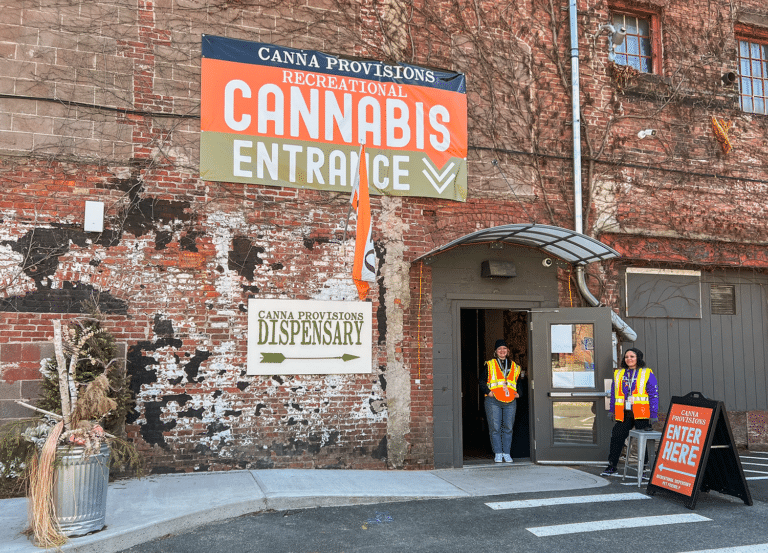
Sanders and Williams co-founded their business in 2019 (just in time to sell “provisions” to the hordes of people who flocked to the Berkshires to shelter in place), with Sanders serving as CEO and Williams as COO. Their once-small operation now has over 80 employees across the Lee, Holyoke, and Sheffield (cultivation) locations.
Williams’ expertise in cultivation, strain selection, and retail management is critical to Canna Provisions outposts. Their Sheffield plant has a small (6,500-square-foot) indoor facility and a larger (10,000-square-foot) outdoor and hoop house grow space. The cannabis plant, with its deep roots, low water requirements, and fast growth (literally, like a weed), is regenerative and good for the environment.
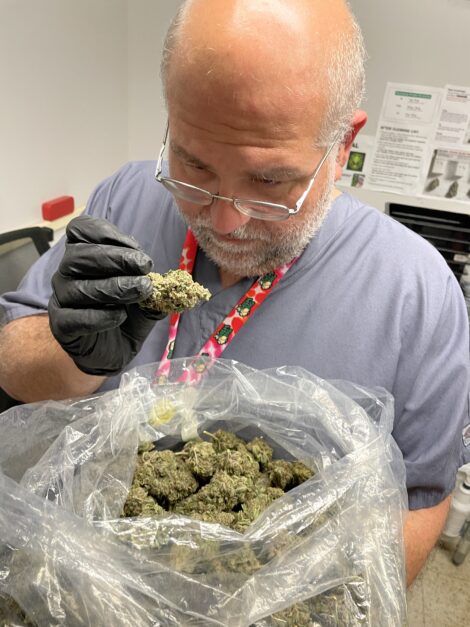
Greg Krzanowski, of Canna Provisions’ award-winning Smash Hits cannabis line, serves as cultivation director in Sheffield, where a staff of nine (five women) helps to grow and develop provisions. Since dropping their first crop (on April 20, 2021), Smash Hits has been rolling out cannabis sourced from “Chemdog” Krzanowski’s famous strains and grown by Chemdog, whose dedication to “the artistry of growing” dates back 30 years.
Once considered an “outlaw” in the legacy market days, Chemdog’s reputation reached legendary highs as the cultivator of the strain sought after by musicians, athletes, and entertainment people. He famously developed his Chemdog line of genetics and strains from seeds acquired from friends he met on the 1991 Grateful Dead tour. Thanks to “a slew of successful crosses,” both the strain and the man secured a permanent place in the Leafly 100 Best Weed Strains of All Time list.
A high maintenance industry
“It’s a very expensive business to run,” Sanders points out. “You need a lot of highly trained staff, and 70 percent of the earnings go to taxes. Add to that the 3 percent that gets taken off the top for anything that might negatively impact the town, and the profits dwindle even more.”
State revenues have dramatically increased from the brand’s volume and high consumer engagement. “The combined total of our infusion of jobs and dollars to the local economy across our three locations is roughly $15 million,” Sanders estimates, adding, “Where others are closing, reducing, or retreating, Canna Provisions is one of less than 25 percent of the legal cannabis operators in the U.S. considered profitable.” Cannabis sales in Massachusetts reached $1.56 billion in 2023, making it a significant economic contributor.
That doesn’t mean it’s been easy. Beginning in the fall of 2023, Canna Provisions has been the lead plaintiff in a lawsuit over the federal prohibition on pot commerce. “Since 2016, when recreational marijuana was legalized in Massachusetts, we have struggled to gain access to small business loans and other benefits we are legally entitled to,” Sanders notes. They also face job posting and workshop announcement restrictions due to federal funding connections. At the same time, they continue to be taxed at over 70 percent due to U.S. IRS Tax Code 280E, which forbids cannabis businesses from deducting ordinary business expenses from gross income.
The lawsuit doesn’t aim to alter federal oversight of interstate commerce but to declare federal restrictions outdated. “We are the face of the lawsuit for a family business,” Sanders states, noting that their company is the “epitome of a mom-and-pop shop” business. “If our efforts are successful, the tax implications of Section 280E will no longer be a cancer for intrastate commerce,” she projects.
When it came time for Canna Provisions to make a large payment for community impact in 2021 (as proscribed under the law), the local police and elected officials had to admit that the company had a clean record and that there was, in fact, no negative community impact. As such, the Lee select board waived the fee, saying that “perceived fears” had never materialized.
An equally challenging hit was the 200-percent drop in the price of cannabis year over year from 2022 to 2023. “We’re seeing the results of the over-saturation of dispensaries in places like New Hampshire, Pittsfield, and Great Barrington,” she confides. “With the current ‘over-supply,’ it’s harder to make your business stand out—especially because cannabis businesses are not allowed to put up any content, promotions, or links on social media, and Meta doesn’t allow them to have a Facebook page.”
The kids are alright; the aging adults need relief
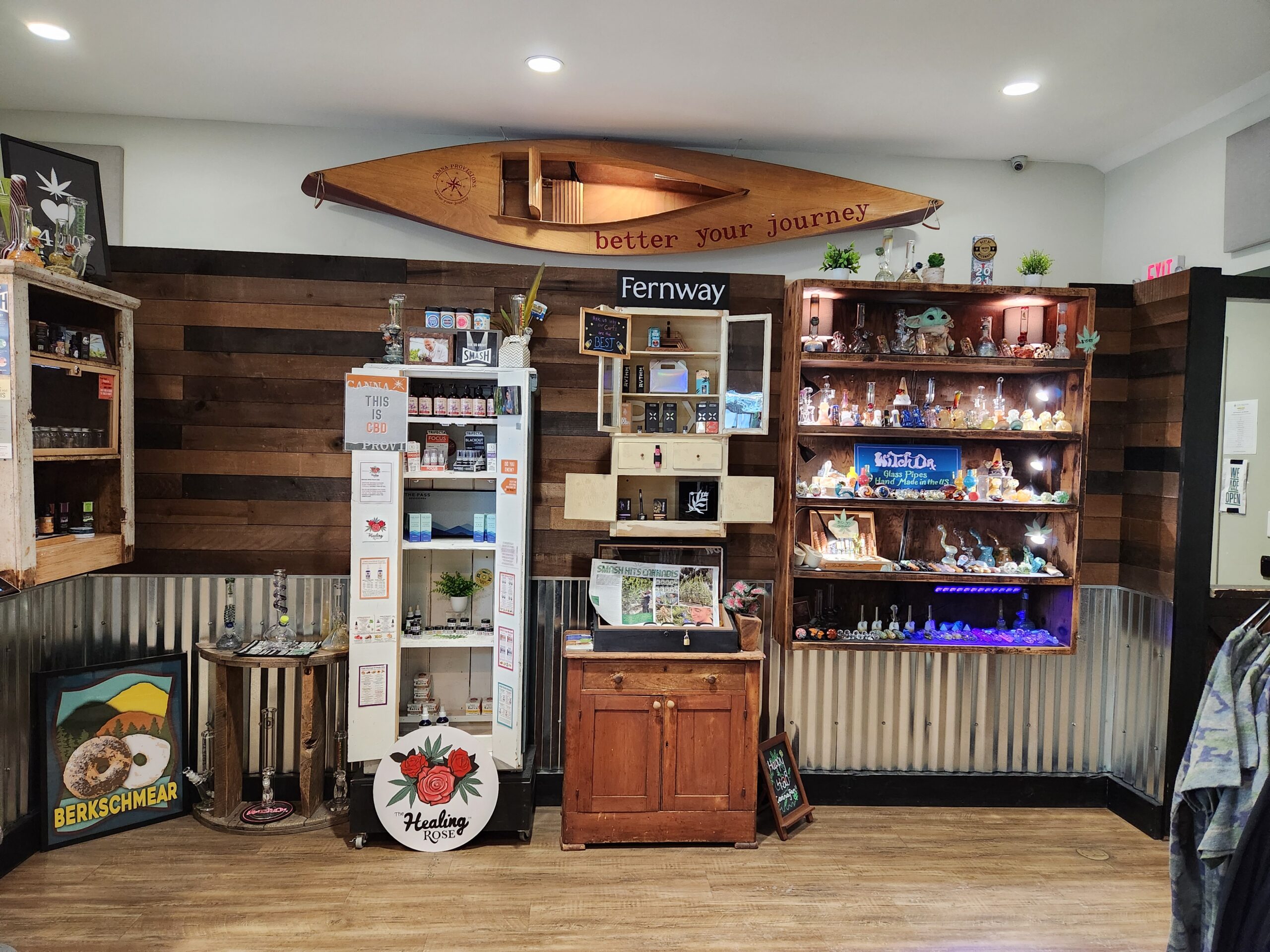
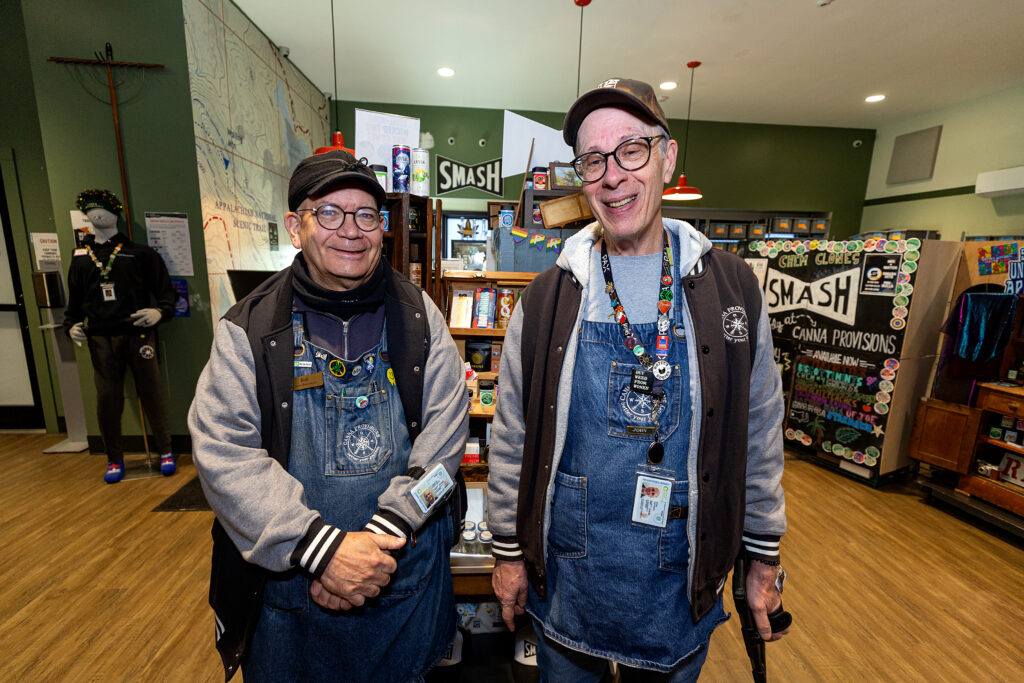
Who is Canna Provisions’ clientele? Spend a half hour in their Lee dispensary, and you will quickly appreciate the demographic range. As Williams points out, “Cannabis is a fun way to de-stress, whether at a concert, party, or quiet gathering with friends. And today, it’s just as acceptable to show up for dinner with a jar of joints as a bottle of wine.”
Mostly, however, their customers are older Americans “who have been failed by traditional medicine or find alcohol a ‘less friendly’ option,” Sanders says. And the most pressing thing they ask for when they visit the store is what they can take to get a good night’s sleep.
According to a Department of Health survey conducted here in the Berkshires, 30 percent of adults reported using cannabis in the last 30 days. “The market is already there,” Sanders asserts. “We’re providing a safe, legal way for people to avoid the gray, legacy market. We understand that we have a very clear responsibility not to sell to anyone underage—or even permit them to enter the building.” Packaging requirements (including not only plastic containers and careful labeling but also childproof seals) add to the cost but also the safety of the product overall.
Sanders is finding a special calling, however, in offering new alternatives for women looking for more effective options for addressing menopause. “The reality is that health issues like menopause affect the entire family,” she points out. Cannabis addresses the biggest symptoms women experience—hot flashes, sleep, and anxiety. “I think my journey down the menopause road is much better thanks to cannabis,” she shares. “If I can help women age 35 and older gain relief during the ‘change of life’ years, I’ll feel incredibly fulfilled.”
For end-of-life or hospice care, especially linked to cancer, cannabis can be used not only for pain relief but also to stimulate appetite when chemotherapy has caused it to diminish. “Cannabis and palliative care are like peas and carrots,” she says, referencing advanced studies at nursing homes in Israel where cannabis has offered significant relief from pain. There are health benefits for pets, too, as the “No THC” options for dogs and cats increase. “We can make an anxious dog or a cat being treated for cancer much more comfortable than traditional medicine,” she explains.
“A model of corporate citizenship and public steward for good business in the Berkshires”
“We’re proud of our 95 percent very positive response,” Sanders states—a statistic she attributes largely to being “really involved” in the community. “Erik is a board member and vice president of the Lee Chamber of Commerce, and I am involved with the Chamber, a business partner of Tanglewood and Shakespeare & Company, an EforAll mentor, a member of the Berkshire Business and Professional Women group, a member of 1Berkshire, and a massive supporter of the Berkshire Humane Society. We focus on showing that we’re a significant net positive,” she smiles.
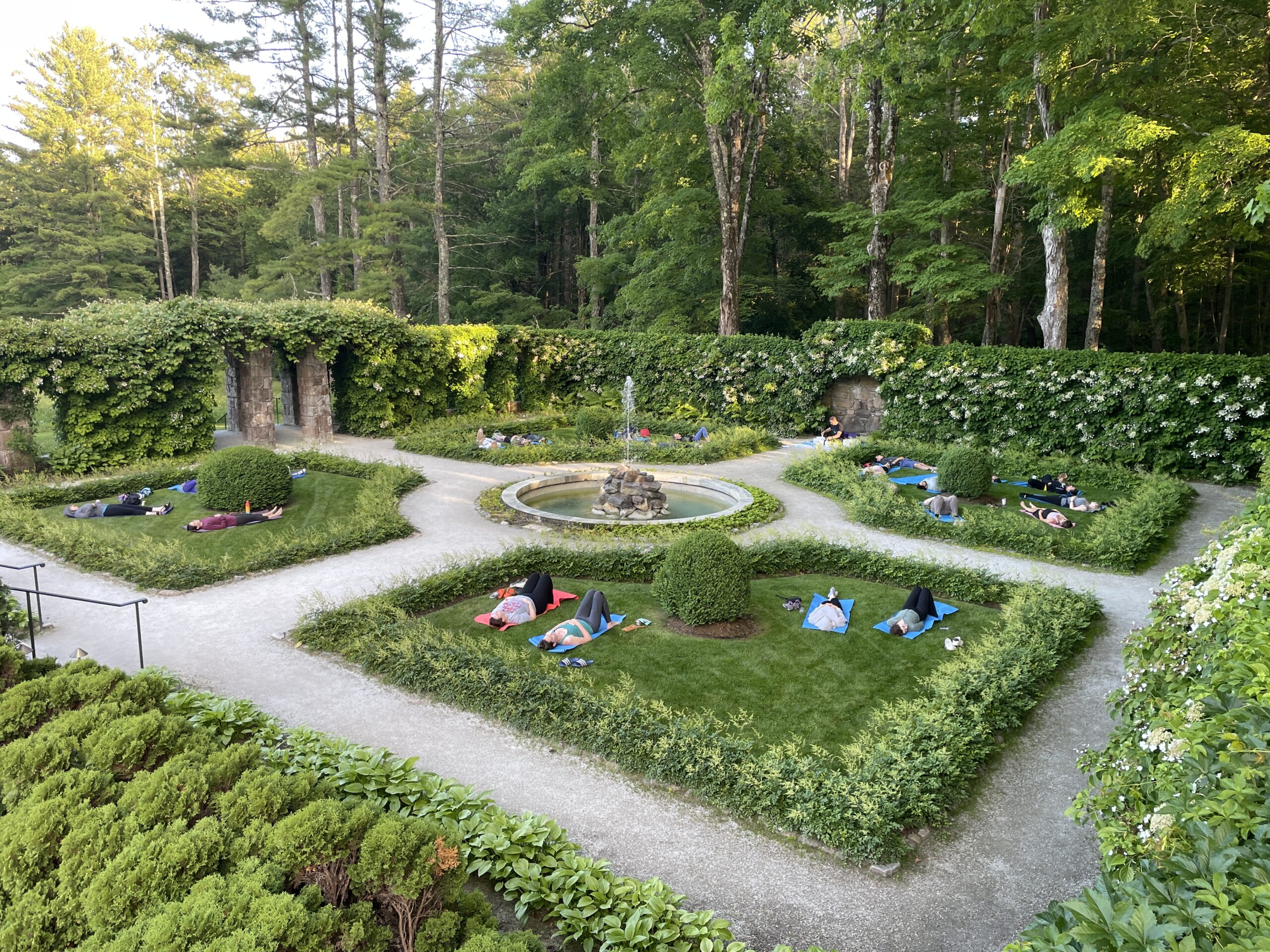
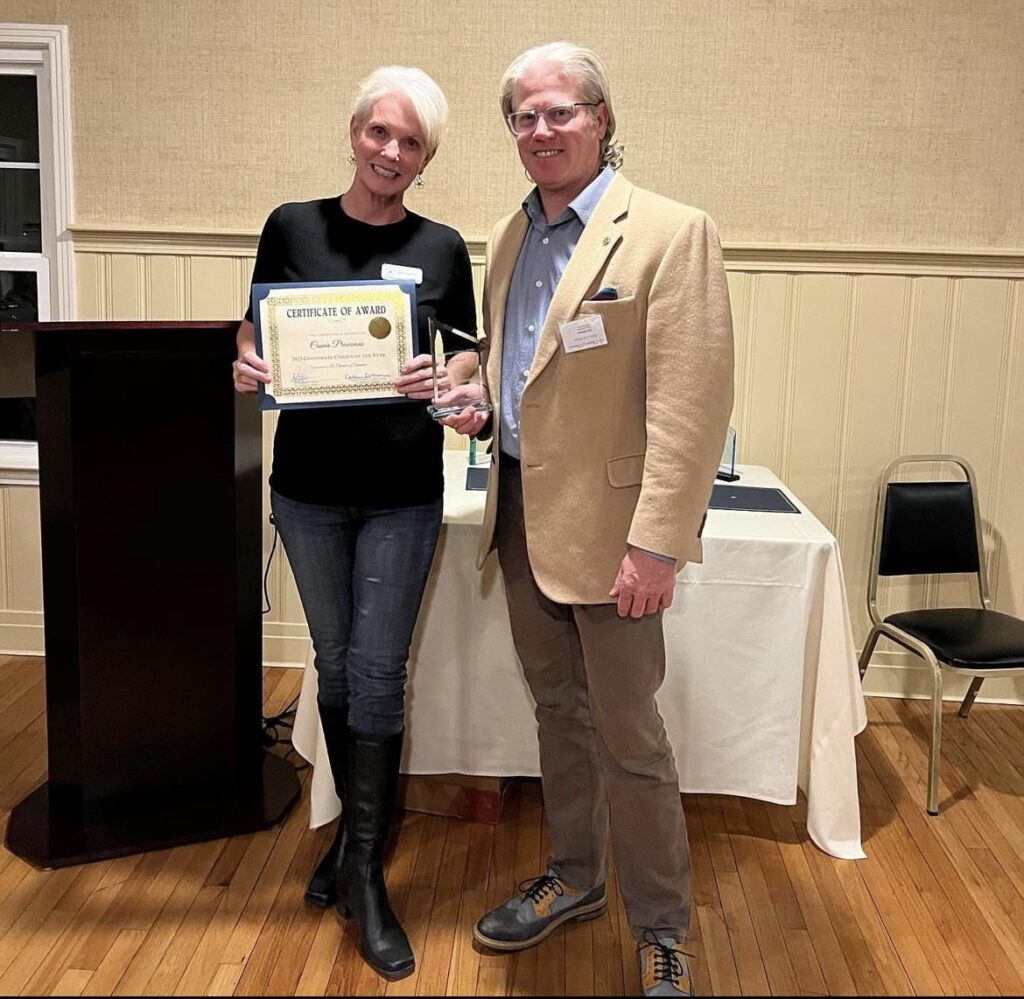
“We hosted 70 highly successful events at Locker Room Sports Pub on Main Street in 2023—from Music Bingo to live music. And we sponsor a variety of wellness events around yoga, sound beds, and meditation.” Canna Provisions was named 2023 Corporate Citizen of the Year by the Lee Chamber of Commerce—the first time the 100-year-old Chamber voted for a cannabis company for the award. The benefits work both ways as each event also helps promote their brand. Coasters with QR codes bring new clientele to their Lee and Holyoke retail stores—sometimes before the event ends!
“We live in Lee, but we understand that we have to bring value to all of the surrounding towns, from Otis to Lenox to Stockbridge,” Sanders acknowledges. They’ve sponsored Nightwood at The Mount and stand-up comedy at The Lion’s Den, partnered with The Lenox Collection in Lenox and Michael’s Pub in Stockbridge, and supported festivals at The Foundry and TurnPark Art Space in West Stockbridge. This year, they also want to get behind something like the MADD Magazine exhibit at Norman Rockwell Museum.
“Not one of those donations is tax deductible,” Sanders admits. “They benefit our heart and soul, but not our pockets.” Still, she has no regret about investing thoughtfully in the community. “I wouldn’t want to run this business if we couldn’t do that,” she states.