Great Barrington — After an hour-long public hearing on Thursday, February 26, the Berkshire Hills Regional School Committee unanimously approved Superintendent Peter Dillon’s proposed budget for fiscal 2027. As proposed by Dillon, the total gross operating budget for fiscal 2027 is $38,828,181, a $1,624,171 (4.37 percent increase) from this year’s gross operating budget of $37,204,010.
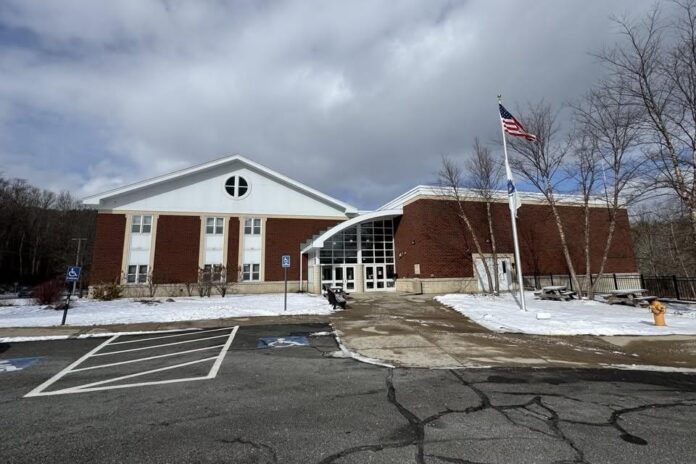
As part of the budget for Muddy Brook Regional Elementary School, Dillon proposed the reduction of first and second grade sections from four to three sections each. Dillon said that next year’s first grade class would have 51 students, with 52 students in the second grade class. He said the decrease in sections would increase each class size from 13 to 17 students, and at most 18 students.
Dillon said the district would use cost savings from reducing sections to fund a literacy coach to assist with implementing a new English Language Arts curriculum.
During the public hearing, several district teachers spoke out against the first and second grade section reductions, including fourth grade teacher Kerry Manzolini. “I feel like we’re at a crossroads again for the third year in a row,” she said. “This may appear to be fiscally necessary, but in practice, it’s going to be a high-risk gamble with the children’s foundational years. I know we aren’t seeing a spike in enrollment. But looking to the future, we very well could see a spike with new housing developments and school choice. Our population is positioned for growth. Cutting sections now is a reactive move that leaves us with no flex in our system.”
Manzolini said even if a handful of new families moved into the school district mid-year, “we won’t just have full classrooms, we will have overcrowding.”
“We must also look beyond the raw numbers to the complexity of the modern classroom,” Manzolini continued. “Our current student body has high needs. Our [student] population is grappling with significant social and emotional behavior. Research shows that small class sizes will reduce disruptive behavior, and we can’t afford any more disruptive behavior. In a smaller setting, a teacher can de-escalate a student’s behavior in seconds through a quiet one-on-one connection in a crowded room. Cutting those two sections would be asking educators to do the impossible, increasing workload, and leading to a direct path of teacher burnout. This leads to lower-quality instruction, increased absenteeism, and a high turnover rate in a competitive market. We can’t afford to lose our best educators to neighboring districts.”
Manzolini added that she was speaking on behalf of a majority of teachers at Muddy Brook Regional Elementary School. “Cutting these sections might balance your line item tonight, but I can assure you that it will increase the budget tomorrow by requiring our district to have more behavioral support, remediation, and perhaps staff turnover will be affected,” she said. “Most importantly, it will diminish student outcomes. We want to keep our classes small enough so every student is seen and every teacher is supported.”
Dillon responded that even with the increase in class sizes, he still considered them small. “We’re moving from the middle to the low end of small to the upper end of small, but it’s still small,” he said. “Teachers in many other districts would be jumping for joy to have a class size of 18 students. At one point in my career, I worked with class sizes of 34 students.”
During the public comment portion of the hearing, Monument Mountain Regional High School teacher John Curletti agreed with Manzolini. “I think it’s important to point out that the kindergarten [section] has full-time paraprofessionals, but the first grade classes don’t,” Curletti said. “While they do get support, it does make that a bit of a heavier lift. I know I sound biased because I happen to know somebody in the first grade as a teacher, and I’m not just speaking on behalf of her, I’m speaking on behalf of all the teachers. I think it’s important because I also teach at the high school, and the classes that I teach are in child development. The recognition that the research does indicate that really the critical time for education is in the early years, and the best thing we can do is to support children at the various early points of their lives because it pays off in dividends over the course of a student’s lifetime in the district.”
Muddy Brook Principal Cynthia Carey told the committee that having a literacy coach would be “very important to the success of our teachers, students, and our families.” “In December, I attended an early learning network meeting that was run by DESE [Department of Elementary and Secondary Education],” she said. “At that meeting, I began to unpack the importance of having a cohesive, connected early childhood experience for students, for families, and for educators. An early childhood coach will provide ongoing job-embedded support that strengthens instruction for the practitioner. It improves classroom environments and ensures that the new curriculum is consistently implemented. Allocating funds for an early childhood coach is a strategic investment for our students, our educators, and our families and setting a strong foundation for their long-term achievement.”
During the committee comment portion of the public hearing, School Committee Chair Steve Bannon said he also has concerns about the cuts to the first and second grade sections. “I think it’s a little risky,” he said. “We’re going to bump up against 18 students [per section]. If we get a few more students, we may have to reverse [the decision] anyway. I understand that [the proposed budget increase] is a fairly good number considering the way insurance and everything else have gone up. Unfortunately, the way [the increase] comes out to the three towns, it’s still rather high.”
As proposed, Great Barrington, which has the highest student enrollment in the district, would pay $23,811,604 in operating assessments, an increase of $1,627,267 from this fiscal year; Stockbridge would pay $4,287,081, an increase of $202,207 from this fiscal year; and West Stockbridge would pay $3,961,550, an increase of $416,969 from this fiscal year.
School Committee member Andrew Potter said that he would be happy to restore the sections. “However, I think the literacy coach position is important,” he said. “The research does support better outcomes. In terms of the class size issue, Peter is right. The research around class size is essentially 12 to 17 being the low end, and 22 to 26 on the other end.”
Potter said he cited the numbers based on research from Project STAR (Student-Teacher Achievement Ratio), based in Tennessee. “The bottom line is I would be happy to restore the sections,” he said. “But when it comes to this budget, I don’t know where else you’re going to squeeze any more juice out of the lemon.”