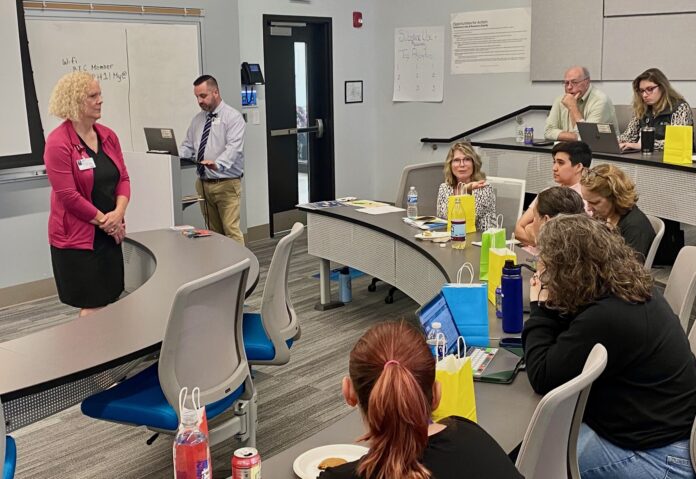
Pittsfield — Held at the Berkshire Innovation Center, the September 4 Community Health Stakeholder Meeting marked the first step in a three-year process required of all nonprofit hospitals by the Internal Revenue Service and Massachusetts Office of the Attorney General to provide an assessment of local community needs.
The local program, known as a Community Health Needs Assessment (CHNA), is a collaboration between host Berkshire Health Systems (BHS) and a “who’s who” of multiple health leadership organizations represented at the meeting including Volunteers in Medicine (VIM), Berkshire Bounty, Elder Services of Berkshire County, Pittsfield Senior Center, Berkshire North Women Infants & Children (WIC), Literacy Network, and the Berkshire Regional Planning Commission.
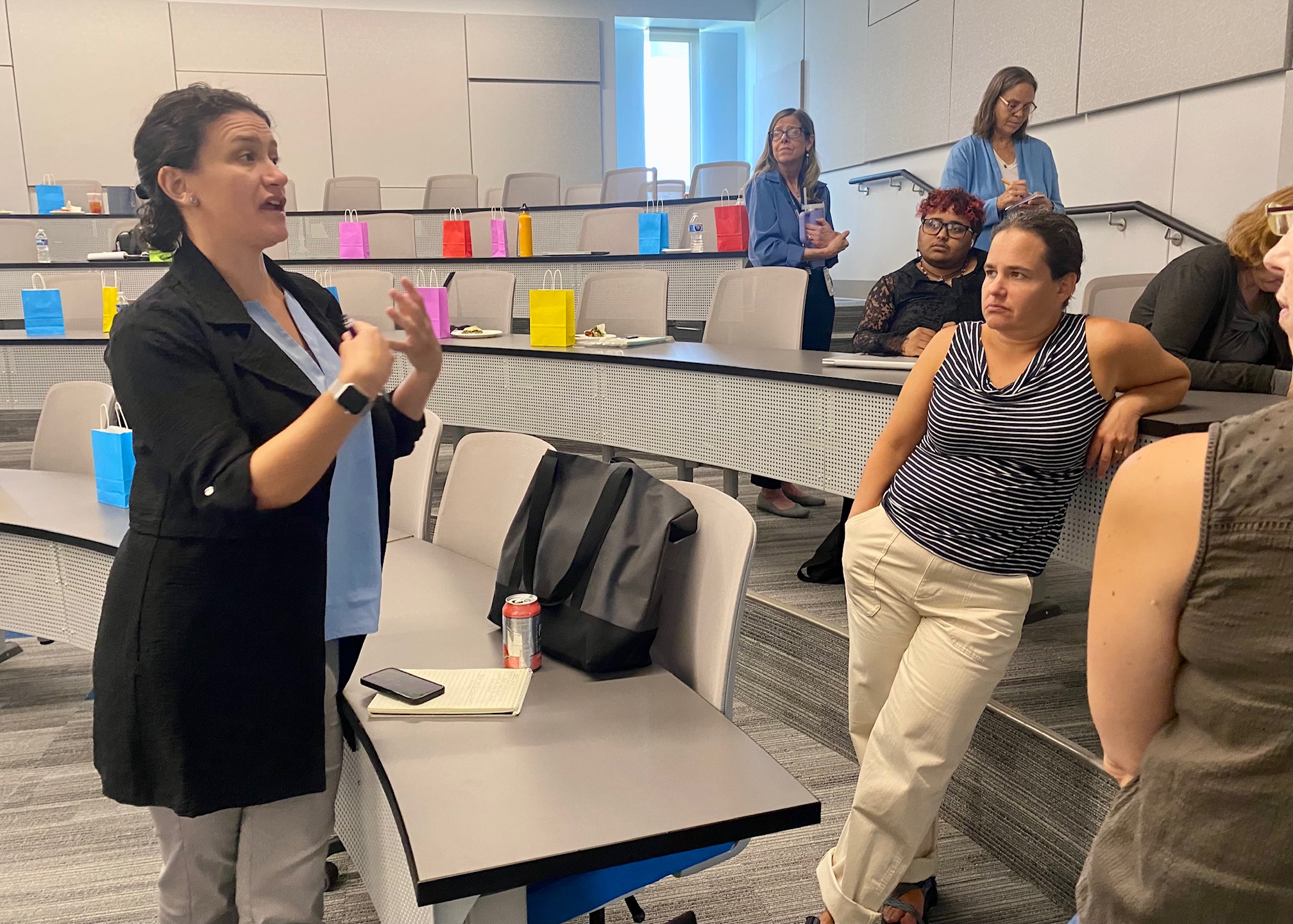
Community members were also asked to “offer very valuable personal input into what’s working and what can we try to fix together,” BHS Vice President Roberta Gale said.
“The challenge for all of us [is] to hopefully work on it collaboratively,” she said of the structured “but fun” agenda that included an overview of the community’s healthcare needs assessment by Laura Kittross, Berkshire Regional Planning Commission public health manager, as well as an activity.
A copy of the slide show presented at the meeting, courtesy of BHS, can be found here.
The CHNA is a document that lays out the highest-priority opportunities for healthcare action to be addressed by BHS and other organizations over the next three years. It is currently in draft form but not yet published and is the beginning of that multiyear process.
“The CHNA needs to take into account input from people who represent the broader face of the community,” Kittross said. “We know that the needs of different members of the community are different, and we want to make sure when we’re doing a CHNA that we really talk to all the different kinds of members in the community to get their input.”
Once complete, the CHNA is sent to the Massachusetts Office of the Attorney General, Kittross said. In addition to figuring out what the needs of the community are, BHS then takes those needs and adopts an implementation strategy to help meet those identified needs, she said. Then, the CHNA is made widely available, Kittross said.
“We are required and, of course, want to get community input on the CHNA, what the public thinks about it,” BHS Director of Media Relations Michael Leary said. In draft form now, he said the document “will be influenced by what we learn here today about how we address some of these issues and what the issues are and other issues people bring up over the course of this discussion.”
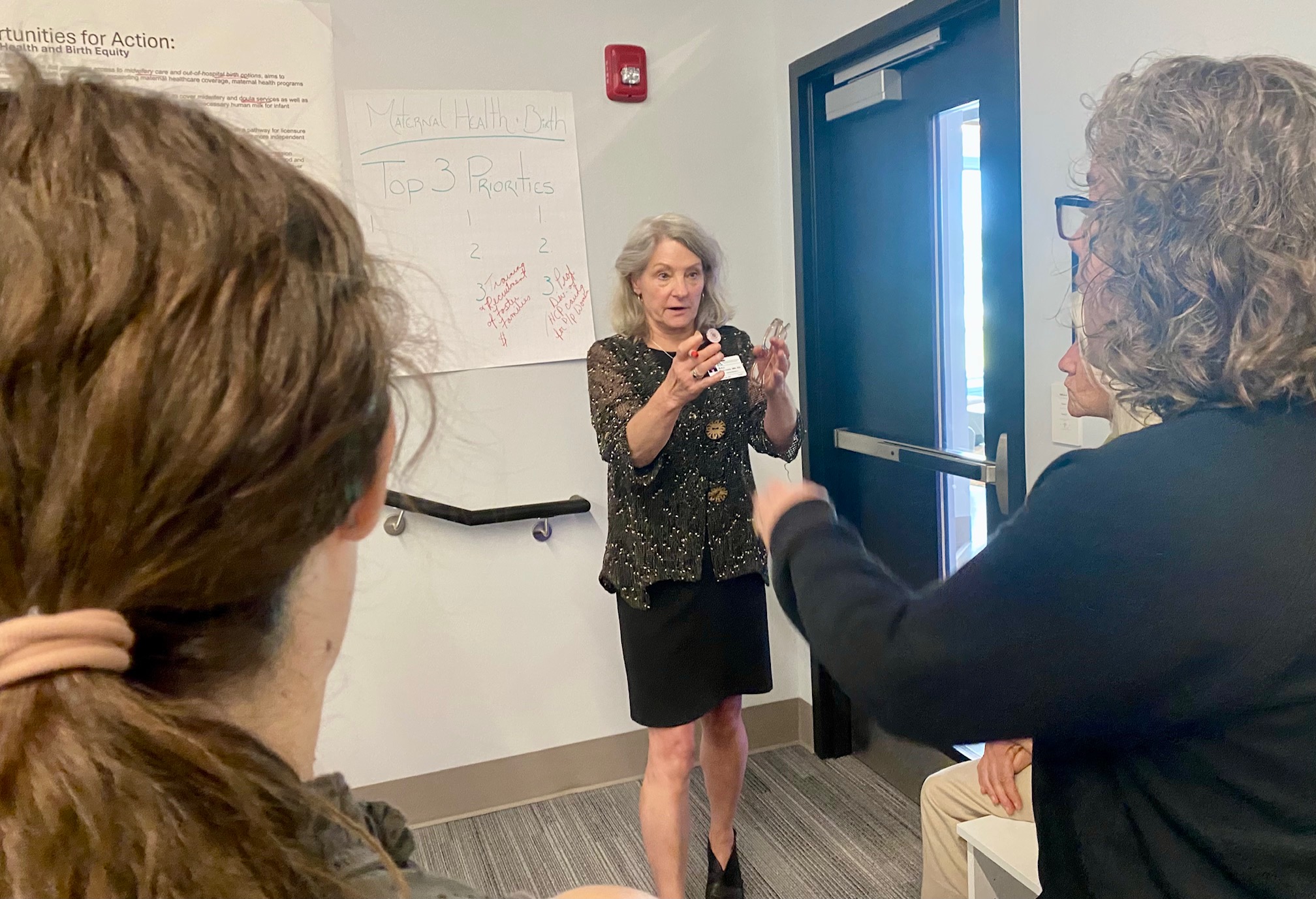
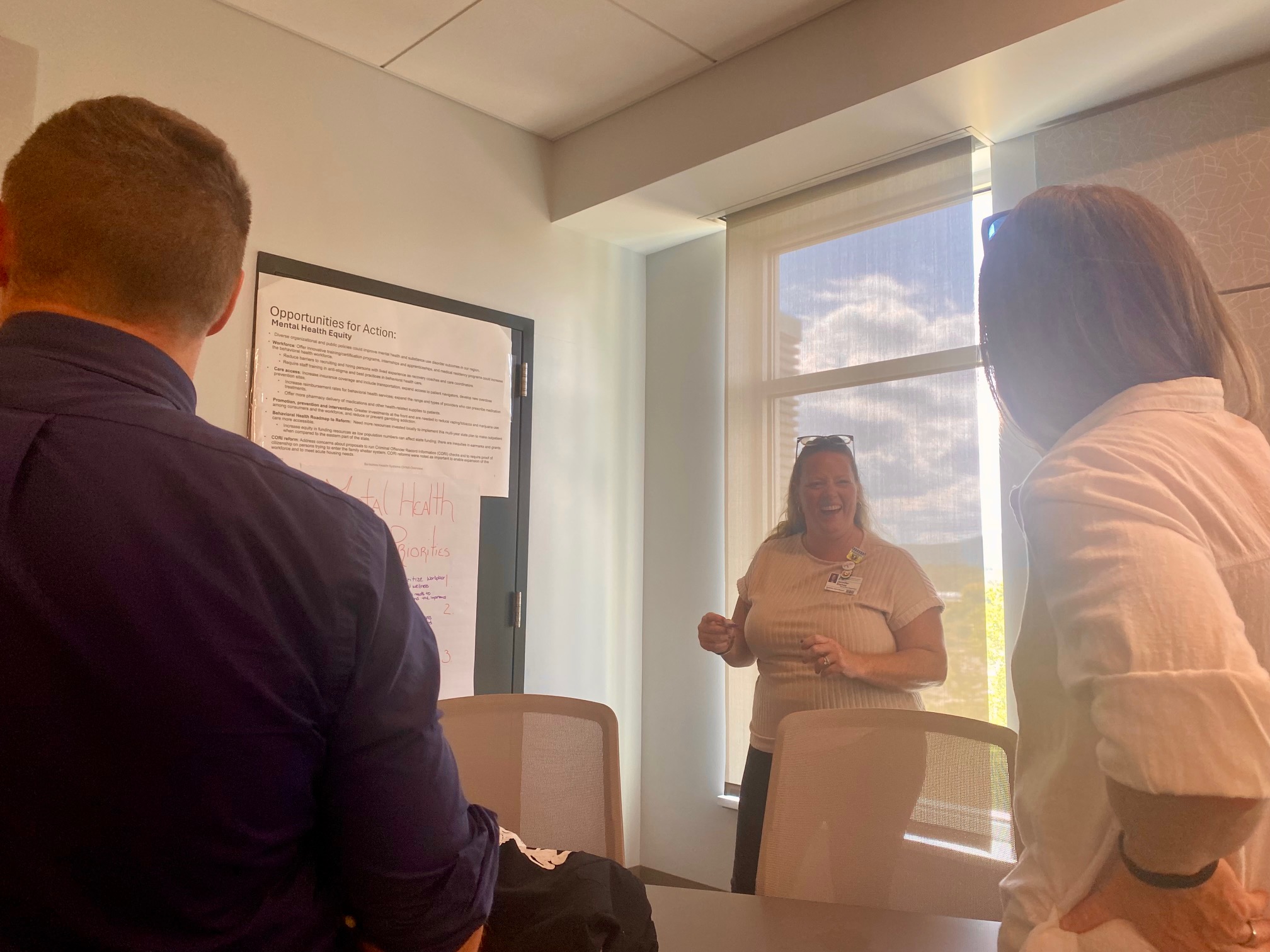
At the event, participants engaged in three topic discussions within rotating small groups including maternal health and birth equity, mental health equity, and substance use and recovery equity. However, those three focus areas are not the only topics to be discussed over the next three years, Leary said, with the community given the opportunity to weigh in on other relevant issues. “Of course, we look at multiple priorities beyond the three, and we’re always open to input from the community on any priority,” he said.
The process is ongoing, with state and federal requirements to continually update the community needs assessment that is formally updated every three years.
“This is a very important process,” Leary said. “It’s a very important part of our community benefit approach to provide the right services to the community at the right time and in the right place.”
The timing of the BHS-hosted noon meeting was not lost on Pittsfield resident Elliott Hunnewell as the session was conducted while legislators grilled United States Secretary of Health and Human Services Robert F. Kennedy Jr. on Capitol Hill over vaccines and the turmoil within his department.
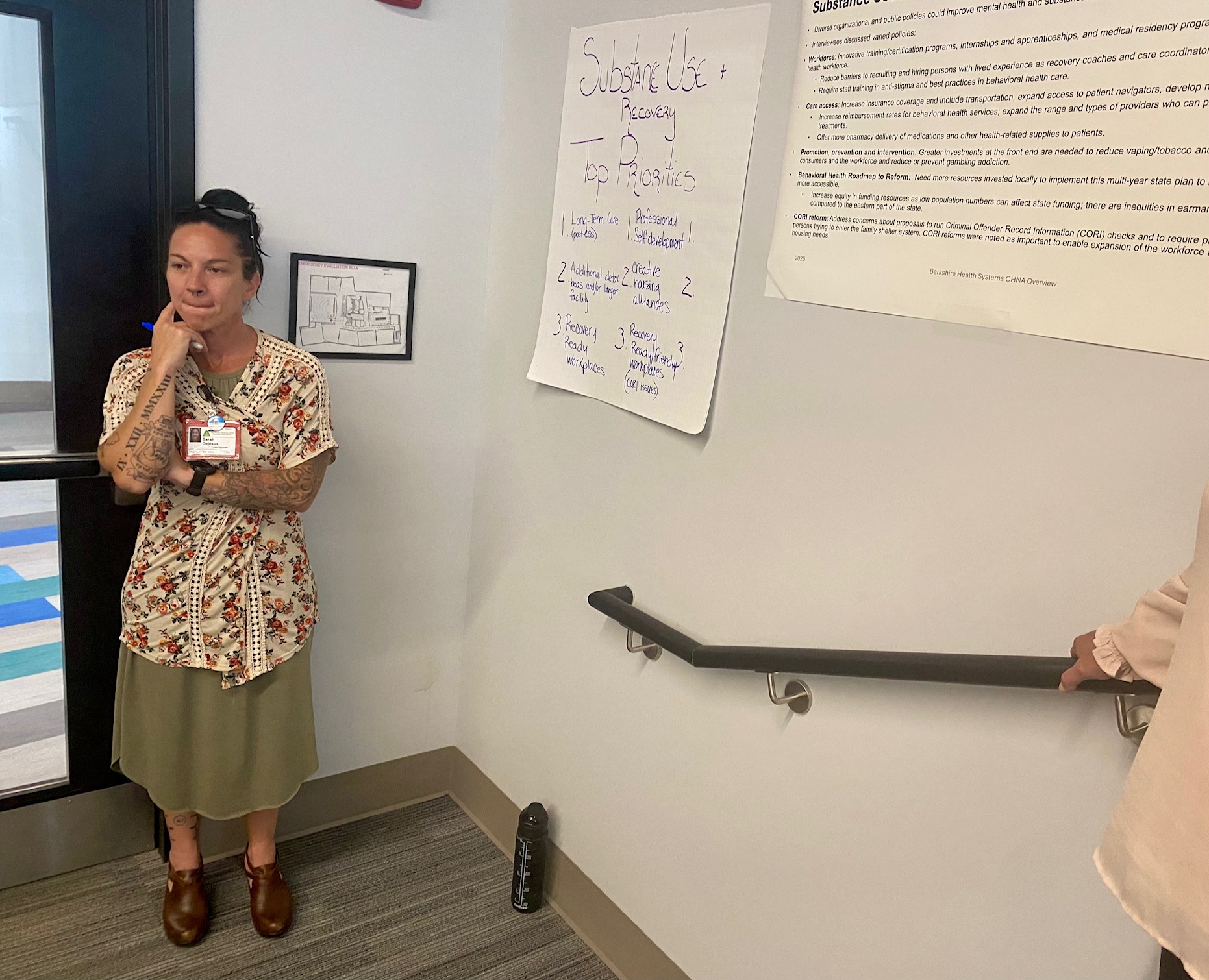
For Hunnewell, the session meant the opportunity to gain data and statistical knowledge. The self-employed community health administrator previously worked with state departments of health and attended the one-and-a-half-hour session to learn what is happening within the area’s marginalized communities, especially at this current political juncture.
“Like many, I feel a little bit paralyzed,” Hunnewell stated of recent changes to federal health regulations. “I really want to know what I’m talking about and have the facts and have the statistics so that I can have some reasonable conversations with people who don’t agree with me.”
For Leary, the local community health conversation was not any more dire than at any other time the area’s needs assessment has been conducted. “Every administration brings nuances to public health,” he said. “Our organizations are managing those processes as best we can. We follow guidance from the Massachusetts Department of Health; that’s our licensing agency. We feel very strongly that we will continue to provide the kind of support to the community that’s needed.”
Residents can provide comments on community health needs to individual local health organizations or the Office of the Massachusetts Attorney General or by emailing communications@bhs1.org.