Great Barrington — As the war against food insecurity continues, Berkshire Bounty remains on the front line. The nonprofit organization, whose focus is in South County, collects donated food and purchases food for food pantries and senior centers.
The organization was co-founded by Jay Weintraub and Mark Lefenfeld back in 2016. Both Weintraub and Lefenfeld serve as co-presidents of the organization, which currently has a four-person board of directors. Recently, the organization hired its first executive director, Morgan Ovitsky.
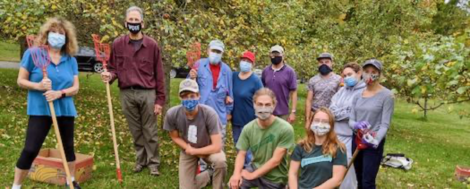
In an interview with The Berkshire Edge, Weintraub said that the organization gets its food either through donations, food drives, or purchases of food through donations. “We have a very significant amount of donations that are coming in through the door,” Weintraub said. “Every month, we have a food drive where we ask people to put food outside their doors on certain days, and we collect it from them.”
Weintraub said that last year the organization collected and delivered up to 410,000 pounds of food, and it currently has over 100 volunteers. He said that the three main sites that the organization delivers to are the People’s Pantry, the CHP in Great Barrington, along with the South Congregational Church in Pittsfield. “Initially when we started, we were just thinking about ways to collect food, including picking apples from people’s trees in their backyard,” Weintraub said. “Over the last few years, we have developed relationships with supermarkets and we have been successful in collecting money to allow us to purchase food.”
Ovitsky said that donations for the organizations are needed more than ever before. “During the pandemic, Berkshire County had a 42 percent increase in food insecurity,” Ovitsky said. “There was a drop in food insecurity rates post-pandemic. That is because of all of the federal benefits programs, including stimulus checks and child tax credits. However, in the most recent days, with the end of all of those federal benefit programs, we are hearing from all of our food pantry partners that the numbers of people who are in need are now higher than they ever were at the height of the pandemic. This is also due to inflation, along with the rising costs of gas and utilities.”
Ovitsky said that she has heard from representatives from local school districts that the rate of students who are dealing with food insecurities is also on the rise. “The foundation of food insecurity is poverty,” Lefenfeld said. “We tend to focus on the impact of poverty by supplying food.”
“While we are attacking one element of poverty, I think that we’re hoping to make our organization’s impact felt even more strongly than before,” Weintraub said. “While this is a relatively small area compared to other geographic locations, there’s a tremendous amount of poverty here.”
According to Weintraub, the organization spent $200,000 last year on buying food, and Berkshire Bounty is on track to spend the same amount by the end of this year. “About 47 percent of all of the food that we collected last year was purchased,” Ovitsky said.
“We depend on volunteers and donations, but we also depend to a great extent on word of mouth,” Weintraub said. “We always encourage our volunteers to talk to their friends about either volunteering or donating money. We keep our organization’s expenses very low, and we don’t spend a lot of money on marketing. Word of mouth is one of the reasons why we’ve been so successful.”
For more information on The Berkshire Bounty go to its website.