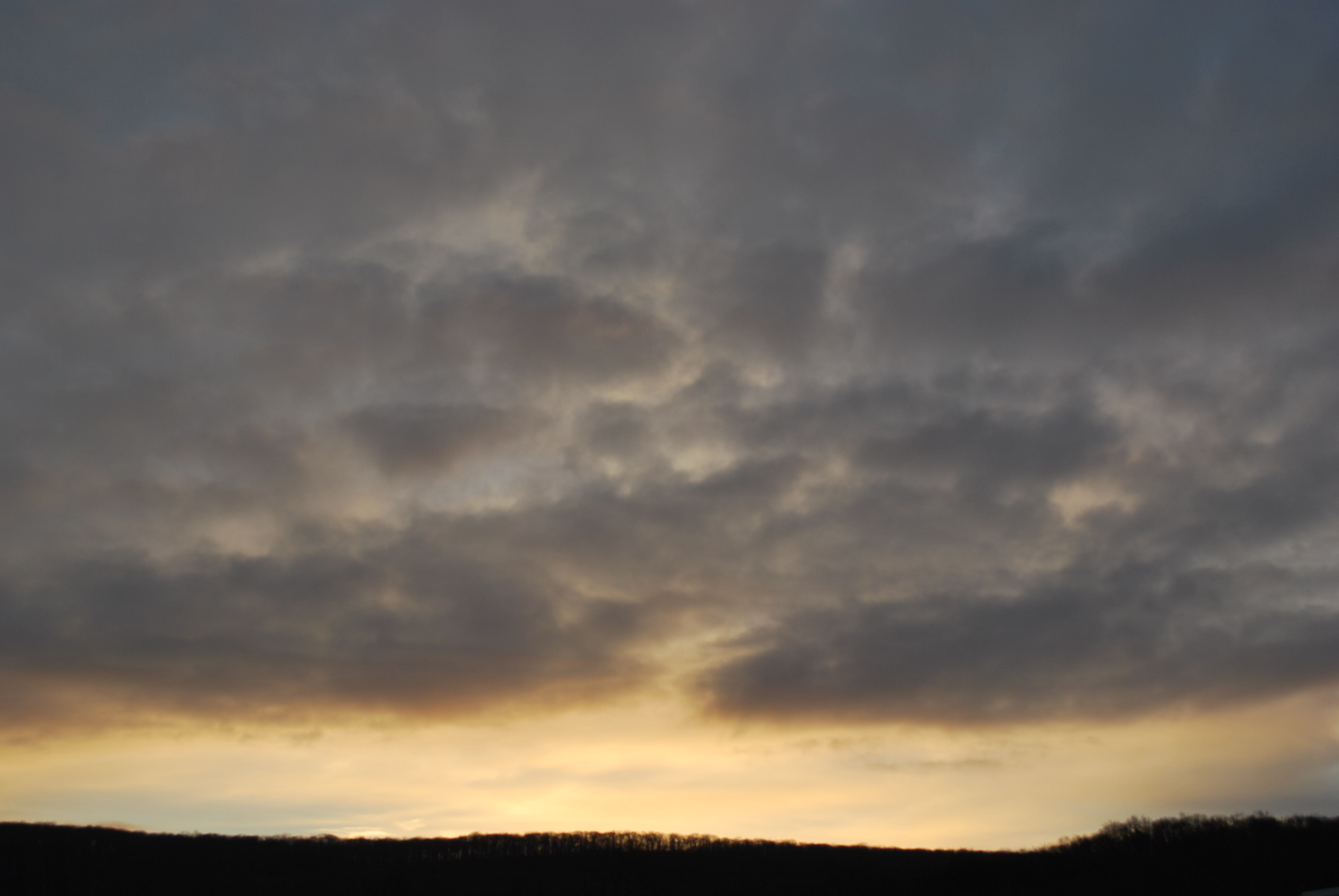
December 26, 2016 – January 8, 2017
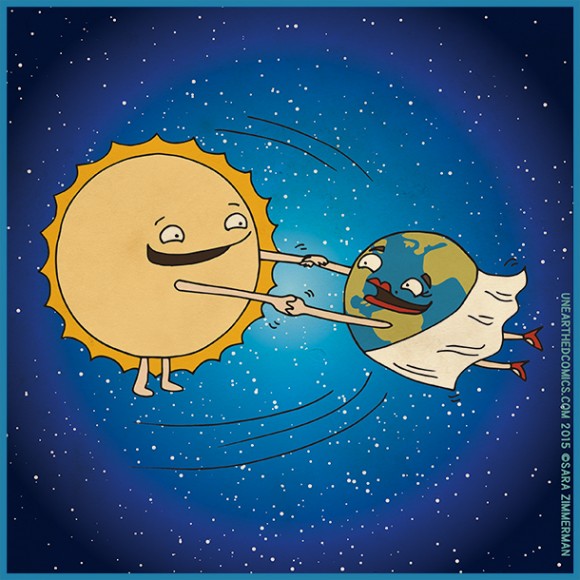
Mt. Washington — Peek behind the scenes where turn-of-the-year astronomy reveals the dance of our great golden Sun with our home planet, majestic blue-marble Earth. Our planet’s perihelion (peri=close, helios=sun), its closest approach to the sun, occurs on January 4. Earth’s orbit around the sun is elliptical, bringing us millions of miles closer at perihelion than it will at aphelion (farthest from the sun) on June 3, 2017. This variation is not enough to affect the seasons, but Earth moves quickest when closest to the sun, actually increasing the distance we travel in a day, which contributes to the difference between fixed, mechanical clock time and sun time.
Most of us are focused on one simple aspect of the astronomy of the season: the solstice – the shortest day, longest night of the year in the northern hemisphere – that occurred on December 21. Unless we look closer, perhaps following a sunrise/sunset chart, the fact escapes us that the darkest mornings of the year, i.e. the latest sunrises of the year in our locale, within seconds of 7:22 a.m., begin this Thursday, the 29th, and continue through January 9.
Our earliest sunsets of the year, 4:21 p.m., ran from December 6–12. Even though afternoons have gained six minutes of daylight over the past 14 days, total day length remained the same because mornings have been getting darker by the seconds and minutes. Although all of these incremental changes might only be seconds each day, the pattern inspires our interest in what about Earth in relation to the Sun causes this to happen.
Why do the earliest sunsets of the year always occur before the solstice and the latest sunrises after? Two phenomena are at work: the tilt of Earth on its axis in relation to the sun and Earth’s perihelion, which results in the quickening movement of our planet in its orbit.
Even though mornings will be the darkest of the year until January 9, afternoons will be lighter, gaining about a minute every day.
I’m imagining a surfer tracing the deep trough of a dark wave – lifting, climbing, breaking into the light above.
Opportunities to participate:
Mark your calendar – April 8 & 9, 2017 Northeast Astronomy Forum (NEAF): https://rockland-astronomy-club.myshopify.com/collections/neaf
https://www.youtube.com/watch?v=CU5OL24XtRM
Resources:
https://curious.astro.cornell.edu/observational-astronomy/timekeeping