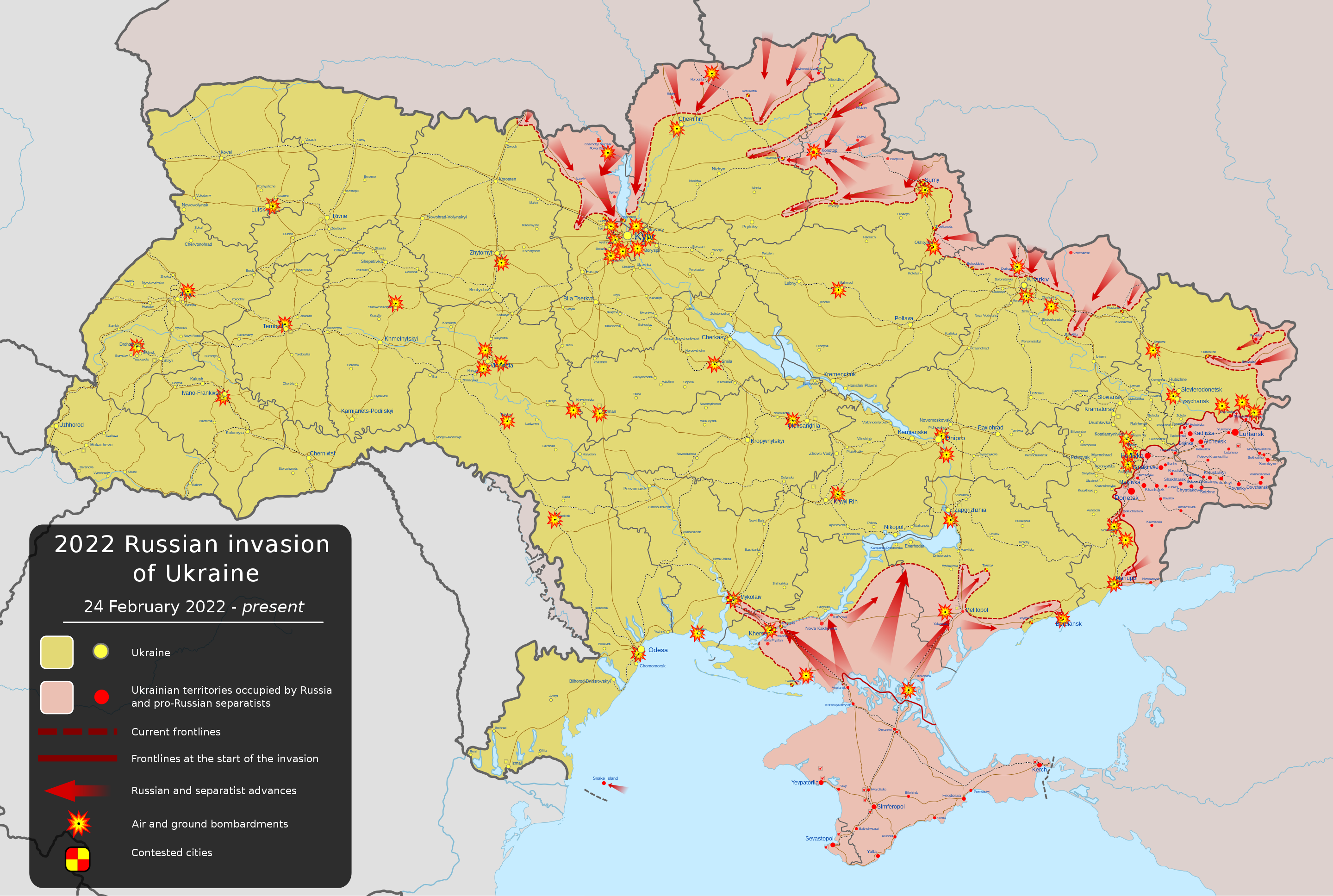
Some two months in, 2022 has proven to be a rough year for the financial markets. Equities were approaching “correction” territory even before Russia’s military staging of its equipment and troops at the Ukraine border. Then this past Thursday the much-anticipated invasion finally occurred, causing the equity markets to experience one of the wildest intraday swings in memory—the Dow dropped over 800 points before rebounding to finish the trading session in positive territory.
During that day, as developments on the battlefield in Ukraine deteriorated, the markets sharply improved for financial assets, adding to equity markets already in correction territory; as such investors viewed the morning’s decline as a buying opportunity.
The degree of the intraday rebound left investors of all stripes flummoxed. How can the markets ignore a geopolitical event with the potential of redrawing the map of Europe? When it comes to geopolitics, the simple answer is “we’ve been here before.” These same markets have witnessed Pearl Harbor as well as the North Korean invasion, Cuban missile crisis, Kennedy assassination, Iraq invasion of Kuwait, and COVID, among other notable (and motion-sickness-inducing) market declines. Each event, with the benefit of hindsight, created a buying opportunity that richly rewarded those with a long-term market perspective. Evidently, following Thursday morning’s market hit, bargain hunters feared the risk of missing yet another buying opportunity more than they feared the geopolitical risks on the battlefields.
From a portfolio perspective, the broader picture and rationale behind Thursday’s midday correction was a more complex situation involving more than just the Russian invasion. Well before the rhetoric out of Russia escalated to military action in Ukraine, the markets began adjusting to a new reality—a world in which the Federal Reserve is no longer directly offering to support the markets. Accordingly, equity values deteriorated, and interest rates marched higher, in lockstep with the Fed’s abrupt late-2021 policy shift when they were forced to acknowledge that surging inflation would not abate any time soon. At this juncture, escalating global tensions in a region that serves as a flashpoint for higher energy and natural resource prices clouded the plethora of data the Fed is trying to decipher, alongside the pressure that inflation, a damaged supply chain, and the residual effects of the coronavirus are exerting on the global economy. A major risk stemming from rising geopolitical tensions is that it increases the potential for policy error by the Fed and its global, central bank counterparts.
Despite this negative backdrop from European geopolitics and the Fed seeking to normalize policy, the setting for the economy remains favorable and geopolitical market gyrations are not representative of the health of consumers and corporations. As the U.S. GDP growth is forecasted to remain above trend levels once again this year, consumers are flush with cash and corporations appear likely to deliver high single-digit revenue and earnings growth. Also of critical importance, the access to capital remains robust and credit markets are highly liquid.
While the financial markets always prefer clarity, there is no definitive playbook for markets— there never has been—and we should expect volatility to remain elevated for some time. Steep declines and sharp rallies will ensue as headlines blare the news of the moment. However, there is solace when one views today’s market action through a historical lens, gleaned from past geopolitical events and periods of extreme volatility. While an immediate crisis always feels uniquely dire with the threat that markets will never stabilize, typical recovery patterns tend to emerge with surprising regularity and consistency. Markets tend to be resilient, with a swift drawdown always followed by a subsequent recovery.
As has been true during prior times of market upheaval, we recommend remaining steadfast and committed to a long-term strategic asset allocation built around broad diversification. The last three years have generated market returns well above historical norms; pullbacks and corrections allow for market excesses to clear, setting the stage for further long-term gains. Pronounced market declines set up more attractive valuations and prospective returns, despite how uncomfortable the geopolitical events may feel in the near term.
The author does not provide tax, legal, financial or investment advice. This material has been prepared for informational purposes only. You should consult your own tax, legal, financial and investment advisors before engaging in any transaction.