This year’s New York Film Festival, the 58th, was a diminished event, like so much else in this coronavirus time. The offerings were less imaginative and intellectually complex despite some good films, and I watched the movies this year not under the perfect film-viewing conditions of the Walter Reade Theater at Lincoln Center, but on my small computer screen in Egremont. It’s great that the show goes on, preferable to no festival at all, but viewing a film is so dependent on the full visual experience the director put into it that a given film might have a very different impact under proper viewing conditions. But despite all that, it’s a pleasure to look at a lot of good films and write about them!
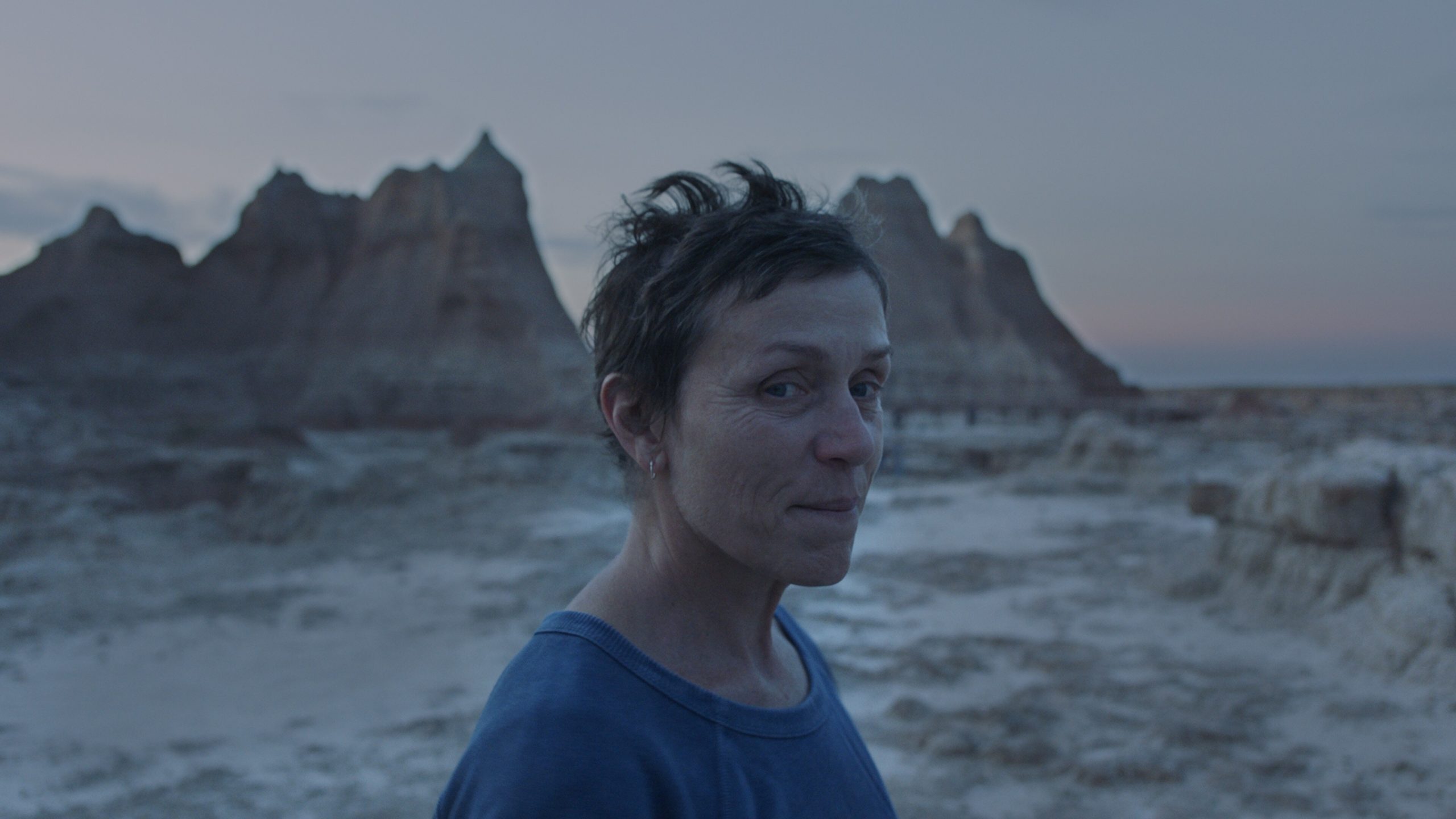
Of the feature films in this year’s festival lineup, I’m happy to report that women directors distinguished themselves. Particularly noteworthy to me was “Nomadland” directed by Chloe Zhao, with a marvelously subtle, totally believable, understated performance by Frances McDormand. She plays Fern, a woman in her 60s who takes to the open road after her husband dies and she loses her job at a Nebraska gypsum plant when it closes down. She lives out of her RV at first because she’s forced to, but later by choice. She uncomplainingly takes a variety of blue-collar jobs when she can get them, many of which require strength or are unpleasant, e.g. scrubbing toilets. She’s very hardworking, resourceful, inventive and adaptable. And unlike the homeless, unpleasant, seemingly pathological wandering woman in Agnes Varda’s “Vagabond,” Fern is friendly and generous, caring about others and liked by everyone, but also self-sufficient and light with not an ounce of self-pity or sentimentality. Particularly touching are the encounters and relationships between women in the film — older, fiercely independent women who look and sound like the real (and appealing) people they actually are and not a Hollywood version of real. In fact, they are nonactors, the actual women who figure in the book “Nomadland” by Jessica Bruder, that forms the basis of the film, a book that researched the large community of women and men who, these days, are forced to live out of their RVs because, out there in mostly white western America, the old life supports have collapsed. This is clearly a film for our time, though its humanity and compassion make it more than just topical.
The film’s young woman director, Chloe Zhao, was born in Beijing but educated in America, ultimately at New York University’s film school. Her previous film “The Rider” was quite astonishing for its courage and empathy, dealing as it did with young American Indian men who ride wild horses at rodeos out west and, if they survive, do so with horrendous injuries. It’s no surprise that McDormand solicited her to take on this film, with survivors of other sorts of loss and injury, and to do it in a way that is not a downer but a pleasure to watch.
Of course, while Zhao adapted the book and directed and edited the film, it would seem very much a collaboration with Frances McDormand in the creation and the shaping of the character. But the pacing is quick, agile and smart — Zhao boldly follows a scene of grief with a rollicking piano song about loss that comes out of nowhere but is just right. She knows how to make good, serious movies that wide audiences can connect to and find satisfying as well as eliciting admiration from film critics. That doesn’t happen so often in American film.
What is also extraordinary about this film is the age and look of its heroine, and of the other characters, and the interest with which it observes them. Fern — with her gritty look, mannish haircut and the same sweat clothes throughout (though clearly clean) — never pays attention to her appearance (though, of course, to us, MacDormand is very attractive as a woman and her name will bring audiences to this film, when audiences come back). Also all the old people at the RV campsites who we meet, watching them — especially old women — sing and spontaneously dance, hearing their poignant life situations told with plucky honesty, that’s a world Hollywood would never touch. And there is no attempt to gin this up in any way. There’s an interesting quiet attraction between Fern and David, played by the always excellent David Straithern with just a touch too much elegance for the world he’s in. But this attraction is insistently not, for a change, at the center of the film. Nature is important, and the landscapes even on my small home screen are imposingly large and open, vast vistas and huge skies, but they are never pretty, and more often than not, bleak and desolate.
Similarly, the music on the soundtrack does not impose emotions on you, but a wonderful wandering piano seems to convey reflection and internal questing in a way that words in this film don’t much communicate. And not to produce a spoiler — since this film will unquestionably come here when the Triplex reopens — the link of women to domesticity, to the house, to connection and security, is challenged in this film by a spirited woman who has been forced out of a confined life (that she also loved) and is wary of returning to anything like it.
Sophia Coppola’s heroine in “On the Rocks” is living a life many young women will recognize, as she races around getting her girls ready in the morning, taking them to school and playschool, to ballet lessons, her exhaustion, feeling herself plodding and alone, struggling to do her own work as well — though it’s all a bit generic. Laura is a writer who lives in SoHo with her entrepreneur husband, Dean, and two small daughters; and for New Yorkers, this film also has a special poignancy for showing us the beloved busy downtown streets before COVID-19 and long shots of Manhattan at all times of day and night. Laura suspects Dean of having an affair but unfortunately, he is an utterly undefined character, a “nice guy.” We never even know what kind of work he does, much less who exactly he is. But Laura’s uneasiness keeps her from writing her book, already under contract — though, here again, we do not know the content of her project, which might have been one good way of defining and enriching her character for us, making her more individuated and distinctive. She does have a volume on her desk, apparently written by her in Italian, titled “Amici e Cognoscenti,” that we see for a minisecond but that is never explained.
Other women seem friendly to her and she to them but the one friend we see her with is a tedious running joke through the film, embarked as she is on a deadly nonstop monologue in ridiculous New-Age jargon about herself, which leaves Laura looking even more isolated. Otherwise, hers is a comfortable looking life, which cannot be accused of white privilege (as I’m sure Coppola’s casually wealthy earlier films have been viewed by some, added to the fact of everyone’s consciousness that Frances Ford Coppola is her father) since here Laura is played by Rashida Jones, half-Black and half-Jewish, and husband Dean by Black actor Marlon Wayans. This casting is done in colorblind fashion, so it seems to me they could just as well be white characters, at this time something of a rarity.
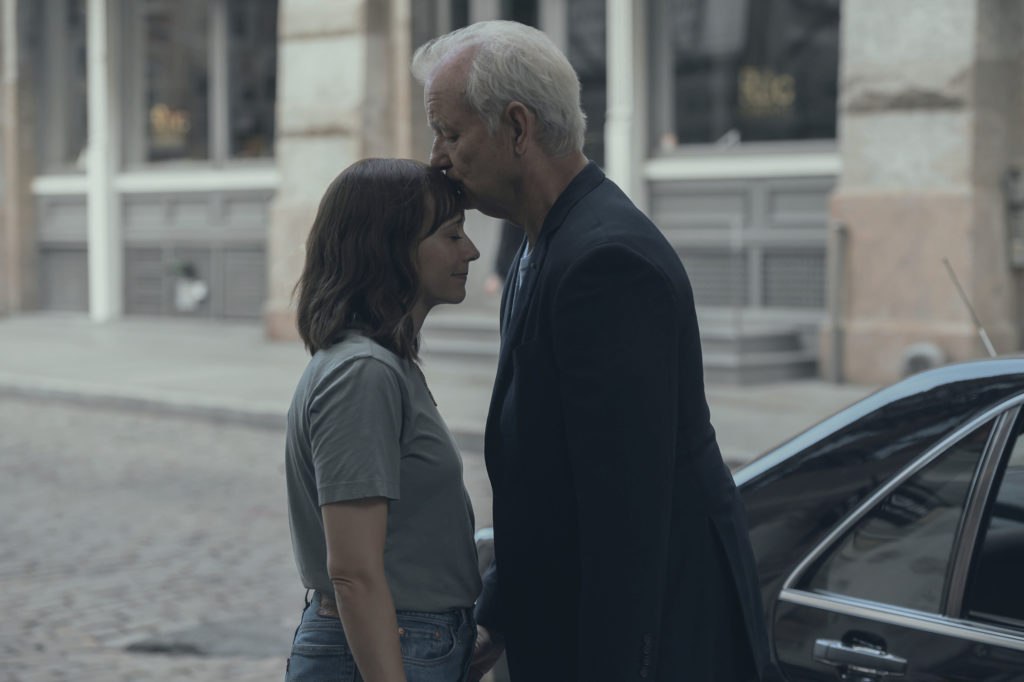
What really makes the film is Laura’s relationship with her too-close father, Felix, played by Bill Murray, who, on a voiceover at the very start of the film, is heard telling his very young daughter: “Don’t give your heart to any boy. You’re mine. Until you’re married and then you’re still mine” — funny and not so funny. As Murray dominates the film whenever he’s on screen, so Felix is ever-present in her life, waiting downstairs with his driver to whisk her away to one luxurious restaurant after another. He’s a retired art gallery owner, a bon vivant, a gourmand and pleasure lover, seductive to women, seductive to strangers for whom he sings a song on a Mexican beach, even a performer of dazzling legerdemain with the police who stop his car. He encourages Laura’s marital suspicions, leading to a wild pursuit out of Italian film comedies. Laura tolerates his intrusiveness until she doesn’t, in a moving confrontation near the film’s end. She tells him she’s tired of his taking over everything, making it all about you and what you want, all the time. When he says he doesn’t hear well, particularly women’s voices, she responds as strongly to that, and goes on to say that it’s a wonder she was capable of having any kind of relationship at all. Clearly it couldn’t be easy to define oneself at all in the shadow of such a powerful presence, and one without boundaries, an important theme and a moving declaration by the protagonist of her own selfhood and her own marital adventure, which father Felix, in a final scene of separation and caring, accepts. Were this a good European film, it would go further with this material, have more intensity and complexity. But still it’s an unusual and interesting exploration, and the fact that Felix feels like what one imagines the great Frances Ford Coppola might actually be like (more or less) as a father adds an extra layer of interest. (This is an Apple Original Films and A24 Release, and will debut on Apple TV+ Friday, Oct. 23.)
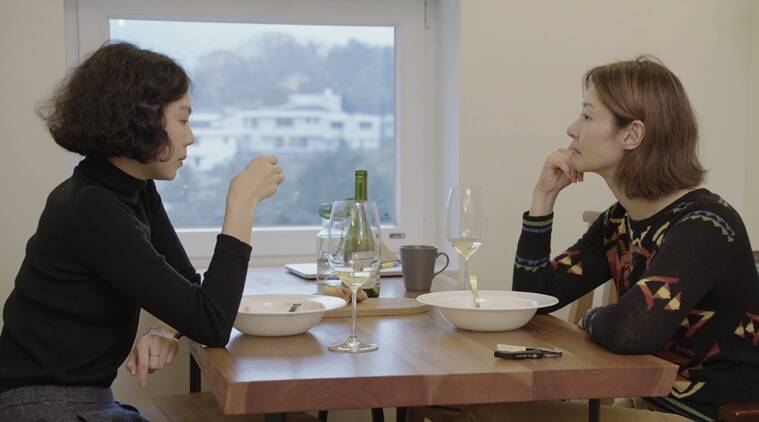
“The Woman Who Ran” is a charming film about women from Korean male director Hong Sang-soo, regarded by some as the Asian Woody Allen — focused usually on the nuances of male-female relationships, neurotic, and super-prolific. But his work is much quieter than Woody Allen’s and can look like nothing much. This one, however, I found myself smitten with, though, again, “nothing happens” in the plot-driven Hollywood sense. The film is constructed around a series of visits between young women. Gamhee, for the first time in her five-years-married life, is briefly on her own (her husband loves them to be together all the time, as is repeated — the tone wry and melancholy — over and over, and maybe explains the running lady of the title). She pays a series of visits to two old friends and has a third encounter with someone from her past. The women sit across tables eating and they talk about meat, loving it, the beauty of cows’ eyes, or about a rooster abusing hens, or about marriage. They admire apartments and mountain views (a different mountain on each visit). And they are gentle and attentive to one another, quietly supportive.
The actress who plays Gamhee, Kim Min-hee, is the director’s partner in real life, very pretty, fetchingly thin, stylishly dressed and lovely to watch move. Men occasionally enter the frame —a new neighbor complains about the feeding of stray cats (his wife’s afraid of cats); a poet keeps pestering one of the women, who slept with him once when drunk — but the men are totally peripheral, often filmed from the back so we hardly see who they are other than hulking and a little sinister. But the women fend off these men, they hold their ground: One issues a startling verbal assault, another a subtler jab of revenge in the final episode aimed at a figure like Hong himself, a writer now become popular and accused of talking too much, itself a joke on the talkiness, the heavy reliance on dialogue of this very film. But it’s talk that meanders and looks like it’s not about much, while at the same time you can feel that a very knowing hand is at the controls here. It’s all done with a light touch, a sense of human foibles benevolently considered in a world in which a number of characters are artists, for better or worse. The delicate, witty, enjoyable quality of this film is as much an escape from our stressful lives as the film-within-a-film is in this movie, and as it is for Gamhee, who we leave in a darkened movie theater watching ocean waves.
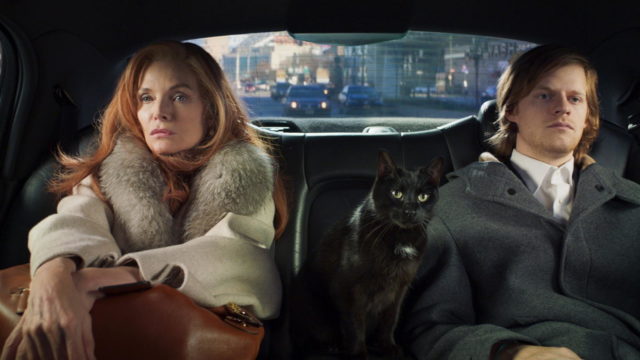
The film honored to close the festival, Azazeal Jacobs’ “French Exit,” from a bestselling novel of the same name by Canadian writer Patrick deWitt, stars a very beautiful and in-command Michelle Pfeiffer as Frances Price and Lucas Hedges as her son, Malcolm, who she brings into her life, with a flamboyant gesture that opens the film, only when he is 12 years old. We jump another 12 years to Malcolm fully grown, and to Frances when this very wealthy woman discovers that there is no money left. With the piles of notes she gets from selling off her jewelry and art objects, she and Malcolm set off to Paris for an apartment loaned by a friend. These two carry the film — Pfeiffer by a theatrical authority with suggestions of menace, and Hedges, following her in tow, by managing passivity like the fine actor he is, often turning it into a grave attentiveness, though Malcolm is also able to restrain Frances’ meanness as well as to enjoy some of her outrageous acts of destructiveness. I’d guess Truffaut is lurking somewhere here, not only in the sweet scenes of Malcolm euphorically biking through beautiful Paris streets with background music charmingly reminiscent of “The 400 Blows” (the music appealing and just right throughout), but also “Jules et Jim” with that heroine’s danger, unexplained and fascinating. There is astute psychology in “French Exit” often voiced by the characters about themselves in their quirky dialogue, but neither the script nor the director try to much enter the inner lives or personal history of these characters. Instead, they sustain a distanced witty-sad tone throughout — not easy to do. And not everyone will enjoy the heightened use of words in the film — a touch theatrically artificial, stylized and unnatural — but it works, it holds one’s interest; there’s intelligence here, and love of language and of oddity. There’s the beauty of faces, startling in the case of Malcolm’s girlfriend (Imogen Poots) but also Pfeiffer, who is much loved by the camera, close-up and full-length, frontal and in profile. Jacobs also skillfully uses the camera to create a fluid movement through space. But above all, Michelle Pfeiffer carries it all off beautifully, the diva’s indifferent grandeur, and underneath, the sense of a life fallen to pieces. We accept the mystery of her as we accept (unfairly to invoke one of the most endearing films ever made, in my opinion) Catherine in “Jules et Jim.”
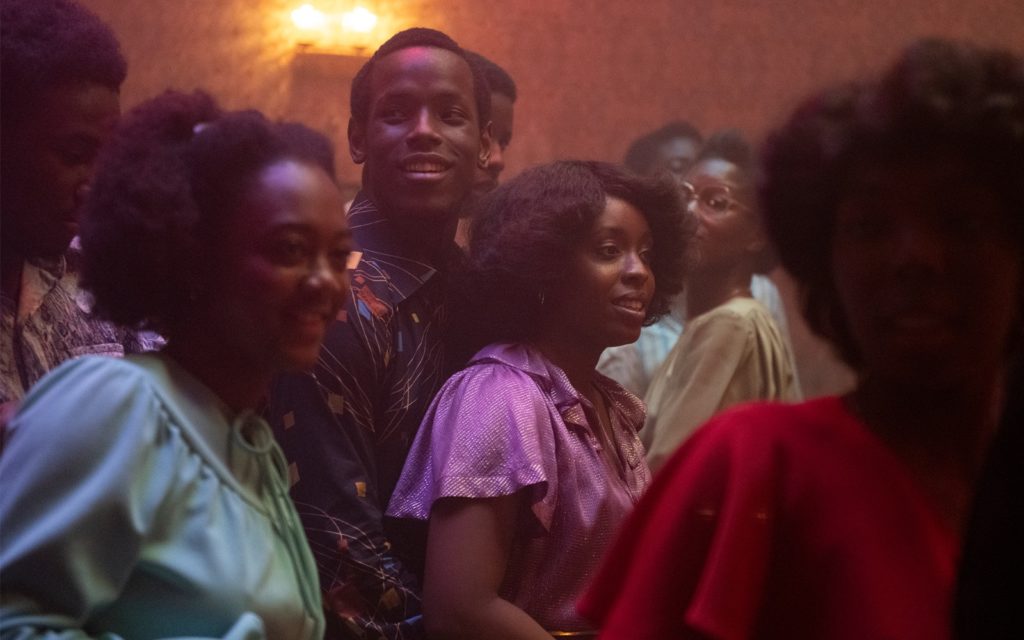
The British director Steve McQueen had three films in NYFF58, part of the “Small Axe” series of five, produced and to be distributed by Amazon Prime in November and December, aimed at placing the British/West Indian experience on the screen — his own, that of his parents, and of the actors’ parents as well. McQueen’s earlier films — “Hunger,” about the 1981 Irish hunger strike; and “12 Years a Slave,” which won him an Academy Award for Best Picture — have earned him his standing in the eyes of many as one of the most important filmmakers now working in England. “Lovers Rock” was given the honor of opening the festival, and perhaps, on a large screen in a real theater, the luxuriousness of dancing couples, their bodies moving gracefully, sensuously through space, gorgeously shot, would create a magic to make up for a minimal script and minimal plot. McQueen was not sure where he was going, he said in a virtual press conference, not interested in dialogue but in moods, senses, smells. Setting it all at a dance in one room in the 1980s, he liked that the dancing Black people would only see other Black people, directing, behind the camera, serving as crew. He remarked on the tenderness of the reggae music lyrics and also talked a lot about how the young Jamaican actors change their speech depending on who they are talking to. There are also a few tensions in the film and some moments of near violence. But I wanted more from it, and found myself restless halfway through.
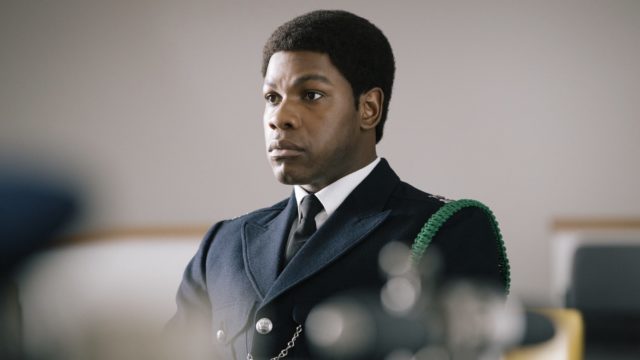
A second film by McQueen at the festival was “Red, White and Blue,” also set in the West Indian community of London, about the racist behavior of the British police. The Logans are a family of immigrants, recognizable in their commitment to education, sacrifice, aspiring, making a difference. The film opens with an unfair beating of the father of the family, a Black truck driver, by two hostile white cops, a scene observed by the driver’s son, Leroy Logan. He’s a young scientist who then decides to join the all-white London police force and try to change it. We watch him go triumphantly through the training as he faces various kinds of ugly racist behavior. Even the young Black kids distrust him, because of his uniform, when Leroy tries to approach and help. It’s a distressing story based on a real person, and it’s certainly a film for this Black Lives Matter time. McQueen can use a camera boldly, and he has an attractive hero here, but the film, for me, feels a little pedestrian, polemic in a too-obvious way, though, at the same time, clearly an important film to have made.
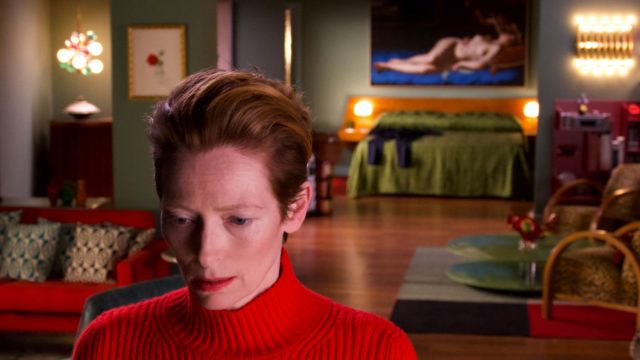
Pedro Almodovar, one of my favorite directors, has a short film in this festival, his own rewritten version of a play by Jean Cocteau, also a gay man, about a lover walking out of a four-year relationship. The one left behind in this case is the British actress Tilda Swinton, always of ambiguous sexuality, and the work is a monologue of lovers’ pain and rage, mounted beautifully in odd spaces, constant changes of costume, opening with Swinton in a grand red ball dress and ending with her in messy contemporary layers, closing with a bang but also with humor, though not one of the director’s most memorable efforts.
Phillippe Garrel’s “The Salt of Tears” is another film about love, French, black and white, about a young man just setting off on a career as a cabinetmaker and in the course of the film, gets involved with three different girls. In the end, however, only the relationship to his elderly father seems to be important to him — pretty people, pleasing images, little substance.
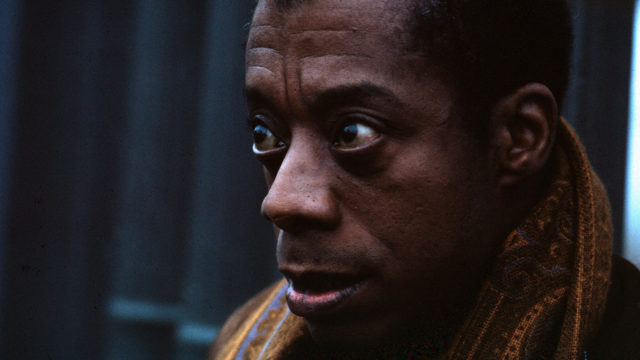
The documentaries, as has often been the case in recent years, were especially noteworthy. The true stunner for me was “Meeting the Man: James Baldwin in Paris,” a short documentary shot in 1971 in black and white for BBC by Terrence Dixon in Paris of James Baldwin talking. I remember hearing Baldwin in a discussion with Norman Mailer in the late ‘50s, and being bowled over by him, not to speak of how his essays felt the first time one read them, or his first novel, “Go Tell It On the Mountain.” Given what the country has been through in new and much deeper recognitions of Black experience recently, Baldwin’s words in this film — rough footage 50 years old — are even more searing, brilliant and devastating. He becomes belligerent with the interviewer: Jimmy Baldwin’s Paris is not important, he tells him. What IS important is that I’m a survivor of something, a witness to something. He says: “my country runs the world; it OWNS the world.” When asked why he left the U.S., he responds, “I left because I knew I was going to be murdered there.” He says, “I’m one of the very few dark people in the world to have a voice. I can’t turn away from that.” Thankfully that particular reality is no longer true, and Baldwin would not have to carry such a horrifically heavy burden and moral duty were he around now. I’m not sure how distribution will be handled but if there is any way to see this film, it is worth the effort.
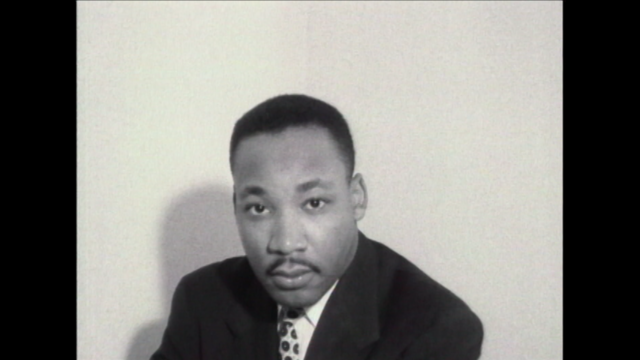
Sam Pollard’s “MLK/FBI” is a strong film documenting how J. Edgar Hoover, the all-powerful FBI czar for close to five decades, was determined to destroy Martin Luther King Jr. even as King was increasingly successful, lauded and awarded the Nobel Peace Prize. From archival footage, we follow the growth of the civil rights movement under King from a small Southern resistance organization to a national force. Hoover’s obsessive hatred shifts from Communist hunting by way of a beloved French Jewish supporter of King’s, Stanley Levison, to massive surveillance of King’s private sexual life. The crazy ferocity of this used to be chalked up to Hoover’s own pathologies, but the film makes clear how mainstream the agency he ran was, endorsed by presidents and by the country at large. It’s a stunning point of view, with all-too-familiar parallels to our current situation. Hardfaced decent white citizens’ characterizations of King sound completely off the wall in the same way as any virulent Trumpite so many years later. This is all the more heartbreaking as the film keeps its focus on King and the milestones of his movement, with footage of the various marches and bus rides and attacks, Ralph Abernathy often at his side, his talking to presidents and TV interviewers, the wonderful glowing faces of supporters turned toward him and, young as he was, the extraordinary dignity and spiritual beauty of him. There’s even a striking bit of film of his father wildly preaching and the young son Martin standing calmly by his side.
There was also a fascinating film about Helen Keller, John Gianvito’s “Her Socialist Smile” (HBO). This Helen Keller is shockingly different from the simplified and sanitized image we were all brought up with: an overwhelmingly disabled person cut off from everything in a dark and silent world yet wondrously gaining language. What emerges instead is a fighter, a fiery socialist, a person passionately engaged in the suffrage movement of her time as well as with workers’ oppression and inequality in addition to the plight of the disabled. Her writing is eloquent, rousing, moving — sometimes read as voiceover by Carolyn Forche the poet, sometimes printed against a boldly black background. How did Helen Keller create this self? The film gives us clues, not from her graduating from Radcliffe in 1904, which education which she dismisses as about dead ideas. But she read hungrily and speaks of the books she loves — H.G. Wells, Bakunin. There is little footage of her, but we do see her world in very intriguing glimpses — the first suffrage parade, which she attended, that was dismissed by Woodrow Wilson and which passersby blocked on the street. We see how widely socialism had entered the culture by 1913 and the attacks on it, how the Wobblies’ headquarters was destroyed by the American Legion. Her renown was enormous but when she took to public stages talking politically about the need to reorganize society, she was ignored or criticized. Du Bois offers an homage to her. Her family was from Alabama and her father had slaves. She fell in love with Russia and the revolution, but she soon realized that the dream is not related to the reality. I should mention that the film periodically cuts away from the intense talk and ideas to images of nature, often in motion — water flowing, birds flying, finally dried seed pods opening into the wind: good decisions. It’s skillfully put together and a revelation — yet another instance of an amazing story that has not been told.
“City Hall,” a very long documentary from the great Frederick Wiseman, now around 90, asks you to give a big chunk of your time to it, but rewards you with a rich examination of city government — Boston here. We sit in on meetings — not introduced or told how to judge, just given the experience. From the complex fiscal maneuvers that it begins with — shifting to a wedding between two women — the editing makes the film engaging, as it provides the fullest education and immersion into the world of any large city’s city hall. One of Wiseman’s other recent films, “Berkeley,” about the University of California, also was much longer than films tend to be, and sat one through all the minutia of academic meetings and brief visits to classrooms, as his film “National Gallery” does the same thing for the complex world of great museums. These films — like “City Hall,” if you don’t hurry the experience — take you through a world without judging it and yet not copying either, but shaping it as art does.
“Swimming Out Till the Sea Turns Blue,” a still more ambitious documentary from China, two hours long, directed by Jia Zhangke, aims to give a sense of the enormous changes in Chinese society from 1949 to the present. It focuses on three writers attending a literary conference in 2019 in Shangxi, the director’s home province. The writers talk to us at length — lively, colorful talk — and a camera all through takes in, in such an absorbing way, a huge range of faces, often of the old and people living their lives, preparing and eating meals, playing cards, But the writers who are the talking heads remember the harshest times and the huge improvement in quality of life — the town a pit until water was filtered of salt and then become a model for food production. The memories are often of poverty, hunger and terribly hard lives, of massive social change like the ascent of the Communist Party takeover in 1949 and the Cultural Revolution in the 1960s — a sweeping portrait that, however, gives no real criticism of the painful cost of the changes or of mistakes made, no sense of the censorship, the imprisonment of critics, the thrilling and terrible days in 1981 of the Tiananmen Square uprising and massacre. So, though this is a valuable, well-made documentary, it’s certainly nothing like the whole story.

Two engaging animal-oriented documentaries have unusual subjects. “Gunda,” made in Norway by Russian director Victor Kossakovsky, keeps an extraordinary focus for 93 minutes — in black and white — on a world of farm animals, most especially an enormous sow and her many piglets from the minute after they were born. There is no human being in sight. From the opening moments when these tiny creatures battle each other savagely for the mother’s teats — a massive, somewhat repellent lineup of teats that the camera frequently returns to — we know that we are in a very strange and even disturbing world, very far away from the pretty, funny images in the nature films shown on BBC or PBS. The director rejected the use of color because it made sweet picture postcards of his images; and he rejected any musical score, refusing to use the usual outside aids to move audiences, instead filling the soundtrack with the grunts and screeches of this pig world. The result is a brave, worthy, uncommercial project. (At the same time, oddly, one was also reminded of the old tearjerker Russian films about the Mother.) The director’s persuasively passionate, eloquent talk at the NYFF virtual press conference makes clear his almost religious commitment to the animal world and his skeptical questioning of our human sense of superiority over the creatures, our assumption of the right to control and destroy them.
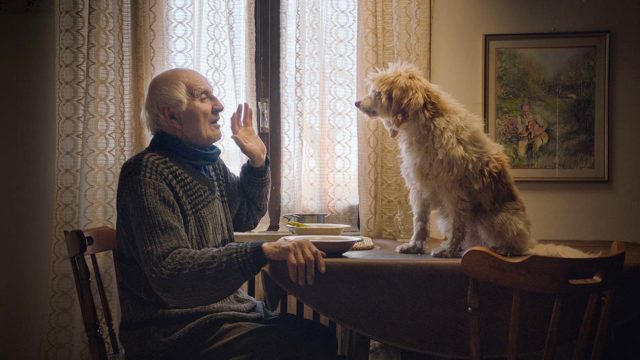
“The Truffle Hunters,” made in northern Italy in the forests of Piedmont by Michael Dweck and Gregory Kershaw, gives us entry into the specialized world of truffle hunters. They are a scruffy group of old men with a lot of wild hair; and the hunters are also their dogs, with whom they have profound bonds. We watch men and dogs scramble up difficult heights and dig away for the highly valued and very expensive food. We get introduced to a whole body of faceless and unsympathetic business people who market this material. We listen to the truffle hunters’ disgust with those who hunt only out of greed, and watch a troubling exchange between a young man trying to coax the secrets from a very old truffle hunter, one of the best, who has been doing this for many decades and who is far too smart to give anything away. This same old man’s careful planning for how his dog will be taken care of after he dies is part of the touching intimacy with which the hunters continually talk to their dogs, scrub them, lovingly pat them, with the dogs looking like they would do anything for these masters, totally at one with them.