
Patience is a virtue for gardeners but not always the easiest to come by. We want plants to grow immediately and flower or bear edible fruit within days of planting. For the most part, it doesn’t really work that way. And for parents teaching their children to garden, it is hard to compete with the apps on their tablets and phones, such as “Farmville” and “Grow A Garden,” that grow plants and communities seemingly overnight. The “Grow A Garden” game has gained millions of players in the past few years; on some level it must be making young players curious about how things grow in real life.
When Sheffield’s Dewey Hall decided to add three Under-12 categories to their third annual Dahlia Festival that will be held in September, I immediately thought about how one could build the patience level of a young gardener to take a plant from tuber or seed to flower. Dahlias are not like some plants, such as radishes, that produce their end results in 20 days. They require planting, watering and staking before the plants even begin to flower, usually in mid- to late summer. Perhaps by growing them along with beans, radishes and lettuces that are quick to grow, parents can build up not only their own patience for waiting for things to mature, but those of their kids.
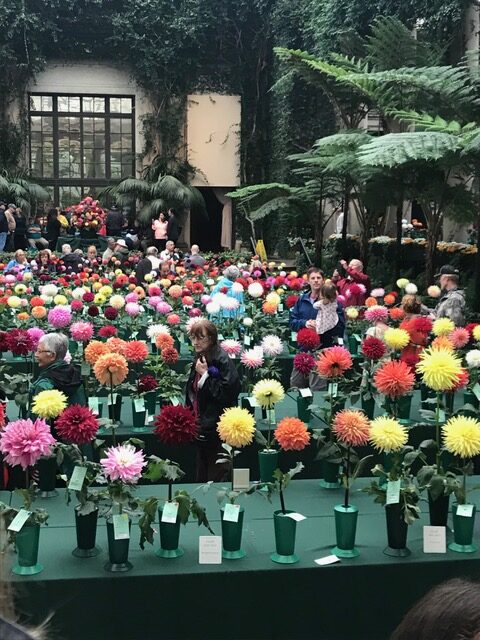
The categories for entry in the youth class will include smallest flower, biggest flower, and most colorful. Selecting a variety that meets one of those criteria seems easy enough (acquiring seeds and tubers on “Grow A Garden,” as well as pets that nurture them, is a key part of the online app). In my real life experience, very few animals have helped us to grow dahlias—our beagles crash through them while playing with one another and the plants are occasionally nibbled by rabbits. Generally, the weeding, watering, and fertilizing of the plants gets done by humans. Rules that work on the app may not mimic what works in the garden, but they do teach young gardeners an important critical rule: understanding the conditions and needs of plants and providing them with some consistency are critical to success in the garden in either universe.
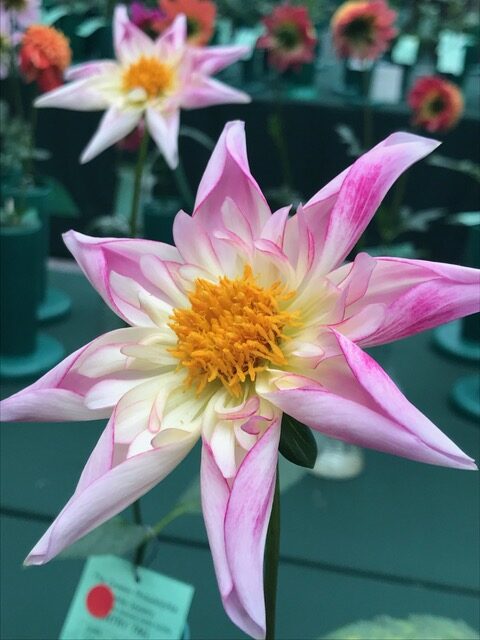
I am hoping families will be working to plant tubers or buy young plants (it is a little late in the season to get dahlias growing from seed for this year’s competition though perhaps possible) and begin to show how things can happen here on Earth and in the earth. (Good soil is critical to the growth of dahlias, along with sunlight, consistent moisture and good air circulation.) Relating what is happening online to what is happening on the ground seems like a nice step for families concerned about the screentime of their younger members. And, to my mind, the prospect of coming to Dewey Hall in September to enter the competition and to meet your peers and competitors might be the greatest reason of all to work in the garden and to connect literally, not virtually, with other like-minded souls.

At the end of the day, this is what gardening is about at any age. And maybe for all of us, a little more patience pays off.
For more information about how to enter the competition at Dewey Hall’s Dahlia Festival in September, visit deweyhall.org.
____________________________________
A gardener grows through observation, experimentation, and learning from the failures, triumphs, and hard work of oneself and others. In this sense, all gardeners are self-taught, while at the same time intrinsically connected to a tradition and a community that finds satisfaction through working the soil and sharing their experiences with one another. This column explores those relationships and how we learn about the world around us from plants and our fellow gardeners.