Every fall I teach a class about herbaceous plants as part of the Berkshire Botanical Garden’s horticulture certificate program. While I think the goal of the class is for me to inspire others, as we discuss annuals and perennials, monocarps and biennials, and leaf and flower forms and root structures, I find myself being inspired by the miracles of the plant kingdom as well as by the students themselves. And this week, as we address flowers —their form, their purpose, their evolutionary biology—I cannot help but think of another event taking place in the coming days that combines the same ideas focused around one genus, dahlia, and the range of flowers humankind has cultivated within it over the centuries: Dewey Hall’s Third Annual Dahlia Festival.
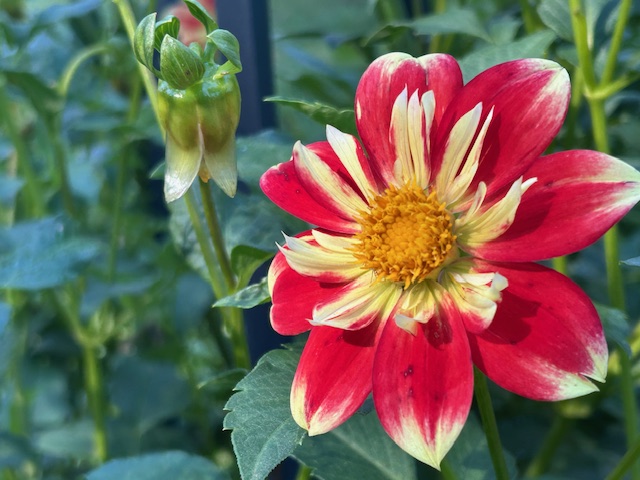
The Festival kicks off with a class by local flower farmer Anna Mack on Tuesday evening. Mack will teach attendees the art of growing—and stowing—their favorite varieties of dahlias so they will grow for seasons to come. As most species of dahlias are native to the mountains of Mexico, they are not fully hardy here, so there is an art to growing them and having them again in the coming year. Their tubers (welcome back to my herbaceous plants class lesson two) are underground storage mechanisms that contain all that is needed to bring these plants forward into the new year, but, alas, our winters are too cold for them to stay in the ground without being damaged. Anna Mack will explain how their tubers can be dug up after a hard frost (evidenced by the plant’s blackened foliage) and be cleaned and stored in a cool dark place in a slightly moist medium to be planted out the following year, either directly into the garden when the soil has warmed or started earlier in containers to have flowers for cutting and arranging early in the season.
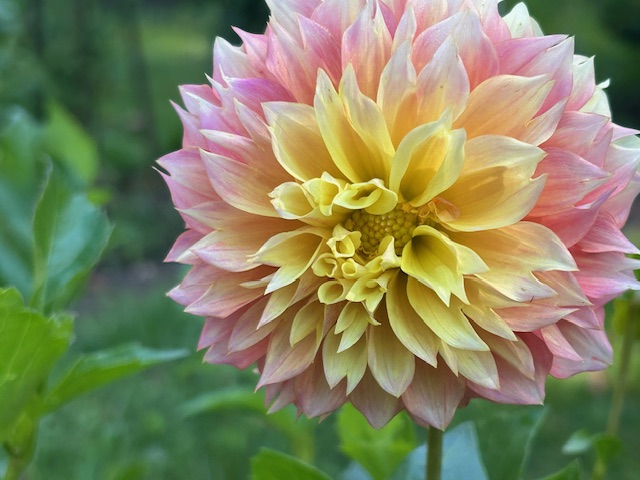
Competitive growers each have their own approach, and best practices are as varied as the range of flower forms and colors this genus can take on, but ideally Mack will help people determine the best approach for each individual type. And while getting these plants to bloom early may be of interest to some, planting tubers directly for blooms in the last half of the season is a very viable option. As we learn in our herbaceous plants class at BBG on day one, look where plants grow in the wild to see how they will respond in your garden. Dahlias grow in the mountains of Mexico, where the cool nights and warm sunny days promote their flowering. What this means for us is that these plants actually do their best as the season cools down and will set flower buds through the first frost, hence the late date of the Dahlia Festival competition, September 20th.
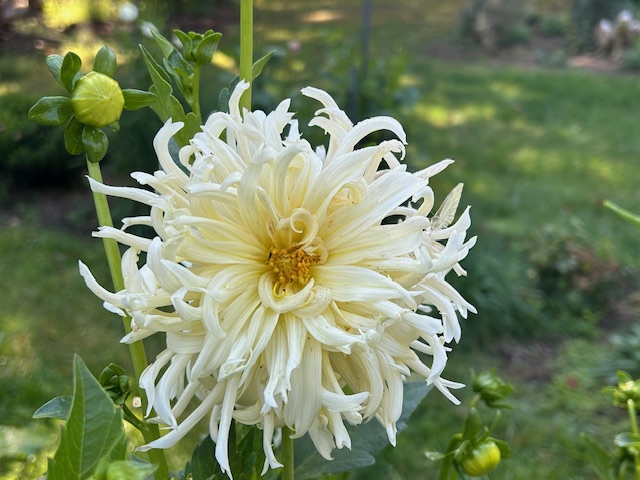
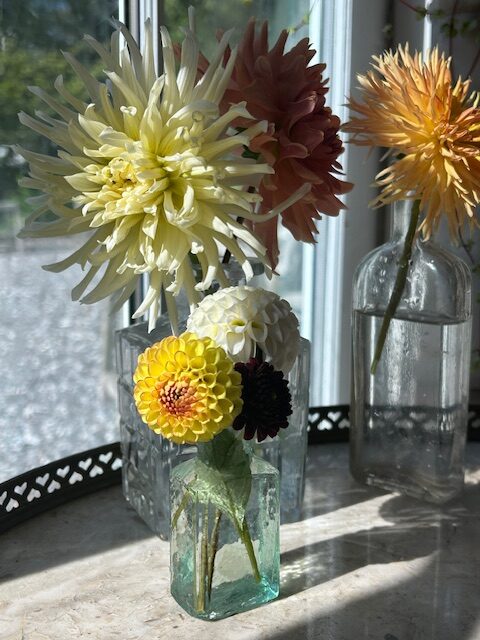
On that date, Dewey Hall’s exhibit hall will be filled with scores of flower entries from local gardeners in ten categories for adults and three categories for juniors (under 12) category. The range of forms this species can take on through cultivation highlights another topic in my class. Dahlias are composites, characterized by a flower head that looks like a single bloom but is actually composed of many small, individual flowers (florets) arranged in a disc and ray pattern. These individual fertile flowers produce seed which can produce new dahlias. Over the years, gardeners have selected forms and colors that they like and have kept them around through vegetative propagation—dividing the tubers and sharing them with friends to guarantee that the variety lives on. This is also known as clonal propagation, which varies from growing something from seed, and is key to keeping many varieties of our favorite plants extant (or in existence or surviving).
And so ends today’s botany lesson. If you didn’t sign up for the class at BBG, don’t worry. You can go to the Dahlia Festival at Dewey Hall and take in the wonder of it all. And if it captures your imagination, maybe you can enroll next fall at BBG to further your knowledge of the plant kingdom and all its wonders and to inspire me in turn, as every student always does.
____________________________________
A gardener grows through observation, experimentation, and learning from the failures, triumphs, and hard work of oneself and others. In this sense, all gardeners are self-taught, while at the same time intrinsically connected to a tradition and a community that finds satisfaction through working the soil and sharing their experiences with one another. This column explores those relationships and how we learn about the world around us from plants and our fellow gardeners.