I am a weekend gardener. Although I work at a garden center from Monday to Friday, I also need to eat, sleep, and, you know, live. Last week, the gardens had begun to dry out. I watered my vegetable beds briefly in the morning and night. We needed rain. Then, on Saturday when I was ready to weed, plant, mulch, and edge, it rained. It rained all day. Hard. Gardening didn’t happen, but I refused to complain.
I still had Sunday! Despite the finger-numbing chill and strong, blustery winds, I did get out to do a little bit of edging, some pruning, and some weeding. Our moral here is that you have to make hay while the sun shines, or at least garden when you can squeeze it in. Now would be a fine time to do a second sowing of cold-tolerant vegetables.
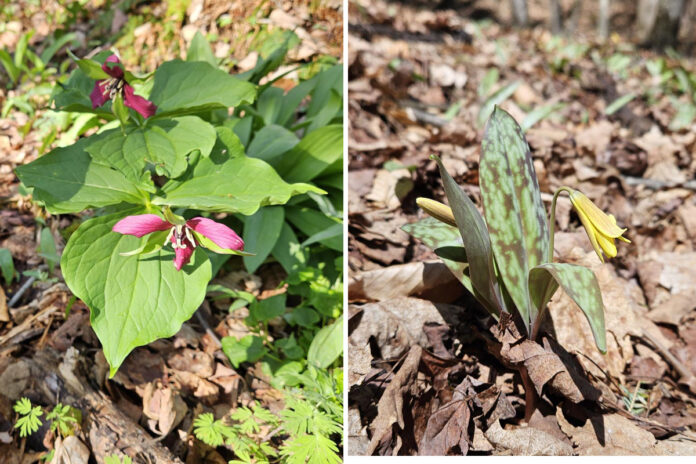
April showers bring May flowers—and April flowers! The trillium have opened in our woods, along with black cohosh and trout lily. Venture into your local woods this weekend to see a lovely display. Together with our neighbors, we are clearing a small wooded area that has been overgrown with bittersweet, invasive bush honeysuckle, and garlic mustard. Rather than ripping out everything, our neighbor has been surgically selecting plants to remove. As a result, spring ephemerals have appeared! No Trillium yet, but we have trout lily (Erythronium americanum), starflower (Trientalis or Lysimachia borealis) and false lily of the valley, AKA Canada mayflower (Maianthemum canadense).
Mark any location where spring ephemerals have appeared. When filling holes with summer perennials, you need to avoid digging up those precious early plants. Mark your daffodil and tulip locations as well. The marker doesn’t have to say anything like “here lie daffodils.” I use large and interesting stones as markers, but you can use different garden ornaments or statues as well. If you want a bigger show next year, you willl want to plant more of those bulbs in that location in the fall. Add a reminder to yourself in your September calendar to (1) buy more bulbs and (2) plant them the spot by “the big rock near the steps.” You get the idea. Nobody just remembers this stuff without reminders.
The day after heavy rains was perfect for weeding out perennial weeds. I focused my chilly fingers on garlic mustard plants that were starting to set flowers. It is best to dig out the garlic mustard in March through April while soil is moist and you can pull the full root. If you wait too long into May, the soil has hardened and roots have grown deeper. So, do it as soon as you get a chance, like this upcoming weekend! Once you gather your garlic mustard, keep it in a dark plastic bag perhaps in a sunny spot until the plants dry up and die completely. Then put it in the trash, not the compost.
Pulling too late will likely break the roots and allow the plants to resurface. From May through a killing frost of October, focus your efforts on mowing down or cutting down the garlic mustard and preventing it from setting flowers/seeds. (Thank you, Susan C. for reminding me of this timing).
My other chilly day activity was pruning forsythia. To shape shrubs and encourage flowers in general, prune shrubs immediately after they bloom. Oddly, my forsythia didn’t bloom beyond the five or six branches around the base. They are still blooming, but the upper branches have no flowers. I suspect that our frigid February winds killed the flower buds because I had pruned the plants early last year to encourage more flower bud formation. When I look closely, I can see along the branches the buds that won’t open.
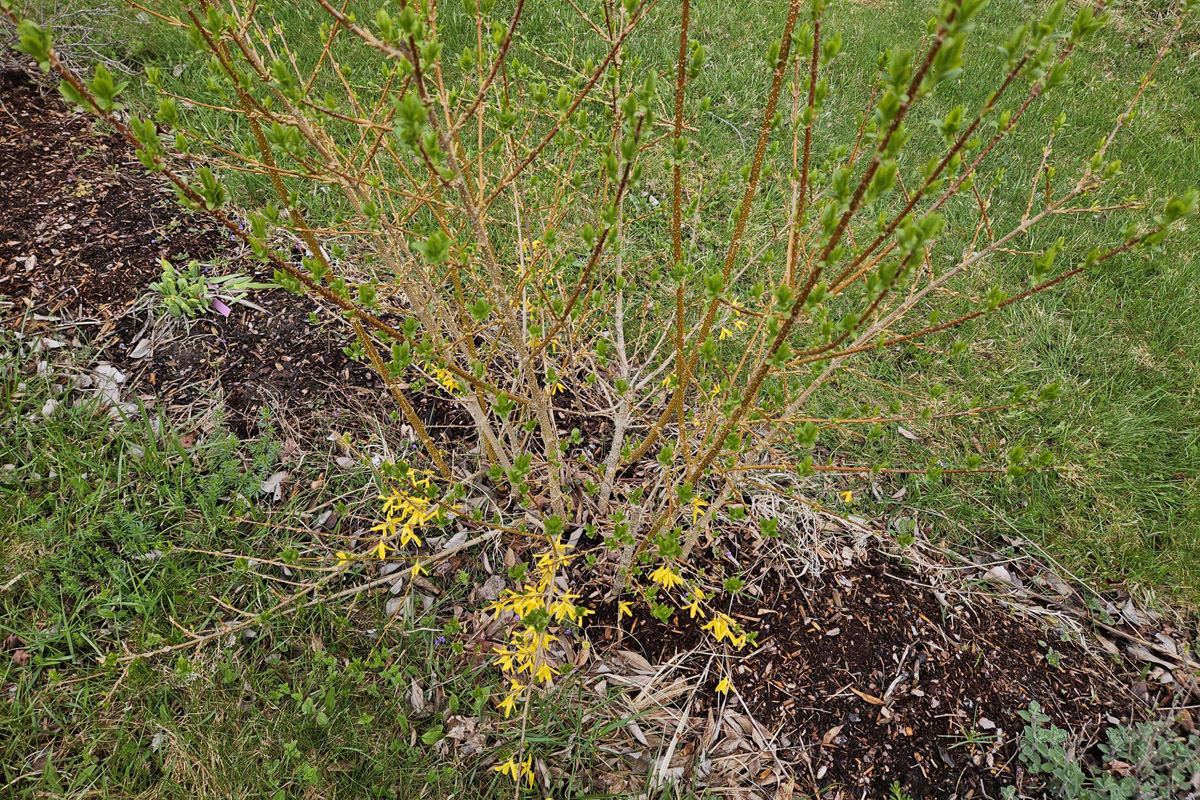
I pruned out inner branches that crossed stronger ones, and I cut back some of the long stronger branches to an outward-facing leaf node. I then scraped off the matching leaf node that faced the center of the plant to prevent a branch forming that direction. At the pruning point, the leaf node will branch outward this summer and, hopefully, flower next spring. Next to prune: Viburnum “Dawn” and Cornus mas (Cornelian dogwood).
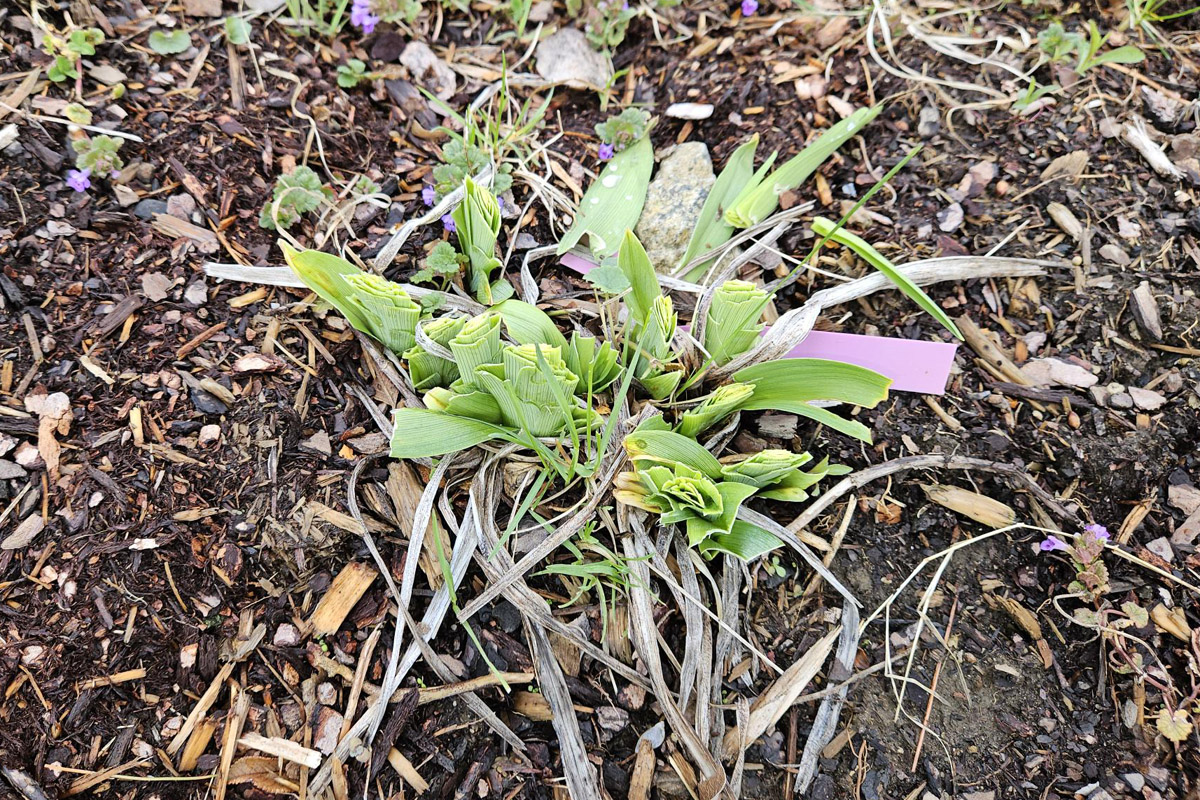
As I walked around the forsythia planning my next pruning cuts, I discovered a daylily clump that served as lunch for a rabbit. Rabbits and deer browse. They munch and move on. I have this same plant across the driveway, and it was ignored. I would have immediately grabbed my repellent spray, but the weather was too windy. Luckily, the daylily has been here for a few seasons and I expect that it will leaf out again.
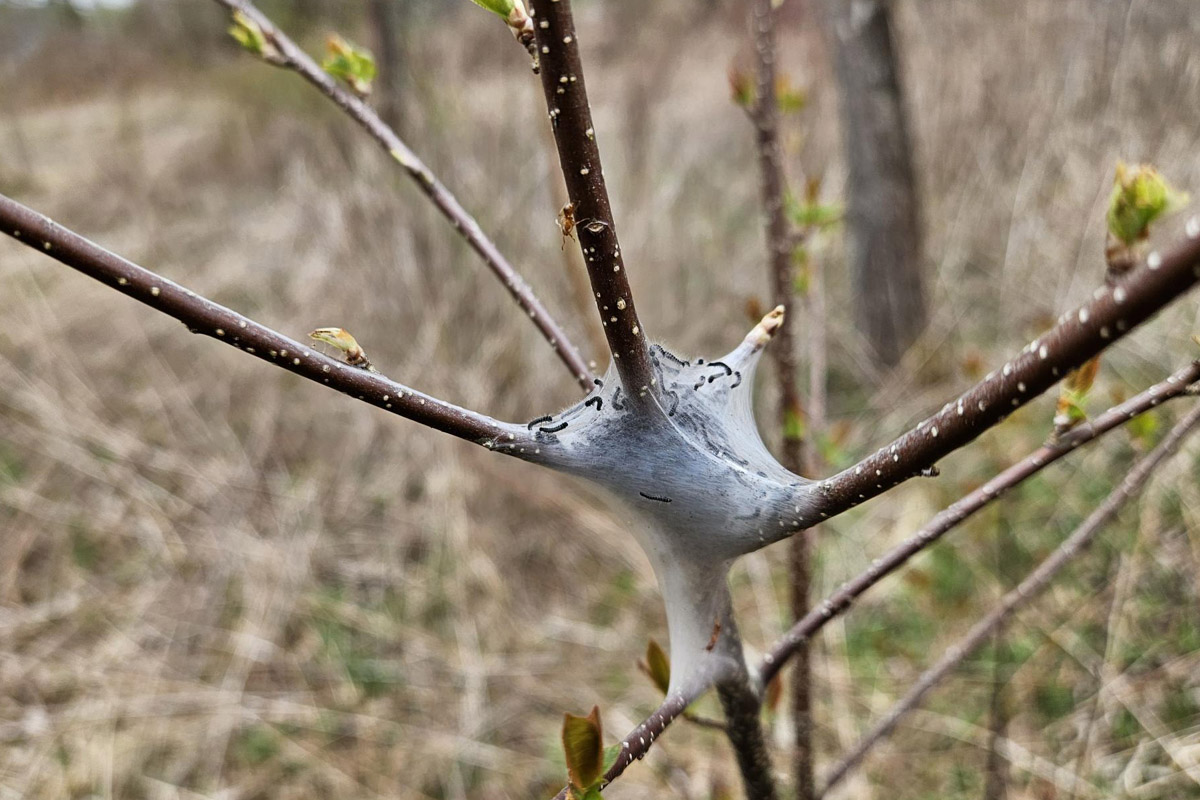
Speaking of pests, scout now for signs of tent caterpillars. I spotted this small tent on a sapling. A native pest, they can be unsightly and defoliate trees. Usually, a mature tree will not suffer long-term damage. But remove them from young plants. An easy way to control the caterpillars is to prune out the branch holding the tent and dispose of the tent, branch, and caterpillars in a garbage bag. Do not put in a compost pile!
Mother’s Day will be upon us soon (May 11), and that is a popular day to give flowers. If you want to give something blooming, consider giving a low-maintenance, flowering shrub, tree, or vine that will bring years of joy. A flowering houseplant will also remind them of you longer than a bouquet of cut flowers. If Mom wants to encourage pollinators, note that single flower forms are more accessible to bees and pollinating flies than the hybridized, frilly double flower forms of some plants.
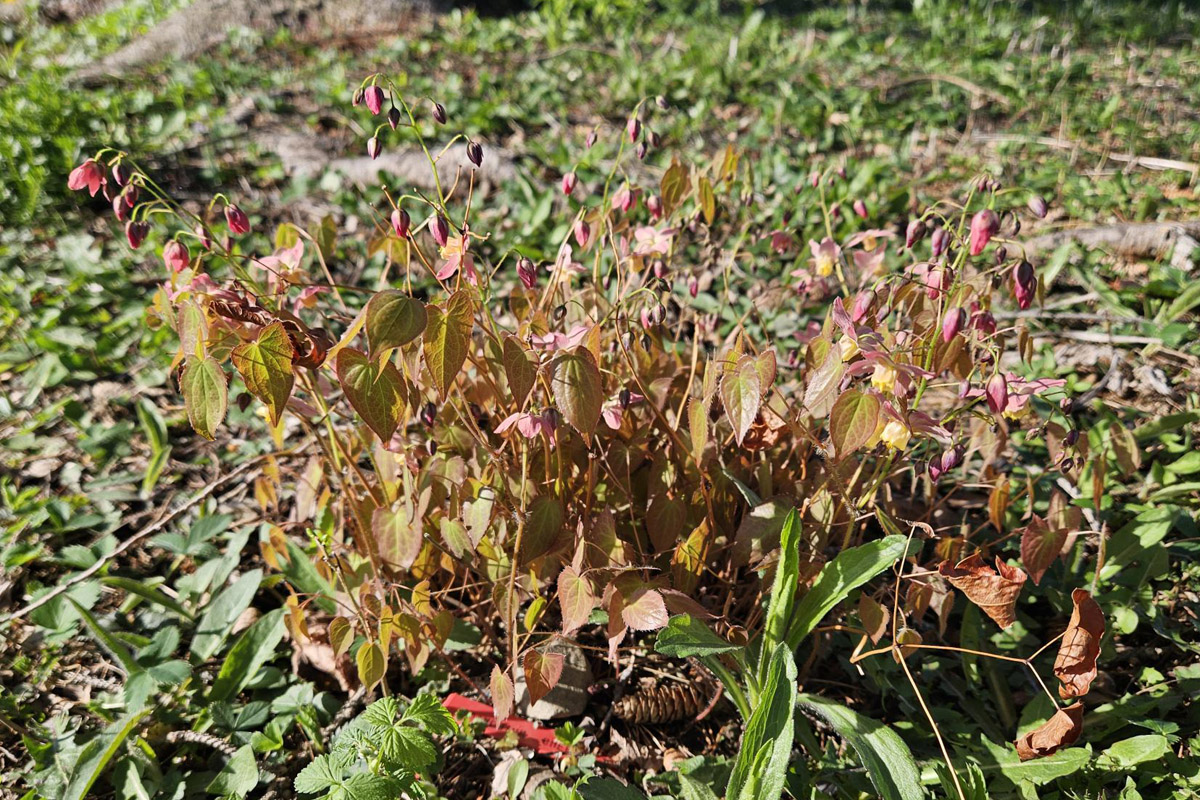
Or a beautiful non-native perennial that might be a nice addition in Mom’s (or your) gardens would be barrenwort (Epimedium sulphureum or Epimedium roseum). These plants send up delicate stems of small bell-like flowers in part-shade locations now, then form mats of heart-shaped leaves through the summer that dance in a breeze. They don’t mind dry shade. I intend to keep adding some as an airy ground cover below my large spruce tree.
I call myself the Lazy Berkshire Gardener because I don’t want to work too hard in my gardens. I want to enjoy them. I find it easier to observe my landscape and let the compost happen, the water pool up, or daisies to self-sow. I look for ways to do the minimum task for the biggest impact. For example, mulching is better than spraying and much better than weeding all season. I look for beautiful, low-maintenance plants that thrive in or at least tolerate my garden conditions. Plus, I am willing to live with the consequences if I miss something.