Remember the dry weather of a few weeks ago? Me neither. This coming weekend when the weather is dry again (we hope), check plants for dark sunken spots on leaves. Remove the leaves if you can do so without stripping the plant bare. Clean your tools and gloves with rubbing alcohol between handling any signs of fungus or you might spread the problem. Use fungicide as preventative on the remaining stems and leaves of plants that were affected. Be sure to follow the product directions!
I’ll have to check on my peony plants. They have grown and seem crowded– a perfect opportunity to develop fungus. As I mentioned recently, my peony plants are just getting established so I’m watching them closely. I also watch the weather. If I have blooms just beginning to open when heavy rain is forecast, I’ll cut them for vases because the rain will probably shred them. Sadly, I chose the wrong size of hoop for the different plants. Some peony plants grow taller than others. Of course, my tall hoops were around the shorter peony plants and shorter hoops around the taller peony plants. In my defense, I inherited the larger peonies on this property and didn’t really notice how tall they would get. Yup, stems broke. I took photos to remember where to place the hoops next spring when the peonies first emerge. We can always try to learn.

Once most things were planted and rain arrived, I took a tour around the gardens to see what needed attention. Invasive vines and small weeds will grow very quickly after recent rains combined with heat. I like to get out ahead of the worst infestations. Oriental Bittersweet has sprung up in all my flower beds, especially under established shrubs. My rhododendron has a vine rising out of the middle. I will crawl in under the shrub and cut away that vine and any others I see cropping up while I’m under there. Note to self: wear head protection and check for ticks after I emerge.

I also noticed many rhododendron buds didn’t open this spring. I suppose they were also frosted and killed from our late frost. I could remove the dead buds, or they can stay on the shrub to dry up and fall off. I’ll check that the dead tissue doesn’t become a home for fungus. I have already confirmed that new growth has sprung from around the dead buds. The plant hasn’t been set back too badly and new flower buds will form this summer. I’ll pull off dead leaves as well to prevent fungus from attacking those.
My raspberry canes have fruit forming but the ends of the canes are stripped of leaves. I decided this damage came from beetles or other insect pests because the canes are not snapped or bitten off like damage from deer or rabbits. Since the fruit is forming on these summer fruiting canes, I’m not in a rush to identify the pest or start spraying. The plants are surviving and fruiting. New fruiting canes are growing ready to form the fruit for next year.
I spotted more insects last weekend. A Calligrapha beetle came in on my lettuce from the garden or off a jacket from our walk. Not sure because it just ‘appeared’. This Calligrapha has a cool pattern, and some identification sites say it attacks dogwood. That makes sense because I brush up against hundreds of dogwood branches on my walk. From what I’ve researched, I don’t need to worry too much about the Calligrapha as a pest. Watch out for the red lily leaf beetle. This bad bug chews chunks out of true lily leaves, but the worst part is the larvae. Once you see the beetle, hunt down and scrape off and destroy any orange-brown oval eggs you see (they look like small rice grains) likely under the lily leaves. The hatched larvae can wipe out a lily plant.

I also spotted a couple of Lady beetles and Soldier beetles — both ‘good bugs’ that hunt and eat small insects. Luckily one soldier beetle was on the asparagus where a host of asparagus beetle larvae are feeding. Hope it can eat them all.
As I walked about, I found the flowering stems of chives were turning brown and setting seed. I trimmed them off and let them stay in an empty patch of soil nearby. Perhaps more chives will sprout. If you catch yours earlier, use the purple flowers to flavor vinegar or as the final touch to a stir-fry. My basil isn’t large yet but this next week I may trim whole stems of basil back to a leaf node rather than just leaves. Two new stems will emerge from the leaf node and make the plant bushier. Use your herbs fresh if you can. For example, harvest mint leaves for iced tea on the next hot and humid day.
Slugs have found a few of my 200 zinnias. Time to put out some slug traps, diatomaceous earth, sluggo or shallow dishes of beer bait. Traps consist of flat stones where slugs will retreat after sunrise. In the morning, lift the stone and scrape off the captured slugs into soapy water. A ring of diatomaceous earth (crushed pumice stone) can form a barrier that slugs can’t cross without slicing the bodies. Sluggo is the brand name for snail and slug bait of iron phosphate. It attracts slugs but when they ingest it, they die. It does not harm plants. Use it, too, as a barrier but recognize that it attracts snails and slugs. Lastly the slug beverage bar technique: use bad beer in a shallow dish near your infested plants. The slugs will come to drink and die drunk.
During my tour, I try to check on my gardening successes, not just my problems. Common milk weed, like thistle, wasn’t planted but it showed up a few years ago and now I just let it continue to grow and build my plantings around it. Also, I’ve identified the annual ox-eye daisy in a few key spots and have let it grow. Now there should be a large enough seedbank that daises will pop up in my gardens each year. Always take a moment to enjoy what you’ve accomplished.
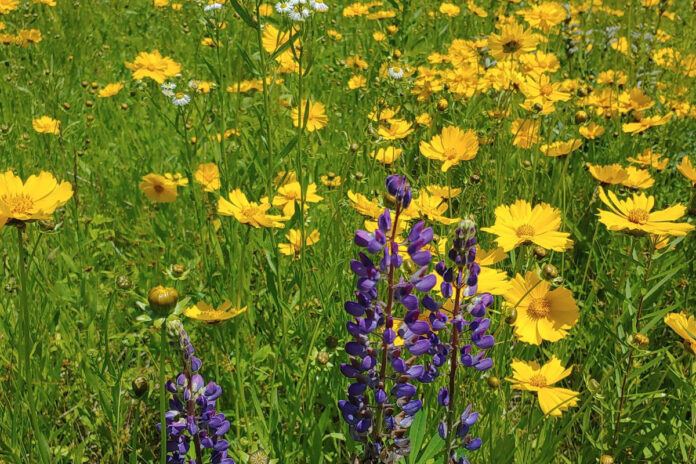
We’re very proud of where we destroyed the lawn to introduce native wildflowers. This area was all turf grass. To create a meadow garden, the area was covered in black plastic in fall of 2020. In late spring of 2021, the not-so-lazy gardener stripped the surface growth and spread wildflower seed. In 2021 and 2022, a few larger plants were added “to establish a presence”. Some invasive plants have appeared, but the overwhelming number of plants are sturdy New England natives that should outcompete the bad guys, especially if the lazy gardener gets in there and removes the invaders.
I had another victory or maybe gentle sigh of relief? I hadn’t given up on my perennial hibiscus, Hibiscus moscheutos, but it took its time. When you tour around your plantings, look closely at the branches for signs of new green growth. In the case of my hibiscus, new growth has finally started to emerge from the roots. I left stems above the ground last fall when I cut it back to mark the plant’s location this spring. But now it’s SUMMER. Signs of life have appeared. The growth is not from the stumps I left behind; so, I had to look carefully. Lucky for me, the leaves of hibiscus don’t look like goldenrod or violet. Also, my repeated tours to this spot helped me recognize when something new – the hibiscus leaves – appeared.

Likewise, I have Butterfly weed in a weedy section of the yard and struggle to distinguish the Asclepias stems from goldenrod. I try not to pull out everything and sure enough, the butterfly weed has started to bud and I now know which stem it is! Lucky I’m a lazy (or patient?) gardener.
I love articles about gardening and new insights on our common garden practices. Research and products continue to evolve. For that and other reasons, I won’t declare one thing better than the other without being specific on how the products are used.
If your favorite products work for you, please use them. If you don’t seem to get the results as advertised or claimed, perhaps you could do some research and experiment with something different. I encourage more diversity and more organic practices, but I don’t garden in a vacuum. My neighbors don’t do as I do and pests don’t recognize borders. Bark mulches or wood chips whether shredded or coarse, buckwheat hulls or stone – all have an aesthetic and purpose that can serve your needs based on cost, the design you want, and time you have for garden maintenance. Let your experience and needs be your guide.
_______________________________________________________________________________
I call myself the Lazy Berkshire Gardener because I don’t want to work too hard in my gardens. I want to enjoy them. I find it easier to observe my landscape and let the compost happen, the water pool up or daisies to self-sow. I look for ways to do the minimum task for the biggest impact. For example, mulching is better than spraying and much better than weeding all season. I look for beautiful low-maintenance plants that thrive in or at least tolerate my garden conditions. Plus, I’m willing to live with the consequences if I miss something.