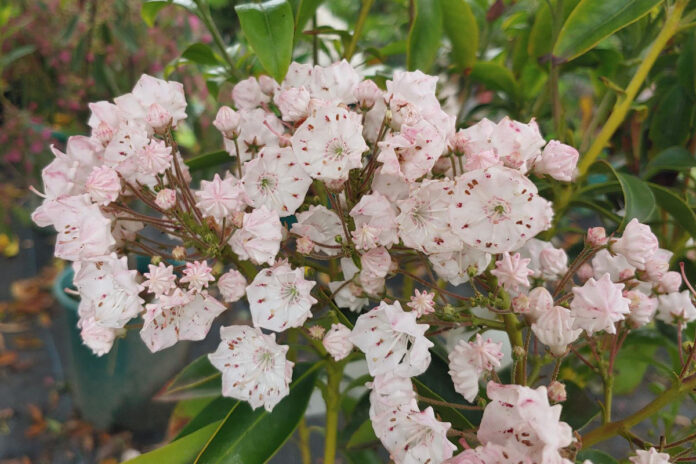
It’s Mountain Laurel time! Mine is all budded and ready to open but I snapped a photo of one in the nursery already in bloom to remind everyone to take a walk in the woods and see our native Mountain Laurel (Kalmia latifolia).
Rain this last weekend has improved the condition of all my gardens. I have young basil plants that I could have planted a few weeks ago but didn’t. There’s still time and the soil is ready. I’ll place them near the tomato plants this week. The warm weather and moist soil will help them get established fast.

The basil I have is small but perennial oregano, thyme, savory and basil plants will send up flowers with some heat. Pinch back those herbs the moment you see buds form. Pinching will send more leafy branches to the sides and keep the herbs sweet. Once flowers form, the herbs can get leggy with smaller, sometimes bitter-tasting leaves. Or use kitchen shears to trim a few inches from the top of your herbs regularly and add to freshen up your cooking (or spruce up a can of soup or a sandwich).
Ready to pick those veggies? Rather than pull up entire clumps of lettuce, use your garden snips or kitchen shears to cut a few leaves from each clump. The clump will put out more leaves. Pick snow peas while pods are still flat and sugar snap peas once they are plump – but before the shapes of the peas start ‘showing’ in the pod.
Try to pick early in the morning while the day is still cool. Vegetables start to produce more starches as the sun warms them and they start to grow again. The best water and sugar content of vegetables occurs first thing in the morning.
However, fruits like strawberries and raspberries should be dry when picked. Plants covered in cool morning dew can develop fungus. If you were to rummage around those plants while wet, you would easily spread fungus spores from leaves to fruit. I have good luck picking tomatoes, raspberries and strawberries in the late afternoon or early evening. My other favorite trick with the red fruits? I pick them when pink or just showing a hint of color. They finish ripening within 24 hours on my counter and I get ahead of the slugs, or birds, or sneaky rodents that inevitably take a tiny bite out of the ripe fruit.
Mid-June and my peonies have started to bloom! Having a reliable and fragrant bloomer in my garden inspires me to make a bouquet. Once I start, I’ll circle around looking for anything with an interesting shape or color to add to the arrangement. I use a jar of water, or you could have a bucket of water depending on how many flowers you intend to gather, and as I cut the flowers, I quickly put them in the container.

Once I’ve gathered odd numbers of blooms in a variety of shapes and related colors, I bring them indoors to trim and arrange. I choose a jar or vase big enough to hold the stems in water and the flowers above the vase rim. I fill the vase about ¾ full with cold water. My peonies usually have short stems because I cut back to where a new bud is forming. For peonies, I need to use my shorter vases.
When adding your water, remember your stems will displace some of the it. Adjust as necessary. Trim off any leaves from the stems that might be submerged. They will decompose, spoil the water, and shorten the life of your cut flowers. Next—arrange! I’ve learned two different arrangement methods:
First, you can arrange the flower stems in one hand. Gently hold the stems and add flowers one at a time with your other hand so all the flowers are the same height or varied with tallest in the center and a dome of flowers gradually shorter as you go to the outer edges of the clump. Once you have the arrangement still in one hand, trim the stems to an even cut at the bottom and place in your vase. Then release the stems to gently fall around the top of the vase. Slight adjustments can still be made but you don’t force stems into tight spots which can cause bruising and breakage.
My other method works well with the sturdy stems of peony. I usually have short stems on the peony and my vases are shallow enough for them to reach the bottom and stay in position. So, I keep a few leaves that help support the flower above the vase rim. The leaf stems can also hold other flowers in position. For this arrangement, I put the sturdier, supportive flowers around the edges and gently slip longer stems of other flowers in the middle.
Trimming flowers of annuals will bring on more flowers so don’t be shy! Add more annuals around your gardens, too. Garden centers will be having annuals on sale soon and they will bloom for you until September especially if you trim them back occasionally. Also cut those annual flowers for arrangements indoors.
This past week of cool rainy weather has stalled the blooms of many plants but with a little heat, things will just explode. Grass included! Keep your mower height high now through July and August – about 3”- and if you need to mow twice a week to keep your mower moving through the dense turf, do it. The longer grass blades will shade the roots and keep moisture in the soil. Your lawn will stay greener and healthier.
While we want thick, dense lawns; many plants will be healthier when not dense. That is, too many stems, or too many branches too close together will prevent air circulation and sunlight getting to all the leaves while endangering your plants with fungus or powdery mildew. Now is the time to prepare for the onset of these diseases.
If your plants had fungal problems last year, start using fungicides now to prevent a recurrence. Also, thin plant stems by cutting a few stems in the center of a clump all the way to the ground. The remaining stems will have better air circulation and you’ll never notice that a few stems are removed. Plants that benefit from thinning especially include beebalm, phlox, campanula, goldenrod and aster.
If you cut aster or goldenrod back by about 1/3 anytime into early July, you get more flowers and more compact plants.
Lilacs can be susceptible to powdery mildew and thinning their branches will also help prevent the mildew from forming.
More insect fun! I have been using the google ID feature from the photo gallery on my smartphone. Take a picture and tap the square QR code looking icon. You have launched an internet search for that image and if it’s a fairly common plant or insect, an identification comes up. Don’t believe the first reference you see, but usually multiple sources will confirm the same match!

I’ve identified a Pine Sawyer beetle and learned that it is relatively harmless. Other insects I recently found are the active small larvae of Willow Beetle. I thought it was Spongy Moth! If you remember, a few months ago this column showed a tree that was severely bent and broken from another dead limb after heavy winds and snow this winter. That tree has put out leaves only to be attacked now by the willow beetle. I haven’t seen much larval activity from other beetle larvae on other plants, but this willow was severely damaged. That’s another hint that the pest is specific to the plant. Spongy moth damage would be on more trees around the same time. If the tree had been healthy and larger, it would be better able to withstand the caterpillar attack. As it is, that willow tree may not leaf out at all next year. Too much damage from too many sources. So, what will we say killed it? Too many things.
To prevent the premature failure of your plantings, make sure they get enough water on a regular, weekly basis, prune or thin as needed, remove invasive competition, fertilize them and mulch their soil. Oh – and if they experienced fungus last year, use a pre-emergent fungicide. Always check the label for complete instructions and to be sure you have the correct product for the job. Then, be lazy! Let your plants fight the pest insects, stabilize themselves in the wind, soak up the sun; and support the birds, the beneficial insects and you.
_______________________________________________________________________________
I call myself the Lazy Berkshire Gardener because I don’t want to work too hard in my gardens. I want to enjoy them. I find it easier to observe my landscape and let the compost happen, the water pool up or daisies to self-sow. I look for ways to do the minimum task for the biggest impact. For example, mulching is better than spraying and much better than weeding all season. I look for beautiful low-maintenance plants that thrive in or at least tolerate my garden conditions. Plus, I’m willing to live with the consequences if I miss something.