Well, I won’t bore you with more snow stories. You know them all. Not much new gardening to do when the weather stays this cold and the snow this deep.
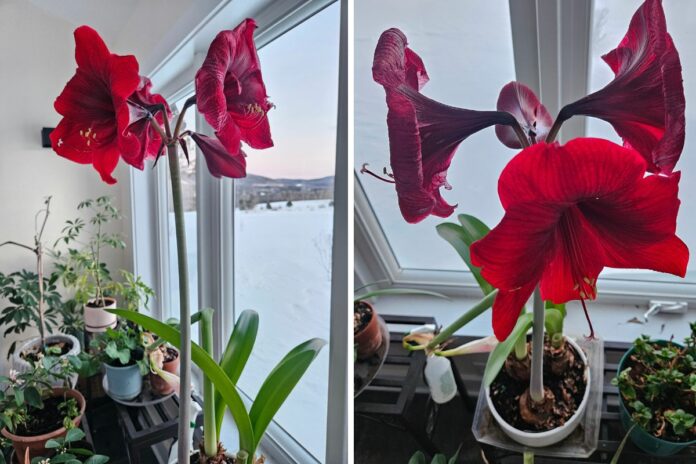
The last of my amaryllis bulbs that over-summered last year has a fourth bloom opening now. The stem must be 40 inches tall! Indoors is where the growing is happening.
I am thinking we will have a slower start to spring than we have seen the last few years. It will take a while for the snow to melt and the ground to thaw. Don’t rush your seed-starting unless you have a good spot to grow your seedlings on and to repot them into slightly larger pots. You will need the seedlings to be in a cool, very bright setting or the stems will stretch and get weak before you can plant them outdoors. That all said, you can start cool-weather crops like broccoli, cauliflower, and Brussels sprouts indoors now to acclimate for outdoor planting in late April.
Once the temperatures move up into the 20s and 30s next week, you could scout around for pruning opportunities. Shrubs and trees are dormant now, and they will be ready to get started once the sun hits the vernal equinox on March 20. Many deciduous shrubs that have been growing in place for three years or more should receive a maintenance pruning. Prune inward-growing branches to an outward-facing leaf node or prune them back to the ground. Prune out thin branches, especially if they cross branches that form a preferable structure. Prune out a quarter to a third of all branches, focusing on the oldest (thickest) branches, to open the center of the shrub to more light.
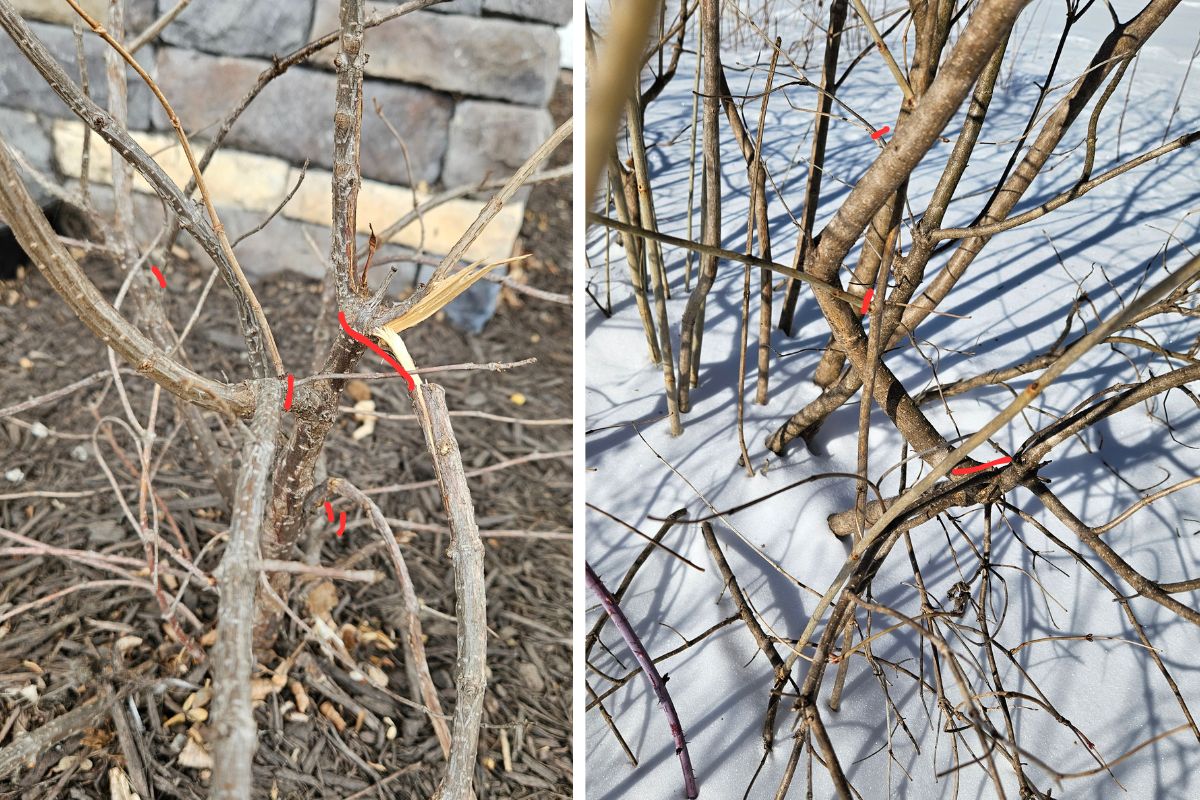
Also, prune your grapevines and blueberry bushes when ground is frozen to reduce soil compaction. Grapes will fruit on the new wood that grows this spring, and pruning encourages that growth. Prune 80 percent to 90 percent of the wood from last year and keep just the simplest skeleton. Fruiting stems will grow off that structure. Blueberries fruit best on wood from one to three years ago. Older branches (grayest about four years or older) should be pruned out to encourage new growth for next year’s fruit.
Another winter gardening task would be to scout for damage on boxwood plants. Boxwood (Buxus spp.) has a distinct fragrance and a formal garden distinction. Boxwood can be shaped into topiaries or interesting small hedges. It can grow as a ball, a pillar, or cone and, with care, will tolerate living in a pot above ground. However, this versatile evergreen shrub has its share of issues. For a detailed review of types of boxwood damage and solutions, visit this page at Ohio State University agricultural extension.
Boxwood may attract boxwood leafminer—the result of small flies laying eggs on the underside of boxwood foliage. From a distance, the damaged leaves might look similar to winter burn: either brown or yellowing. The pests create different damage patterns when you look closely at the leaves. The leafminers are insect larvae pests that tunnel between leaf layers and create yellow or brown circular spots or blisters on the leaf surfaces. Bad infestations of leafminers can be controlled with early spring pruning or appropriately timed pesticide applications.
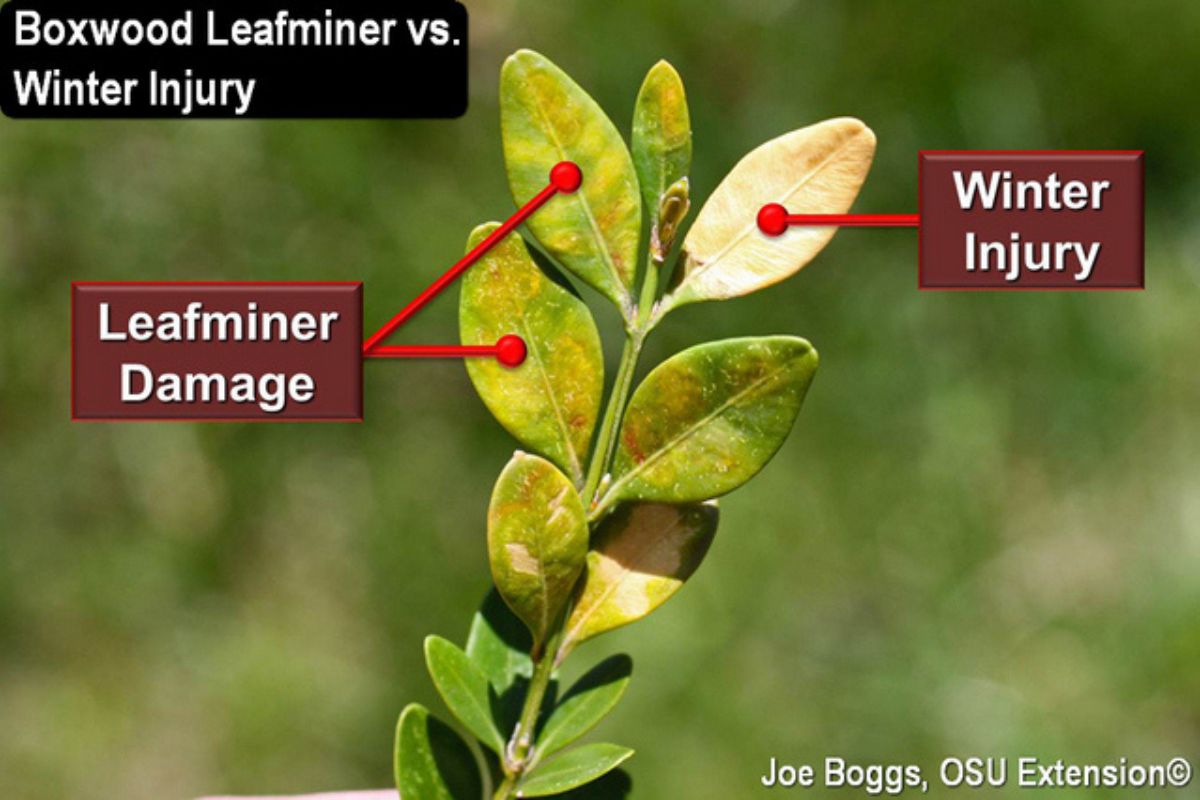
Winter burn on boxwood is the yellowing or browning of the leaves overall and usually will appear on one side of the shrub, primarily the side exposed to the harsh winter sunlight from snow or building reflections on the south or west sides. Damage can be pruned out early in the season, and the shrubs will fill in. To prevent future damage, wrap the shrubs with burlap or provide a windbreak in the late fall.
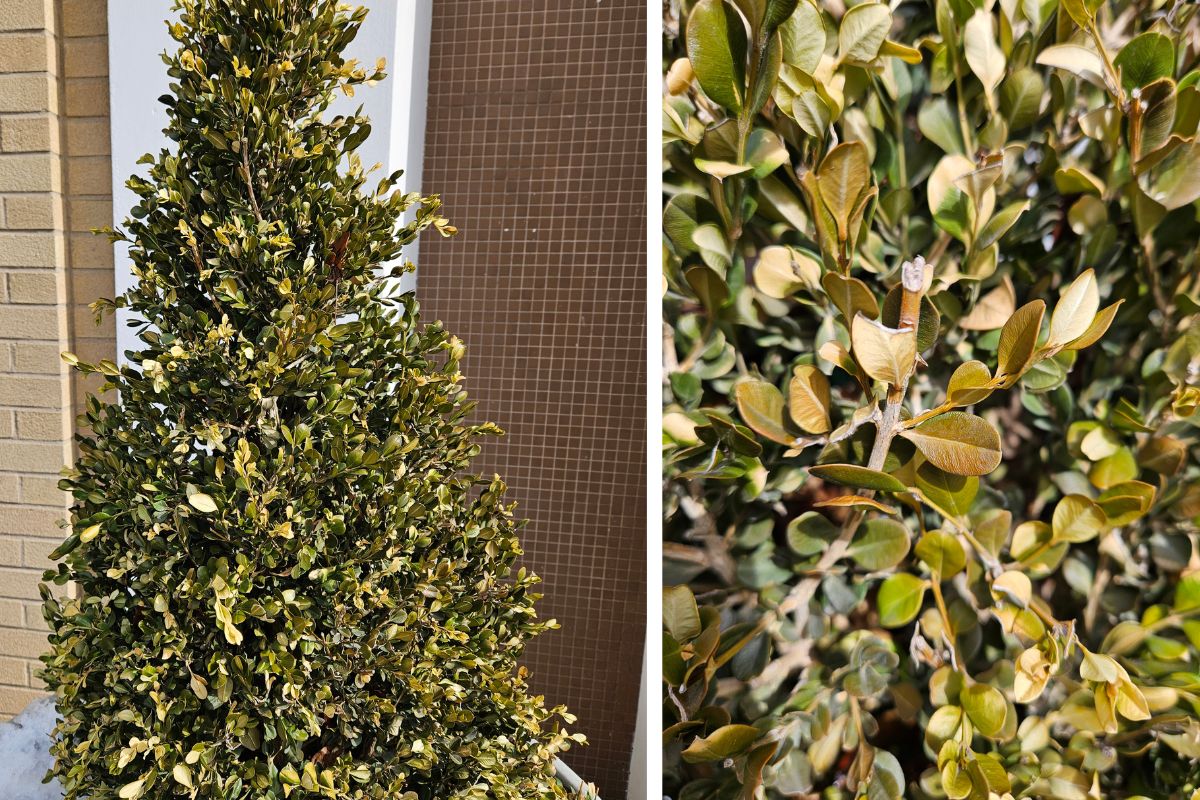
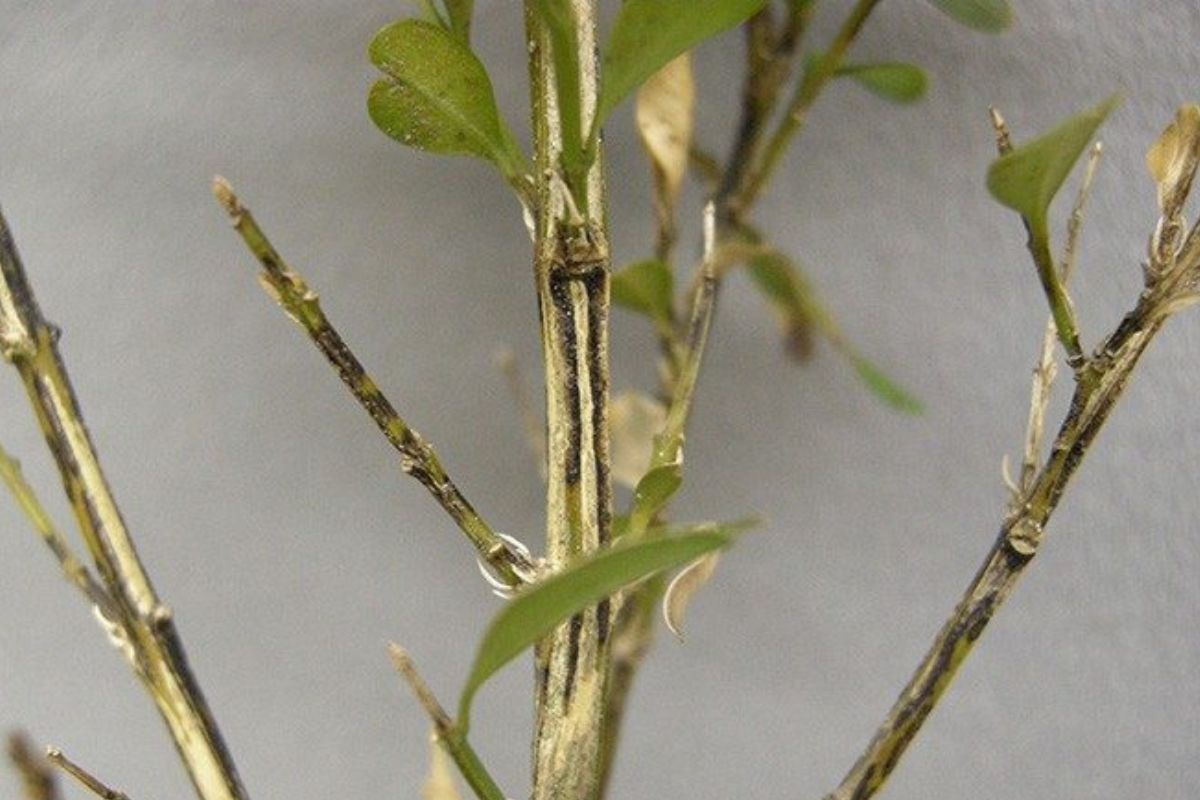
Boxwood blight may look like winter burn except that it occurs during the growing season and random branches are affected, not just one side. Twig stems with blight will have streaks of black. The blight develops from the leaf edges in hot, humid weather and gradually affects entire branches. Early detection and removal of infected plants is the best solution for now. Preventive fungicides on non-symptomatic plants would be a good idea. Images of different boxwood issues were also found on the Virginia Cooperative Extension website.
I call myself the Lazy Berkshire Gardener because I don’t want to work too hard in my gardens. I want to enjoy them. I find it easier to observe my landscape and let the compost happen, the water pool up, or daisies to self-sow. I look for ways to do the minimum task for the biggest impact. For example, mulching is better than spraying and much better than weeding all season. I look for beautiful, low-maintenance plants that thrive in or at least tolerate my garden conditions. Plus, I am willing to live with the consequences if I miss something.