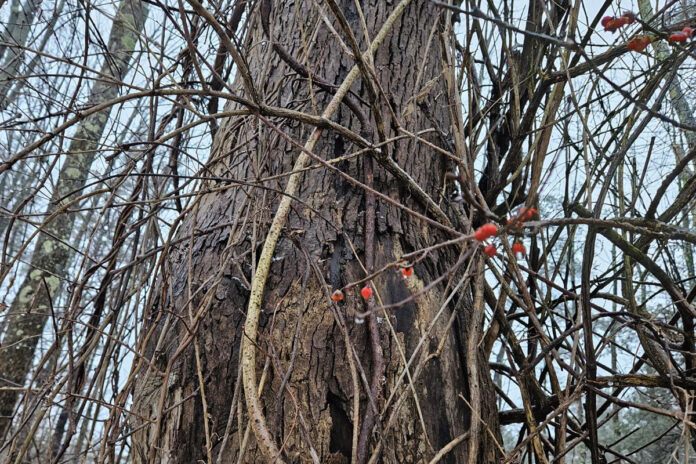
Where do all the invasive plants come from?
I touched on it last week, but the short answer is humans and human activity. Through seed companies, agricultural schools, or garden centers touting “bigger,” “stronger,” and “pest-resistant” plants, we created the opportunity for new species (from worms to trees) to meet their basic needs in a new landscape. Sometimes we installed these invaders on purpose to solve a problem, and sometimes they hitched a ride on our transported goods or selves.
Now what? I need to remember that while the invasion may not be my own fault, the invaders are humans’ responsibility.
During the study time of winter, while I am dreaming of low-maintenance plants to enhance my view, I must remember to consider the impact of my laziness. Planning now makes it easier to be lazy later. I better not introduce plants that will out-pace my native originals. Will that tree grow too fast and shade out the sun-loving wetland plants? Will the tree’s seeds spread too far, escape my yard, and infect the forest, ruining native habitat for countless species?
My example is at a big scale, but a simple shrub or single vine can create the same level of damage.
Different states have restrictions on the sale of plants that have become invasive within their borders. Not all are the same. Plants restricted in Hawaii probably wouldn’t survive here anyway. Plants deemed invasive are determined to be harmful to economic, environmental, or human health due to how they change an ecosystem.
Connecticut, Massachusetts, and New York all have different lists of regulated plants due to invasive qualities. Some plants overlap. Do an online search of “Invasive plant species of [your state].” Click here for the list for Massachusetts. Detailed lists of plants show both those prohibited from sale and those considered “likely” invasive. In reviewing the invasive plant lists for your area, you will notice that these plants have common characteristics. They reproduce in multiple ways, usually robust seed spread, sometimes twice in a growing season, and root or rhizome spread. Along with replication, these plants escape cultivation and become naturalized in our “wild” spaces. In untended settings, invasive-termed plants will leaf out earlier and stay green later; out-compete the native species; and often change the hydrology, soil chemistry, and soil structure to the point where nothing else will grow.
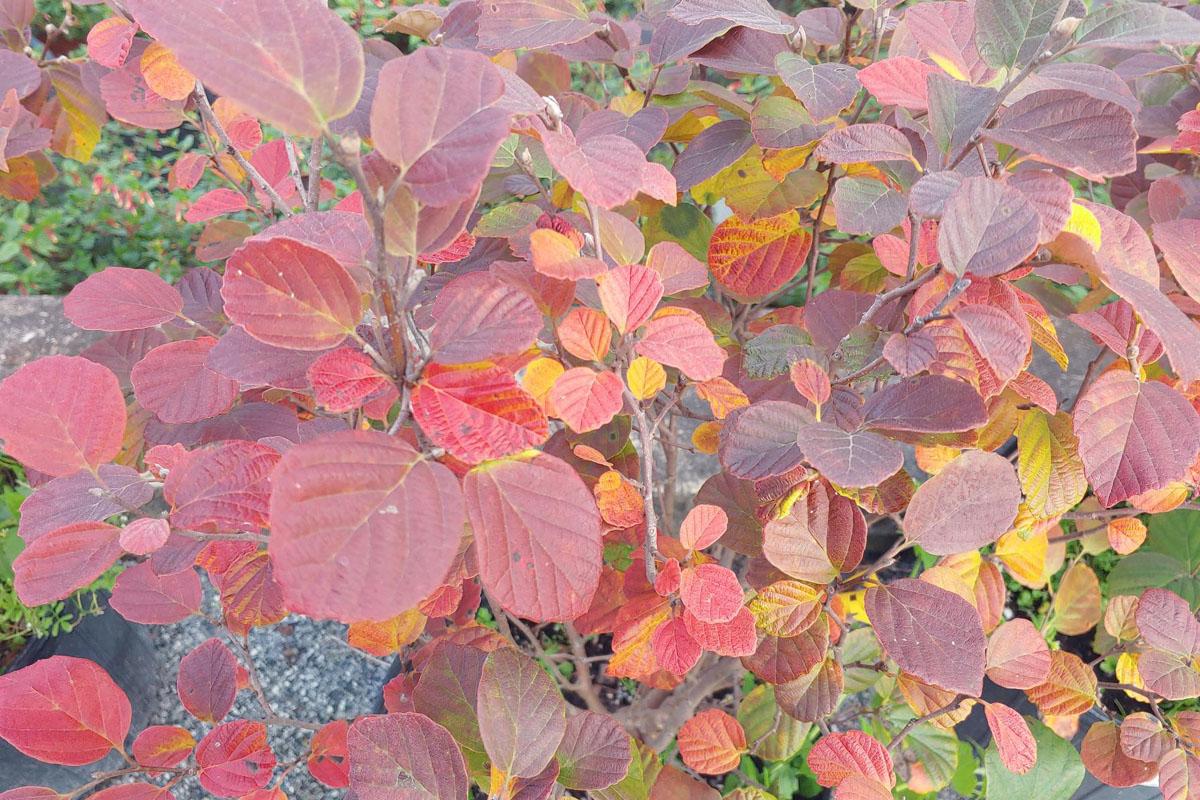
You probably know about invasive bittersweet vine already. Choose native vines Virginia creeper or grapevine as an alternative. There’s a native honeysuckle vine and clematis vine as well. And no, you cannot purchase a burning bush (AKA winged euonymus) like your parents had. But you can plant blueberries (a native plant) or Fothergilla (also an East Coast native plant) that get vibrant red foliage in the fall. You cannot purchase bush honeysuckle. But you can plant viburnum species or spicebush. What you plant will depend on your conditions. Unlike burning bush or honeysuckle, a blueberry, Fothergilla, or viburnum will not grow just anywhere. But among them, you can find the one that will grow beautifully in the place you have with some planning. Plan well and they will be low maintenance, too.
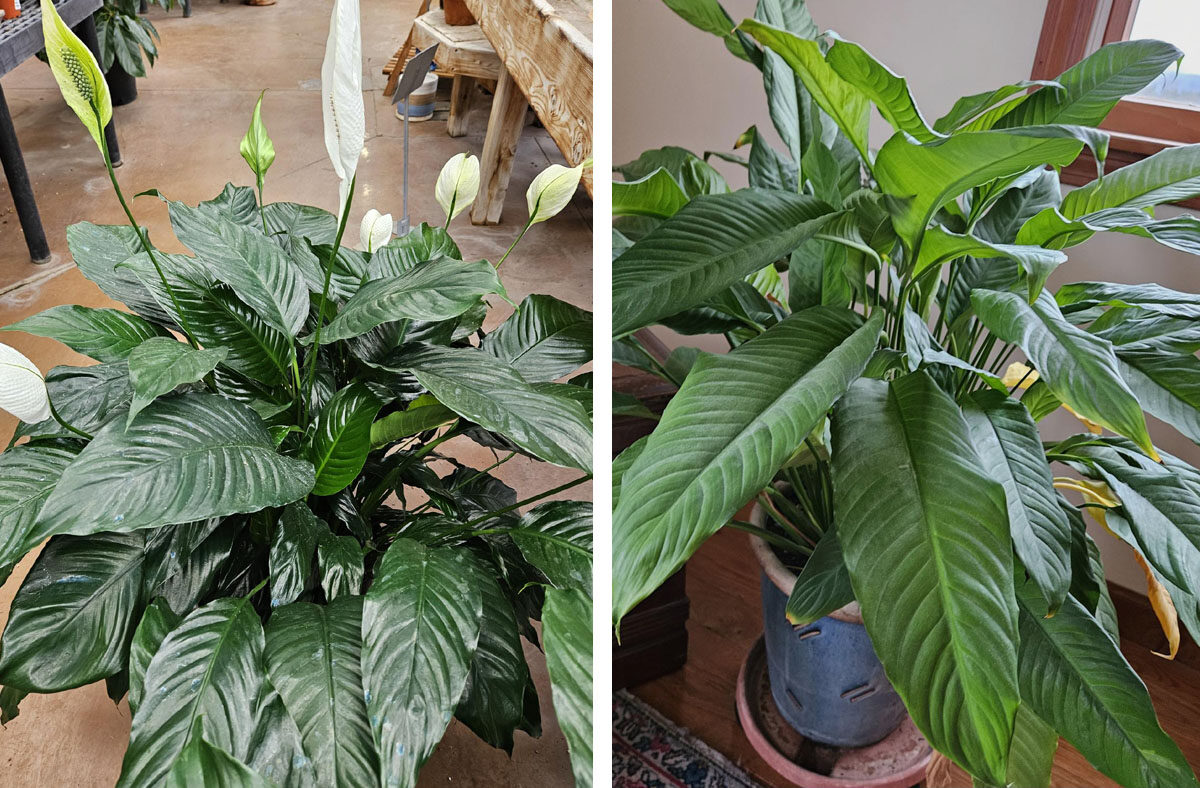
Enough dreaming up the growing season. I had another realization about my indoor plant-care habits: I have been monitoring the water but not the dust on my plants! My peace lilies (Spathiphyllum) are alive but dreary and droopy. When visiting the greenhouses at work, sometimes I don’t recognize that I have the same plants growing in my bedroom. Mine can look pretty bad. Last weekend I decided to do a photo comparison for you and offer some suggestions of how I can do better.
Plants in the greenhouse grow in optimal light with high humidity. Staff clean them off regularly to keep them healthy and, of course, display them attractively. These plants have not been neglected for weeks in some dim corner of my house.
I know I need to water mine at least two times a week and start feeding the soil once a month as the days get longer. The plants will survive if watered once a week, but survival doesn’t mean thriving. I can simplify this task by adding diluted fertilizer (half the recommended strength) to my watering can once a week. With that, the leaves should turn a darker green.
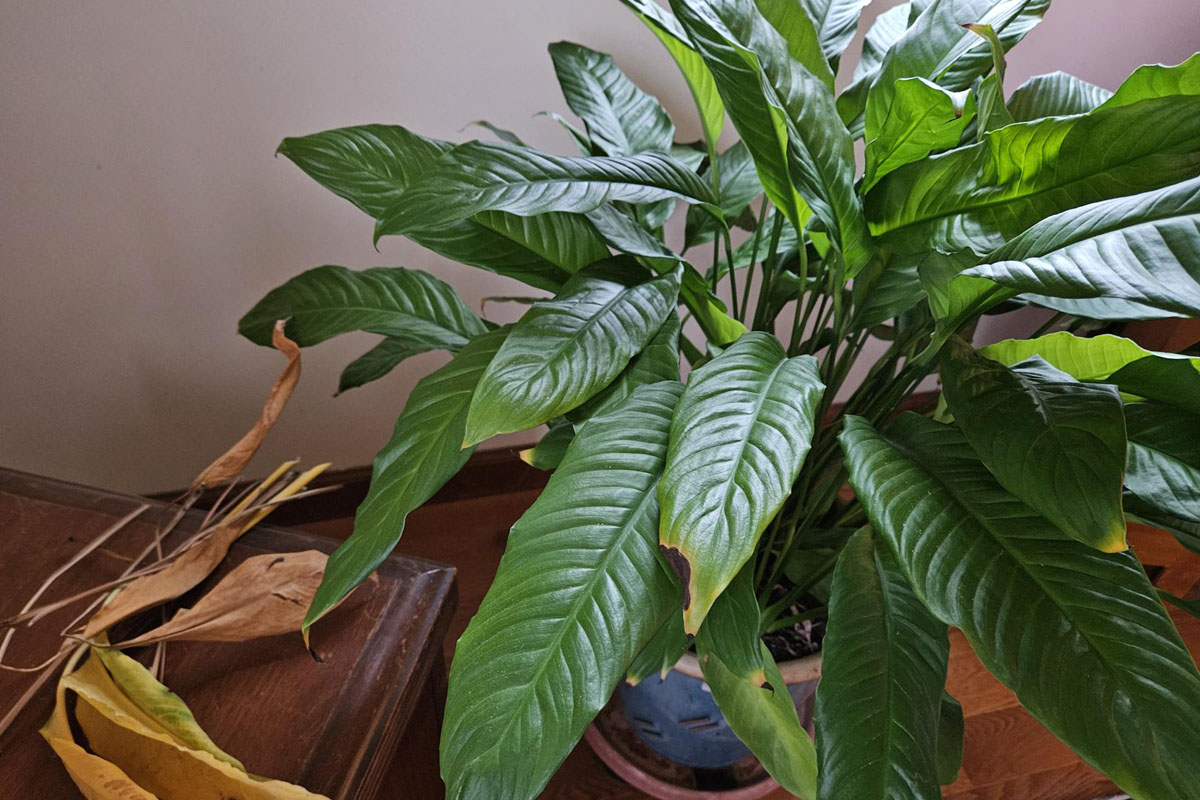
What I forget about, however, is the need to dust the leaves on my tropical plants. The leaves transpire and absorb light to undergo photosynthesis to produce carbohydrates that feed the plant! My fertilizer only supplements. Houseplants (usually natives from shady tropical areas) often have wide flat leaves that develop a film of dust like any other home surface. Gently washing that film off with a damp cloth has brought out a gloss to the leaves.
I can’t do much about the yellowed leaf tips. These burnt yellow tips formed when I let the plant dry out too much. Like the human vascular system, plants also have nutrients flowing to and from all the cells of the leaf. When water is scarce, the plant reduces the flow and minerals build up in the leaf tips, killing those leaf cells. I can’t do anything to restore those leaf tips.
I call myself the Lazy Berkshire Gardener because I don’t want to work too hard in my gardens. I want to enjoy them. I find it easier to observe my landscape and let the compost happen, the water pool up, or daisies to self-sow. I look for ways to do the minimum task for the biggest impact. For example, mulching is better than spraying and much better than weeding all season. I look for beautiful, low-maintenance plants that thrive in or at least tolerate my garden conditions. Plus, I’m willing to live with the consequences if I miss something.