Last weekend, what did I do? I tried to stay cool and keep the plants watered. These last few days of temperatures in the 70s are a real relief. Weeding can be hard work now while the soil is dry and hard. Focus your energy on preventing weeds from flowering. We are still watering the vegetable garden every day and newly planted perennials every two days.
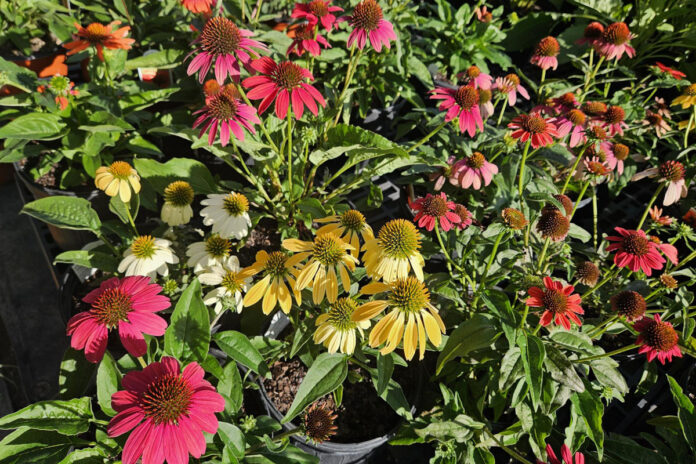
Gardens will keep growing. August-blooming perennials bloom for weeks if I can keep them alive. They are usually drought tolerant, too—a plus. I want more. I am thinking about adding new coneflower plants to my flower beds. I have a few native clumps, but I am intrigued by the coneflower “Cheyenne Spirit,” botanical name Echinacea ‘Cheyenne Spirit.’
This hybrid has different colored flowers off the same plant, and even different from year to year. The flowers bloom in white, peach, yellow, orange, pink, and deep burgundy. What bloomed yellow this year may be burgundy next year. What fun! When summer annuals become overwhelmed by the heat, this coneflower steps into its full multi-colored glory.
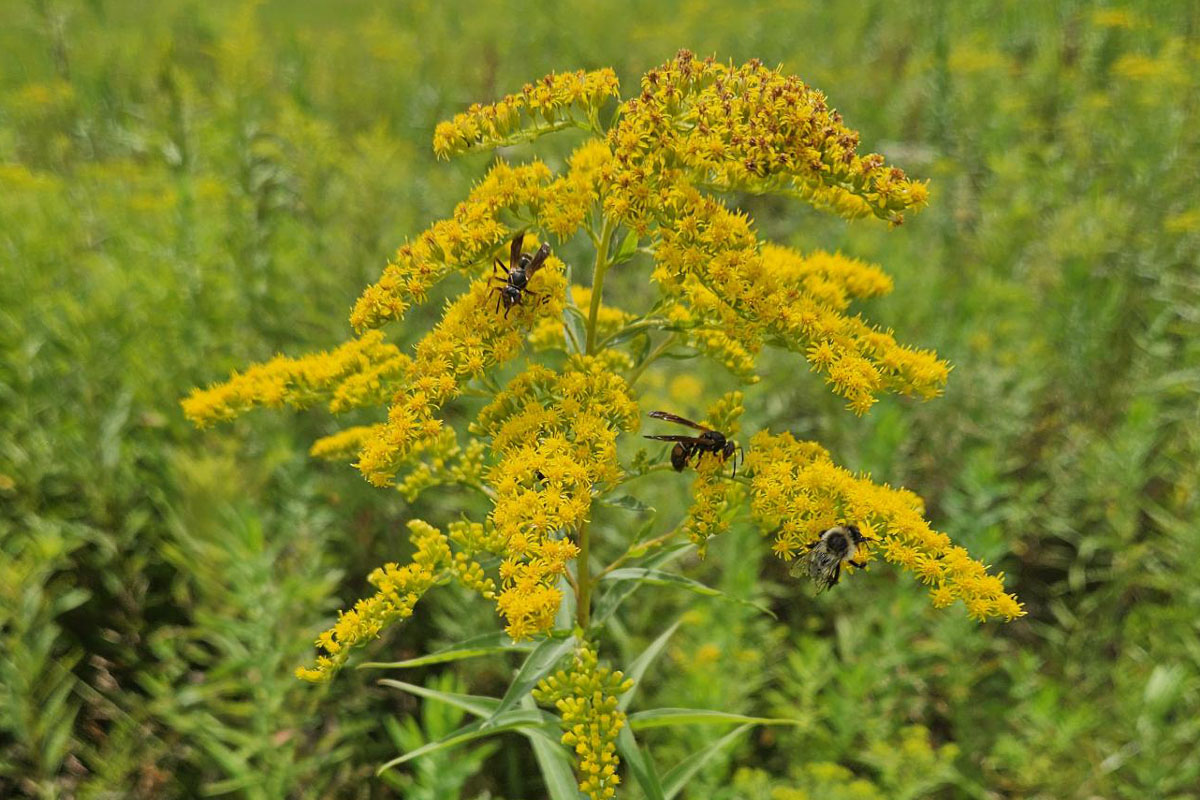
The varied echinacea will combine nicely with fall asters and goldenrod. Goldenrod has multiple species, and all support large numbers of pollinators and overwintering insects. I try to keep my goldenrod flourishing in the wildflower garden but not overtaking my other flower beds. It is the backdrop for the landscape in August and September. The Solidago spp. does not cause allergy symptoms as the pollen is heavy and sticky, designed to stick to visiting insects. Each stem supports a plume of hundreds of miniature yellow flowers.
Here is an excerpt from the Grow Native Massachusetts website:
There are more than 20 species of Solidago native to New England, and they are adapted to grow in a wide range of soil and sun conditions, from sand dunes to moist, open woodlands. This is also one of the very best native perennials for biodiversity. According to Doug Tallamy’s research, the genus Solidago supports over 100 species of moths and butterflies, and the Xerces Society rates it as having high pollinator value, attracting many native bees, wasps, beetles, ants, and flies.
My second wave of Shasta daisy flowers have all faded. I have cut back the stems to a pair of leaves level with the overall shape of the mound. The perennial clump looks like a tidy shrub now. Prune back the stems of spent perennial flowers to improve the appearance of your flower beds—or leave sections to encourage birds to visit for the seed heads.
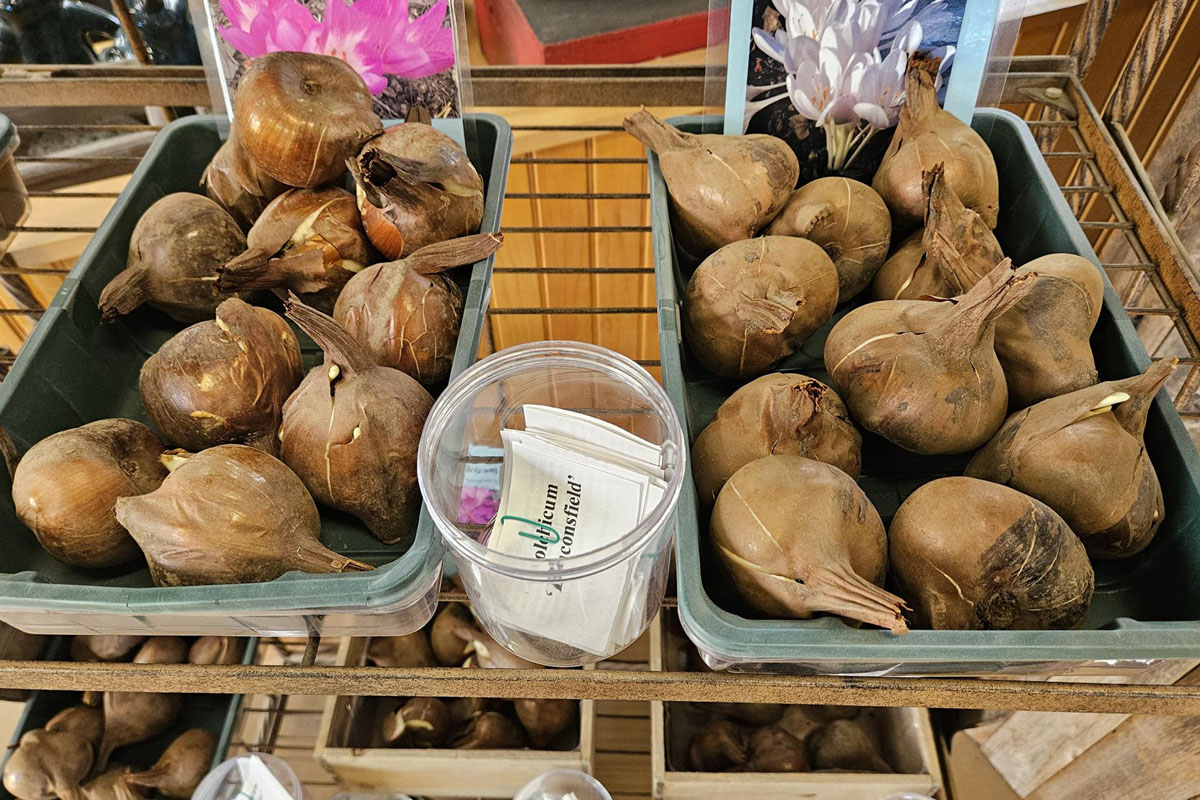
In garden centers now, begin to look for fall-blooming crocus bulbs, Colchicum. The flowers look like huge crocus flowers, but the blooms emerge in fall. Leaves appear in spring and then die back by midsummer. The bulbs are the size and color of medium russet potatoes.
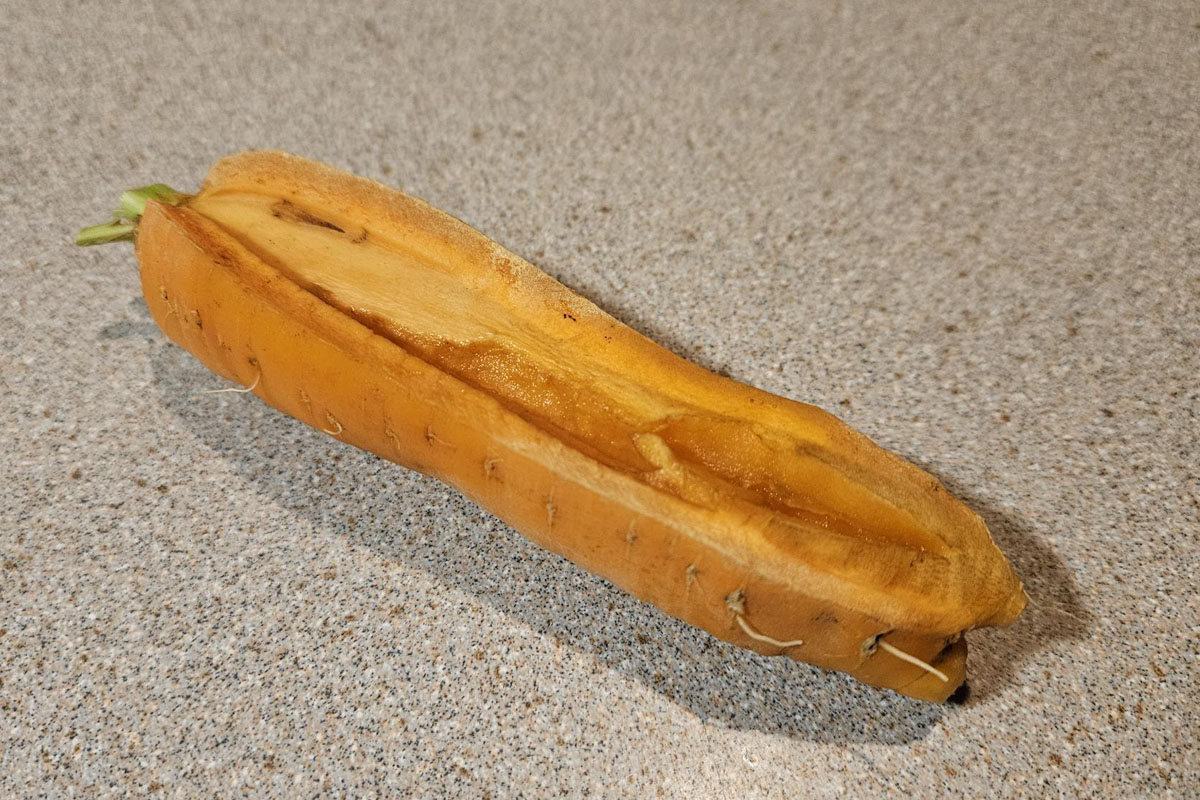
Recent picking showed the effects of inconsistent watering on a carrot. This year, I had some carrots germinate earlier than ever—yay!—but they have kept growing and a few have split. They split because they were ignored for a bit in the highest heat when they could have used extra water. As better growing conditions return, they start growing again!
I will harvest some from that same row and let the younger ones keep growing.
The lettuce and greens have sent up central stems to form flowers, known as bolting. Typically, greens turn bitter at this point. To salvage the crop, I cut back the stems to a pair of leaves above the soil level. I will take the stems and pull off any good-sized leaves to soak in cold water. After soaking for about a half hour, they don’t taste as bitter. I rinse again in cold water and spin dry to use in fresh salads.
We are watering the late-season raspberries every other day in the high heat and once a week once it gets cooler. Bees are swarming the canes, and no Japanese beetles in sight. Looks like the worst of the damage is over. We should be eating late-season raspberries by early September.
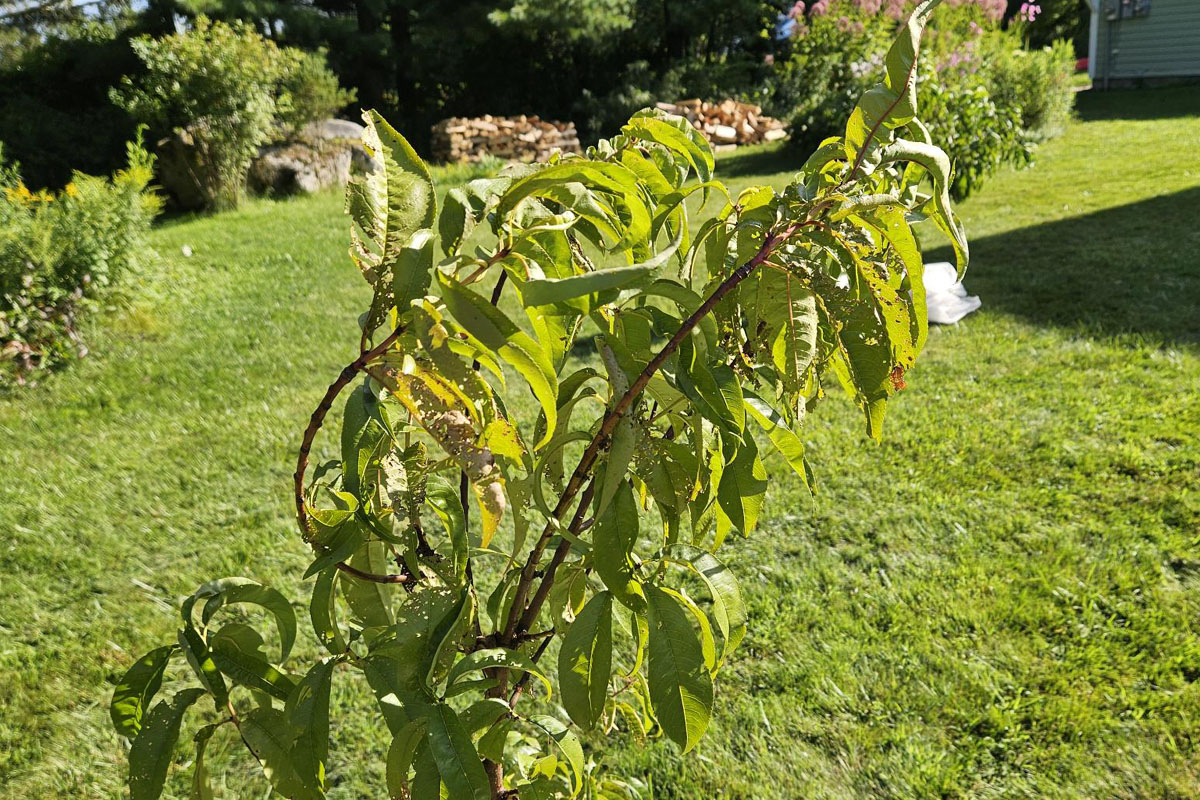
I am pleased to write that my peach trees have been released from polyester Remay fabric. In desperation a month ago, I covered the trees to prevent defoliation from Japanese beetles. I had ghosts haunting me from the lawn, but the trees have emerged with no further damage. It may be a bit warped looking now, but it will bounce back to an appropriate shape.
Tomatoes have started to ripen rapidly. What you cannot add to BLT sandwiches, fresh salsas, soups, caprese salad, or a lunch box try making into tomato sauce or just can the whole tomatoes. Preserving tomatoes for winter truly captures summer in a jar.
However, my lazy trick is to make “dried” tomatoes in the oven. Slice tomatoes in half and scoop or squeeze out extra pulp. Paste tomatoes work best, but any large tomato will do. Place tomatoes on an oiled cookie sheet, skin down. Sprinkle with olive oil, salt and pepper.
Roast tomatoes in the oven—I typically broil for five minutes and then turn the temperature to 250 and leave on the cookie sheet for one hour. I will turn off the oven then and let them cool there. Once easily handled, I mix the dried tomatoes with a dash more of salt, pepper, and rosemary for a yummy appetizer spread. Mashed together, it keeps in the refrigerator for about two weeks.
I have additional reminders for mid-August:
Although houseplants appreciate cooler temperatures, you will need to plan the transition back indoors as the sunlight and humidity change. Begin pest prevention for houseplants spending the summer outdoors. Treat them with insecticidal soap by spraying tops and bottoms of leaves, stems, and soil surface. Repeat in seven days.
Dry onions, shallots, and garlic well before storing. Especially confirm the necks are dry and stiff.
Consider saving seeds from non-hybrid vegetables or annuals. Let a few seed heads ripen on zinnias and cosmos and you will be rewarded with finch and sparrow acrobatics as they perch and feast on the seeds.
Allow grapes to fully ripen on the vine. Do a quick taste test before picking. I typically wait until late September.
Are you maintaining your compost pile? If not, bury vegetable scraps in vacant spots of the vegetable garden.
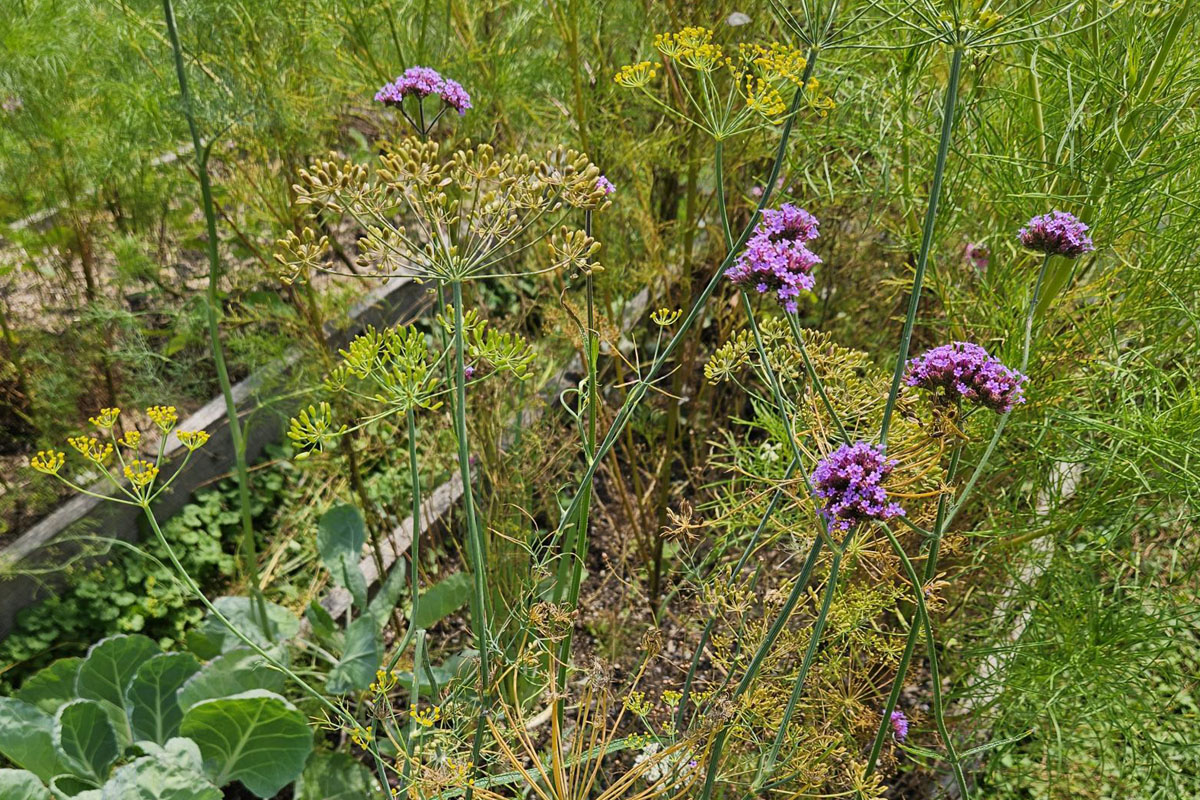
Let some dill and coriander seeds fall to the ground to sprout new crops next year.
I call myself the Lazy Berkshire Gardener because I don’t want to work too hard in my gardens. I want to enjoy them. I find it easier to observe my landscape and let the compost happen, the water pool up, or daisies to self-sow. I look for ways to do the minimum task for the biggest impact. For example, mulching is better than spraying and much better than weeding all season. I look for beautiful, low-maintenance plants that thrive in or at least tolerate my garden conditions. Plus, I am willing to live with the consequences if I miss something.