Celebrate Earth Day on Saturday, April 22, by reviewing the small things you can do (and encourage others to do) to improve our planet’s condition. We humans have found ways to consume incredible amounts of energy and introduce polluting toxins along the way. Please consider how your actions affect your surroundings, adjust your activities to conserve more energy and reduce your waste, and then, encourage others to do the same. Everyone together can make a difference. Here’s a shout out to Stephanie Blumenthal’s recent article on recycling options. Gardeners should want to know!
What do I do? As a lazy gardener, I choose to reuse plastic pots for as long as possible because most are not recyclable. I use compostable pots for things like sunflower or squash starting because those plant roots don’t like being disturbed. Once the seedling has hardened off, you plant the whole thing, pot and all, into the garden. When planting, be sure the lip of the biodegradable container is below the garden bed’s soil level because the pot may wick water away from the seedling.
I’ll put in a Ward’s Nursery plug here. In the past, Ward’s was able to gather pots for recycling but the markets for that material have disappeared. At this point, Ward’s Nursery encourages customers to bring back 1-pint to 15-gallon plastic pots as well as trays that are in reusable condition. Ward’s Nursery considers it an exchange area and customers can select from the pile what they can use. Before you drop off, please knock out soils and rinse the plastic.

When you leave pots in the recycling pile, please place your contribution with similar items in the exchange area. It’s a community effort! Ward’s staff will reuse containers as well. Just remember to wash them before reuse to remove any lingering disease. Please do not bring trash – no plastic tags (that you should keep for reference anyway) and no 6-pack or 4-pack annual inserts. Keep those and YOU can reuse the packs for seed-starting!
I try to plant things that will benefit the most creatures as well as serve my needs. Contributing to the diversity of your part of the world will have a rippling effect as you share your experience (aka tell others) and as the insects, the birds and the microorganisms find your plot, reproduce, and continue to make a difference on the planet.
Spring ephemeral plants–like the Trout Lily I wrote about last week–can be added to any partially shaded flower bed. These early bloomers help extend the season of flowers for you but also feed the first insects of the season. Migrating birds need those insects as they move to their breeding homes.
I like to use native plants that adapt more easily to my location and so, have fewer pests (requiring less fussy management from me) and have reasonable water needs. Goldenrod–Solidago species–can be aggressive but I will always have some in my gardens. They support 115 butterfly and moth species, 11 species of bees, and songbirds through the winter.
I collect rainwater in rain barrels to then water annual flowers and my vegetables. I let the grass grow at least 3 inches tall and mow with a rechargeable electric mower. I do have an advantage by having solar panels and feel pretty good about my electric power usage. We don’t do much for our grassy/clover/strawberry/thyme mix groundcover except keep it long. Have you heard of No Mow May? I’ll talk more about that next week.
If you have open dirt – and I mean dry, dead compacted dirt– you probably want to do something about putting in a growing ground cover. That is an environmentally sound idea! Open soil surfaces invite weeds and if weeds don’t move in, erosion takes over. Unfortunately, grass seed won’t take to that dirt very easily even if watered regularly. Spring is a great time to repair lawns suffering from snowplow ruts and salt damage. But, when you try to seed, water, and feed a new lawn this time of year, you also water and feed the annual weed seeds in that open ground. That makes more work later – no good for a lazy gardener!
No matter what will be planted, you, the aspiring lazy gardener, need to provide better soil surface area for your preferred plants. You will need to add at minimum topsoil and better, compost. Loose and organic soils with moisture retentive characteristics give new plants, sod, or grass seed a much better chance. I would wait to seed a full lawn until early September, though. By fertilizing lawns and encouraging their growth in the fall, you may have some annual weed seeds germinate but they will die before setting seed again. If you aren’t planting yet, at least spread mulch over your soil to start encouraging insect life and hold the topsoil in place. The mulch will break down and add to the soil while shading out weed seeds.
Limit your grass seeding to damaged areas that can be quickly weeded. After seeding, use (reusable) polyester fabric to keep the seed in position and to prevent weed seeds from blowing in to sprout! Weed prevention products are best used now while Forsythia is blooming. Just remember that weed seed preventer like corn gluten will prevent ALL seeds from germinating. Wait about six weeks after using corn gluten before seeding your grass.

Plant deciduous trees to block overheating western sun unless you can capture that sun with solar panels.
Plant evergreens to block prevailing winter winds and keep your home warmer in winter.
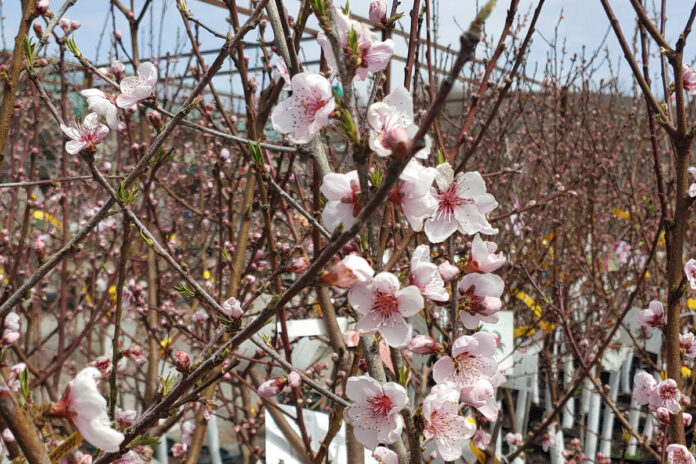
If you haven’t purchased a self-pollinating dwarf fruit tree, I suggest you do. They don’t need to take much space and the homegrown fruit cannot be beat. Peach trees are self-pollinating so you only need one. Plus, Arbor Day is Friday April 28. Time to get ready!
Create a grass free zone around trees in lawn areas. This protects the tree trunk from weed trimmers and creates a more natural setting for the tree. You can install a non-invasive perennial bed of plants with low water needs, something like spring ephemerals, bulbs, geranium or other shallow rooted perennials, around the tree. Or remove all plants and apply a 3-inch layer of mulch over the tree’s root zone while keeping the mulch away from the tree’s trunk.
When adding mulch around fruit trees, make the mulch a bit deeper (4-6 inches is good) to keep soil cold around the roots of your early blooming fruit trees. If the soil stays cold, the tree will not flower prematurely and you can avoid damage from frost biting early blooms.
Mostly, think before you purchase and toss. Plan before you waste time as well as energy on products that offer the same results as materials you already have. Now you can celebrate Earth Day and congratulate yourself for taking care of your planet with all your new gardening plans!
_________________________________________________________________________
I call myself the Lazy Berkshire Gardener because I don’t want to work too hard in my gardens. I want to enjoy them. I find it easier to observe my landscape and let the compost happen, the water pool up or daisies to self-sow. I look for ways to do the minimum task for the biggest impact. For example, mulching is better than spraying and much better than weeding all season. I look for beautiful low-maintenance plants that thrive in or at least tolerate my garden conditions. Plus, I’m willing to live with the consequences if I miss something.