
Editor’s note: Besides tracking technological advancements and innovations, our author is a Juilliard-trained musical composer. Listen to “Augmented by AI,” an original improvisation by Howard Lieberman, composed for this column.
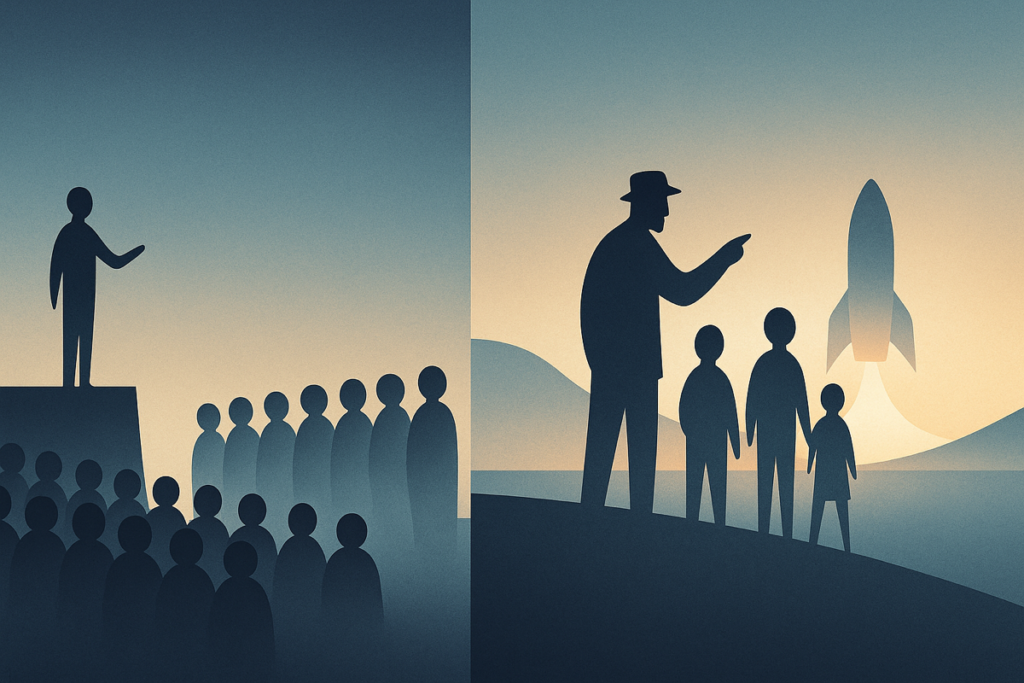
Education serves two distinct purposes, and we do ourselves a disservice when we pretend they are the same. The first is learning how to be in the world with other people. This includes emotional awareness, understanding social expectations, collaborating, resolving conflict, building friendships, developing empathy, and participating in community. These skills have historically been taught in a shared environment because they are about navigating difference, not eliminating it. Group learning creates the friction and the feedback required to develop the ability to coexist, cooperate, and contribute.
The second purpose of education is profoundly different. It is the cultivation of original thought, the ability to think deeply, to conduct research, to pursue unanswered questions, and to create work that has not existed before. This has always required a far more individualized approach. This is why graduate students need major professors and committees, rather than general instruction. It is why apprentices study directly with craftspeople. It is why every serious composer, scientist, artist, and inventor eventually needs more than a curriculum. They need guidance.
Mentors have historically served as the architects of this second kind of learning. Not because mentors have all the answers, but because they understand how to navigate questions that don’t yet have answers. This role resembles a guide on the side far more than a sage on a stage. It is relational, contextual, responsive, and adaptive. For centuries, this personalized pathway has been limited to a small number of people because individualized attention was expensive and difficult to scale. That constraint is now changing. AI does not replace mentors. Instead, it provides the infrastructure that supports individualized learning economically and at scale, making the second purpose of education accessible to many more people than before. Mentors will still be needed, but the nature of mentorship evolves. AI becomes an amplifier of the process, freeing human guides to do what only humans can do.
This raises a possibility we have never genuinely had. We could design an educational system that finally respects both purposes. Group learning for community skills. Individualized learning for the skills of originality. One size never fits all, and now it no longer has to.
One size never fits all
The uncomfortable truth is that the batch-processing model of education was never designed for humans. It was designed for systems. Schools were built to solve the logistical problem of scale. They were created to produce compliance, predictability, and consistent outcomes. None of these goals is inherently bad, but none of them describes learning. They describe manufacturing.
The factory metaphor is not an insult. It is simply accurate. Standardized curriculum, scheduled pacing, age grouping, identical tests, and linear progression are inventions of the Industrial Revolution, not discoveries of cognitive science. Education became a supply chain, and children became inventory.
The problem is that the world the system prepared people for is gone. The standardized workers the system once required have been replaced by automation, software, robotics, and machine intelligence. The global economy rewards ingenuity, not uniformity. Yet the structure remains, leaving students trained for a past that no longer exists.
Research on adaptive learning shows that learners progress and retain more when instruction aligns with their individual pace and preferences. This reduces gaps and improves outcomes. A recent review of AI-enabled personalized learning confirms what educators have known but could not solve. Standardized pacing penalizes differences and suppresses potential.
If one size never fits all, the answer is not a better size. It is a different approach. All of us have had amazing teachers who changed our lives. They were few and far between. They had the passion, creativity, and caring to meet us where we were. And yes, this requires a lot more work, which is why those teachers who made a big difference tended to have more energy and vitality. It was necessary to deal with a room full of individuals rather than a room full of carbon copies. This is also true of parents and parenting, a crucial part of education. Parents cannot simply outsource the responsibility for their children’s growth and learning. They need to take part.
Mastery always requires mentorship
Howard Lieberman created this image with AI assistance.
Here is another uncomfortable realization. Education at its highest levels has already admitted that batch teaching fails where it matters most. We simply do not talk about it. No one earns a PhD by sitting in a room with 30 or 100 other people, taking notes. The moment knowledge becomes creation rather than consumption, the model changes completely.
Mentorship is not a luxury or a tradition. It is the only known method for producing original thinkers. The great works of science, mathematics, agriculture, technology, art, and philosophy did not come from standardized outputs. They came from relationships. They came from challenge and critique and long conversations and failed drafts and abandoned hypotheses.
Studies confirm what history has demonstrated repeatedly. Mentorship improves retention, motivation, identity formation, and performance. One peer-reviewed study found measurable improvements when mentorship moved from peripheral support to core instructional structure. See The Power of Academic Mentoring.
The irony is real. We apply the most effective learning method to the smallest number of people. We treat personalized intellectual development as a reward for surviving standardized schooling. The future demands the reverse. Many major contributors to our world barely survived the uniformity of school. I have been dealing with creative outliers for my entire life as a CEO, dean, professor, distinguished lecturer, and mentor. Often, the people with the most potential were the least compliant. And why should they be forced into a subdimensional version of what they could be because the system had neither the patience nor the energy to deal with them?
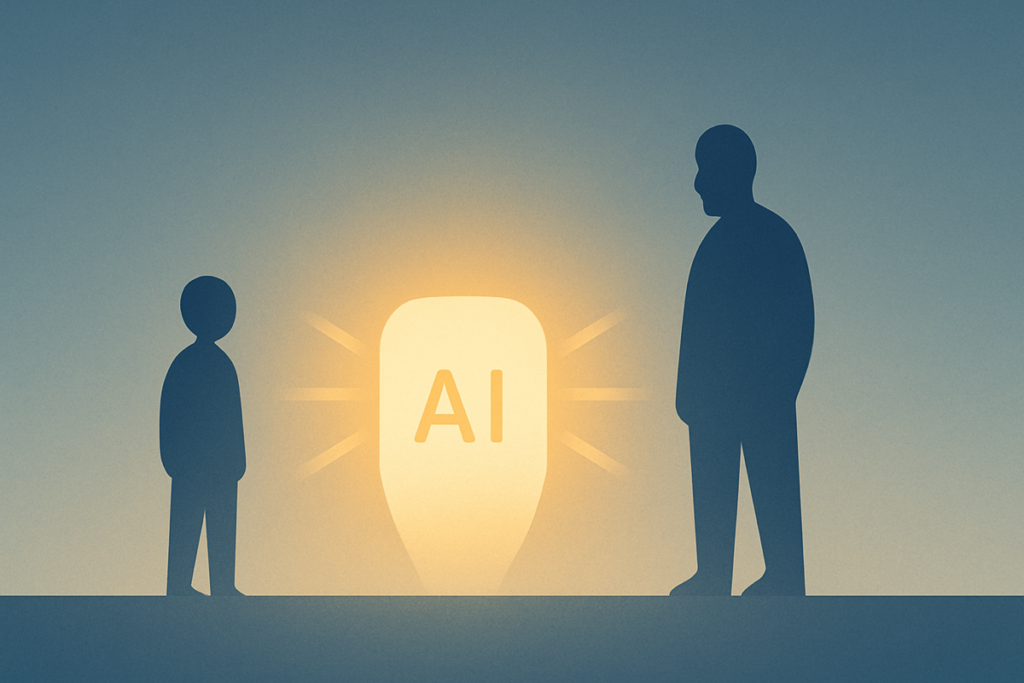
Innovators are much more interested in what could be than in what is. Perfecting the past is not emotionally relevant to those creative outliers we need so they can invent tomorrow. They tune out. In the past, if they had the good fortune to have parents who provided an encyclopedia at home, they could supplement what their classes did not cover. Many of these bright outliers learned more from themselves than they did from their classes. But encyclopedias were very expensive, big, and heavy, which is why not every home had them. But AI, Wikipedia, YouTube, and TikTok are much less expensive, more portable, and, above all, accessible 7 days a week and 24 hours a day.
AI: affordable, personalized education
Howard Lieberman created this image with AI assistance.
The moment the printing press made books affordable, education changed forever. Not because the printing press replaced teachers, but because it changed the economics of knowledge transfer. AI is the first technology since print to carry that level of educational leverage.
Adaptive systems now analyze comprehension in real time, adjust pacing, offer targeted support, translate language barriers, and shape personalized pathways. Research shows improved outcomes when AI-driven personalization supports instruction. These tools do not eliminate difficulty. They eliminate waste.
Importantly, AI does not remove teachers. It removes the limitations that once forced teachers to teach many people as if they were all the same person. AI assists and augments while teachers mentor, contextualize, challenge, and inspire. The United States Department of Education recognizes this potential, noting that AI can expand access to individualized support while reducing administrative burden.
If the printing press democratized access to knowledge, AI has the potential to democratize access to wisdom, which is a very different category.
The resistance to AI mirrors the resistance to print. The issue was never technology. The issue was power. When knowledge spreads, control weakens. Personalized learning produces independent thinkers, which some systems, organizations, and governments find inconvenient. A recent critique warns that educational AI could become a tool for control if centralized. See Educational AI and authority.
This is not an argument against AI. It is an argument for agency. For transparency. For alignment between the tool and the purpose. The crisis in education is not only a crisis of outcomes. It is a crisis of intent.
We stand at a precipice where education can shift from producing standardized workers to cultivating unique contributors. The system served its original purpose. That purpose has changed. The future belongs to learners shaped by mentorship, guided by curiosity, paced by capability, and supported by intelligent tools designed to amplify individuality rather than erase it.
Individuality is not a luxury. It is the core competency of the future.