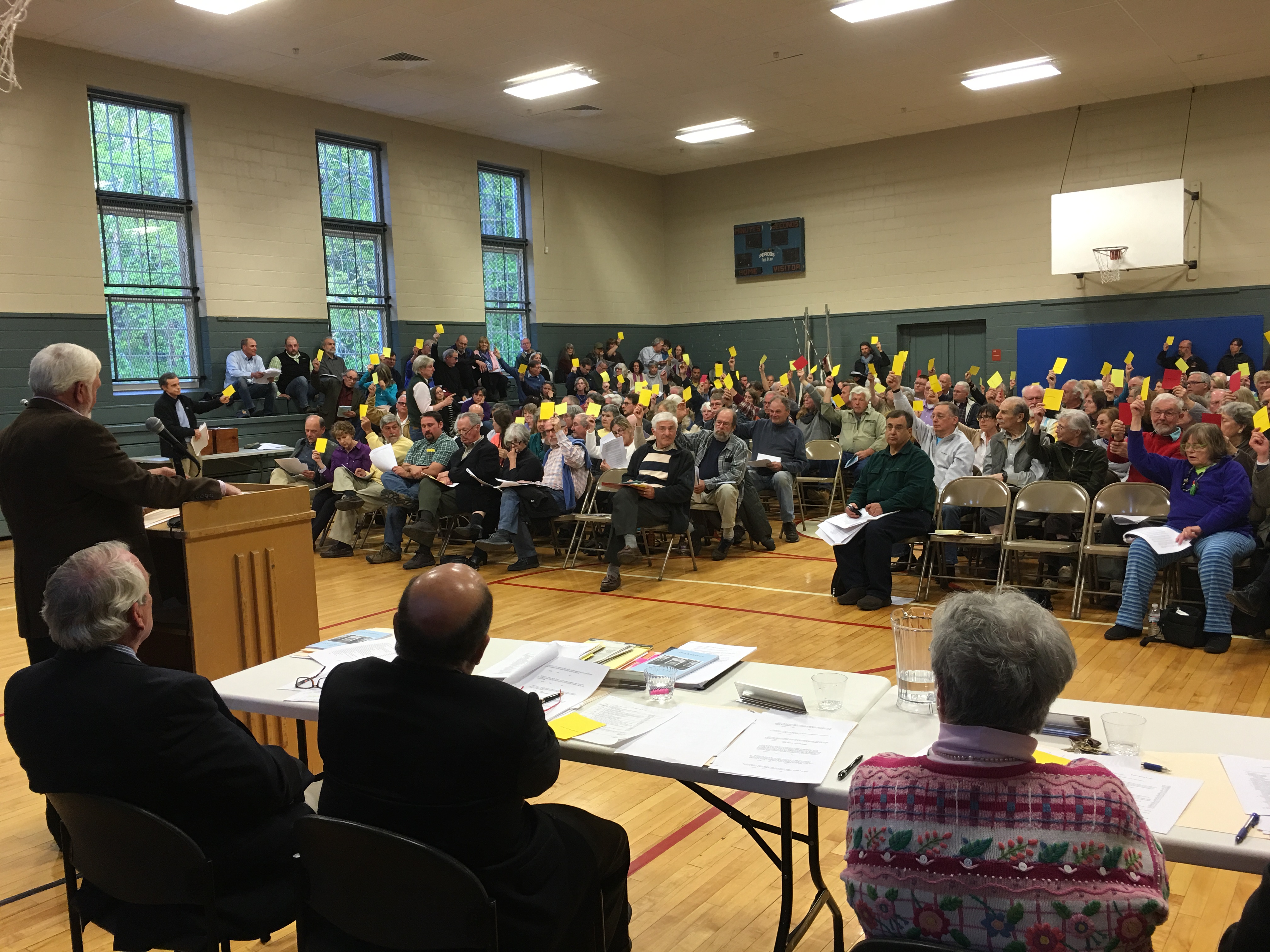
Stockbridge – Despite provocative challenges issued the week before at the Great Barrington Town Meeting, a deliberative Stockbridge Annual Town Meeting Monday night (May 16) approved — without a murmur — the town’s Berkshire Hills Regional School District assessment of $2.9 million and a BHRSD capital expenditure allocation of $124,709.
A week earlier, the Great Barrington town meeting had rejected its share of the Berkshire Hills school budget, on the grounds that it pays too much for education at Berkshire Hills Regional School District and that Stockbridge pays too little. Since West Stockbridge had already approved its assessment, Great Barrington will be obligated for its $14.5 million portion — whether or not it is adopted at a special town meeting – because by the terms of the regional school agreement the $25 million Berkshire Hills 2017 budget is approved if two of the district’s three towns adopt it.
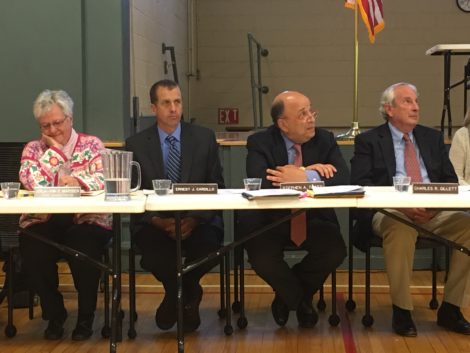
The Stockbridge Town Meeting chose to ignore Great Barrington’s insult. There were other, more relevant issues on the minds of Stockbridge voters: the authority granted the Town Administrator and the jurisdiction of the Police Chief – both of which would play a role in determining the future character of the town.
After 31 years in service to Stockbridge, Town Administrator Jorja-Ann Marsden is retiring on July 15, and the Board of Selectmen will be interviewing candidates to replace her. Her successor will be paid $110,000 but will not be permitted to hire or fire employees, or negotiate contracts. These last stipulations were the result of a motion presented by resident Terry Flynn, and approved by a 76-50 margin at the end of the 31/2-hour town meeting.
Curious about the process of hiring a new Town Administrator, resident Terry Flynn visited one the Board of Selectmen’s 8 a.m. meetings on Wednesday, an early morning session that is rarely covered by the media or attended by citizens.
At one of those sessions, Flynn explained to the more than 200 people present at the town meeting in the gymnasium of Town Hall, he learned that selectmen were considering granting the town administrator responsibilities similar to those of a town manager. That significant a change in the management of Stockbridge town government should involve a serious public discussion, he observed.
“The town is at a crossroads,” he maintained, and rather than adopting a management structure that relies more on professional consultants than on the judgment of the selectmen or townspeople, he proposed that the town hire an interim administrator while the public debate over the expanded role of administrator takes place.

Selectman Steve Shatz rejected Flynn’s proposal, saying that the town needed professional guidance. “This attempt to handcuff the selectmen who are attempting to find a person of quality to guide us into the future is misguided,” he stated. “We are trying to attract an administrator of equal caliber to the town managers in towns around us. The requirements for the job were prepared by Jorja-Ann.”
He added that an $11 million operation such as the town of Stockbridge needed professional guidance. “The town is incredibly complex, with all kinds of mandates from the federal and state government. Every $11 million business I’m familiar with has professional management.”
Selectboard Chairman Charles Gillett observed that while he agreed with Flynn about the risks of having consultants run the town – “it hasn’t happened yet, and I don’t imagine it will.” – he also thought the town administrator should not be restricted.
But Stockbridge resident Nina Ryan endorsed Flynn’s approach.
“We are not trying to handcuff the selectmen,” she responded. “This is a transitional moment, and we have had insufficient discussion about the future and what kind of management structure we do want. We need to participate in this discussion, and you need to give voice to the people.”
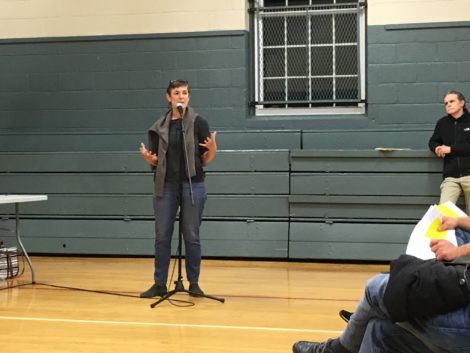
Tom Stokes strode to the microphone to agree with Ryan.
“I’m in favor of this motion,” he said. “We need to reflect on where we’re been. Let’s not jump into a new form of government.”
And Laura Dubester pointed out that “we need more information. I think there’s a little bit of a backlash here. We citizens need to be involved.”
On the other hand, regarding the role of the police chief, Stockbridge voters turned aside a citizen’s petition from John Hart that would have returned the town to having a “weak” police chief, whereby the selectmen would manage the operation of the Police Department. Hart’s petition was in response to the controversial 2-year tenure of Police Chief Robert Eaton, who left in March. Selectmen named department Sergeant Darrell Fennelly to replace him.
“I don’t think you want the Selectboard micromanaging the Police Department,” Shatz commented. “We’ve had a strong police chief for the past 20 years, and with prior chiefs it’s worked well. Former Police Chief Rick Wilcox opposes this article, and in a letter to the Berkshire Eagle notes that we should be more concerned with the professional competence of public officials and avoid political interference with the police.”