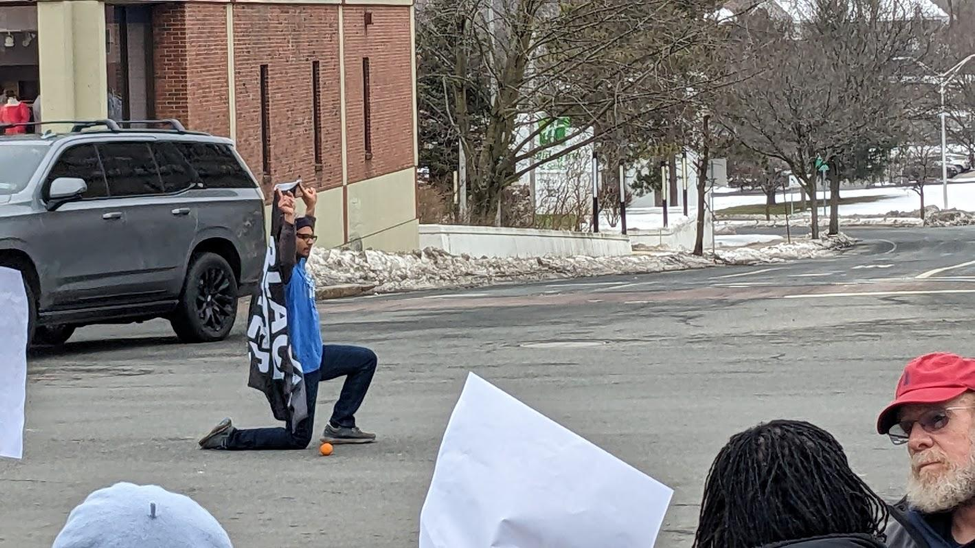
There has been a lot of talk lately about the role of police in our society. It is important for us to assess power as a commodity. Power is given to some institutions through societal mechanisms like the legislature. The problem, as we all know, is that there are times when police powers are abused by the people who hold them. If you give people badges and guns and the legal right to tell others what to do to, it will certainly not be long before that power will be abused. You don’t have to go much farther than your news outlets to witness that abuse. We also know that police abuse dovetails with other “isms” in our society when it comes to the ways in which some civilians are treated under what we call “the law.”
Race and ethnic backgrounds figure prominently in the scheme of things. We know that historically, Black people and other people of color have been less represented in our police departments than Caucasians. There may be exceptions, but, historically, the majority of positions of power are filled with white people. People of color have traditionally been undervalued by contemporary society. We know that we have a long way to travel before we achieve anything like equality. While we have made some progress in this area, it’s undeniable that it will be some time before we can hold up our heads when it comes to the simple concept of fairness.
It has always seemed absurd to me that we hand out power based on race. Answer this question: Are Black people equal to white people in our society in their prestige, power, and wealth? We are not talking about individuals here but rather each of those populations taken as a whole. You’d have to be out of your mind to answer that question with anything but “no.” It has never been so, and it is not so now. It is undeniable that the amount of skin pigmentation an individual has or doesn’t have becomes an important ingredient in the overall way we worthiness in our society. While we may have taken important steps to make things a little more equal, we are a long way from making things right. As long as differences exist, you had better believe that privilege and resources will, to some degree, be meted out based on these differences.
We give out prestige and power based in large part on race and ethnic background and that situation is not about to change for the better any time soon. As soon as we acknowledge that people are different, we distribute power based on those differences. It has always been so and while we constantly try to equalize things and to deny those differences, we have never been able to do so.
If we recruit, promote, and reward members of our police forces based on ethnic background or race—in other words, based on differences—we will see the present problems in our society continue. It will occur to some readers that it doesn’t always matter that people of different races may find themselves in non-traditional groups. As we so recently witnessed, Black police officers may, from time to time, be just as guilty of overuse of their power on other Black people as white police officers are. That, sadly, has become all too evident in these past days.
It is important to remember that cops are a reflection of a society’s power structure. Understanding that kind of power is essential to understanding the way in which we order society. So every time you open a newspaper and find police involved in a critical situation in which there are winners and losers, you might apply your critical skills to see what our power structure is doing this time.