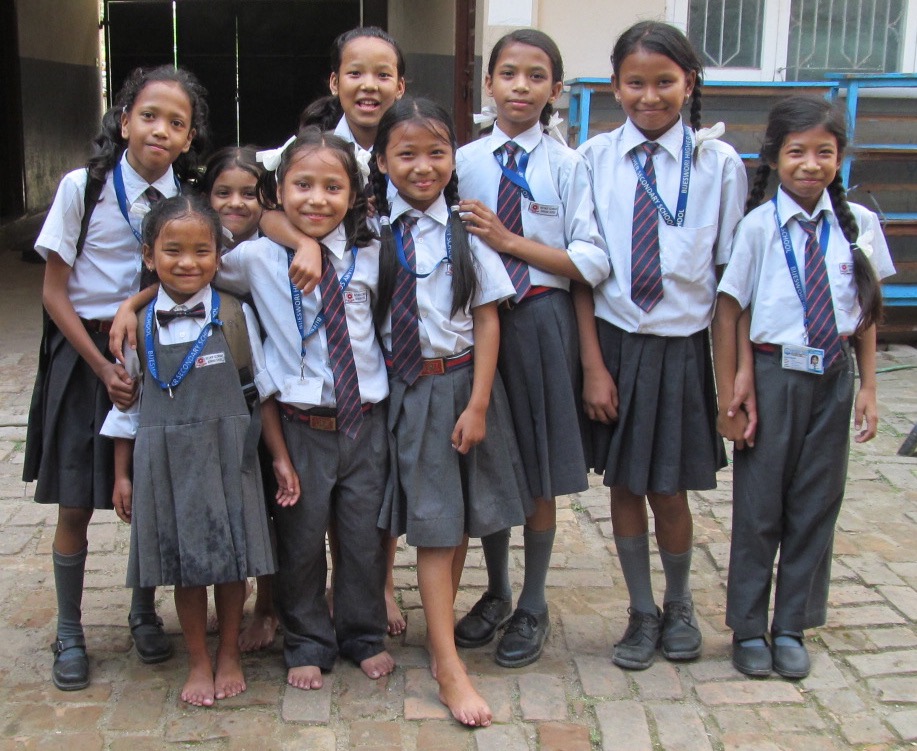
Ricky Bernstein, a Sheffield artist and committed do-gooder, directs a grass-roots program in Nepal that sponsors girls’ education. His interest in Nepalese children dates back to the late 1980s when he and his wife, Elizabeth Cary, director of education at the Berkshire Botanical Garden, adopted two orphan girls in Nepal.
After that Bernstein gradually became more involved in charitable work in Nepal, organizing donations of money and items like wheelchairs. “I work alone in my studio, so it was fun to make asks and get them donated for girls in Nepal.” He became president of Hands in Outreach in 1991, and immediately reformed the board and realigned it to sponsor only girls. “The boys there are poor, too, but life for girls is much more arduous in Hindu culture.”
Gradually service to others became a mainstay of Bernstein’s life. “Nepal felt like a forgotten place, and I could make an impact there, improving the quality of life for marginalized people.” Almost all of his giving in Nepal goes to women because they will use it wisely. Besides, he says, “men will just drink it.”
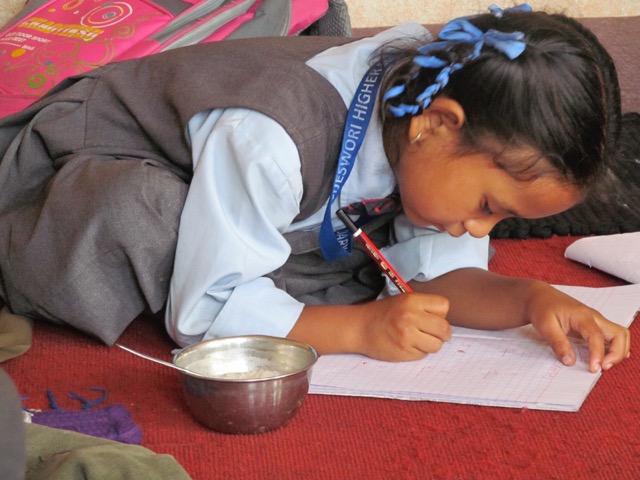
Bernstein runs the Hands in Outreach board by consensus. Board members are kept up to date because “having a team is a much better way to run an organization. The sum of the parts is so much greater.” As an artist, starting a charitable organization was something of a challenge. At first, he solicited art and craftspeople by word of mouth, but he acknowledges that he became a very effective fundraiser because the organization was such a worthwhile cause. “There isn’t a shadow of a doubt in what I believe in,” he explains.
Part of his enthusiasm for his mission is that giving money saves lives. “It’s an intervention, and poor women without intervention will never be able to lift themselves out of poverty because their lives are inexorable.” He notes that employment in Nepal is 50 percent for both men and women. The intervention made by his organization gives mothers an opportunity to save money so they can have a choice in their lives and be far less dependent on their husbands.
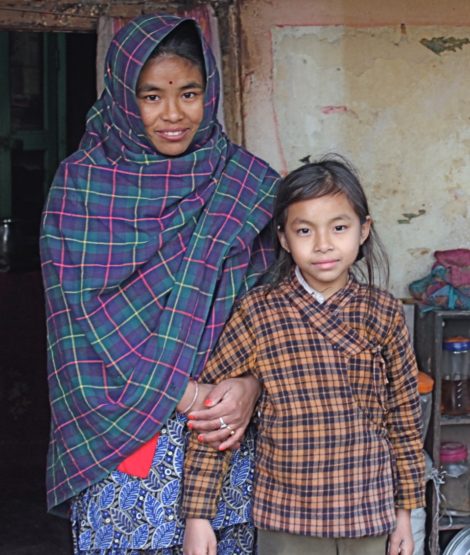
There is no welfare system in Nepal, no safety net to affect peoples’ daily lives. Women’s average monthly salary in Nepal is $30 — a dollar a day. Hands in Outreach recently was awarded a generous grant from Dining for Women, an organization dedicated to improving the lives of women worldwide. The women in this two-year pilot project spend half and save half. Each woman is helped to obtain critical Nepali citizenship, open a bank account, and have the opportunity to go to school in three, two-hour literacy classes per week. For most of these illiterate women, this the very first chance they’ve had to go to school.
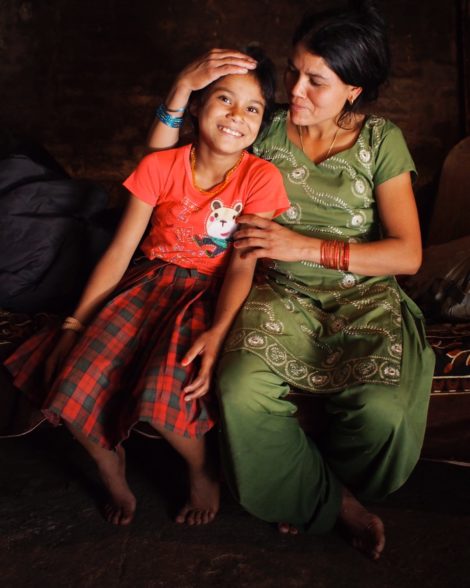
Bernstein spends three weeks a year in Kathmandu where he makes home and school visits. Hands in Outreach is administered locally in Nepal by Ram Adhikari and Palmo Tamang. Ram has been with the organization since he was 14, and has been the Nepal director for 18 years. Palmo, a trained social worker, has worked for them for nine years. Bernstein says, “Ram learned on the job. And he’s an enlightened male,” an unusual combination in Nepal.
The girls are selected on the basis of need and poverty, both of which are corroborated by at least three home visits. The selection process is open, run by social workers, friends, women already in the program, neighbors, and principals they trust. They are so rigorous in their selection process that they have a 98 percent retention rate. Although arranged marriages are the norm in Nepal, they have only had one girl leave in the ninth grade to get married.
A key to the program’s success in retaining the students up to and including high school is that the staff gets to know the families. Ram and Palma make home visits, an important way to keep up with the families. Their close bonds with the students have turned Ram and Palma into surrogate parents. Of the 120 families with girls attending the program now, no more than 20 are intact families. Bernstein is quick to acknowledge that Nepal is a patriarchal society, and men typically leave the women after they have had a lot of children.
The major task confronting Hands in Outreach now is “to grow up.” As Bernstein notes, it’s not enough to have a compelling program for an organization to persist. It also needs to build a good data base and implement good accounting, Important goals, yes, but not particularly sexy ones.
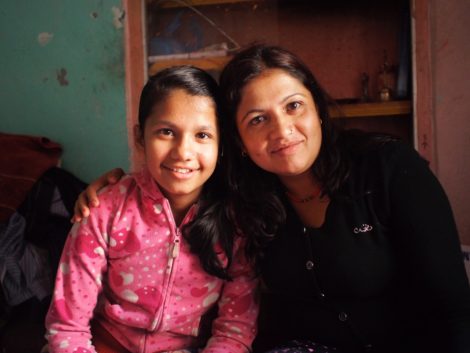
Hands in Outreach has supporters all over the U.S. and Canada. Typically, it spreads by word of mouth, with members asking their friends to help out. Book groups have been a particularly successful source of fundraising. Unlike most charitable organizations, they do not do a year-end appeal, but there is an annual newsletter written and produced by Bernstein. “It’s a passive ask,” he says, but he does more energetic asking to various people all over the country. Most sponsors sign on for a 10-year giving cycle, meaning that they can follow one girl from kindergarten through high school.
Bernstein’s desire to promote understanding in the world does not begin and end in Nepal. For the last decade, he has organized the Berkshire Human Rights Speaker Series. In that capacity he produces six lectures a year with local, national, and sometimes international speakers. It all began when a Nepali national living in New York was invited to speak at the Unitarian meeting. It was so successful that Bernstein initiated the speakers’ series. He was helped by the advice of journalist Eugenie Sills, who still provides their media consulting pro bono.
Bernstein’s method of finding speakers is “organic” he says, a convenient way of summing up his approach in reaching out to people with an important message. Sometimes it’s a well-known academic who has come east to do research, or an author on a book tour. This past year the theme was “Black Lives Matter” that solicited Berkshire locals heavily invested in human rights.
Over the years of heading up this series, Bernstein has developed a mailing list of more than 600 names. And since people often forward their email announcements, the group continues to grow. The Human Rights series meets on Sunday afternoons at Hevreh in Great Barrington.
When reading about someone as dedicated to profoundly important social issues as Bernstein is, one might expect him to be a quiet, somber man. But you would be wrong. He is deliciously outgoing, greeting his friends and acquaintances with big hugs and even bigger smiles. Clearly, doing good has made Ricky Bernstein a happy and fulfilled man.