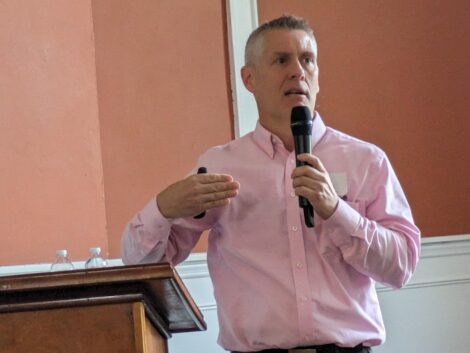
Lenox — “I think that there’s a lot of folks in the Berkshires that are property rich, but cash poor,” State Rep. William “Smitty” Pignatelli said in a blunt assessment towards the end of the Berkshire Housing and Food Summit on Friday, September 22 at Town Hall. “I would love to see more senior housing. That will open up purchasing or renovating opportunities for young people to buy their first home. [When it comes to the Berkshire County population] we are aging. We’re older, we’re sicker, and we’re poorer. That’s the Berkshires. That’s a fact of life. If you look at the healthcare system, 70 to 80 percent are on Medicaid or MassHealth reimbursements. That means we have a lower income standard in the Berkshires.”
The event, organized by Rep. Pignatelli, included leaders of Berkshire County community organizations to discuss issues and possible solutions to problems involving a lack of affordable housing and food insecurity in Berkshire County. The event was moderated by Jim Ayres, Principal Consultant for the Haydenville-based company Strategies for Collaborative Impact & Justice.
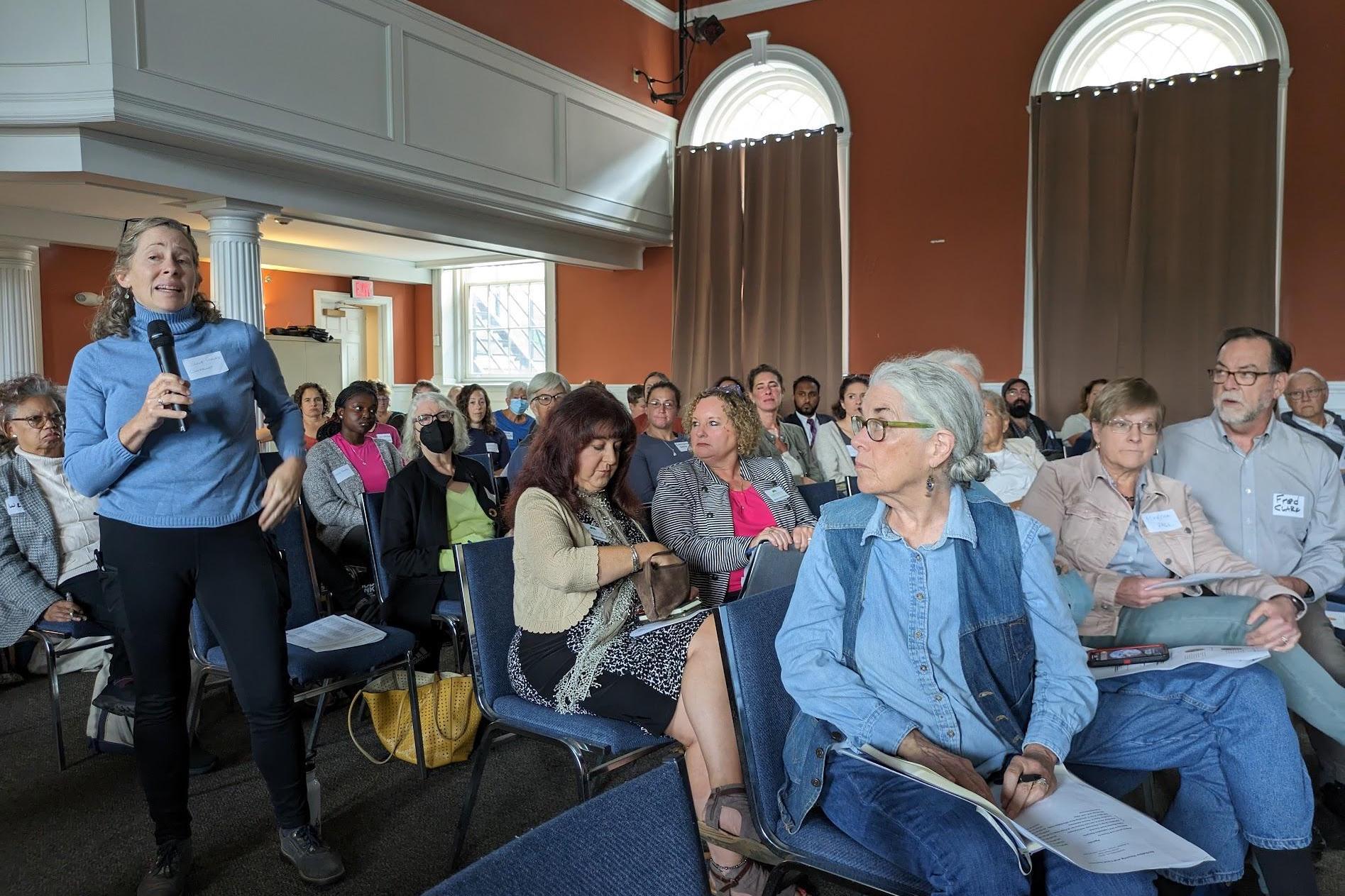
“This is a chance to pull together people from across Berkshire County to look at the challenges around housing insecurity and food insecurity, and particularly to do that with a focus on collaboration and new ideas,” Ayres told The Berkshire Edge in an interview before the event. “I don’t think the challenges are insurmountable, but these challenges are very difficult. That is why we need everyone working together, as opposed to working in separate silos. We all need to step up and do what we can.” Both Ayres and Rep. Pignatelli estimated that more than 100 representatives from Berkshire County organizations attended the event.
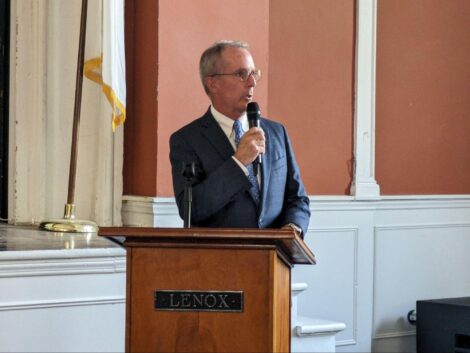
“The issues in Great Barrington are no different than issues in Dalton or North Adams,” Rep. Pignatelli said in an interview with The Berkshire Edge before the event. “But how can we work better together to solve those problems? The problem with the Berkshires is that, historically, we have a lot of overlap. There are duplicative efforts looking for the same dollar. If we could have more of a collaborative effort, we could solve these problems. I think teamwork is key, and convincing the state that this is not an urban versus rural conversation. We’re not here to recognize the problems, because we already know the problems. I want to leave here with plans to solve the problems, and I think some collaborative efforts in recognizing and acknowledging that this isn’t just unique to one particular community, I think is going to be paramount.”
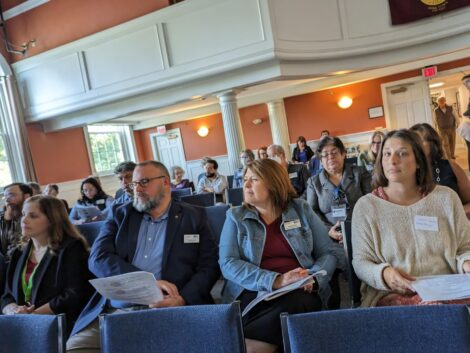
At the beginning of the event, Ayres briefly went over the results from a survey sent to representatives from local organizations about the challenges Berkshire County is facing regarding housing and food insecurity problems. According to the survey, Ayres said, the top common problem relating to housing and food insecurity is that the wages of workers in Berkshire County are not meeting the cost of basic needs. “The amount people are making day to day simply isn’t enough to cover basic expenses,” Ayres said. “We all know that the amount isn’t even enough to cover rent, and the prices for the freshest food have skyrocketed. It’s difficult across the state, but here in Berkshire County, it’s particularly challenging.” The minimum wage for the state is $15 an hour, having been raised at the beginning of the new year from $14.25 an hour.
Ayres said that the ideas and solutions that were given by survey respondents revolved around workforce development. “It’s important for individuals to improve their skills so they can hopefully earn more money and be in a better position to overcome that income gap,” Ayres said. “Housing subsidies are key to [helping] people to be able to afford properties that they would not have been able to afford.”
Ayres said that another top common problem, as identified in the survey, is a failure of not being able to access existing assets and resources. “We’re not always good at taking advantage of the housing stock and food programs that are already available,” Ayres said. “One of the solutions identified is around engagement—working with landlords and giving them the confidence to accept Section 8 and other kinds of subsidies that might be out there. This would provide them with support that would hopefully make more affordable housing units available. Another idea would be spending a good amount of time maintaining and renovating existing properties to keep them affordable. There are often properties that are underutilized and in disrepair.”
Ayres said that one idea to address the food insecurity problems in Berkshire County is to increase the number and capacity of food pantries. “During the pandemic, it wasn’t just the charity-based food programs that made a difference, but we also had farmers, growers, restaurants, and some catering companies that stepped up to get food to the people when needed,” Ayres said. “Housing and food [resources] don’t take place in a vacuum. But rather, they’re connected to a lot of different services.”
The event continued with a discussion concerning four potential areas of fighting the housing crisis and food insecurity: the renovation and maintenance of existing properties, providing more resources at food pantries and food banks, tenant advocacy, and the development of new affordable units.
When it came to renovating and maintaining affordable housing, Construct Inc. Housing Director June Wolfe brought up a state program where an abandoned property is identified, turned over to a receiver, and then sold. She said that, while the program has been effective for Construct Inc. to develop affordable housing, there are several problems with the program. “It’s very slow because it has to go through the court system,” Wolfe said. “Plus, in this real estate market, [investors] are jumping on everything, so the inventory is really low. And then for it to be part of the assessment housing inventory for that particular town, it has to go through an RFP [Request For Proposals] program, which is unbelievably slow and extremely onerous.”
Community Development Corporation of South Berkshire Executive Director Carol Bosco-Baumann said that, to preserve affordable housing, her organization tries to buy properties that already have affordable housing units. “We did buy a property on Main Street in Great Barrington, and we’re looking to replicate what our friends at Construct Inc. did with the Windflower Inn,” Bosco-Baumann said. “But with high real estate prices and high interest rates, it’s very challenging to make the numbers work and make the rents affordable. But we do rely on partnerships, and we work with the town of Great Barrington and its Housing Trust, which is how we can move these projects forward.”
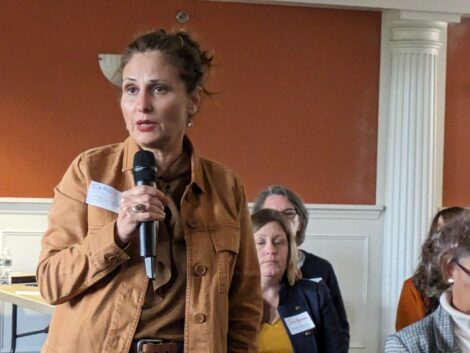
Construct Inc. Executive Director Jane Ralph said that, for property renovation programs to be successful, there need to be more ways to develop public-private partnerships. “We’re in conversation with Berkshire Taconic on how to do that with funding from philanthropic lending,” Ralph said. “We need to figure out how to do this, but hopefully we are on our way. I think that there are a lot of folks who are invested in the workforce and affordable housing, but they don’t know how to help make that work. When renovations or new developments cost so much, it’s really difficult to figure out how to make that happen.”
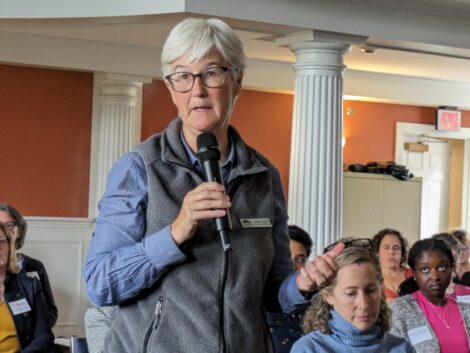
As for providing more resources at food pantries and food banks, Berkshire Grown Executive Director Margaret Moulton said that collaboration between other organizations is essential to increasing resources. “One of the good things that came out of the pandemic is the value of collaboration, and I cannot say enough about that,” Moulton said. “It’s the only way we’ve been able to do the work we’ve been doing, and getting food out to farmers’ markets.” Moulton added that another way to increase resources is through grants from the state government.
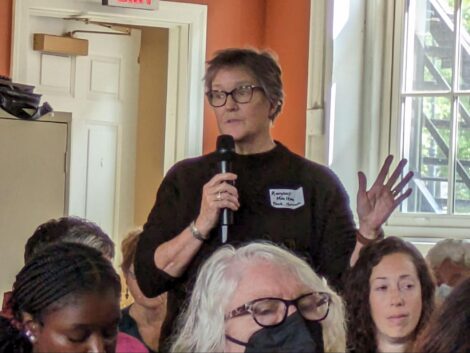
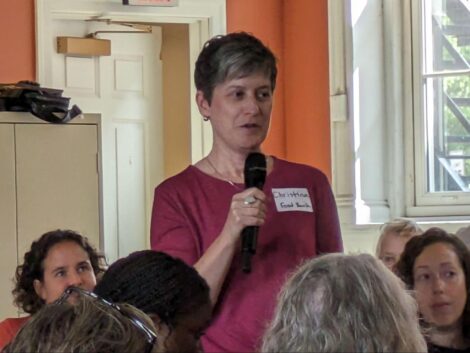
Food Bank of Western Massachusetts Director of Programs Christina Maxwell explained that, for food banks and pantries to offer more resources, each site needs more space. “A lot of the food pantries that we work with throughout western Massachusetts are really struggling with space, and it’s a problem because food insecurity is rising and continues to rise,” Maxwell said. “More and more people are coming to these pantries, and pantries don’t have enough room to put people, store the food, or any room for people to park.”
Maxwell said that her organization offers nutrition education programs, along with SNAP assistance. “We try to do that in person as many places as we can, but due to the small size of our staff, we can’t physically get to a lot of places,” Maxwell said. “A lot of that happens over the telephone, which works great for a lot of people. But some people really need [these programs] in person and kind of a personal touch.”