IN THIS ISSUE
Hailey Gets a Scholarship
Contract Negotiations
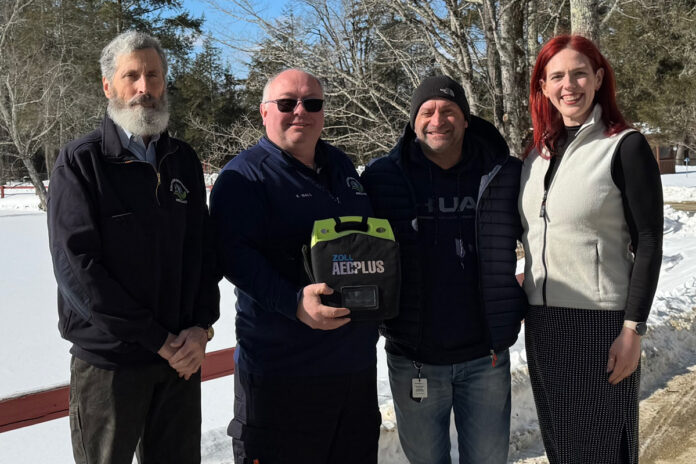
Camp Eisner Gets an AED
Bowling Fundraiser: March 28 at 5:30pm
Documentary: “Honorable but Broken: EMS in Crisis”
Hailey Gets a Scholarship!
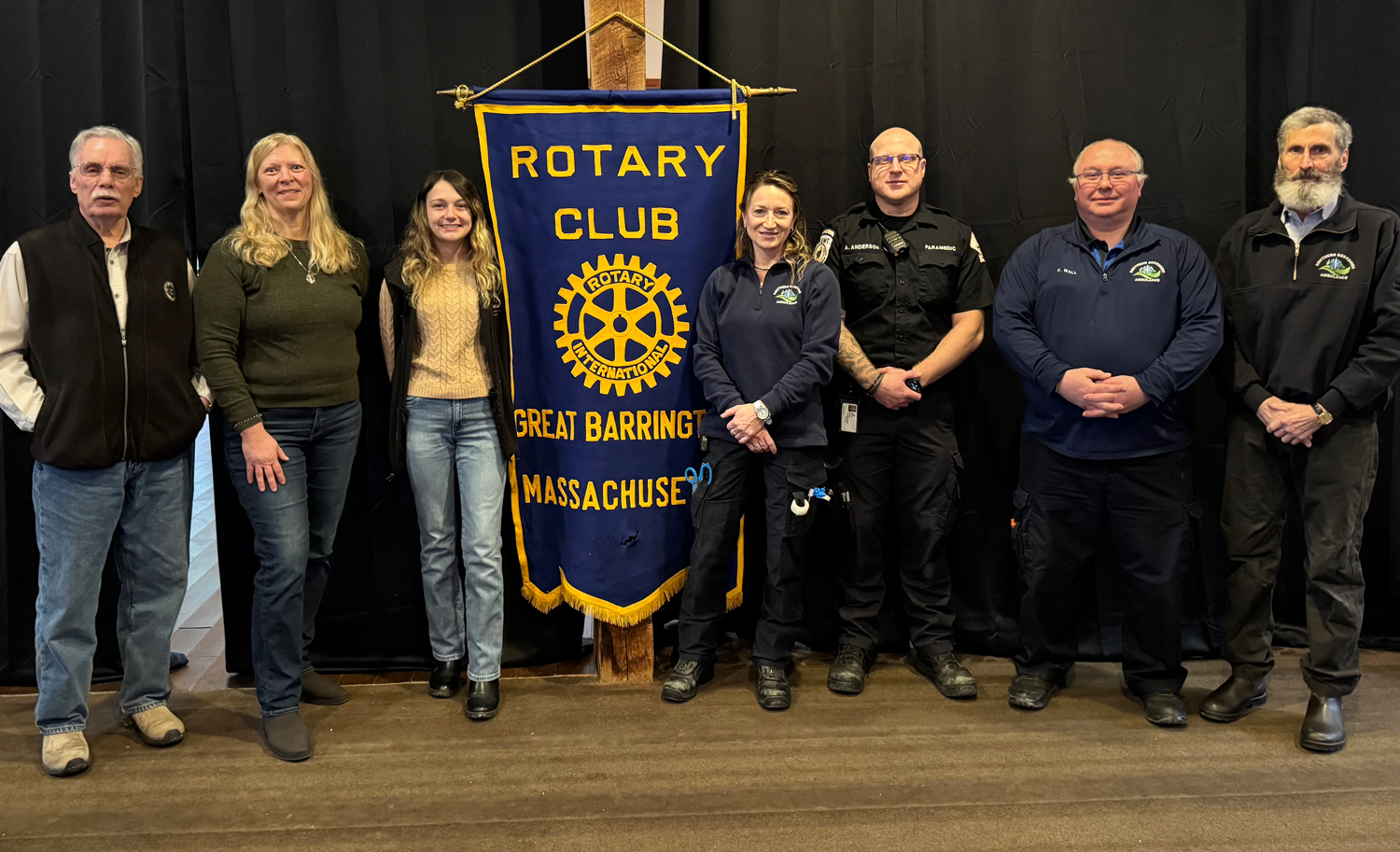
On January 14, 2026, the Great Barrington Rotary Club Student Assistance Fund Inc. presented our Hailey Liebenow with a check to pay for her tuition to become a paramedic. Upgrading an EMT’s skill set to paramedic is an expensive endeavor, a class that spans approximately 1,800 hours and costs over $10,000. Thank you so much to the Rotary Club for recognizing the severe shortage of paramedics we face in South County and for making this possible for one of our own.
President’s Letter: Contract Negotiations
It is budget season for municipalities in Massachusetts, and so far we have met with select boards in Egremont and Sheffield and with Liz Hartsgrove, Great Barrington’s new town manager. On February 23, we are visiting Alford to meet with its Select Board as well.
Two themes have emerged: One is how do we control costs, and the second is what might a contract look like. We’ve received a proposed contract from the Town of Great Barrington and have prepared a response our board is reviewing on February 18. We are confident we can come to an agreement.
Our community depends on having an ambulance available when someone calls 911. Southern Berkshire Ambulance operates a “three by day/two by night” schedule that provides three types of service:
- 911 calls to the six towns for which we provide primary coverage;
- ALS calls to an additional four towns; and
- Interfacility transport support, typically for patients that need transport to or from Fairview Hospital or local long-term care facilities.
We always prioritize 911 calls, so one way to think about our coverage is that we have a dedicated 2/1 911 model, with a bonus of one ambulance we can redeploy away from IFTs as needed in times of high 911 volume.
The resources we have
With the other two services and accounting for interfacility transfers, we are providing 911 coverage with just two ambulances by day and one at night over roughly 155 square miles for primary 911 and 311 square miles when you include ALS intercepts with a bonus rig available when needed. That coverage stretches across towns whose year-round populations are modest but whose numbers swell seasonally and whose median age now sit around 58, meaning more chronic illness, more falls, and more frequent calls for help.
The towns we serve each bring their own profile to the call mix. Some are small hill towns with a stable, older year-round population where neighbors know each other and many residents live with multiple chronic conditions. Others see a sharp influx of second-home owners, cultural visitors, and seasonal workers, so a town that is quiet in February can feel like a small city in July and August, all drawing on the same limited number of ambulances. When a single 911 unit is committed to a long transport from one end of the district to a distant hospital, the remaining coverage must stretch across multiple communities at once, and that is before we factor in the paramedic ALS support we provide to additional towns beyond our core 911 footprint.
Understanding unit hour utilization
To make sense of whether this is enough, EMS planners lean on unit hour utilization (UHU)—a way of measuring how much of each ambulance’s staffed time is spent on calls versus remaining available for the next emergency. For rural 911-focused systems like ours, with long time on task and only a few units, a realistic healthy target is roughly 0.25 to 0.40 UHU overall, and to stay below about 0.45 during daytime peaks when most of our calls from older residents and seasonal visitors come in. Crucially, those targets are not based on average days; they reflect the cost of readiness—the reality that we must staff for the busy days and the bad hours, not for the quiet stretches. An ambulance that sits “idle” at 3 a.m. is not wasted capacity; it is insurance that when two simultaneous calls hit at 3:15 a.m., someone can still get help.
That cost-of-readiness argument is especially important for our towns. When we look only at averages—average calls per day, average transport time—it can appear that we are adequately staffed, because there are often hours when a crew is not on a run. But 911 systems are built for peaks, not averages: the cluster of crashes on a holiday weekend, the overlapping respiratory distress and stroke in the middle of a snowstorm, the surge of calls on a summer festival day. If we staff to the average, those peaks go uncovered; if we staff to the peaks, there will be quiet hours, and those quiet hours are part of what our communities are paying for when they invest in EMS.
This is not just about numbers; it is about what work feels like for our crews. The research and national guidance we have reviewed show that when UHU is sustained above about 0.40—especially in systems like ours with long or 24-hour shifts—fatigue, stress, and burnout climb sharply. As utilization approaches or exceeds 0.50, agencies see more mistakes, lower job satisfaction, and higher turnover, particularly in rural environments where a single call can keep a crew out of service for an hour or more. For our medics and EMTs, that translates into shifts where the radio never seems to go quiet, meals are constantly interrupted, and recovery time between high-acuity calls is scarce; staffing for peaks without enough units means the peak workload falls on too few people.
When and if to add another ambulance and crew to the mix
For Southern Berkshire Ambulance, this means that the question “Do we need another 911 ambulance?” is really a question about safety, reliability, and long-term sustainability rather than comfort or convenience. A 2/1 911 fleet serving older residents spread across multiple small towns, plus seasonal surges and long transports out of district, will hit those high-UHU thresholds much sooner than a simple annual call total might suggest, especially once we recognize that our obligation is to be ready for the worst day, not the average day. Once our own UHU data show that we are routinely in the upper 0.3s and into the 0.4s during peak blocks—and we can pair that with specific instances of level zero coverage and mutual aid dependence—we have a clear, data driven case that adding a peak-time 911 unit or redesigning shifts is a matter of responsible risk management and an appropriate investment in readiness for our towns.
The good news is that these same metrics point toward solutions grounded in our local reality. For example, we can reduce workload per provider by adding a targeted daytime or early evening peak-load ambulance, better separating 911 and transfer work so that long interfacility runs do not routinely pull resources away from our year-round residents and seasonal visitors. We can make this work more “worth it” by aligning compensation with the actual intensity of the job here, outlining clear pathways for advancement and adopting written workload and fatigue policies tied to UHU and time on task that our staff can see and trust. And we can invest in wellness, mental health supports, and a culture that acknowledges the particular strain of high-demand rural EMS in southern Berkshire County so that we are not asking a small group of people to carry an unsustainable load in silence.
Let’s figure this out—together
In the months ahead, our goal is to use this common language—UHU, time on task, the cost of readiness, and the real geography and demographics of our member towns—to have an honest conversation with our board, our staff, and our municipalities. This is a stakeholder conversation, and all are welcome to participate in it.
We want to ask together: Given who lives here year-round, who joins us seasonally, how far we must travel to definitive care, and how bad our worst days can be, at what level of busyness are we willing to operate and what are we willing to invest to keep both patients and providers safe? Framed this way, the discussion about adding a third 911 ambulance during peak periods, adjusting schedules, or changing how we fund EMS is no longer an abstract budget debate; it is a concrete choice about the kind of EMS system we want for southern Berkshire communities and for the people who answer the call when someone dials 911.
How does this relate to contract negotiation? Well, it is central to the idea of how much coverage is necessary and what is the cost of that coverage. Over the next 10 years, for example, the average age of our coverage area is predicted to increase by three to six years. Older populations will continue to increase demand for our services, while at the same time reducing the compensation per call. Why? Because private insurance (under 65) pays about 40 percent more than Medicare (65 and older).
We have so much respect for the herculean task of balancing a town’s budget and understand the need for our towns’ finance committees and select boards to control costs and embrace the concept of smoothing, which tries to keep the year-over-year cost increases to no more than three to five percent. We’ve added a CFO with extensive municipal experience and analytical skills via his own service on a local town’s select board. Let’s use data to determine when this is realistic for the needs of our local emergency services, and when we might need to expand in the future to save the most lives possible by protecting a robust emergency services offering.
Jim Santos
50 Year Volunteer & President, SBAS
Camp Eisner Gets an AED
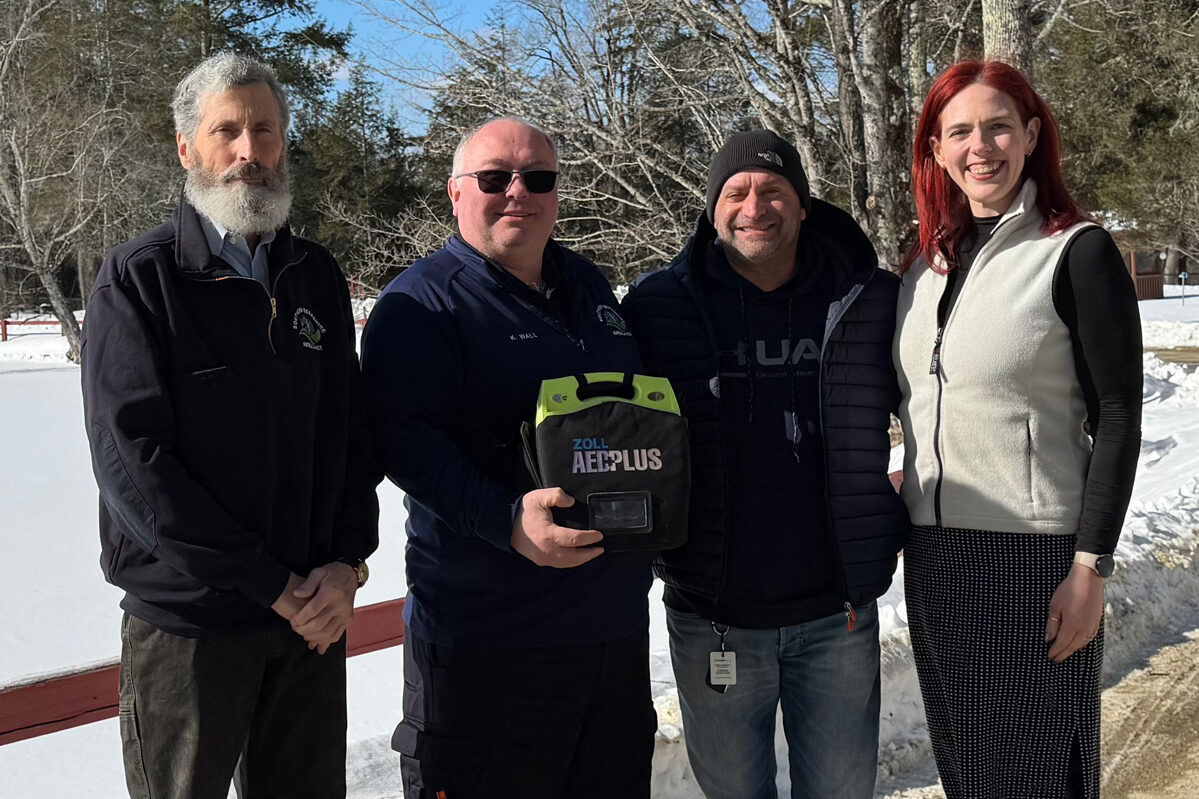
SBAS donated an Automated External Defibrillator (AED) to Camp Eisner on February 4. Camp Director Paul Isserles and his team were present to receive it. The amp intends to position the AED at the pool in case of an emergency.
Bowling for Fun and Dollars
Thanks to SBAS Board member and Great Barrington Interim Police Chief Adam Carlotto for pulling together our bowling fundraiser, to be held March 28 at 5:30 p.m. See the flyer immediately below. For more information, call Cindi at (413) 528-3632 or email her at crmorris11@sbvas.com.

Documentary: “Honorable but Broken: EMS in Crisis”
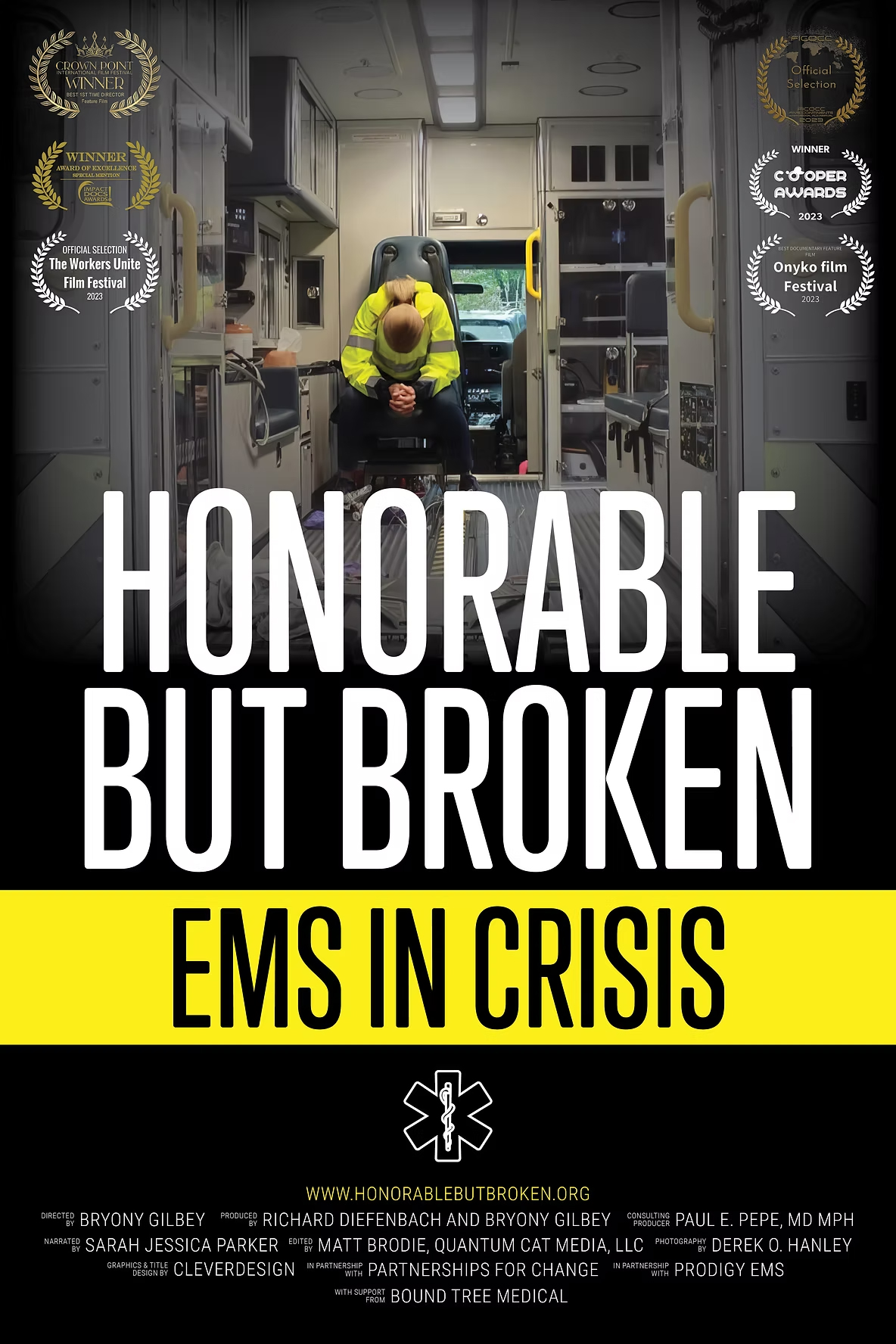
We usually end these newsletters with a light-hearted focus on something related to ambulances. In the context of this discussion, we have decided to instead recommend a documentary: “Honorable but Broken: EMS in Crisis.” It is available for streaming on Amazon Prime and TubiTV.
“Honorable but Broken: EMS in Crisis” is a one-hour documentary that pulls back the curtain on what it means to work on the front lines of emergency medical services in America today. Narrated by Sarah Jessica Parker, the film follows EMTs and paramedics through the emotional highs and lows of the job, highlighting the toll of traumatic calls, chronic understaffing, low wages, and limited mental health support. Through provider stories and system-level analysis, the documentary shows how a critical workforce shortage and outdated funding model are pushing EMS toward collapse—especially in rural communities—raising the stark question of what happens when you call 911 and no ambulance comes.
The film is designed not just to evoke sympathy, but to spur action. It lays out how reimbursement that only pays for transport, the “cost of readiness,” and hospital closures combine to create ambulance and hospital deserts and argues for concrete solutions, including modernized funding and better support for the EMS workforce. Already screened for policymakers and professional audiences, “Honorable but Broken” is intended as an accessible briefing tool for elected officials and the public and is now available for on-demand streaming on platforms such as Amazon and TubiTV.
Thanks for reading this! We will be back next month with more news and information to keep you safe and help you live your best life. We are working on some great options and presentations for our partner towns for this cycle’s budget.
About Southern Berkshire Ambulance
SBA provides primary 911 coverage for the towns of Alford, Ashley Falls, Egremont, Great Barrington, Housatonic, Monterey, Mount Washington, and Sheffield. SBA also covers the portion of southern Stockbridge known as the Furnace District.
SBA provides advanced lifesaving paramedic intercept services to the towns of New Marlborough, Otis, Richmond, Sandisfield, and West Stockbridge when available. SBA supports ambulance needs throughout the county through formal mutual aid agreements covering most of the southern half of Berkshire County.
We are a nonprofit and rely on you to fund our operations.
Please consider a donation to our ambulance fund here.