“When we all take part, we create the connected habitats that life depends on.” — Doug Tallamy, Home Grown National Park
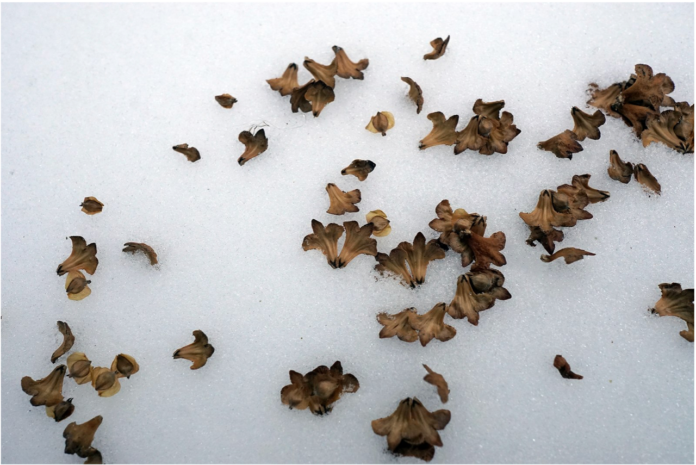
Pictured above, the fanciful, soaring bird patterns scattered on snow are parts of a yellow birch tree’s seed cone fallen from an overhanging branch. The ripe cone released its tiny winged seeds. See twigs with cones and a mature yellow birch in images that follow.
The forests of the South Taconic Range, encompassing public access points in the Massachusetts, Connecticut, and New York tri-state area, are a treasury of trees that encourage close observation. For this stunning wintry moment, we will visit yellow birch, Betula alleghaniensis, also known as golden birch for their shiny golden bark. Native to northeastern North America, both yellow and black birch, Betula lenta, release a wild wintergreen fragrance when a twig is scratched.
All birch trees—yellow, black, river, paper, and gray—may be tapped to produce syrup, although the characteristic wintergreen scent in the sap of yellow and black birch is not present in the syrup. For the complete story, go to Cornell University’s website.
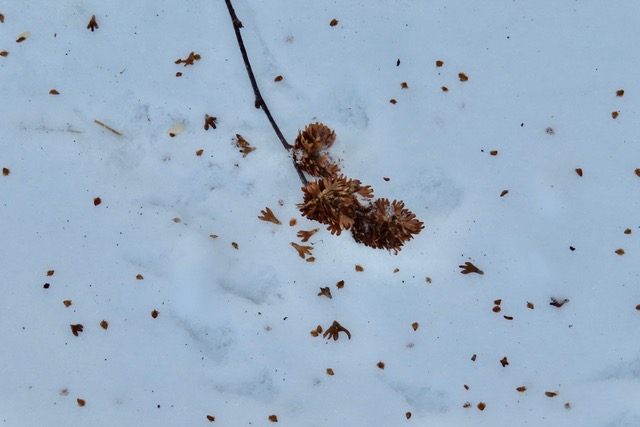
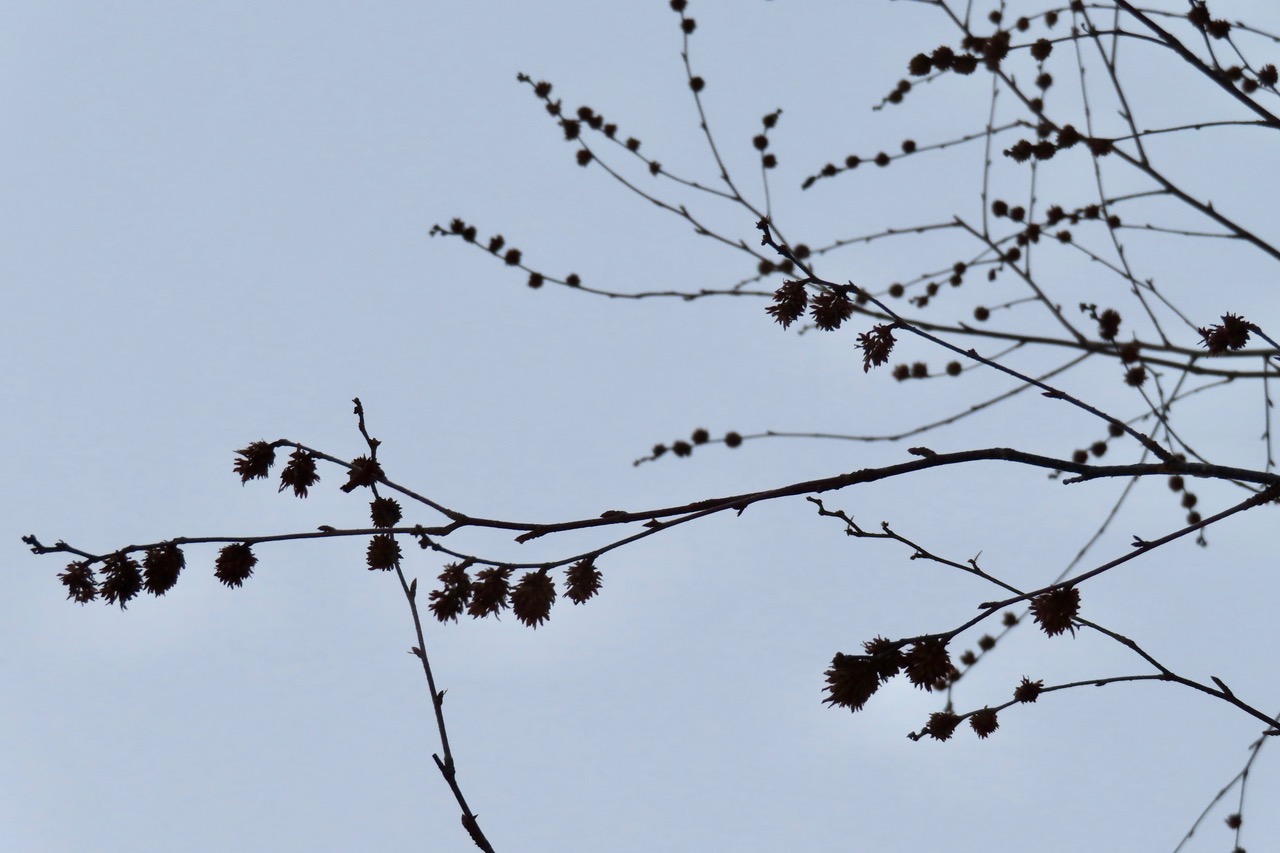
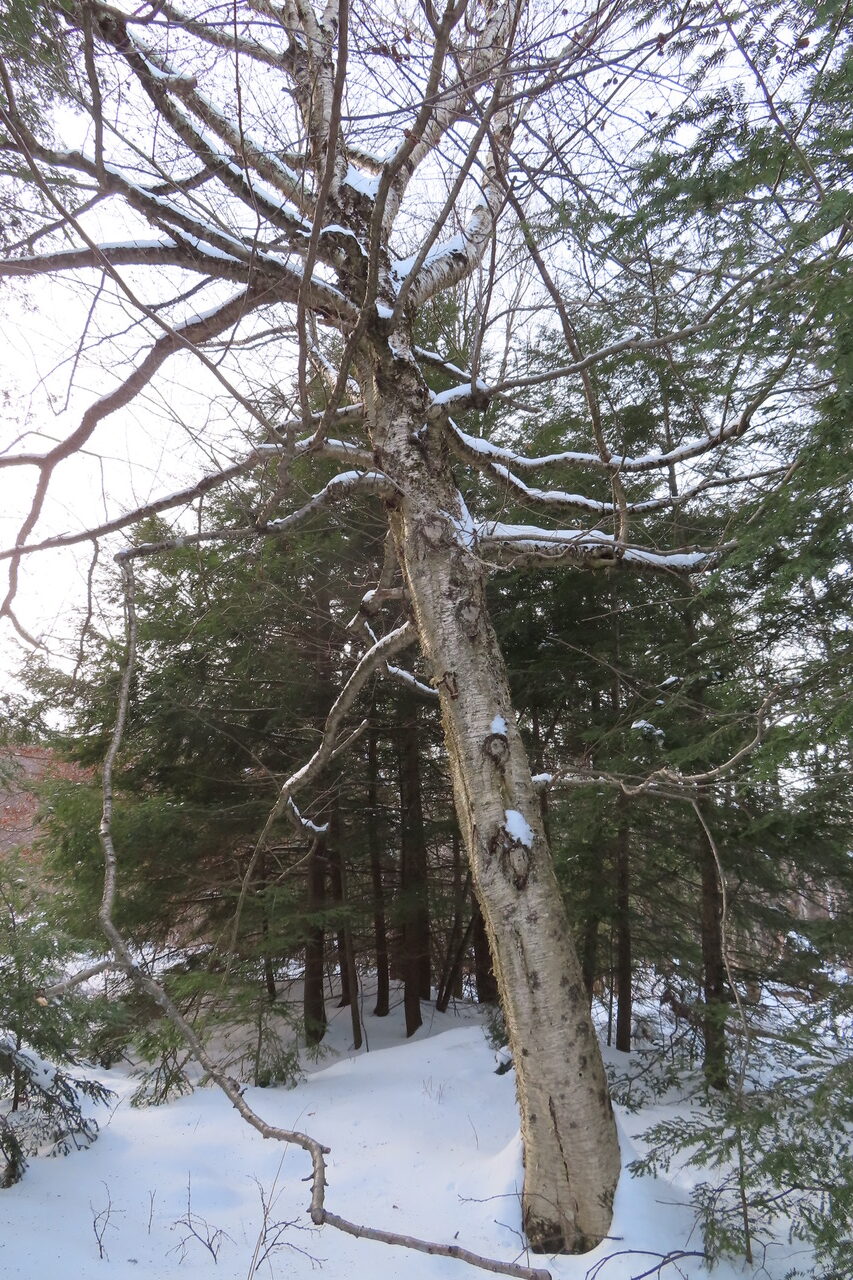
A forest tree that grows to 80 feet tall with a life expectancy of 300 years, according to one source, the bark of yellow birch is known to be either golden or silver-gray. Access more information in this superb article.
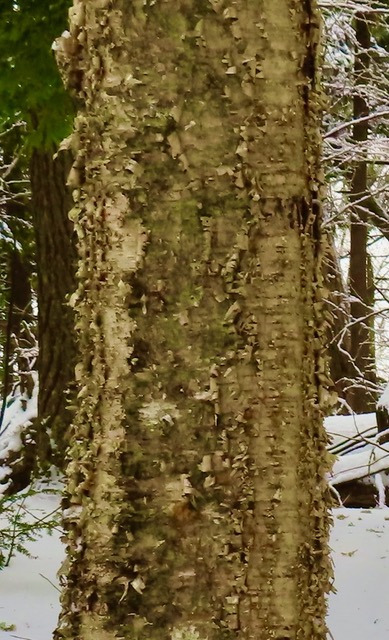
In closing, a close-up: Horizontal lenticels are often prominent on yellow birch bark. In mature specimens, the bark peels in small thin curls.
Resources
- All life on Earth depends on plants – Oxygen. Food. Habitat.
- A superb read: “Seeing the Forest: A new attitude toward your landscape,” a booklet published by The Nature Conservancy’s Berkshire Taconic Landscape Program
Classes and field studies
- Native Plant Trust, Wayland, Mass. — Build community with other new and experienced gardeners and join the movement to increase the beauty and resiliency of New England and the planet, one native plant at a time.
- Berkshire Botanical Garden, Stockbridge
- Conservationist Dr. Doug Tallamy’s initiative “to rebuild the ecosystems that support all life and restore the vital connections between plants and animals for a healthier, thriving planet.” He demonstrates how, in our own gardens, each of us can participate in building the Homegrown National Park.
- Help Save the Environment