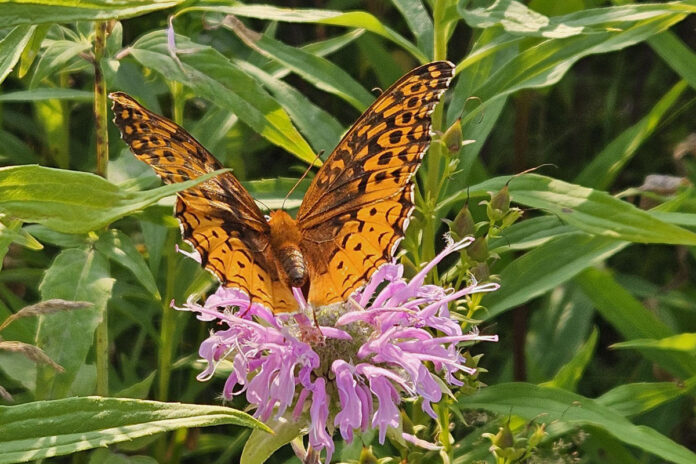
Gardening in mid-July entails damage control and editing. I spend most of my available time picking Japanese beetles, pruning, and pulling weeds. There are bright spots! I see pretty butterflies and goldfinches. Bluebirds have another clutch of babies, too.
Take the time to assess your gardens now and move plants into better locations. Notice where and when sunshine beams the strongest. You will have a better idea of which plants to put where. Some prefer cool morning light, and others can take the hot, dry sunshine of late afternoon.
We have been watering the vegetable garden every day if there is no rain. The cucumbers have shrugged off the deer attack, new lettuce greens have grown bigger, and basil has already contributed to a couple pesto batches. I have had my best year ever with cucumbers. I chose a smaller pickling variety (that can be eaten fresh, too). They grow fast and have not had cucumber beetle problems… yet. It could be that the weather has cooperated. It could be the reflective old coffee bags that I placed under the plants. Beetle pests and white flies lay eggs in the darker areas under leaves. By reflecting light under the leaves, I send the pests elsewhere. Or that is the theory.
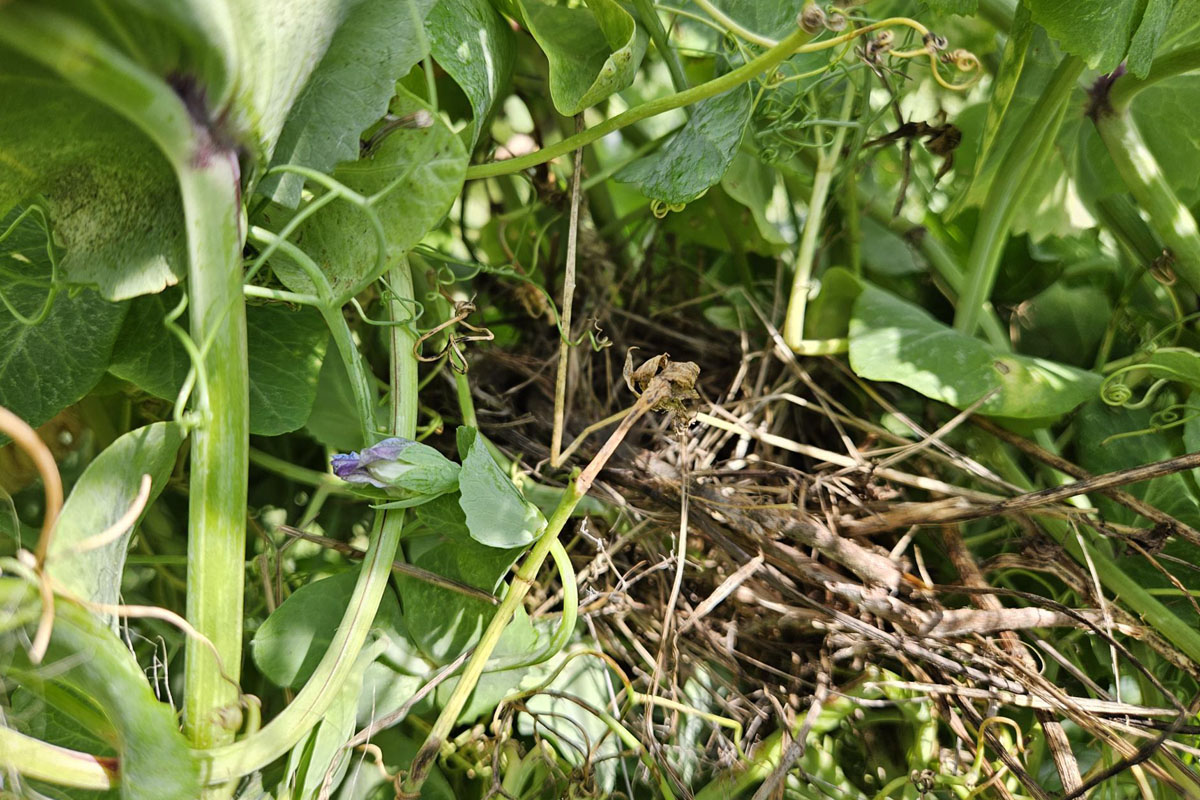
The vegetable garden has offered many days of sugar snap peas. We let the plants rest for a week or so when rain and wind slowed down the flower production. Now I have discovered a bird’s next (likely song sparrow) in the jumble of pea vines. Those birds worked fast. I have seen the male singing at the top of the poles but did not see the nest. It appears that they have taken up residence elsewhere now that I am at the vines picking every morning again.
When I am watering the veggies, I am scouting for caterpillar pests. I seem to miss the tomato hornworm every year, but here is your reminder. The larvae look like a flagging, curled-up tomato leaf. If you see dark green balls of frass on lower leaves or at the plant base, you probably have a pest. Look carefully! They can devour a spray of tomatoes in one night. If found and you see white cocoons on the caterpillar’s back, leave it alone. The cocoons belong to a parasitic wasp which will kill the hornworm.
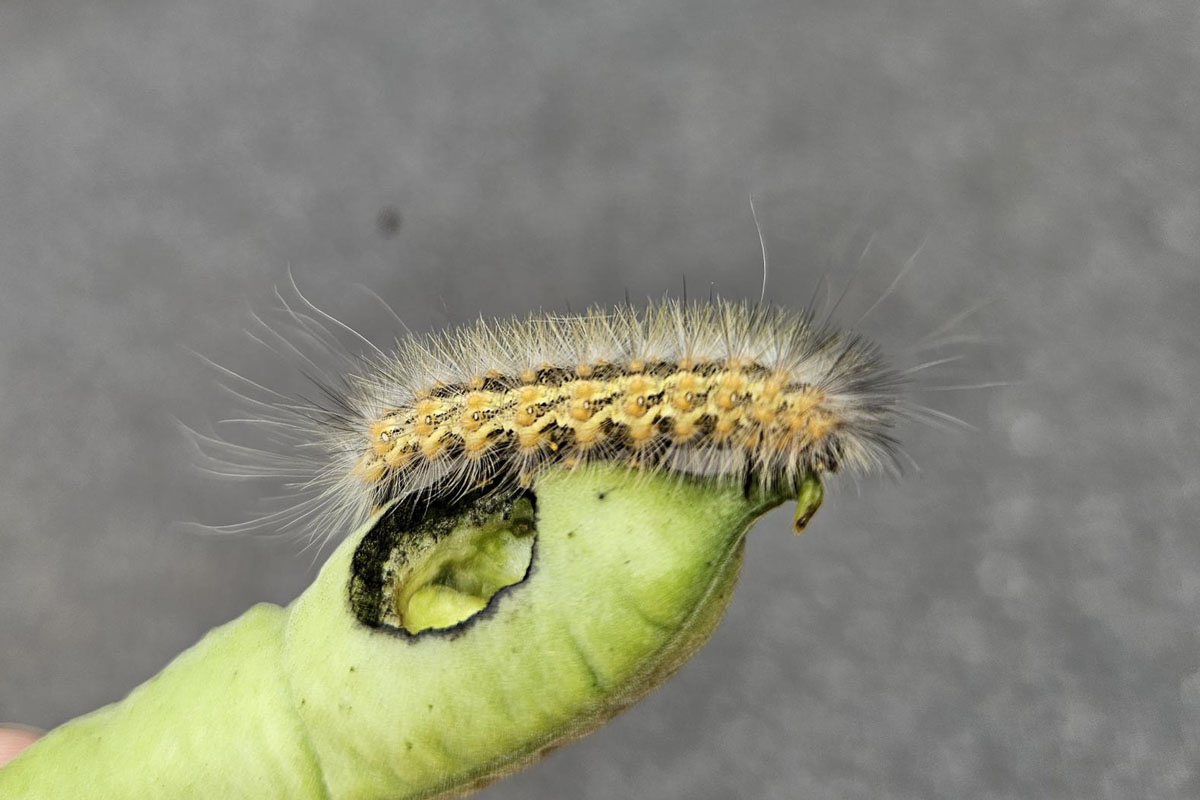
I came across a fall webworm chewing a huge hole in one of my fava beans by noting the frass first! After taking its portrait, I “spished” at a nearby bluebird to get her attention and then laid the bean with the caterpillar in the middle of the driveway. The bluebird circled overhead as I walked away and the caterpillar was snatched for the bird’s babies!
Harvest your beans, peas, summer squash, and cucumbers every day while the fruits are small and tender. If your vegetable harvest has gaps, visit your local farmers’ market or farmstand and keep your food local!
I have also been editing the garden. I like this time of year. I walk around and thin, trim, or yank out whatever has invaded or outgrown the spot I prefer. Thinning and pruning helps with air circulation and keeps the plants disease free.
There are limits, however. Fungus spores have blown in. You may be finding brown spots or black edges on lilacs, apples, and maples. Much of this is environmental. Different fungi cause different patterns on leaves. Bring samples to your favorite garden center or horticulturist friend and get help identifying it just in case the problem is systemic and not environmental.
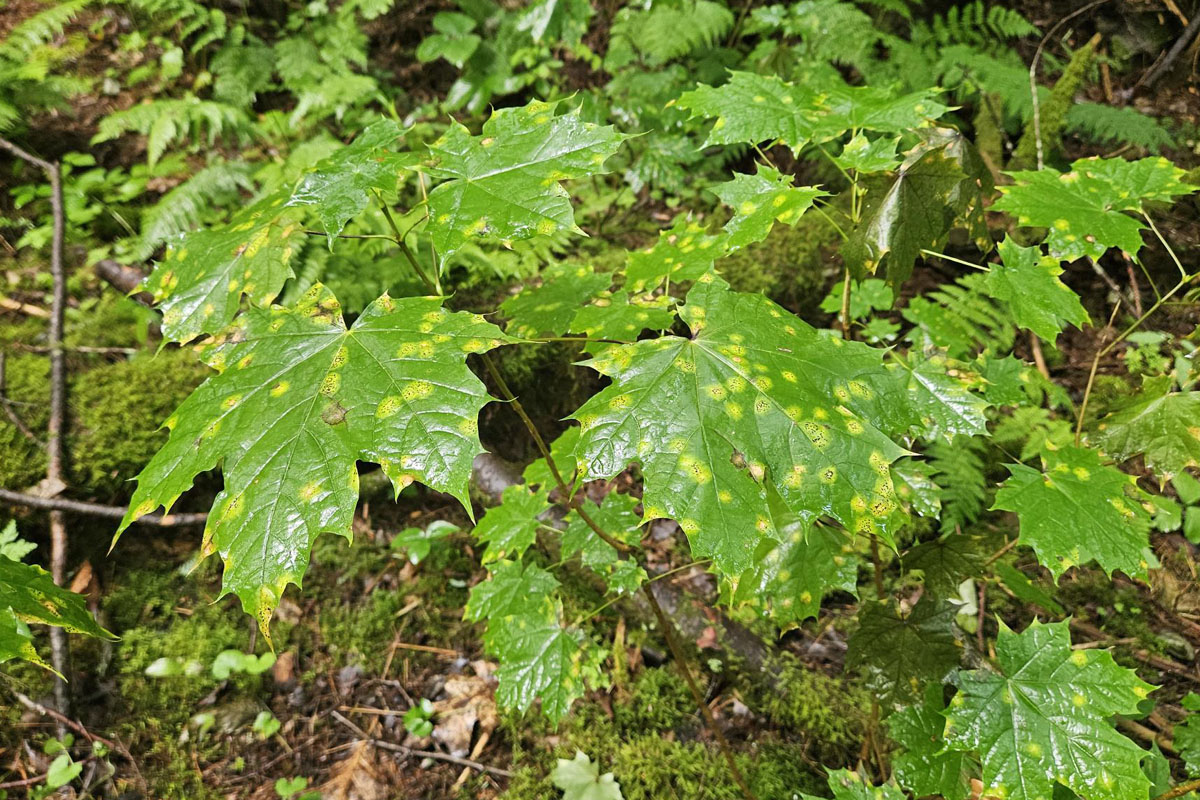
Fungi that have blown in can be controlled by removing damaged leaves immediately and spraying fungicide on healthy plant tissue. Older plants and plants already stressed by other factors (cankers, drought, flood, heat, herbicide residue) are more likely to develop fungal problems. You may slow the fungi, but you will still need to address any other issues. Once you identify the problem, make a plan to spray fungicide on trunks, branches, and twigs of susceptible plants before leaves appear in spring. Many fungi overwinter on the bark.
And back to my recurring July nemesis: the Japanese beetle. I won’t do it the honor of a photograph. You know it. I experienced a beetle onslaught this past week. My new replacement peach tree lost most of the leaves on its upper branches in one day. Argh! I had to take drastic measures. I wrapped the peach tree foliage in a turban of polyester Reemay fabric. The fabric is held in place with twist ties. Luckily the wrap has lasted through a couple wild, windy thunderstorms. I have not spotted any beetles but one moving underneath the canopy. Happy early Halloween!
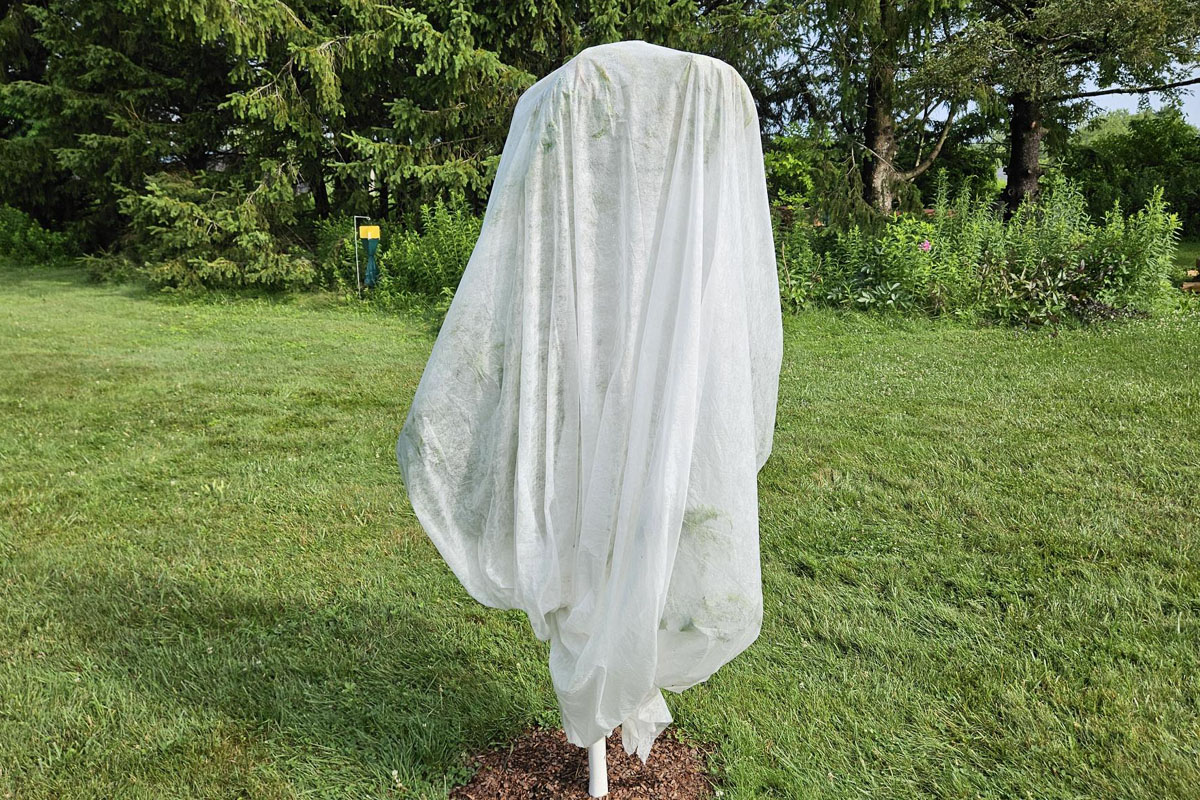
I feel awkward about wrapping the tree this way because the beetles are around for six weeks! However, I do not have the time to monitor the plant for 12 hours each day. I had to do something to protect my new baby; however, mature plantings will not be getting this preferential treatment.
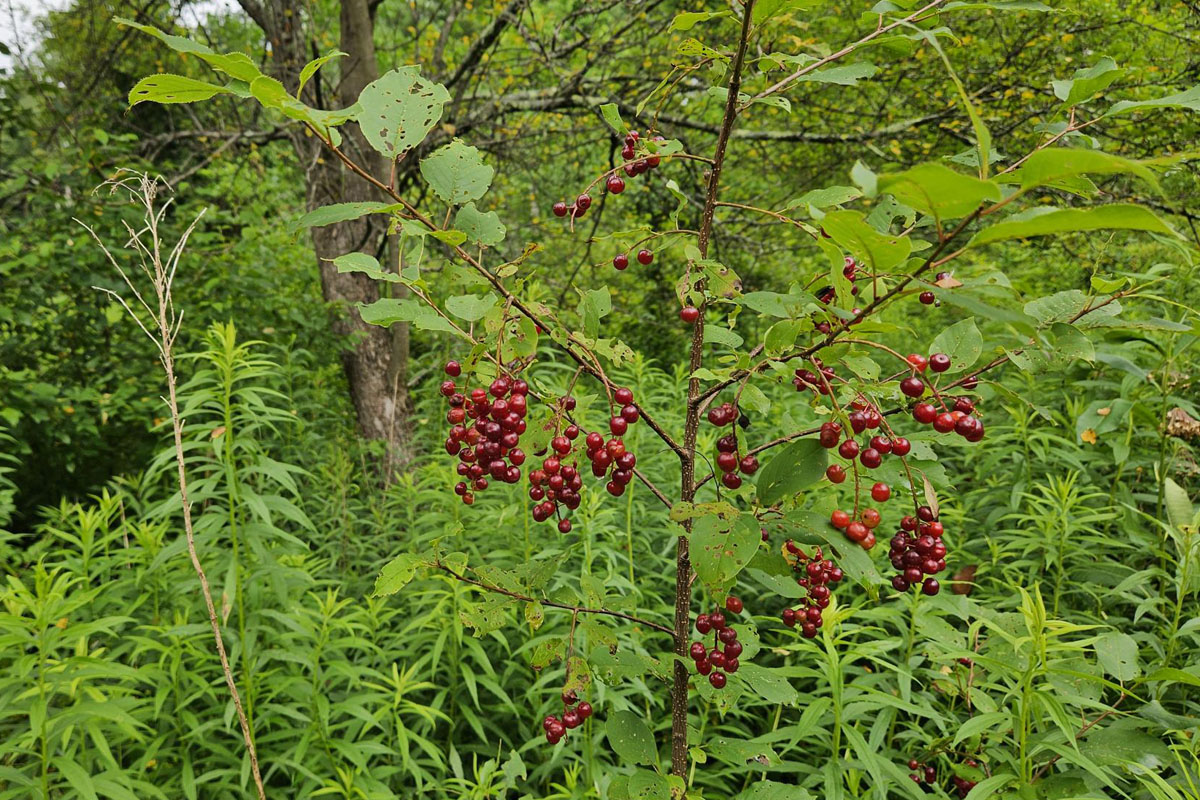
I will end with this week’s success story. On our daily walk through the neighbors’ wooded path, I have coddled a wild chokecherry (Prunus virginiana) by pruning out tent caterpillars and removing bittersweet vines. The shrub now has gorgeous beads of fruit to feed the local bird population.
I call myself the Lazy Berkshire Gardener because I don’t want to work too hard in my gardens. I want to enjoy them. I find it easier to observe my landscape and let the compost happen, the water pool up, or daisies to self-sow. I look for ways to do the minimum task for the biggest impact. For example, mulching is better than spraying and much better than weeding all season. I look for beautiful, low-maintenance plants that thrive in or at least tolerate my garden conditions. Plus, I am willing to live with the consequences if I miss something.