I recently attended a dinner at a friend’s house where the hosts asked each of us to come prepared to read a poem and discuss it with everyone. It was a remarkable dinner, both for the wonderful food and truly fascinating conversations and observations of the attendees.
One of them, who often attends retreats and is particularly knowledgeable about the tenets of a well-lived life, mentioned the Buddhist thoughts about when to speak. This came about when one of the poems lead to a discussion of whether you should tell a loved one that she or he is dying and that the doctors say there is no procedure that can extend their life. The four questions, as I recall them, were: Is the information truthful; is it helpful; are you the one who would say it; and is it appropriate to say it at that particular location and time?
The discussion among the group was profound, as almost all of us have thought of this issue—the obligations of doctors, the wishes of the ill individual, the relationship within a family, etc. I am perhaps too direct and unequivocal in this regard, which I think comes from my profession as a lawyer; I believe people must be told the truth in all circumstances, unless they have previously informed you that they don’t wish to know such a medical diagnosis.
I am certainly not in a position to discuss or opine on the metaphysical or philosophical arguments of this horrible situation; I can only say that I have no doubt that if the withheld information could lead the potential recipient of said information to take a certain action, it should be told to them. To not reveal this information is to deny the humanity and free will that all of us have. This somewhat lengthy philosophical introduction brings me to a recent discussion with a young friend.
She had recently enrolled in a local Waldorf school. Her mother is a health professional, and I mentioned that Waldorf schools, nationwide, have had very low rates of childhood vaccinations compared to other schools around the country, and I wondered what her mother felt about that. My friend was very surprised, saying she had no idea and was sure her mother also did not know. It had never been mentioned by the school, and I remembered that when I inquired at a Waldorf school about vaccination rates years ago, pre-pandemic, I was troubled that they refused to answer any questions about on the subject, except to say that they took no position on them and filed the required reports with the state.
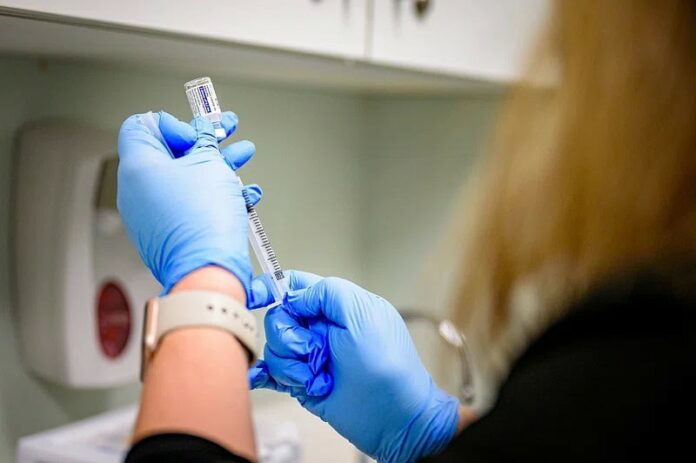
Most states (including Massachusetts) require reporting from both public and private elementary schools of the percentage rate of state-mandated vaccinations for childhood diseases (not including COVID, which is not mandated in almost all states). In Massachusetts, the required vaccinations for students in kindergarten through 12th grade are: 1. DTaP/Tdap (diphtheria, tetanus, and pertussis); 2. Polio; 3. MMR (measles, mumps, and rubella); 4. Hepatitis B; and 5. Varicella (chickenpox). These vaccinations help protect students, as well as those inside and outside of school with whom they would come into contact, from serious illnesses. Schools require proof of immunization before students start classes and may periodically review health records to ensure that all students are up to date on their vaccinations.
There are only two exemptions to allow unvaccinated students to attend school in Massachusetts. The first is a medical exemption, which requires the student’s healthcare provider to determine that the vaccination is medically contraindicated or may actually be harmful to the student. The second is a religious exemption which requires that a student’s religious beliefs are in conflict with vaccinations. There is no personal-belief exemption based on personal opinion or philosophical objection.
In checking various sources, it seems that Waldorf schools around the country report between 40 and more than 70 percent of their students as unvaccinated. I have been told by many people that this is a major selling point for many parents who oppose vaccinations.
There is lots of reporting about vaccination rates in Waldorf schools. A California study of several Waldorf schools reported low vaccination rates, with the Martin Waldorf school having 78 percent of its students unvaccinated, with other schools ranging from 35 percent to 71 percent. Statewide in California, 92.9 percent of private school kindergarteners are fully vaccinated. Numbers from North Carolina, New York, Hawaii, Vermont, and New Jersey show similar results of unvaccinated attendees at Waldorf schools, as well as numerous outbreaks of diseases at schools, most recently an outbreak of measles in Rockland County, N.Y. This last situation prompted my first inquiry about vaccinations in the schools and the legal issues concerning the banning by the State of New York of any student who was unvaccinated, regardless of whether they had any exemption under the then-existing New York law.
A Boston Globe article, citing the 2023–2024 vaccination rates reported by a local Waldorf school, shows only about one-third of the students were vaccinated, meaning that about 66 percent of the kindergartners were not, well below the statewide averages. The school has not yet reported numbers this year, according to the Massachusetts Department of Public Health site.
A 2021–2022 filing by Berkshire Waldorf School states that 34.6 percent of the kindergarten class were exempt from having to have vaccinations, 32.7 percent were not immunized, and there was no record for 5.8 percent of the class. In the 2022-2023 report, the percentages for the Berkshire Waldorf School were, remarkably, 22.7 percent for all three categories, “Exemption,” “Un-Immunized,” and “No Record.”
Let me tell you my opinion straight up: No matter what your opinion and/or your religious belief, there is no moral right to possibly infect my child (and others outside of school) through the conscious decision of sending your son or daughter to school unvaccinated, unless you at least make sure that the school informs parents of the policy to accept such students and that the school checks and verifies any of the two statutory exemptions under which your child is legally admitted. The school has a moral obligation to make sure all potential students’ families are aware of its policies and the vaccination rate of its student body. A school cannot be complicit in violating the law by accepting clearly spurious medical exemptions or false religious representations.
Any parent also has an obligation to get as much information from the school concerning the risks of being in a school with low vaccination rates. To do that, the school has a duty to me and my child to be candid and fully transparent. The policy of many Waldorf schools to apparently conceal this information is reprehensible and is completely antithetical to its founder’s high moral precepts. If you are not troubled by the situation and/or don’t believe in the efficacy of vaccines, so be it, but I think we all agree that many of us would find the withheld information important in making an informed decision.
Whether you agree with vaccines or not (I clearly do, believing that the evidence could not be clearer), you should agree that individuals have a right to make their own choices and not be denied the information to do so. As the Buddhist’s say, is the information truthful, helpful, timely, and appropriate for the place?
You would expect nothing else from schools with some of the finest and most ethical of graduates.