Great Barrington — The state’s Department of Transportation (MassDOT) announced that it intends to replace the Brown Bridge, which crosses the Housatonic River and links North Main Street and State Road at the intersection of routes 23, 7, and 41.
According to MassDOT, the bridge was built in 1931 and is now over 94 years old. As of 2022, an average of 14,979 vehicles crossed the span each day. MassDOT previously conducted a restoration project on the bridge in 2019. The department last inspected the structure in April 2024.
MassDOT’s report on the bridge lists ratings for various elements of its infrastructure:
- The department rated the deck condition as 6—satisfactory condition, but structural elements show some minor deterioration;
- The condition of the bridge’s substructure, which includes foundation elements like columns and footings, is also rated as 6;
- The the condition of Brown Bridge’s superstructure, which includes parts of the bridge that supports its load and includes the deck, along with girders and beams, has been rated as five—all primary elements are sound, but may have minor section loss;
- The overall condition of the bridge has been rated as 6.
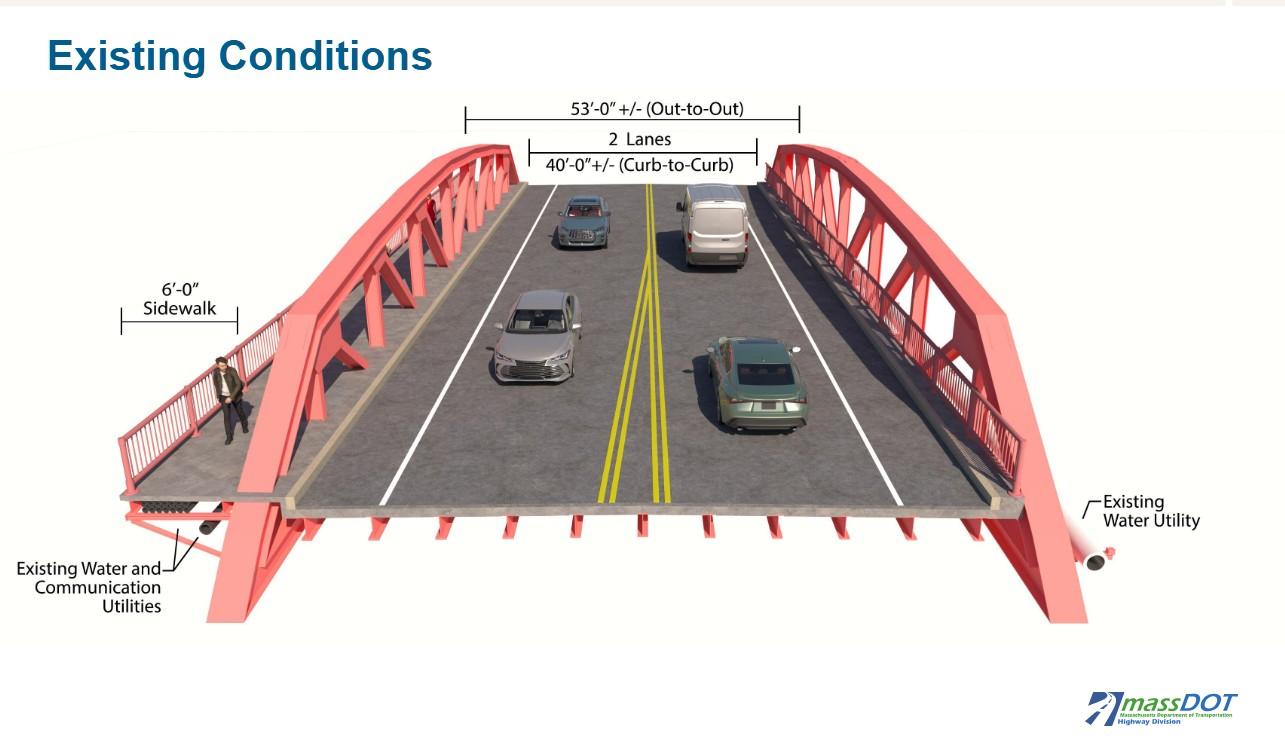
However, MassDOT spokesperson John Goggin told The Berkshire Edge via email that the span is structurally deficient and is due to be replaced. “While the current bridge remains open and safe, the bridge has reached the end of its service life and is classified as structurally deficient,” he wrote via email. “In its current form, the existing bridge lacks the necessary width to adequately accommodate today’s traffic volumes. It also does not meet modern design and safety standards, nor does its current form reflect any changes to environmental regulations or current standards for resiliency.”
A report from MassDOT lists that the bridge “lacks the necessary width to adequately accommodate existing traffic volumes, further compounded by its limited load-carrying capacity.”
The MassDOT report goes on further to state the current structure’s various deficiencies:
[The bridge’s] foundations include masonry elements of an earlier crossing for which there are no records. The trusses which hold up the bridge have no protection from accidental vehicle impacts.
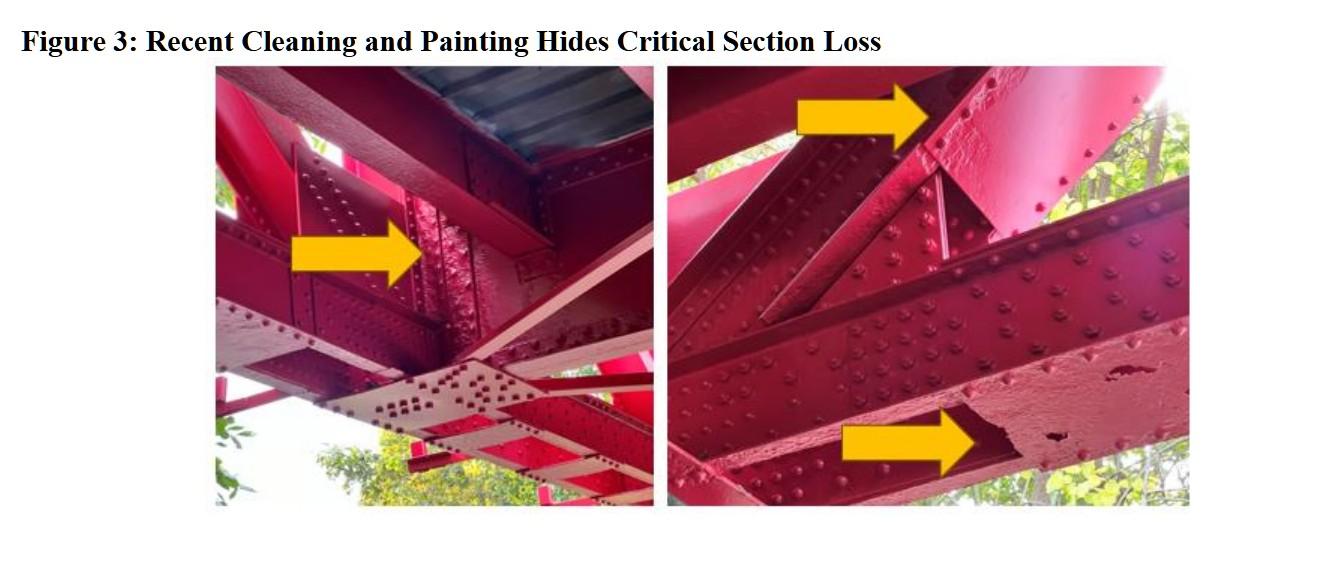
The bridge was cleaned and painted during a rehabilitation project in 2019, however [sic] this cosmetic improvement hides critical metal loss in the structure’s trusses and connections. Even with the work done in 2019, the bridge remains weight limited and, despite its importance in the movement of freight by truck, its configuration makes it difficult for trucks traveling west to make the left turn towards the center of Great Barrington.
Having evaluated the structure and noted its challenges, MassDOT has determined a full replacement.
“Even with routine maintenance and inspection, structural deficiencies occur over time as bridges age and endure vehicle- and weather-related wear and tear over the years,” Goggin wrote in his email. “Repairs were made most recently in 2021 to ensure the existing bridge can remain safely open for use without any additional weight restrictions, while a new bridge design can advance that reflects modern standards regarding safety, traffic volumes, and other components such as cycling and walking.”
As listed on MassDOT’s website, the total project cost is estimated at approximately $18.4 million and is expected to be funded through the state’s 2027 Transportation Improvement Program for the Berkshire Metropolitan Planning Organization.
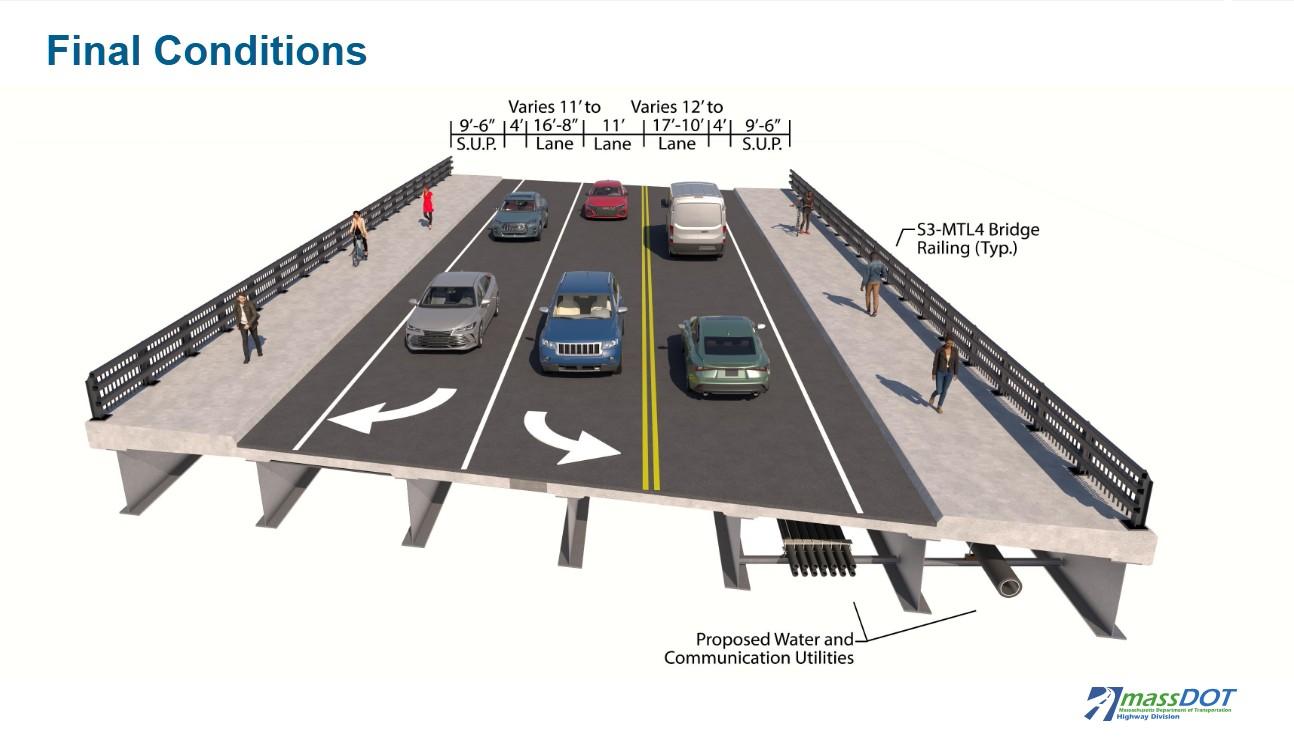
According to MassDOT’s plans, the new bridge will include dedicated left- and right-turn lanes for the westbound approach of State Road to relieve peak-hour traffic congestion. Additionally, the western end of the span would be wider than the eastern end in order to accommodate turning trucks.
Plans for the new bridge call for an intersection with upgraded crosswalks, new signal equipment, and ADA (Americans with Disabilities Act) upgrades in order to meet accessibility standards.
It will also include four-foot shoulders on both sides of the bridge, along with nine-foot, six-inch shared-use paths for pedestrian and bicyclist use.
According to MassDOT, construction on the new bridge is scheduled to begin in the winter of 2027 or 2028, with construction completed by the middle of 2030.
A public hearing on MassDOT’s plans was held on November 19.
At their meeting on Monday, December 2, members of the Selectboard issued several concerns about the plans.
Selectboard member Eric Gabriel said he is concerned about the bridge’s design. “I think we need [to put to MassDOT] an emphasis on the character of the bridge, with it being the gateway into the town,” Gabriel said. “If you are going to get this one bridge that looks exactly like the one over [Route] 23 that crosses over the Green River, I think we need to push back on that as hard as possible. We want to get us something that doesn’t look so much like a highway bridge, but as a proud bridge entering from one side of our town to the other.”
Gabriel added that he is concerned about the potential effects the construction project would have on businesses in the area.
Meanwhile, Selectboard Chair Steve Bannon pushed for the town to get behind the project. “I think the bridge needs to be replaced,” he said. “It’s the state’s bridge, and they’re paying for it all. And I think we should support that.”
The public comment period for the project is scheduled to close on Thursday, December 4.
Comments can be submitted via email to MassDOTProjectManagement@dot.state.ma.us.