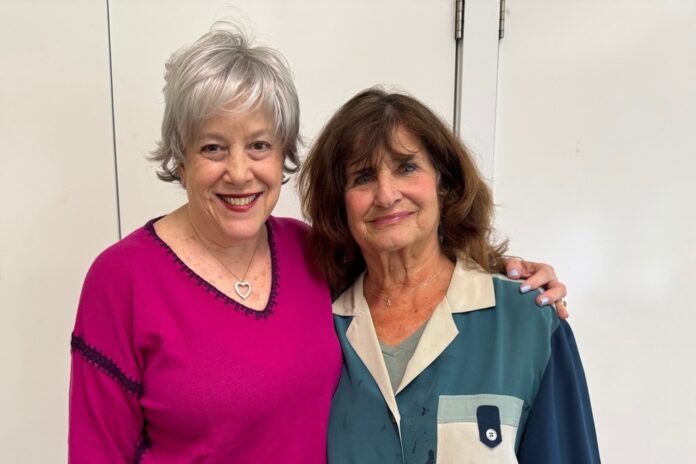
I originally met Barbara Viniar at the Mason Public Library in Great Barrington. She had done extensive genealogical research into her family and wanted to write a memoir. As I listened, I sensed something: While the material might not carry a full-length memoir, it held something else—something freer, more open to invention. I suggested she use her research as the foundation for a novel.
That is how our collaboration began.
We met biweekly, mostly on Zoom. Barbara was remarkably consistent, bringing a new chapter every two weeks, open to feedback and always willing to dig deeper. Over time, her tentative sketches grew into confident storytelling. What began as fragments of family history evolved into a fully imagined work of fiction. By early 2024, she had completed the first draft of what would become “Little Bird,” a novel inspired by her grandmother’s journey from Eastern Europe to Brooklyn in the early 20th century.
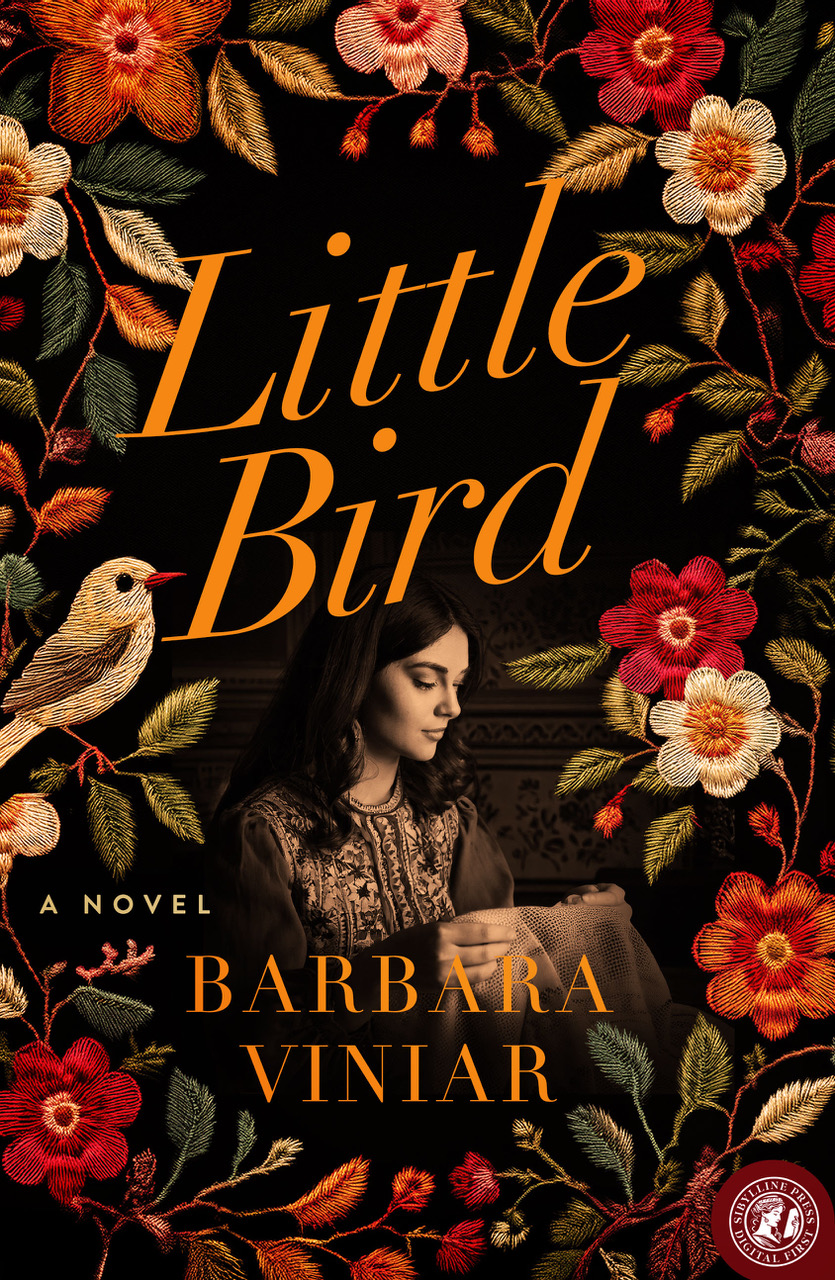
Barbara’s novel began with a question—and a pair of silver candlesticks.
In 2019, she attended a reading where an author described a woman carrying hidden candlesticks in steerage on the journey from Romania. It reminded Barbara of the candlesticks she had inherited from her grandmother—beautiful but silent. Where had they come from? Had her grandmother brought them over? Bought them later? The absence of an answer planted the first seed of narrative urgency.
During the early days of the pandemic, Barbara joined a memoir class and began writing short vignettes about her grandmother. A photograph from a cousin deepened the mystery: It showed her grandmother, tenderly posed with a man. But her cousin told her, “That’s not our grandfather.” Barbara remembered a rumor about a first marriage in Canada, perhaps a marriage of convenience to enter the U.S. Suddenly, the photograph seemed to suggest a hidden chapter of her family’s story.
In 2021, she hired a genealogist, who unearthed more fragments: the name of her grandmother’s village in Russia, the ship she and her father sailed on, the identity of a first husband—possibly a cousin—who owned a factory in Brooklyn. Her father later returned to bring over the rest of the family. Eventually, her grandmother divorced and married the man who became Barbara’s grandfather. These were the known facts. But there were still gaps.
Even the candlesticks had a secret. When Barbara took them to a jeweler, he discovered a Hebrew inscription she had never noticed. They were a wedding gift from her great-grandmother, on that first marriage. One candlestick had been welded—how or when, no one knew. That detail found its way into the novel, imagined rather than remembered.
Her first novel outline is dated November 2021, around the time the genealogist’s report arrived. That is when she reached out to me. We met in person at the library to talk through her vision, and then we worked together until the manuscript was done.
Barbara’s discipline, openness, and willingness to let imagination step in where memory faltered made her a pleasure to work with. “Little Bird” is the result of years of effort—and is a testament to how a story can rise from silence, from absence, from a photograph with no caption.
I have been working with writers for over 40 years—ever since I published my first novel. Teaching has always felt less like instruction and more like a dialogue, a collaboration. The process is a tension between interrogation and encouragement—posing the hard questions, then stepping back to let the writer find their way. Barbara embraced that process. She returned to her desk with resolve, draft after draft, guided by her questions and her imagination. Watching her complete her novel reminded me why I continue to teach. There is no greater reward than seeing a writer push through uncertainty and create something lasting.
Editor’s Note: Sonia Pilcer is at work on a new book exploring her collaboration with an artificial intelligence writing partner.