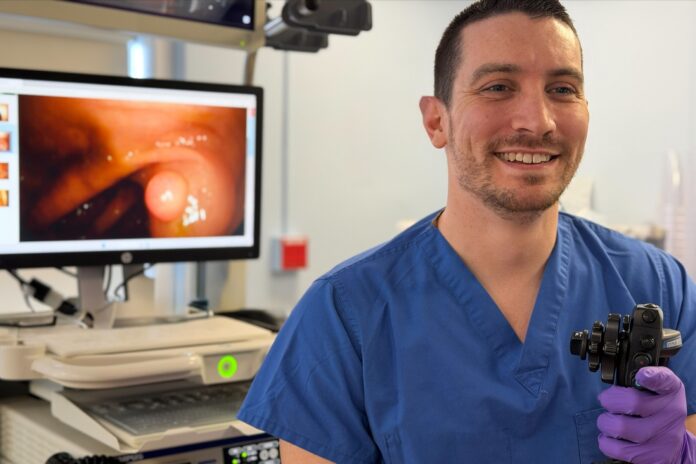
As a general surgeon caring for patients in our community, people often ask why I would choose a career performing colonoscopies. I am always a little surprised they don’t just assume it’s for the glamour. In reality, I didn’t go into surgery planning to focus on colonoscopy. But once I started performing them during training, I realized something powerful: A colonoscopy is one of the few procedures in medicine that can both diagnose and treat a precancerous condition during the very same exam.
When I find polyps (small growths in the lining of the colon), I can often remove them during the procedure. Because some polyps can turn into cancer over time, removing them early can interrupt that process and literally prevent cancer.
That realization changed how I think about the procedure. Instead of simply detecting disease, we stop it before it begins. From personal experience, preventing cancer with colonoscopy is far easier than treating cancer that has already progressed.
One moment that reinforced this for me involved a patient who came in for a routine screening. They felt perfectly healthy—no symptoms, no family history of colon cancer, nothing that suggested a problem.
After the procedure, I spoke with them about what I had found: a large precancerous polyp. Fortunately, it was still in a stage where it had not yet become cancer, and I was able to remove it completely during the procedure.
The patient looked at me and said something that has stayed with me ever since. They told me they had almost canceled the appointment. They were embarrassed about the procedure. They felt healthy. They didn’t have a family history and weren’t experiencing any symptoms, so they wondered whether the test was really necessary.
But they kept the appointment, which quite possibly saved their life. Moments like that are why screening matters so much.
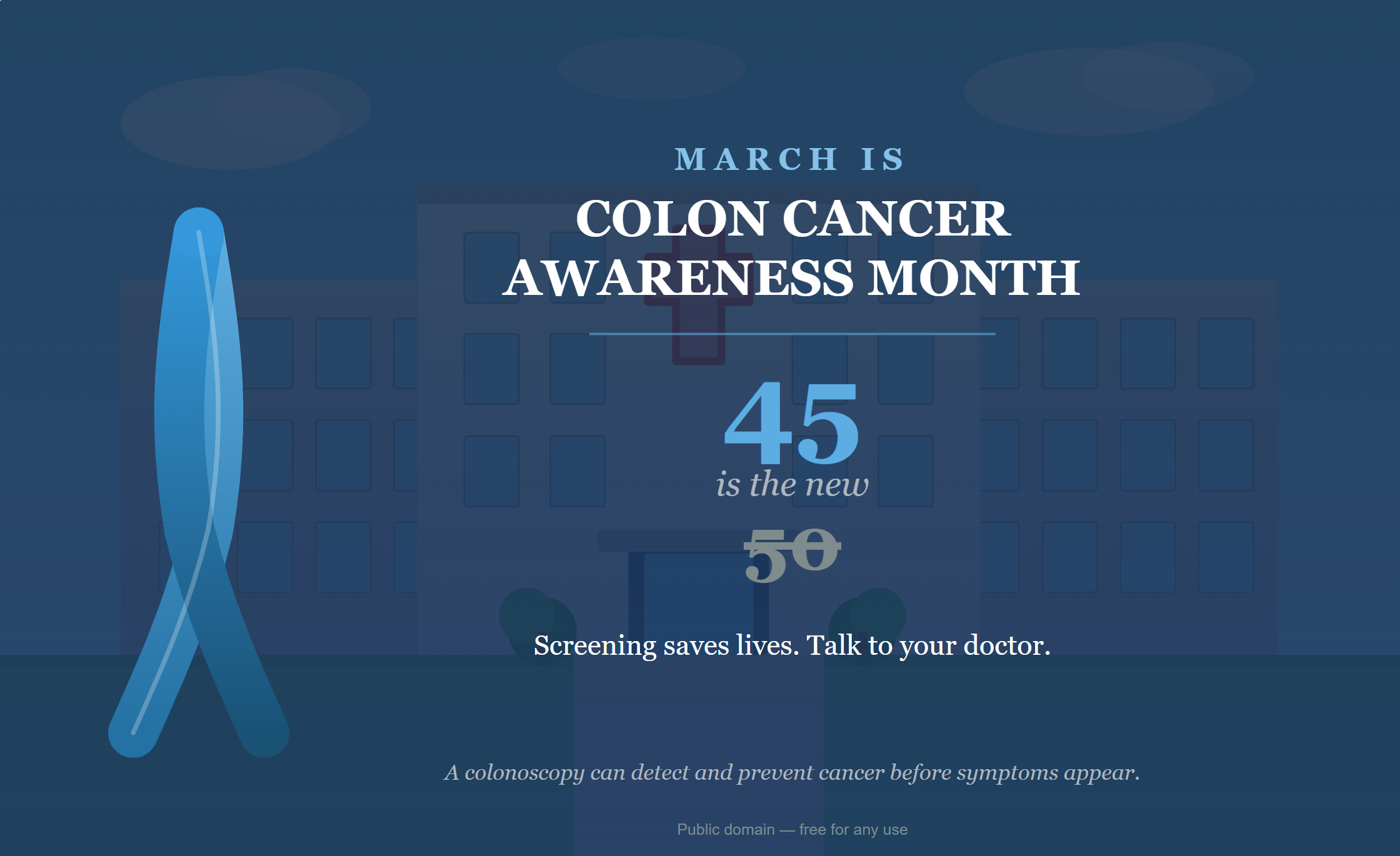
March is National Colon Cancer Awareness Month, and while I perform colonoscopies year-round, it is a good opportunity to raise awareness about colorectal cancer and, more importantly, about the powerful role screening plays in preventing it.
45 is the new 50! Who should be screened?
Current guidelines recommend that most adults begin colorectal cancer screening at age 45 if they are at average risk.
Some individuals may need to start earlier if they have certain risk factors, such as:
- A family history of colorectal cancer or advanced polyps
- Inflammatory bowel disease
- Certain inherited genetic conditions
Your primary care physician can help determine the right screening schedule for you.
What to expect from a colonoscopy
The dreaded prep:
- Patients often tell me the preparation is what they fear most, but the good news is that modern colonoscopy prep is much improved compared with years past. It may not be the highlight of your week, but most people are pleasantly surprised to find it easier than they expected.
During a colonoscopy:
- Patients receive sedation so they are comfortable.
- A flexible camera is used to examine the entire colon.
- Polyps can often be removed immediately if they are found.
The procedure usually takes 20 to 30 minutes, and after a little rest, you are back to work the next day.
A simple step that saves lives
If you are 45 or older and have not yet been screened, consider talking with your doctor about scheduling a colonoscopy or another screening test. If you have already been screened, encourage friends and family members who may be overdue.
Colonoscopy may not be glamorous, but it is one of the most powerful tools we have in medicine. When we find and remove precancerous polyps, we are not just detecting cancer. We are preventing it. If you are due for screening, don’t put it off. That one appointment could make all the difference.